
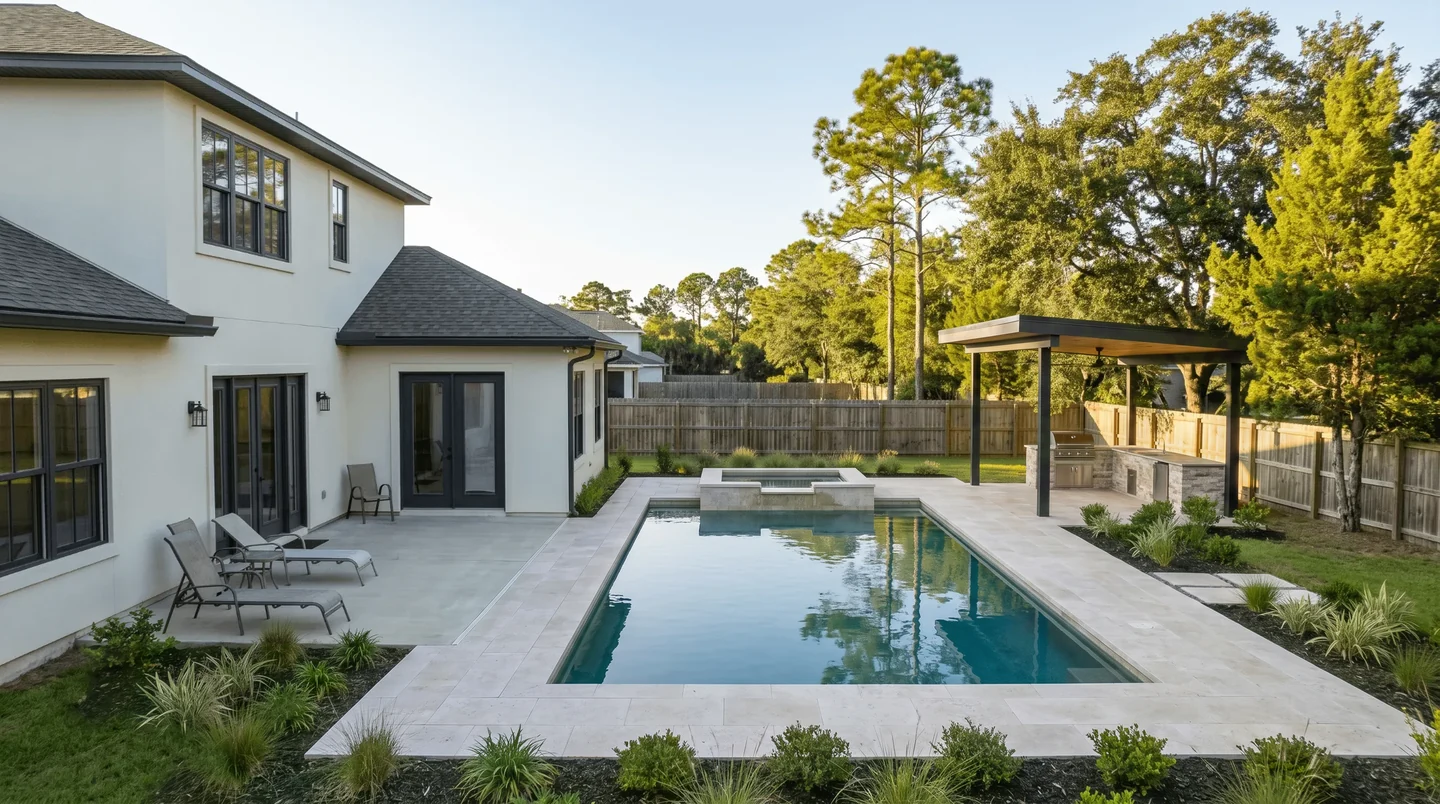
Build the backyard at once or in phases? Compare the first useful result, the decisions you are ready to make and the disruption you are willing to live with. Neither approach is automatically better. A phased plan can fit your priorities, but a first installment that depends on unfinished work may not deliver the space you expected.
Start with one overall vision. Then compare different ways of reaching it without confusing a smaller first-phase price with the cost of the complete project.
Define the first result worth building
Complete this sentence: After the first phase, we want to be able to ___ without waiting for ___. Be specific about the people, activity and supporting space.
A household might want four people to eat outside with a convenient route from the kitchen, suitable furniture and the surrounding area restored. A patch of paving alone would not necessarily meet that goal. Another household may prioritize swimming, with the necessary pool-related work and usable access defined by the responsible professionals.
Keep this first useful result distinct from the final wish list. It helps you recognize when an apparent saving removes something needed to make phase one worthwhile.
Put three options on the table
Option one: a coordinated full build
Describe the complete scope intended for one construction effort. Identify which selections and site questions need to be resolved, how the household would manage the work and who would coordinate the different providers.
Do not assume that doing everything together means every trade arrives at once or that all decisions must be made on the same day. Ask the construction team to explain its actual sequence and dependencies.
Option two: a complete first phase
Identify the work needed for the first useful result, then separate later features. Include the condition in which the remaining yard will be left, access to areas still in use and any agreed preparation for future work.
A phase boundary should describe a finished handoff, not merely where spending stops. Ask what would make the first phase usable if the next one were delayed indefinitely.
Option three: plan now and build later
Planning may be the appropriate next commitment when priorities are still developing, important site information is missing or the household is not ready for construction. The value is in resolving the project rather than treating an uncertain build date as pressure to start.
Keep the planning engagement, its deliverables and its fee separate from future construction. A completed design does not reserve a contractor, lock in future prices or establish that every approval has been obtained.
Compare the same five questions
Use one column for each option and answer these questions in plain language:
- Use: What becomes possible after the work in this option is complete?
- Readiness: Which decisions and professional answers are needed before commitment?
- Access: How would later construction and ordinary household activity reach their destinations?
- Disruption: What work periods, temporary conditions and restoration does this option involve?
- Money: Which amounts come from current written scope, and what remains unpriced or dependent on later review?
A note such as later pool access crosses the proposed dining area is more useful than an unexplained low score. It identifies the exact question the team needs to investigate.
Separate a real future requirement from a possibility
Label later features as planned, under consideration or speculative. The distinction affects how much information is needed now. A committed future pool can raise different access questions from an outdoor kitchen mentioned only as a distant possibility.
Ask the relevant professionals which current decisions could limit that future work. Any preparation installed now needs an actual specification, appropriate review and a clear scope. A line labeled future utility is not enough to authorize construction.
Also ask what happens if the future feature changes. Preserving a location may be sensible while purchasing equipment for an undecided installation may not be. Evaluate the particular choice rather than calling every early purchase future-proofing.
Read the cost comparison without inventing an advantage
Request descriptions of setup, access, temporary restoration and later connections where relevant to the offered options. Keep the complete build, first phase and later work in separate scope groups so the totals mean something.
Do not assign unknown future work a zero. Do not invent a penalty for returning later, either. Ask providers to identify the costs they can actually address and the assumptions behind their answers. Future prices and availability need renewed review when that phase becomes real.
A household may reasonably accept some later work in exchange for a first phase it can manage now. That is a timing and scope choice, not proof that phasing reduces the total cost.
Test the choice against a fictional household
Suppose the household's daily priority is dining outside. Swimming is a definite long-term goal, while a larger outdoor kitchen remains uncertain. The owners compare a full project with a complete dining phase and with planning alone for now.
The dining-first option deserves investigation only if its layout, interim yard and future pool-access assumptions can be supported. If those questions remain unanswered, the owners may choose further planning before authorizing paving. If the full build is sufficiently defined and fits their circumstances, they may prefer one coordinated effort.
The framework does not choose for them. It shows which information would justify their next decision.
Keep service stages separate from construction phases
LANDOVA's consultation, site-and-scope, layout, design, estimating and bidding stages describe planning services. Construction phases describe what you choose to build and when. You can develop a coordinated plan while deciding to build over time.
Request a free initial consultation to discuss the first result you want and the longer-term vision. Technical site capture starts after the approved paid Site + Scope engagement.
