
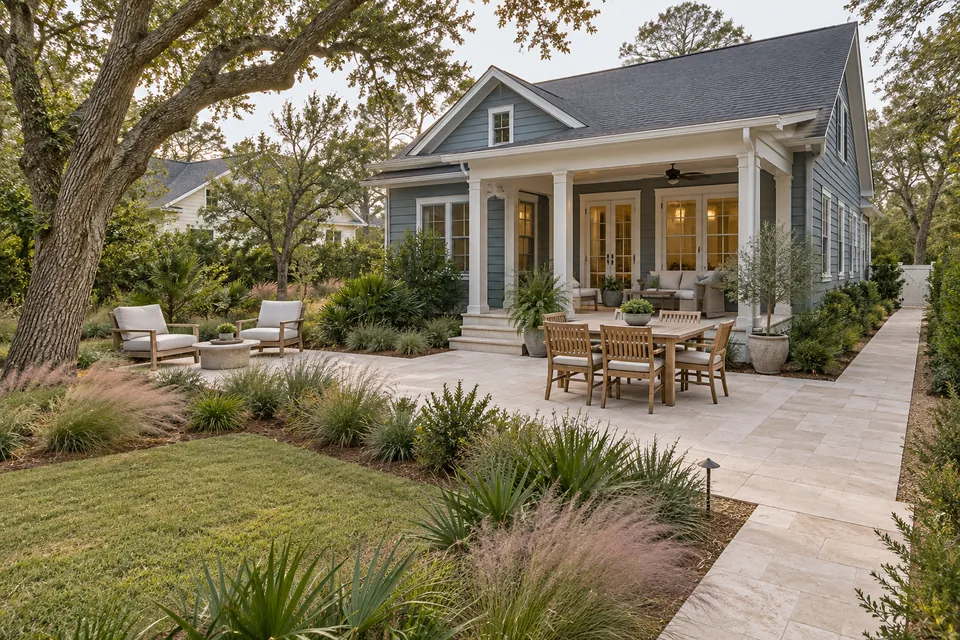
A useful shade plan explains what works when the project opens—not only what might work after new trees mature. A Gulf Coast backyard can combine retained shade, carefully evaluated new planting and suitable shade products, but each part has a different role and timetable.
Start with the hours and seats that matter most. Then distinguish the shade available now from the shade shown as a future intention. That keeps a mature-looking rendering from becoming an accidental promise of immediate comfort.
Identify the experience you need to protect first
Choose one recurring activity, such as lunch at the patio table or an afternoon sitting area. Mark the actual chairs, their orientation and the route from the house. Note when those places are exposed rather than labeling the entire yard sunny.
Use dated observations as a starting point. A single visit cannot represent every season, and a presentation image may use lighting chosen for appearance. Ask what analysis is needed for the actual site and intended hours.
Separate three kinds of shade
On the current layout, make a simple key that distinguishes these conditions:
- Existing and retained: Shade currently associated with buildings or vegetation that is expected to remain, with any needed professional condition review.
- Provided by the proposed first phase: A selected product or structure whose actual placement, performance assumptions and installation requirements need confirmation.
- Anticipated from future growth or work: A new canopy or later feature that should not be represented as fully effective at first use.
Do not blend these into one attractive dark patch on the drawing. A homeowner should be able to identify which source supports the immediate activity and which is still a longer-term intention.
Plan new trees for the whole site
UF/IFAS tree-selection guidance emphasizes factors including mature size, available growing space, site conditions and the purpose of the tree. Use those questions before placing a new canopy beside paving, a pool or a building.
Ask the qualified tree and landscape professionals how the proposed selection relates to the space and future construction. Do not assume its illustrated canopy is present at installation or will reach a particular size by an unsupported date.
For an existing valued tree, obtain appropriate condition and construction-protection input before making its continued shade central to the plan. Retaining a tree on a drawing is not a professional assessment.
Give temporary shade a deliberate role
A movable or seasonal product may be worth evaluating while a later phase or planting develops. Confirm the exact product's intended use, secure installation, operating limits, storage and manufacturer's weather instructions with the appropriate provider.
Ask who will position, operate or put it away. An option that requires difficult daily handling may not suit the people using the yard. Do not treat a temporary item as a substitute for engineered permanent construction or assume it can remain deployed in all weather.
Compare location before increasing construction
Using the same table and household routine, test an alternate sitting position alongside any proposed fixed shade. A change in orientation or activity location may deserve consideration before a larger overhead structure is selected.
Keep the comparison honest. Show the same date, time, furniture and surrounding features when evaluating modeled alternatives. Record any assumptions that have not been checked. More roof area is not proof that the seats receive the desired shade at the relevant hour.
Walk through a fictional two-stage plan
Imagine homeowners who want an afternoon garden seat and intend to add a substantial planting scheme later. Their first concept shows a full tree canopy beside the seat. At review, they recognize that the immediate experience depends on growth that has not happened.
The team compares using an existing shaded location at first, evaluating an appropriate temporary product, or including a suitable fixed shade feature in the current scope. The future tree remains part of the long-term composition, but it no longer carries an unverified first-day promise.
The preferred option records both the immediate use and the later review point. It might favor less construction or more; the decision follows the actual household needs and technical findings, not a generic rule.
Record what changes when the rest of the yard changes
A relocated pavilion, privacy screen or tree can affect earlier shade assumptions. Keep the current layout and selected products together. Recheck the relevant views and operating arrangements when a later phase is developed.
Also separate shade from protection against rain, lightning or dangerous heat. A comfortable-looking garden scene does not establish safe shelter or all-weather use. Follow current weather guidance and the specific product limitations.
Approve a shade strategy with clear limits
Summarize the activity served immediately, the proposed first-phase solution, the future component and the question that triggers reassessment. That is more useful than approving a rendering simply because it looks cool and green.
Request a free initial LANDOVA consultation to discuss your priorities. Detailed property capture and design development follow the approved paid Site + Scope engagement and subsequent stages.
