
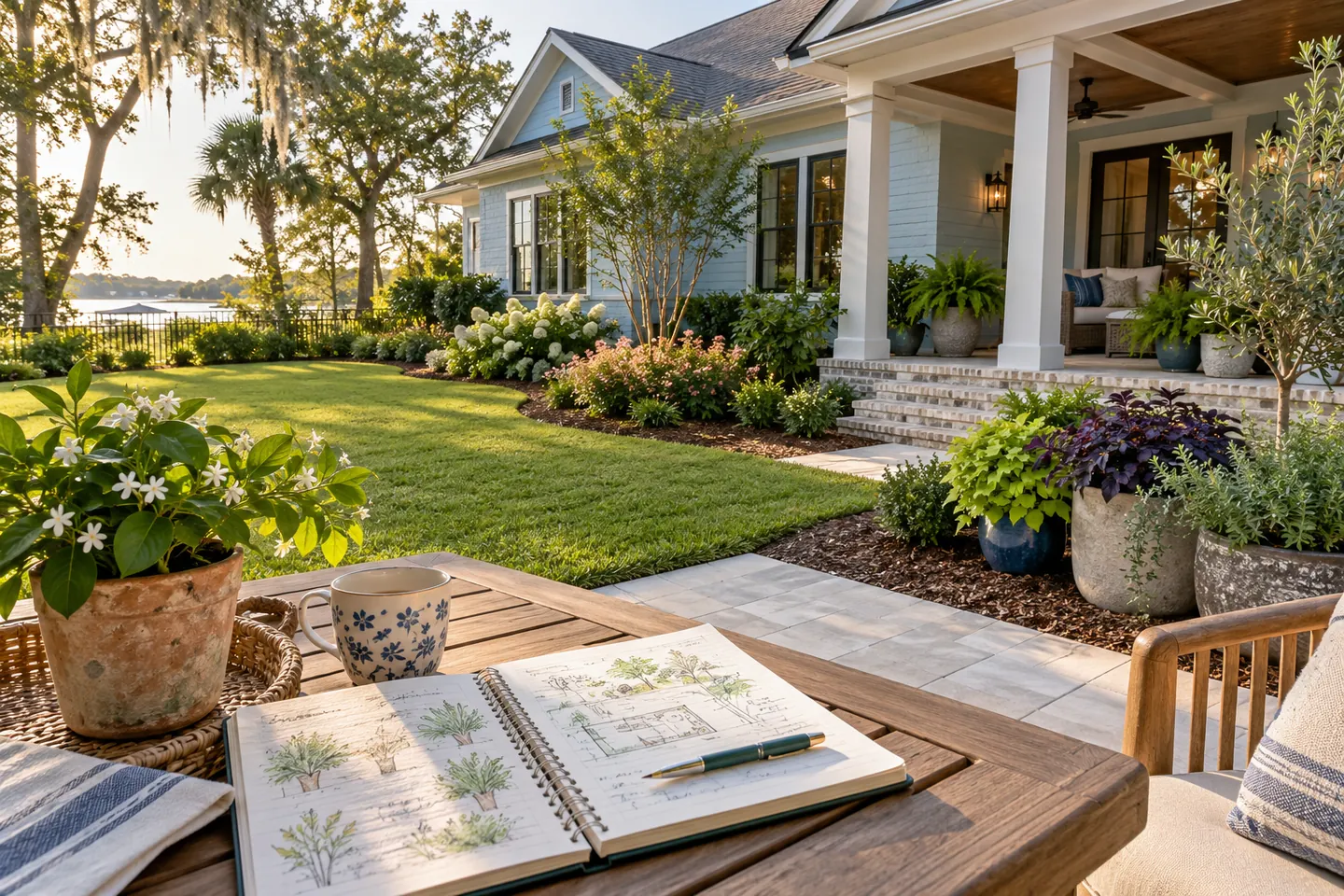
Before deciding how many irrigation zones you need, explain which plants each area will contain and why those plants belong together. A sprinkler drawing should follow the landscape's actual needs. It should not force every bed, container and lawn into one routine simply because they sit next to one another.
This guide focuses on the homeowner's plant-and-water brief. It is not a pipe-layout tutorial or a contractor-selection guide. The qualified irrigation professional must establish the technical design and installation requirements.
Make a plant-area register
Use the current landscape layout and give each area a recognizable name. Record the proposed plant identities, whether existing plants remain, observed light, available soil information and any recurring water observations. Mark unknowns instead of inventing complete answers.
Include containers and newly planted trees in the conversation. Ask which plants are being established and which are already established. Keep their identities and locations linked to the same design version the irrigation team receives.
Understand what a hydrozone is meant to accomplish
EPA WaterSense describes grouping plants with similar watering needs into hydrozones. The purpose is to match watering to the planting rather than treating one continuous bed as one automatically compatible group.
Your role is to ask why the proposed grouping makes sense. The professional should explain how plant needs, exposure, delivery method and site information support the arrangement. A number beside a valve or a colored shape on a plan is not that explanation.
Try a three-area planting example
Consider a fictional yard with a sunny activity lawn, a shaded shrub bed and containers beside a covered dining area. They form one visual landscape, but their water needs and exposure should be evaluated individually.
Ask the team to explain which areas can be managed together and which should be considered separately. Do not infer the answer solely from their proximity. The eventual grouping may change when the plant selection, supply or existing equipment has been assessed.
If one plant in a proposed group has incompatible needs, discuss whether to change the plant arrangement or the watering approach. The landscape and irrigation design should inform each other rather than being finalized in isolation.
Use five fields to review every proposed group
- Plants served: Which exact selections and existing plants belong in this area?
- Reason for grouping: What water needs and site conditions support treating them together?
- Delivery: Which proposed equipment serves the group, and what needs professional verification?
- Growth stage: What establishment guidance differs from the later care plan?
- Owner and review point: Who manages adjustments and when should the arrangement be reassessed?
Leave technical flow rates, supply capacity, pipe sizing and required protective devices to qualified providers. This record describes the planting goals and the questions behind a working system, not installation instructions.
Review existing irrigation without assuming it can stay unchanged
Gather any available system drawing, service history and equipment information. Label visible components as observations rather than a verified record of everything underground. Ask what testing is needed before reusing the system for the changed landscape.
A lawn converted to planting or a newly covered bed may require reconsideration even when the old system still turns on. Have the provider distinguish what remains, what changes and which decisions are waiting for the final planting schedule.
Separate establishment from the long-term routine
Request plant-appropriate establishment guidance and identify who carries it out. Then ask how responsibility transfers to the longer-term care arrangement. A single unexplained controller schedule is not a complete handoff.
EPA WaterSense advises adjusting irrigation for seasonal conditions. Weather- or soil-based controls can support management, but the selected configuration, current local rules and actual landscape still require attention. Ask who makes changes after plant replacement, a new shade structure or observed system problems.
Keep later construction visible
Show proposed paths, future structures and current phase boundaries on the same layout. Ask the professionals to coordinate any required crossings and installation sequence before surfaces are closed. Do not draw an unverified underground route as a confirmed future provision.
If the planting changes, send the revision to the irrigation reviewer. A system designed for an earlier landscape can look complete on paper while answering the wrong brief.
Request a handoff you can understand
Ask for a record connecting the final controller labels to the areas and plants they serve, plus the agreed adjustment responsibilities, relevant manuals and a contact for service. A useful demonstration explains which ordinary actions belong to you and which need professional help.
Keep the plant-area register with that information. It provides a reason for each group and a way to review future changes without relying on memory.
Request a free initial LANDOVA consultation to discuss your proposed landscape. Technical site capture begins after approval of the paid Site + Scope stage; irrigation design and installation remain with the appropriate qualified professionals.
