
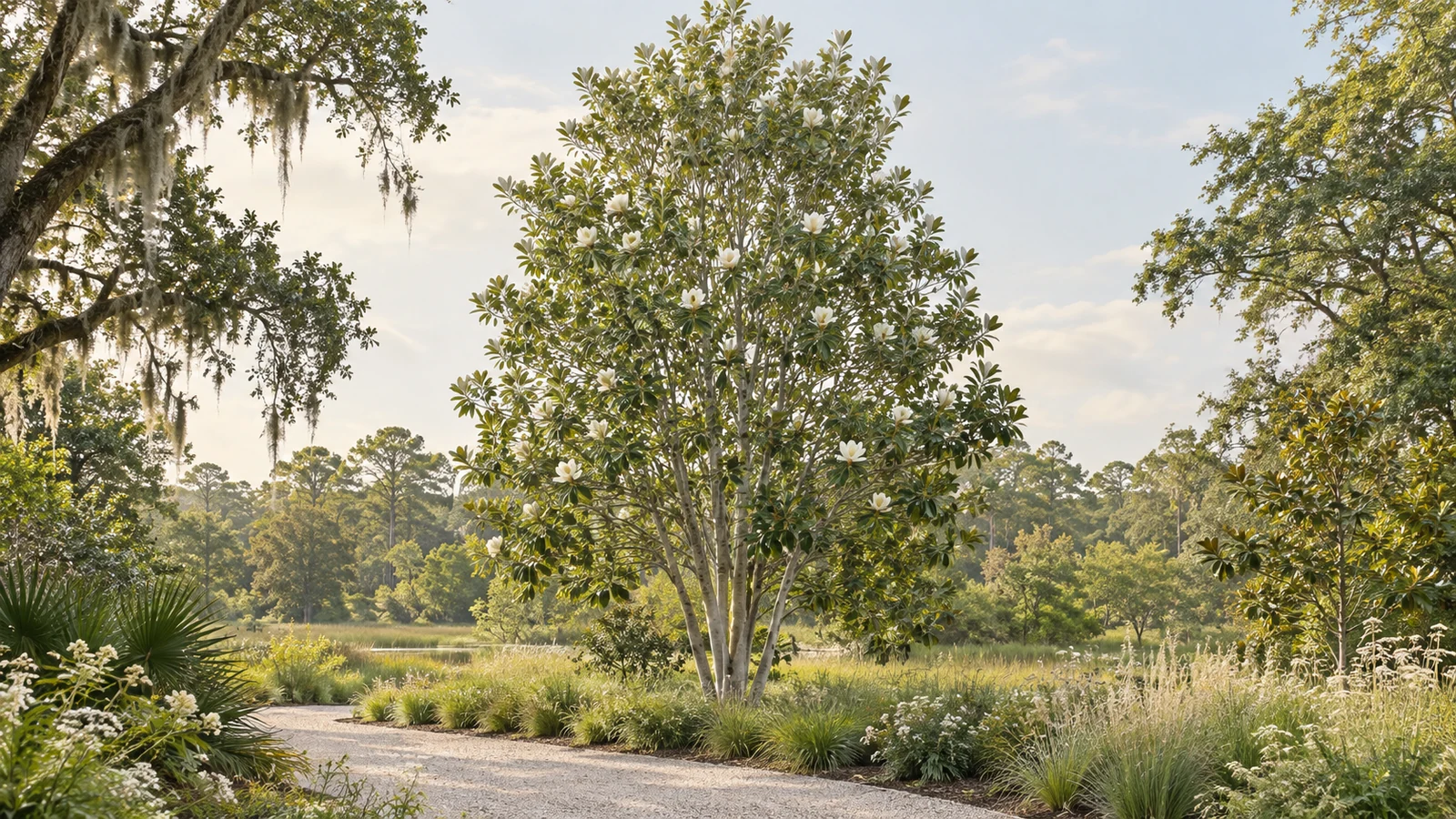
Layering plants is about organizing a view, not filling every gap with another species. Trees, shrubs and grasses can play different roles in a backyard composition. The aim is to understand those roles before selecting individual plants or asking a rendering to make an overcrowded bed look convincing.
Start with the spaces people use and the views they see. Plant suitability still comes first, but a collection of suitable plants also needs an understandable arrangement.
Choose a view to design
Begin at the dining seat, living-room window or route into the garden. Identify what should lead the view, what should form its background and what should remain open. The same bed may have a different front when seen from another part of the yard.
Photograph these viewpoints and keep them consistent while comparing ideas. An overhead planting plan is useful, but it does not show exactly what a person sees through a window or across an occupied patio.
Assign roles before choosing names
UF/IFAS planting-plan guidance distinguishes structural plants, focal or anchor plants, and plants used in masses. It also emphasizes matching growing conditions before settling the visual selection. Use those roles to describe your desired composition without treating every tree as a focal point or every shrub as a screen.
On a simple sketch, label the job of each area. One might provide a background to the dining space. Another might frame a garden opening. A third may connect two beds through a repeated plant form. Leave the species undecided until the site and the intended role can be reviewed together.
Study height and depth separately
Compare the composition from the ground and from above. Ask where taller elements belong, how lower planting relates to the walking edge and how far the planting extends away from the viewer. A visually layered garden does not require a separate row for every height.
Test whether shifting a group sideways improves the view before adding another group in front. An offset arrangement may reveal a focal plant more clearly. In a narrow bed, fewer layers may be a more honest response than drawing plants smaller than their expected mature spread.
Let repetition connect the garden
Choose a limited number of forms or textures to repeat where they help the design read as one place. Repetition does not have to mean an uninterrupted hedge. It might be a recurring low shape, a consistent planted edge or a related group visible from two outdoor rooms.
Then decide where contrast deserves attention. Ask whether an unusual tree, a textured grass or a flowering shrub has a clear role. When everything is presented as the star, it becomes harder to explain where the eye should settle.
Do not treat ornamental grasses as interchangeable
The UF/IFAS ornamental-grass guide distinguishes clump-forming and spreading habits and discusses seasonal changes in height, foliage and appearance. A grass symbol should therefore represent an actual candidate with known behavior, not a permanently neat tuft that stays the same all year.
Ask how the selected plant fits the adjoining route and the intended maintenance. Keep its scientific name and cultivar where relevant attached to the design. Do not assume that a plant's fine-looking texture makes every species suitable beside a seat or in a confined bed.
Compare installation, maturity and a quieter season
Request clearly labeled views rather than one image that mixes young trees, mature shrubs and every flower at its peak. Ask which sizes represent installation and which represent the intended mature composition. Discuss the assumptions behind both.
Then review a period with fewer flowers. What gives the arrangement its shape? Which areas become more open? The exercise is not about avoiding seasonal change; it is about deciding whether the change supports the experience you want.
Try two compositions with the same purpose
Imagine a fictional sitting area that needs a planted background while retaining a view toward an existing tree. One option places several different flowering specimens across the bed. Another uses a quieter background group, preserves the opening toward the tree and concentrates seasonal interest nearer the seat.
Compare both from the same chair with the same bed outline. The second option is not automatically better, but its priorities are easier to test. Ask which composition frames the view, leaves appropriate room for growth and supports the care routine the household accepts.
Bring the composition back to the site
Once the arrangement has a clear direction, check the actual candidates against the conditions and available space. Keep existing-tree protection, utilities, drainage and access questions visible. A pleasing combination should not rely on concealing a service area or planting through an unresolved site constraint.
Record the intended role beside each selected plant or group. If a nursery substitution is proposed, compare its mature form, seasonal behavior and growing needs as well as its color. A replacement should preserve the reason the original selection was there.
Request a free initial consultation to discuss the landscape you want to see and use. LANDOVA's detailed site and planting work follows the approved paid project scope.
