
Published by LANDOVA Design & Planning. October 16, 2026.
A patio color is easy to picture. The route from the kitchen to that patio is easier to overlook. Both deserve attention, but they do not carry the same consequences for every later decision.
The useful question is not simply, “Have we picked everything?” It is, “Which unresolved choice is someone else already relying on?” That question helps you organize an outdoor project without forcing every selection at the beginning or turning planning into a race.
Start with decisions that describe how you live
Before reviewing a feature list, describe a few ordinary moments you want the backyard to support. Where will you put a plate down when you step outside? Where will someone sit while another person cooks? What needs to stay reachable when guests are visiting?
Translate those moments into requirements. “We like entertaining” is broad. “Guests need to reach the dining table without walking through the cooking activity” gives a designer something to test. You can change your mind about the table style while retaining that useful requirement.
Ask each household member for one routine that matters. A rarely mentioned need, such as carrying supplies to a garden area, still belongs in the brief even if it never appears in an inspiration photo.
Find the choices with several consequences
Look for a decision that appears in more than one part of the plan. A cooking location may affect serving routes, views, storage and utility questions. A future structure may affect how much space remains for the first phase. A retained tree may prompt a qualified assessment before surrounding features are positioned.
Draw a short connection between the choice and each affected area. Do not try to solve technical matters yourself. Use the connections to ask which information the responsible professional needs before moving forward.
Keep “we prefer this location” separate from “this location has been verified.” A preference is valuable design input. It does not establish property boundaries, site conditions or installation requirements.
Resolve ownership before assuming coordination
A drawing can show two elements meeting neatly without explaining who coordinates that meeting. When separate trades are involved, ask who reviews their shared interface and who communicates the result.
For example, a planting bed beside paving raises questions about the intended boundary and the work each party includes. Do not assume either trade owns every adjoining task. Record the question, identify the appropriate contact and request a written clarification tied to the current plan.
A useful response names the responsibility and the document where it is recorded. “Someone will handle it” leaves the decision open.
Give future phases a present-day question
A future feature does not need every finish selected now. It does need enough definition to understand whether current work might rely on its location or size.
If an outdoor kitchen is a later possibility, ask what should be assessed now and what can reasonably remain undecided. The answer may require input from the relevant professionals; it is not a reason to install speculative utilities or reserve arbitrary dimensions.
Also describe how the first phase should function by itself. “We will add the kitchen later” does not explain where cooking, serving and storage happen until then.
Try a dependency review on one decision
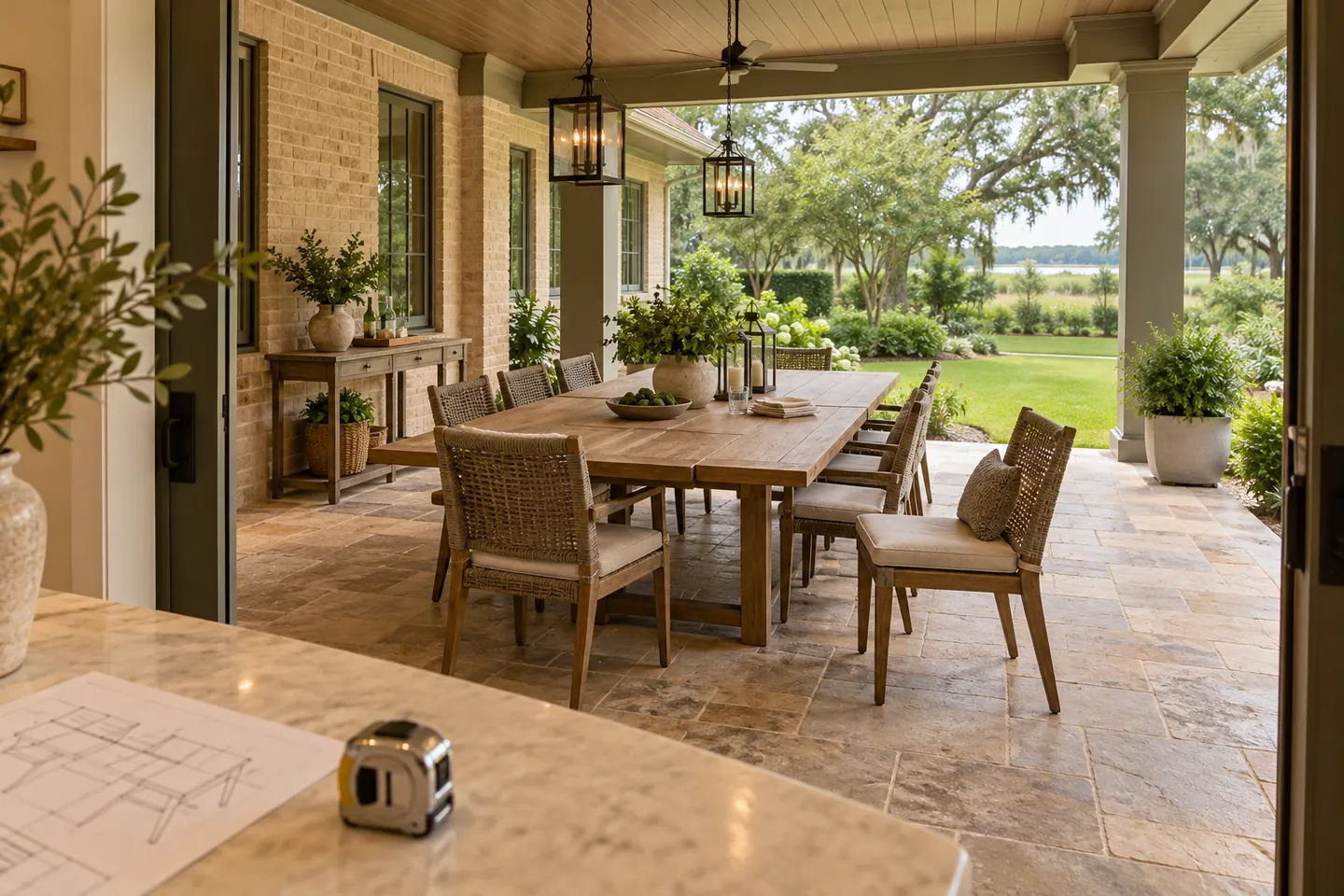
Consider this fictional household: the owners approve a dining patio outline but have not decided whether meals will usually involve their everyday table or a larger extension table. They have already requested a furniture layout based on the smaller version.
The open decision is not the table finish. It is the table configuration the layout must accommodate. The next step is to collect the actual furniture information, show the intended configuration and review chair movement and walking routes with the designer.
The household can keep discussing planting colors while that question is answered, provided those choices do not assume the unresolved patio boundary. The exercise is about identifying a specific dependency, not declaring the entire project blocked.
End each review with a short decision list
For every important open choice, write four things: the question, the information needed, the person responsible for the next action and the work that depends on the answer. Set a review point based on that dependency rather than an arbitrary deadline.
Keep settled preferences visible too. Reopening a decision is possible, but it should be deliberate, with its effects reviewed. A clear list gives the design conversation a useful focus: resolve what the next step actually needs, preserve what is already understood and keep assumptions from passing unnoticed into the plan.
Bring your goals and your unresolved questions to LANDOVA Design & Planning. Start Your Design.
