
Published by LANDOVA Design & Planning. Updated October 6, 2026.
By Jeremy Ruben · A chapter in the LANDOVA origin story
One frustration stayed with me as my work expanded into complete backyard design: homeowners could put several proposals next to one another and still struggle to understand what they were comparing.
The totals were easy to find. The reasons for the differences could take much more work. One proposal might include a larger patio. Another might specify different equipment. An allowance might stand in for a selection. Drainage or a utility connection might sit outside the price entirely.
Collecting more numbers does not automatically make a decision clearer when those numbers describe different projects.
Same label, different contents
Here is an illustrative comparison. Both proposals say “pool and patio.” One describes the pool dimensions, a stated patio area, equipment models, and the work needed to connect the system. The other leaves several of those decisions open.
The shorter proposal might be an early estimate. It might reflect different assumptions. It might need clarification. Missing detail is a reason to ask a question, not evidence that someone is dishonest.
But the homeowner still needs those answers before treating the two totals as equivalent. “Pool and patio” can cover a surprising amount of disagreement for three words.
The rendering and the proposal need to meet
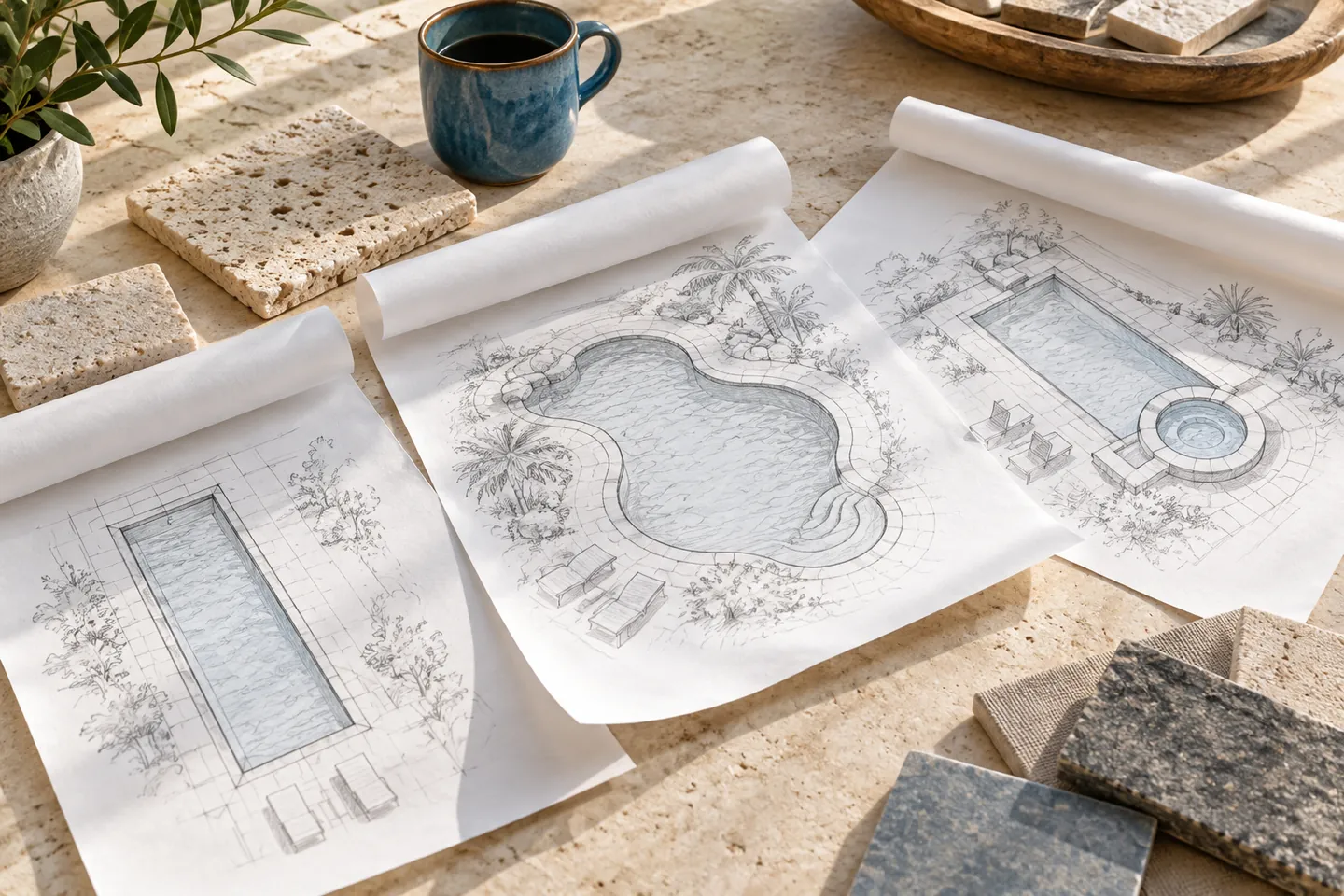
A visual concept might show a pavilion, lighting, planting, and an outdoor kitchen. That helps explain the larger vision. It does not necessarily mean every pictured element belongs in the current construction price.
Keep three things visible: what you want the completed property to become, what you intend to build in the current phase, and what each contractor has actually included.
This also helps with phased projects. A future kitchen can remain in the overall design while its construction budget and timing stay separate. Its location may still raise questions about access and utility work to resolve before earlier work is finished.
The handoffs deserve their own questions
Design, contracting, construction, and ownership involve different responsibilities. A helpful sales conversation is one part of that experience. Scheduling, changes, site restoration, handoff, and service need their own clear arrangements.
I had seen how stressful unclear expectations could become for homeowners. That helped convince me that good planning needed to include the work between the obvious features: who is doing what, what remains unresolved, and where one person's scope meets another's.
Good builders benefit from clear information, too. A shared target gives them a better basis for explaining their approach and price.
A practical place to start
Ask each bidder to identify the design revision being priced, included work, exclusions, allowances, and open questions. If an item is unclear, keep it marked as unclear until someone answers it. An unknown cost has not politely volunteered to become zero.
This thinking is part of why I built LANDOVA around design, project definition, and proposal comparison. The aim is to make the homeowner's next decision easier to understand before it becomes a commitment.
Price still matters. So does knowing what that price buys.
Keep exploring
Read the practical planning guide →
Next in the story: Five Stars Still Leave Questions: Reading Pool Builder Reviews →
