
By Jeremy Ruben, Founder of LANDOVA · October 15, 2026
A contractor can respond more usefully when the request describes one clear project. Attractive images help explain the vision, but pricing also depends on the work included, the selected materials, the phase being built and the responsibilities where one trade meets another.
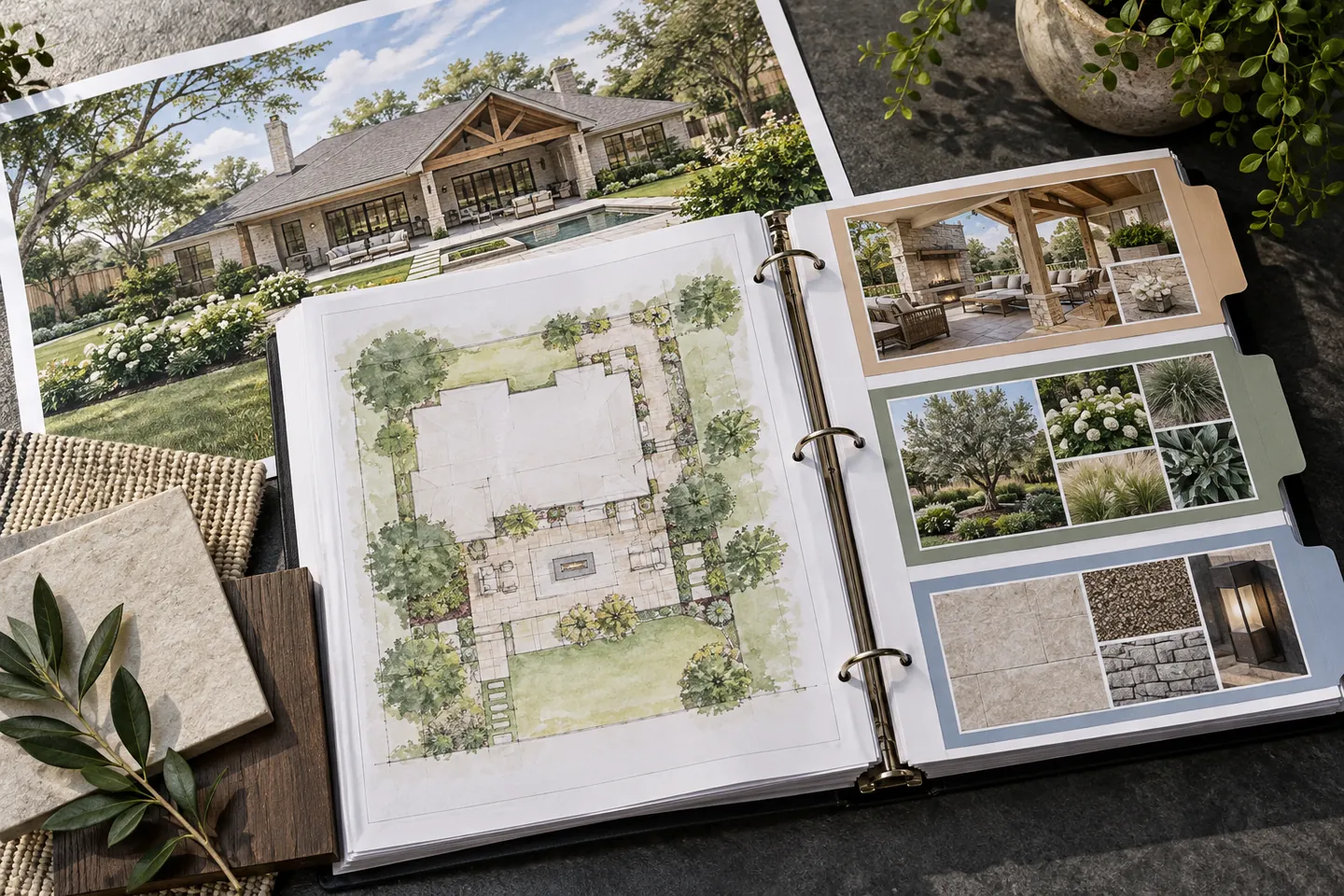
A design and bidding packet brings those decisions into a current, organized reference. At LANDOVA, it connects the approved design with the scope homeowners want contractors to price. “Contractor-ready” must describe its purpose: ready for a pricing conversation is different from ready for permitting or construction.
Connect the packet to the six-stage process
Consultation establishes your goals. Site evaluation and scope definition provide the project context. Layout approval settles the arrangement; detailed design develops the appearance and selections. Estimating then helps you decide what to pursue and which work belongs in the first build.
By the bidding stage, those decisions should tell a consistent story. The packet carries them forward so providers pricing the same work receive the same baseline. It is not a substitute for the reviews and commitments those providers must make for their own scopes.
LANDOVA's Project Estimate & Phasing Plan organizes the budget direction. A bidding packet asks contractors to respond to the chosen scope. A planning estimate and a contractor's proposal serve different purposes, and neither becomes a construction agreement merely because it is included in the folder.
Start with a clear cover and document list
The cover should identify the project, packet date, revision and purpose. State whether the recipient is being asked for a preliminary review, a proposal for defined work or a separately priced alternative. Identify the contact for questions and the requested response date.
List the current documents and their revisions. Keep superseded drawings in the project archive, separate from the issued set. A contractor should not need to guess which of several email attachments represents the homeowner's approved direction.
Include the information behind the price
The contents depend on your agreed services and the work being requested. A useful packet organizes these categories:
- Current layout and relevant views: Show the features, relationships and design intent. Label conceptual information and identify supporting dimensions or records.
- Site information: Include relevant documented conditions, access considerations and existing records, with dates and known limits. Keep unverified conditions visible as questions.
- Selections: Identify chosen products, finishes and available product references. Label undecided choices and allowances so an illustrative material does not look like a final specification.
- Scope by trade: Describe the requested work and its boundaries, including applicable removal, preparation, installation, connections and restoration.
- Phase boundaries: Separate work to build now, future work and any preparation requested now for a later feature.
- Open items: Record questions, the person or trade expected to address each one, and the decision needed before commitment.
- Response requirements: Ask for inclusions, exclusions, allowances, substitutions, timing and other information needed to compare proposals.
A realistic rendering supports the request; it does not identify every purchasable item or installation requirement. Keep selections connected to the plan, and let the appropriate professionals supply the technical specifications their work requires.
Make the handoffs between trades explicit
A pool contractor, paving installer and electrician may each understand their own work while making different assumptions about the connections. Who removes an existing surface? Who prepares the adjoining area? Who provides a connection, and who restores the disturbed yard?
For each important interface, record the responsibility, the information the next provider needs and the sequence to confirm. If responsibility is unresolved, label it as an open item. A broad phrase such as “complete installation” should not hide an unanswered handoff.
Providers competing for the same scope receive a common request. Different trades receive their relevant scope within the coordinated project. A paving installer should understand the planned kitchen relationship without being asked to price work outside the requested paving scope.
Show the complete vision and the phase being priced
Consider a fictional household planning a patio now and an outdoor kitchen later. If the packet shows the complete vision without explaining the phases, one provider may include the kitchen while another leaves it out. Their totals answer different questions.
A clearer packet identifies the patio as the current build, the kitchen as a future phase and any proposed preparation that needs evaluation now. It asks the responsible trades to confirm suitable routes, connections, access and sequencing before those decisions are treated as settled.
The future kitchen can remain visible in the design while being excluded from the current construction price. Any preparation included now should be described separately. That distinction helps prevent both missing work and accidental inclusion of a later phase. Read more about planning future features before building the patio.
Keep questions, alternatives and revisions together
Ask each provider to identify the packet revision used for its response. If a question changes the shared scope, issue the clarified information to everyone pricing that work. Otherwise, the next round of prices may be based on different assumptions.
Welcome professional suggestions, but request alternatives separately from the baseline. A substitute material or different layout may be worth considering; it should not silently replace the work everyone was asked to price. Record what changed and request updated written proposals when the clarification affects price or scope.
This organization supports LANDOVA's controlled bidding process. It also makes missing information easier to address through specific questions rather than repeated explanations of the entire project.
Use a final readiness check
Before sending the packet, confirm that its drawings, selections, phase labels and scope descriptions agree. Check that the request says what response you need and makes the remaining questions visible. You do not need to pretend every uncertainty has been resolved to begin a useful discussion.
Before construction, confirm the additional site verification, technical design, engineering, approvals and installation details your project needs. Design and pricing documents do not automatically constitute a permit-ready or construction-ready set. LANDOVA's deliverables follow the agreed engagement; the responsible professionals and contractors confirm requirements for their work.
You select and contract directly with your building team. A clear packet gives that decision a better foundation: a shared project, traceable versions and a written understanding of what each proposal covers.
