
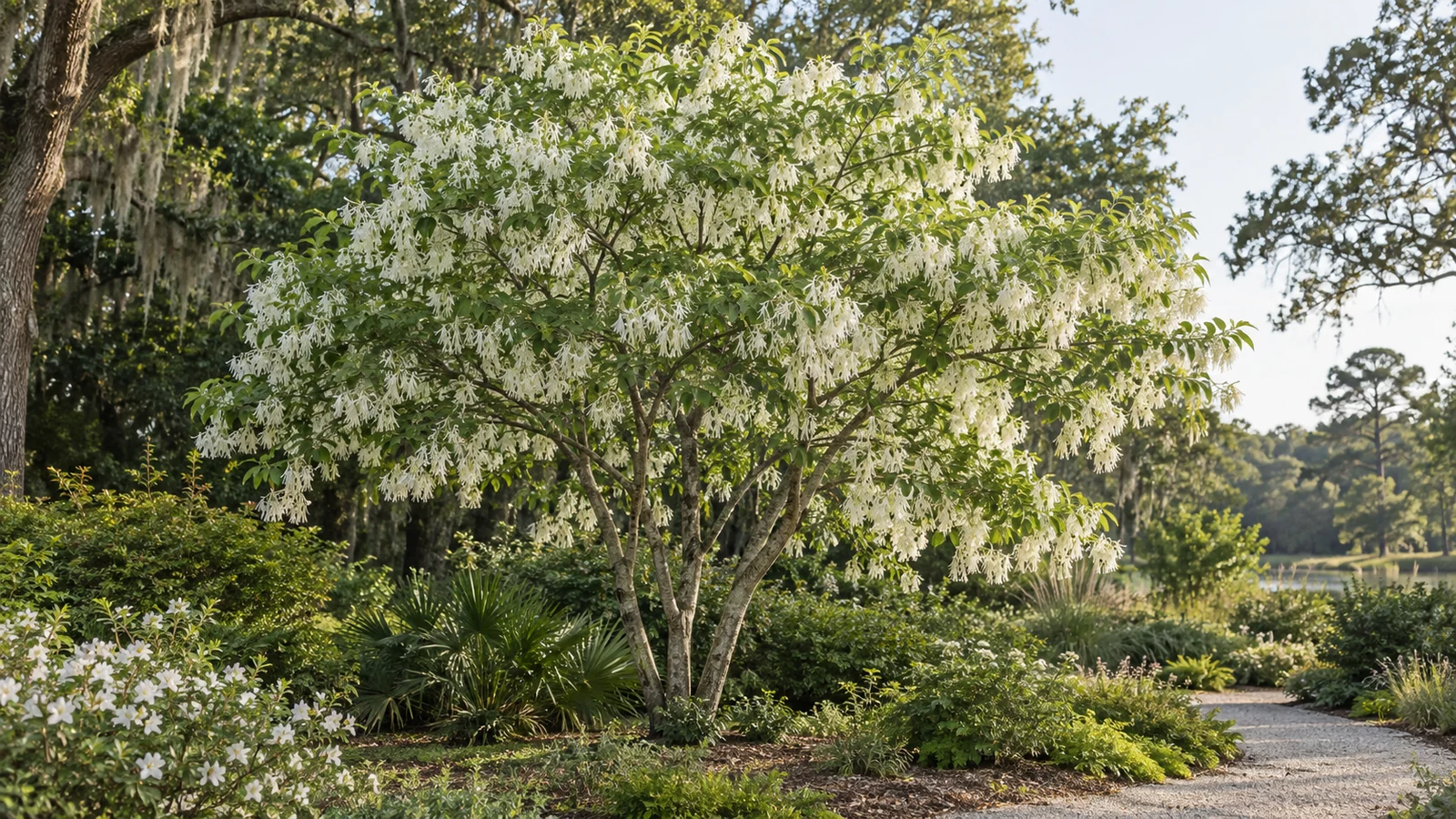
A native plant can be part of a deliberate landscape design without the garden becoming a collection of unrelated specimens. Begin with the function of each planting area, then investigate native candidates that suit the actual site and the visual character you want.
The goal is not to choose between design and native plants. It is to make the planting choices explainable: why this plant, in this place, performing this job?
Describe the role before the species
Decide what the bed needs to contribute. It may form a background to the patio, frame a view, provide seasonal interest or connect an existing tree to the surrounding garden. Separate those goals rather than asking one attractive plant to satisfy all of them.
Then describe the intended appearance. You might prefer repeated groups, a relaxed mix, a strong outline or a quieter setting around one focal plant. These are composition choices to discuss with your designer, not qualities established by the word native.
Use native status as one part of the selection
UF/IFAS's native-plant overview includes many plant types and reminds gardeners that natives still need the right growing conditions. A broad regional label does not establish that every candidate fits each bed on the property.
Record the scientific name and any named selection being proposed. Ask what source establishes its native range and how that information relates to your location. Keep origin, site suitability and design function as separate questions rather than allowing one answer to stand in for all three.
Compare a composed palette, not just a list
Ask for candidates to be grouped by their intended roles. Which provide the main structure? Which create the recurring lower layer? Where does seasonal change deserve attention? A shorter, well-explained list may be easier to evaluate than many species with no placement rationale.
Review the same garden outline with two different arrangements. One could use repeated groups and a clear edge. Another could use a more varied composition around the same sitting area. Keep the intended uses, paths and available space unchanged while deciding which character you prefer.
Let an actual plant profile challenge an assumption
American beautyberry, Callicarpa americana, provides a useful example. UF/IFAS describes it as a Florida-native deciduous shrub and states that it is not salt tolerant. Native status therefore does not make it an automatic year-round screen or a default choice for a salt-exposed coastal site.
That is a demonstration of how to read a profile, not a recommendation to plant beautyberry in your backyard. Ask the same role-and-site questions of every serious candidate. Where the evidence conflicts with your intended use, reconsider the plant or the job rather than ignoring the limitation.
Review a full season of expectations
Ask what remains visible when flowers or berries are absent and what changes when a plant loses leaves or is maintained. Discuss whether those changes are welcome parts of the design or conflicts with a particular need.
Keep expectations specific. A seasonal focal point can have a different assignment from a planting that must provide visual enclosure during the months you use the patio most. Do not evaluate both from the same peak-season photograph alone.
Discuss care without promising a maintenance-free garden
Ask the supplier or landscape professional to explain establishment and ongoing care for the actual selections. Identify who will do that work and how they will reach the plants. Keep desired simplicity separate from any claim that native plants never require attention.
Review the mature arrangement, too. A garden designed around natural plant form should not depend on repeatedly forcing a large plant into a space chosen for a much smaller one. Ask whether the intended composition remains workable as the selected plants develop.
Make wildlife goals specific enough to investigate
If supporting wildlife matters to you, describe the goal and ask for relevant regional guidance on the selected plants. Keep the source attached to the claim rather than assuming every native product offers the same benefit in the same setting.
Also consider the household experience around paths, seating and play areas. The question is how the planting supports your goals as one landscape, not how many desirable labels can be attached to the purchase list.
Choose a direction with an explicit tradeoff
In a fictional courtyard project, the owners want a composed garden with seasonal interest near the dining area. They compare two native-focused palettes using the same bed shape and furniture. One prioritizes a repeating background; the other puts more emphasis on seasonal focal plants.
They ask which plants fit the light and space, how the views change through the year and what care the arrangement needs. The selected direction records those tradeoffs. Neither option becomes suitable simply because every plant on its list is described as native.
Bring your preferred character and planting goals to a free initial LANDOVA consultation. Detailed site and planting decisions proceed within the approved paid scope, supported by appropriate horticultural information.
