
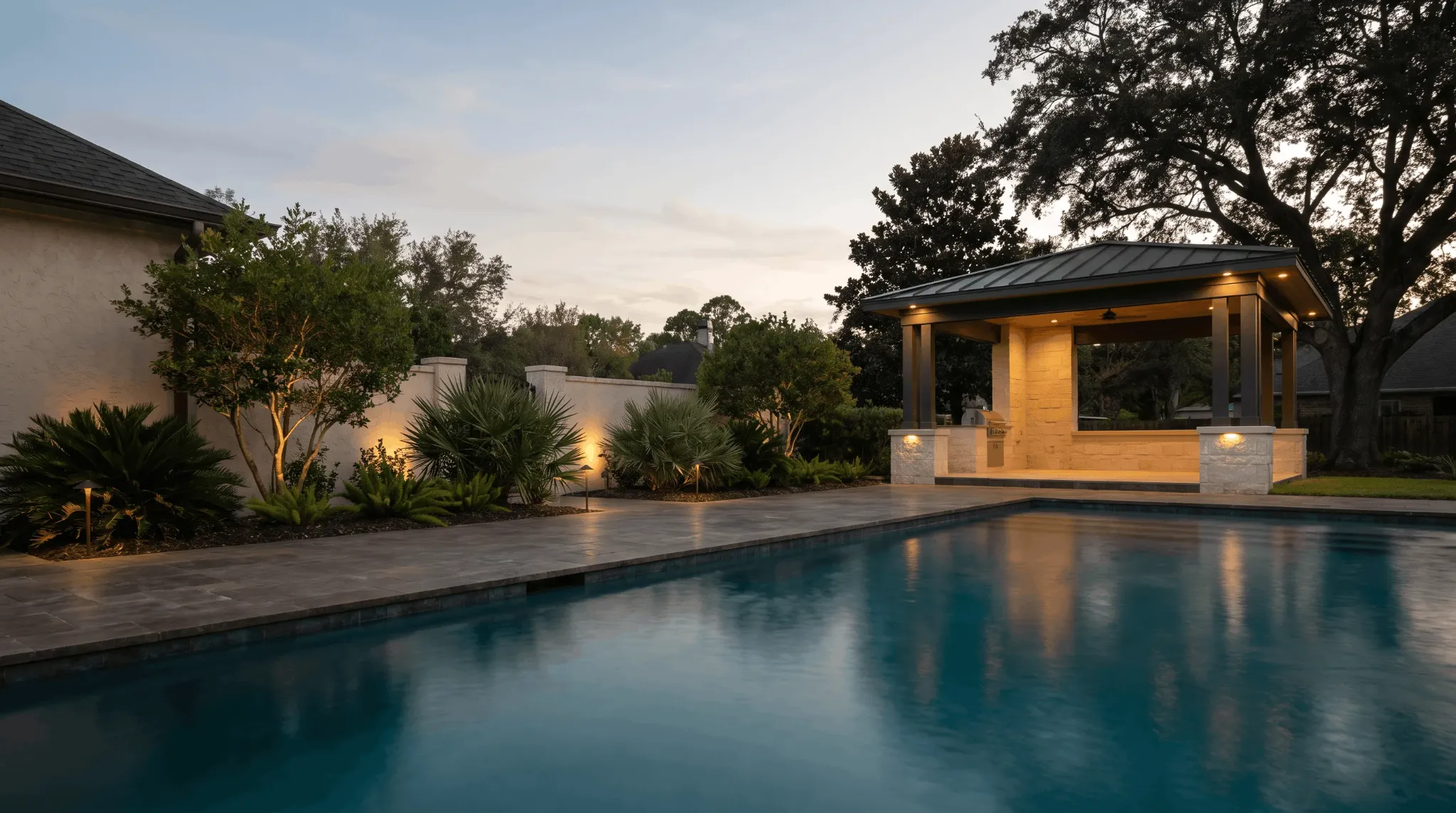
Start an outdoor lighting plan by deciding what people need to see—and which parts of the landscape do not need added light. A fixture for every plant or a bright outline around every patio can distract from the experience you wanted to create.
This is a lighting-priority exercise, not a fixture shopping list or an electrical design. The aim is to give a qualified lighting professional a clear brief before product counts and wiring routes dominate the conversation.
Begin with tasks, destinations and views
Mark the activities your household performs outside after dark. Separate food preparation, dining, moving between destinations and looking out from the house. Ask what information a person needs at each location rather than choosing one brightness for the entire yard.
Then identify the important view. Perhaps one tree or a garden wall should provide a calm background to conversation. That does not mean every object behind it needs equal emphasis.
Use a four-part hierarchy
On a copy of the current layout, give each proposed lighting purpose one of four roles:
- Work: Places where people perform specific tasks that require suitable lighting.
- Movement: Routes, entrances and transitions needing project-specific visibility and safety review.
- Focus: Selected features that support the intended nighttime composition.
- Quiet background: Areas where additional decorative illumination is not necessary to the brief.
The quiet-background category does not authorize an unsafe unlit path or override required illumination. It asks whether optional light has a purpose once practical needs have been addressed.
Apply the responsible-lighting principles
DarkSky and the Illuminating Engineering Society's five principles call for light that serves a purpose, reaches the intended area, uses no more output than needed, operates only when needed and favors warmer coloration where possible. Use them to question the proposal, not to claim that an untested concept is certified or compliant.
Ask the professional which adjustments to shielding, aiming, output and controls support that direction. The right arrangement depends on the actual fixtures, landscape, users and applicable requirements.
Check the view from a chair and a window
Review a proposed fixture from the places where people will actually look toward it. A light hidden in one perspective may be conspicuous from another seat. A decorative effect facing the yard can also affect a bedroom window or a neighboring property.
Ask for consistent viewpoints when comparing options. Do not judge glare or actual visibility from a single polished rendering. The image communicates intent; the selected installation requires its own assessment.
Try a reduce-before-add review
Once the professional has addressed practical lighting needs, look at the optional decorative layer. Ask what happens if one accent is removed, reduced or turned off at a different time. Does the main feature become clearer? Does the background feel calmer? Is a necessary activity still properly supported?
Changing one element at a time makes the choice easier to understand. Adding more fixtures to connect unrelated effects may make the design busier rather than more coherent.
Give each proposed light a reason and an off condition
Keep a short record with location, task or visual purpose, intended hours, control method and unresolved question. A light proposed solely because a product package includes another fixture deserves the same review as any other addition.
Ask how normal operation differs from an occasional gathering. Identify which controls the homeowner will use and which settings the professional should establish. Treat product compatibility and electrical installation as technical responsibilities, not assumptions hidden in the concept.
Compare a fictional garden without changing its layout
Imagine a patio overlooking a tree and a planted boundary. The first lighting concept gives similar emphasis to the tree, every shrub and the fence. The second addresses the required activities and routes, emphasizes the chosen tree and uses a quieter decorative background.
Review both from the same dining seat and indoor window. The second is not automatically correct; the homeowner and lighting professional still need to evaluate the intended use. The comparison simply makes hierarchy visible rather than equating more light with a better outcome.
Keep the professional handoff separate from the visual decision
After the household agrees on the lighting priorities, request the actual fixture schedule, installation scope and control demonstration from the relevant providers. Changes in planting or structures may affect the earlier proposal and deserve another review.
Lighting near pools, wet areas and electrical equipment requires qualified design and installation under the applicable requirements. A low-voltage description or attractive illustration does not remove those responsibilities.
Request a free initial LANDOVA consultation to describe your nighttime goals. Detailed design and technical work follow the approved paid scope.
