
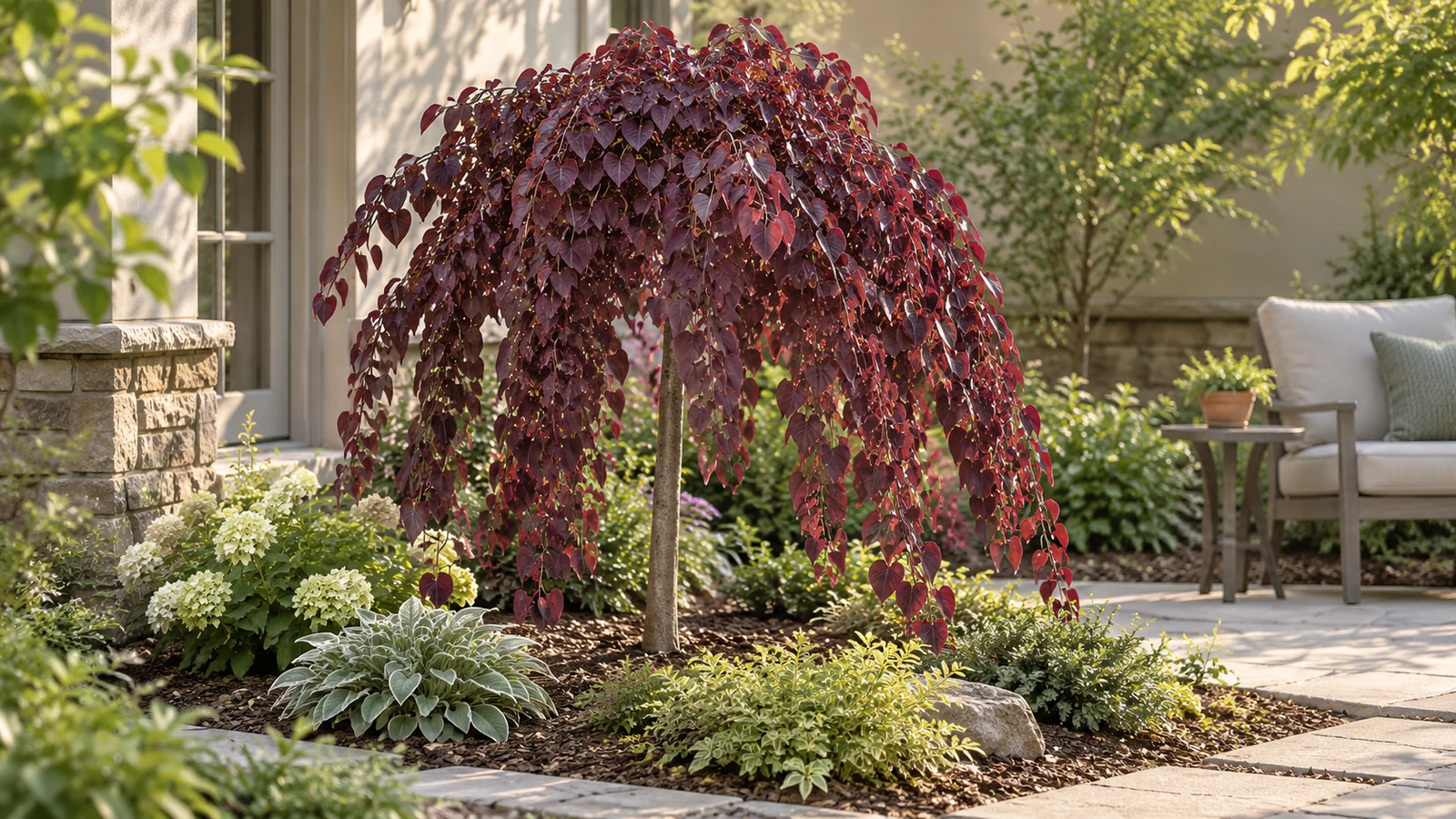
A plant library is most useful when it helps you question an attractive photograph. Before adding a favorite to the design, check exactly which plant the profile describes, how much space it may need and which conditions remain unverified for your property.
Use the library to build a reasoned shortlist, not a shopping cart driven by images. A saved name or appealing rendering is a candidate for review—not a final planting specification.
Begin with one location and one purpose
Write a short brief for a particular area before browsing: where the bed is, what it should do, the space available and the observations you already have. Note which view should stay open and who will care for the planting.
For example, a household might want seasonal interest beside a dining area without losing the view across the lawn. That brief gives plant width, form and seasonal appearance a clear role in the decision. An unranked list of every attractive flower does not.
Read identity before the other fields
Check the botanical name and any cultivar or named selection. Confirm that the photograph, description and dimensions refer to the same plant. Similar common names do not establish that two selections have the same growth habit or site needs.
Keep the source and review date with facts that matter to your decision. When a library entry is incomplete, use a credible regional reference or request professional clarification rather than filling the gap with an assumption.
Treat missing information as an unanswered question
An empty salt-tolerance field does not mean a plant tolerates coastal exposure. A missing mature width does not mean it remains compact. A general description such as easy care is not a complete account of the work your household will face.
Use three labels in your notes: supported by a named source, needs local interpretation, or not yet verified. This keeps a promising candidate in the conversation without pretending the profile answers everything.
Read one real profile across several decisions
UF/IFAS describes American beautyberry, Callicarpa americana, as reaching 3–8 feet tall and 4–8 feet wide, with deciduous foliage. The same reference states that it is not salt tolerant.
Those details answer different questions. Width matters when reviewing a narrow planting bed; leaf loss matters to someone seeking persistent screening; the salt warning matters to an exposed coastal location. None of those facts alone tells you to plant or reject it everywhere.
This is a profile-reading exercise, not a recommendation or spacing prescription. Use the actual site and intended role to decide which facts need further horticultural review.
Connect the profile to the drawing
Ask the designer to compare the candidate's supported mature dimensions with the available bed, nearby paths, furniture and existing plants. A small nursery specimen should not be the only size shown when a decision depends on long-term fit.
Review the important human viewpoints as well as the overhead plan. Ask what the plant may hide from the dining seat or an indoor window. A broad dimension range remains planning information; it is not a promise that every individual will stop at the same outline.
Compare a shortlist with reasons
Keep a few serious candidates for each role and write one sentence explaining each. A useful note might say: we like this form for the garden entrance, but need to confirm its mature spread and suitability for the observed light.
Use a compact comparison with these fields:
- Exact identity: Which plant and selection does the source describe?
- Role: What job does it have in this particular bed?
- Fit: Which supported attributes match the space and conditions?
- Open question: What could change the decision?
- Next reviewer: Who will clarify that question before purchase?
Do not score an unanswered attribute as a match. A shortlist with two well-documented candidates can be more useful than twenty favorites with no explanation.
Use rejection notes to avoid repeating the search
When a candidate does not suit the intended role, record the reason rather than deleting the context. It may be appropriate elsewhere, or a similar image may appear again under a different name. Knowing why it was set aside prevents the same discussion from restarting.
Keep preference separate from suitability. Disliking a flower color is different from discovering that the candidate's mature form conflicts with the available space. The next option needs to address the actual reason for reconsideration.
Review the delivered selection separately
A strong profile does not verify what a nursery will supply, whether the exact cultivar is available or whether an offered substitution preserves the design. Have substitutions compared against the attributes that mattered—not only the flower color or pot size.
Retain the approved plant identity and the supporting notes with the project record. That makes the library useful beyond the first browsing session and gives the design and installation teams a common reference.
Request a free initial LANDOVA consultation to connect your plant interests with the overall backyard brief. Detailed site capture and planting design follow the applicable approved paid scope.
