Bring a spring ribbon of color to a well-drained edge.
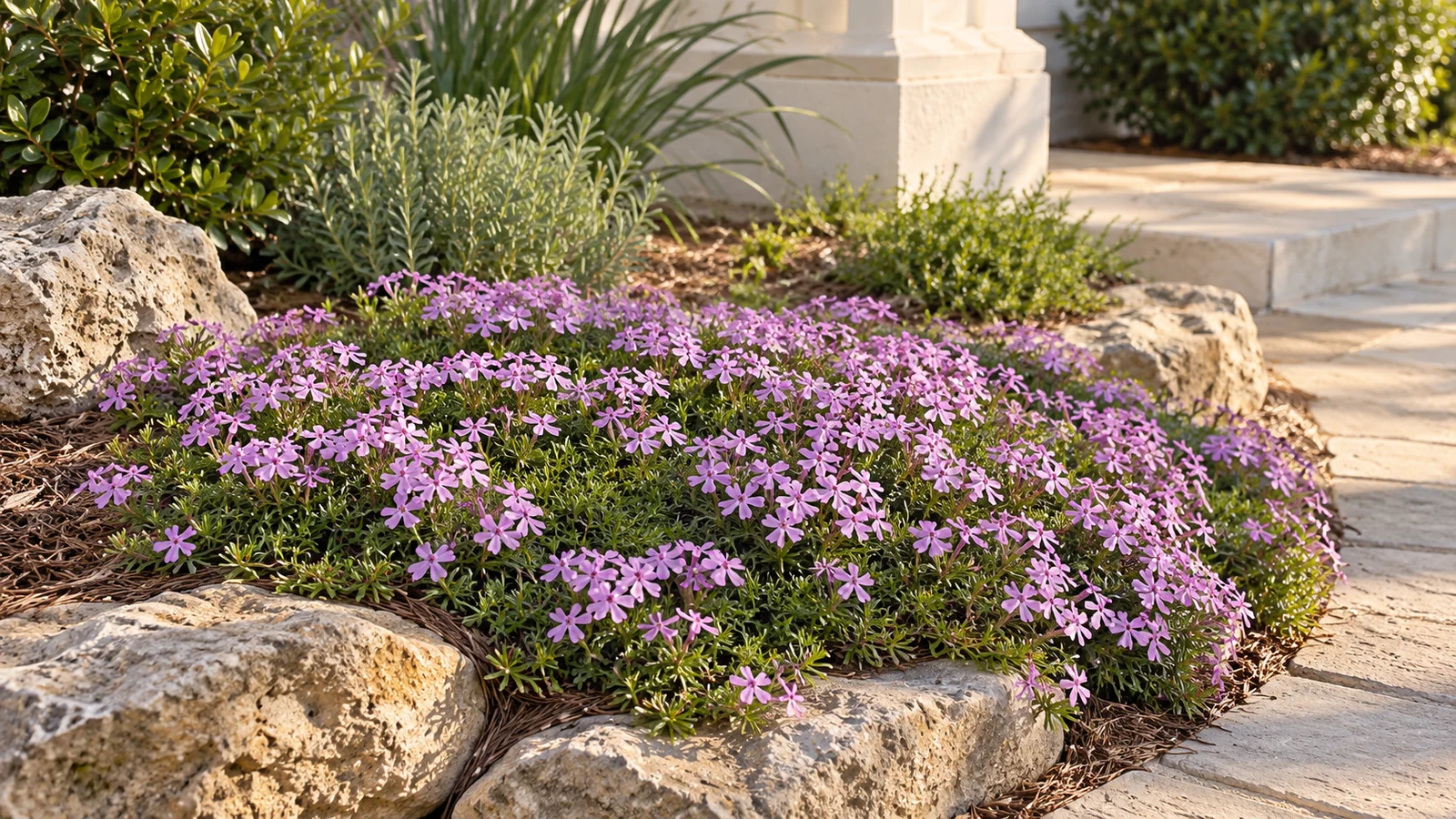
Creeping Phlox makes a low mat of fine leaves and a concentrated display of flowers in spring. It can soften the top of a low wall or give a sunny garden edge a seasonal color moment. Flower color depends on the selection; the pink-lavender illustration represents the general effect rather than a promised named cultivar.
Before you choose: This is a site-specific choice for the Gulf Coast. Heat, humidity and wet soil can be difficult, so prioritize drainage and avoid crowded, constantly damp beds. The spring flower display is seasonal, not year-round, and older mats may thin in the center.
Illustrative planting concept
Size and space
Typical height: 4–6 in. Mature spread: 2–3 ft wide.
NC State gives a height of 4–6 in and a spread of 2–3 ft. The diagram uses a three-foot mature footprint with the same scale in both views. It shows space for one spreading plant, not a recipe for how many plants to order or how quickly they will meet.
Installed example: 2 in high × 7 in wide. This is an illustrative size, not a pot-size or growth-timeline promise.
Sun; some afternoon shade can help in hot, humid summers · Well-drained soil; avoid a wet, crowded crown · A spring flower display over fine, semi-evergreen foliage
Care: Light cleanup after flowering; check thinning centers and summer stress
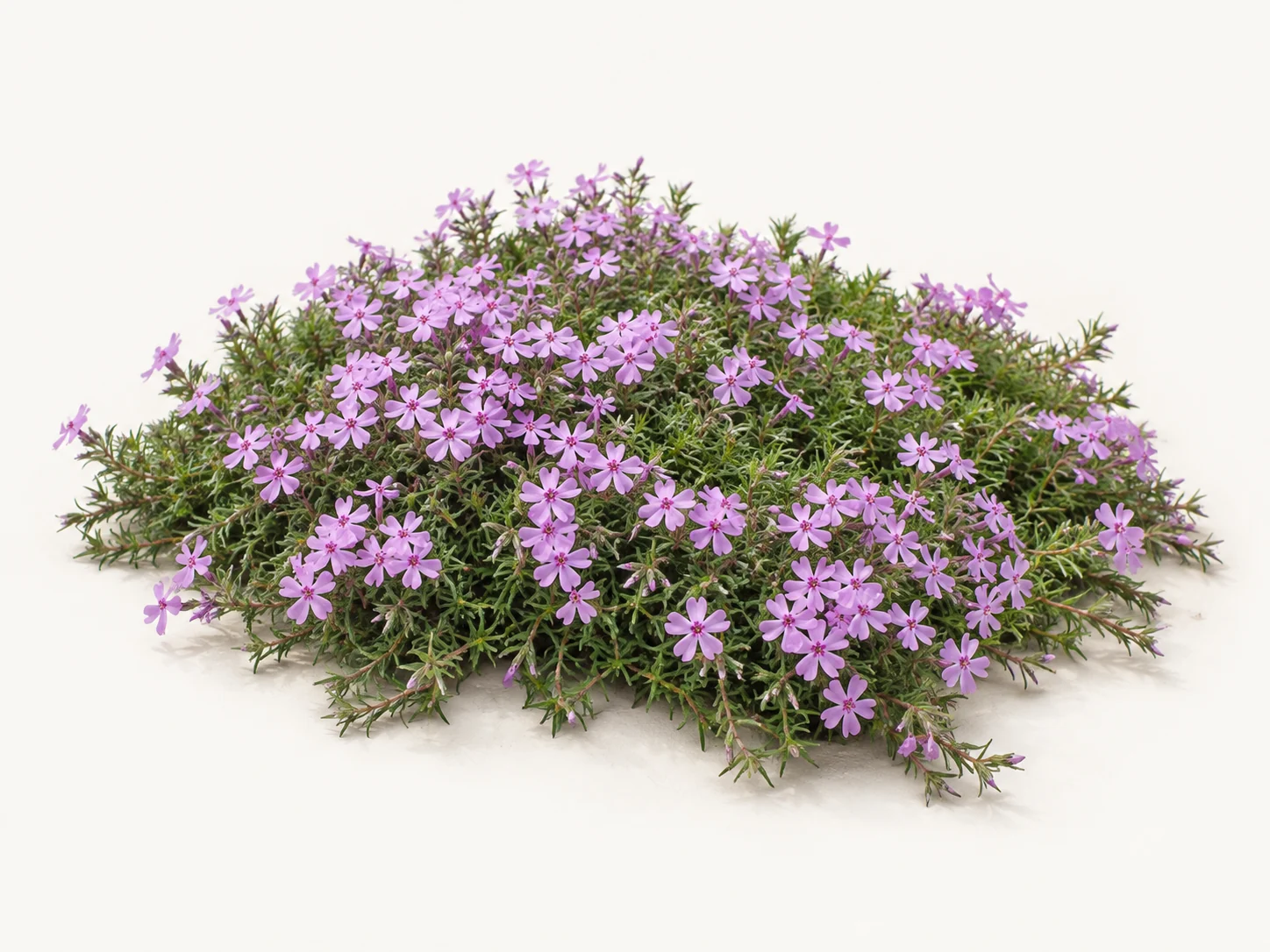
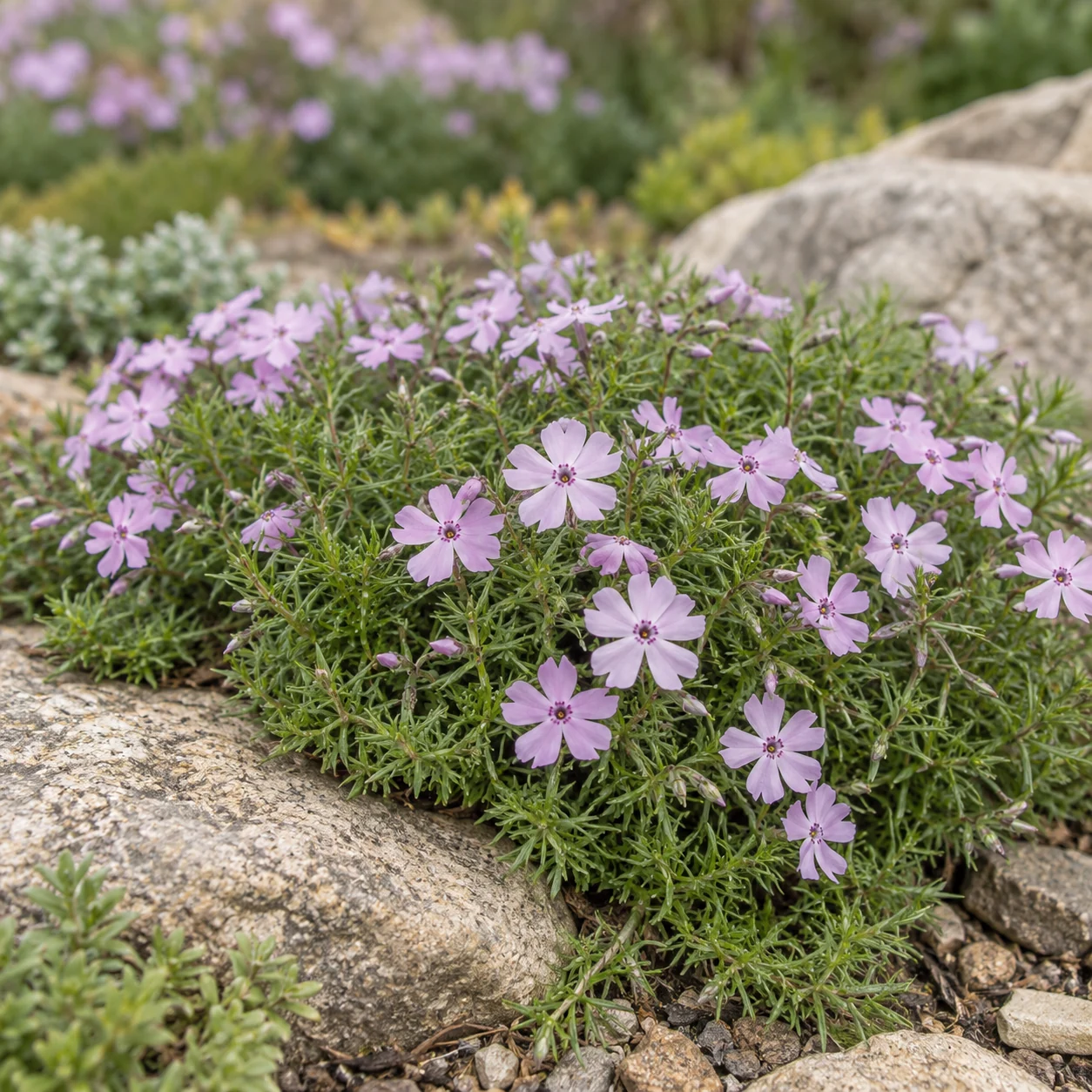
Know the whole plant
Illustrative overall form of Creeping Phlox; the nursery plant, season and growing conditions will affect its appearance.Illustrative foliage and seasonal detail of Creeping Phlox. Confirm the botanical name on the nursery label.
Where it works around Pensacola
Explore Creeping Phlox for a Pensacola bed with excellent drainage and useful sunlight. Some afternoon shade can help during hot, humid summers, provided the site stays open and the foliage can dry. Start with a well-chosen area and assess its performance before relying on it for a large continuous ground layer.
A spring-flowering bed edge
A soft planting above a low wall
A low layer beside a sunny path
A seasonal accent near garden stone
A small trial in a freely draining border
Does water leave the crown?
Keep the plant out of low pockets and away from irrigation that repeatedly wets a crowded mat. Correct drainage problems before planting.
How harsh is the summer position?
Observe reflected heat from paving and walls. A spot with afternoon relief may be useful, while deep shade is unlikely to produce the desired dense flowering mat.
Will the seasonal look suit the design?
The flowers are a spring event. Use the fine foliage as the rest-of-year texture and rely on other plants for later color.
Can the mat be maintained?
Allow access for light cleanup after bloom and inspection of older centers. Thinning growth may need attention rather than being hidden beneath neighboring plants.
Before it goes on the plan
Is it the tall garden phlox?
No. This guide is Phlox subulata, also called moss phlox. Tall garden phlox and woodland phlox have different forms and growing needs.
Is it native to Florida?
This species is native to parts of the eastern and central United States. It is not labeled as a Florida native in this collection.
Can it take regular walking?
Treat it as a planting-bed groundcover. Keep the walking surface separate so the low mat is enjoyed from beside the path rather than repeatedly stepped on.
Pairing ideas
Pink Muhly Grass: Pink Muhly can provide height and fall interest in a sunny, draining bed. Leave the phlox open to light and away from the grass crown.
Peach Drift Rose: Peach Drift Rose offers a different flowering season and shape. Place it in its own sunny, draining area and adjust irrigation so neither crown stays wet.
{"key":"phlox","name":"Creeping Phlox","botanical":"Phlox subulata","slug":"creeping-phlox","id":"PLT-PHLO-SUBU","type":"groundcovers","h":[0.3333333333333333,0.5],"w":[2,3],"install":[0.2,0.6],"native":false,"groundGroup":"medium","light":"Sun; some afternoon shade can help in hot, humid summers","lightTags":["sun","part"],"water":"Well-drained soil; avoid a wet, crowded crown","season":"A spring flower display over fine, semi-evergreen foliage","care":"Light cleanup after flowering; check thinning centers and summer stress","benefit":"Bring a spring ribbon of color to a well-drained edge.","intro":"Creeping Phlox makes a low mat of fine leaves and a concentrated display of flowers in spring. It can soften the top of a low wall or give a sunny garden edge a seasonal color moment. Flower color depends on the selection; the pink-lavender illustration represents the general effect rather than a promised named cultivar.","caution":"This is a site-specific choice for the Gulf Coast. Heat, humidity and wet soil can be difficult, so prioritize drainage and avoid crowded, constantly damp beds. The spring flower display is seasonal, not year-round, and older mats may thin in the center.","sizeNote":"NC State gives a height of 4–6 in and a spread of 2–3 ft. The diagram uses a three-foot mature footprint with the same scale in both views. It shows space for one spreading plant, not a recipe for how many plants to order or how quickly they will meet.","site":"Explore Creeping Phlox for a Pensacola bed with excellent drainage and useful sunlight. Some afternoon shade can help during hot, humid summers, provided the site stays open and the foliage can dry. Start with a well-chosen area and assess its performance before relying on it for a large continuous ground layer.","uses":["A spring-flowering bed edge","A soft planting above a low wall","A low layer beside a sunny path","A seasonal accent near garden stone","A small trial in a freely draining border"],"checks":[["Does water leave the crown?","Keep the plant out of low pockets and away from irrigation that repeatedly wets a crowded mat. Correct drainage problems before planting."],["How harsh is the summer position?","Observe reflected heat from paving and walls. A spot with afternoon relief may be useful, while deep shade is unlikely to produce the desired dense flowering mat."],["Will the seasonal look suit the design?","The flowers are a spring event. Use the fine foliage as the rest-of-year texture and rely on other plants for later color."],["Can the mat be maintained?","Allow access for light cleanup after bloom and inspection of older centers. Thinning growth may need attention rather than being hidden beneath neighboring plants."]],"faq":[["Is it the tall garden phlox?","No. This guide is Phlox subulata, also called moss phlox. Tall garden phlox and woodland phlox have different forms and growing needs."],["Is it native to Florida?","This species is native to parts of the eastern and central United States. It is not labeled as a Florida native in this collection."],["Can it take regular walking?","Treat it as a planting-bed groundcover. Keep the walking surface separate so the low mat is enjoyed from beside the path rather than repeatedly stepped on."]],"sources":[["NC State Extension: Creeping Phlox","https://plants.ces.ncsu.edu/plants/phlox-subulata/"]],"unit":"in","heightLabel":"Typical height","spreadLabel":"Mature spread","color":"#70815a","guideKind":"Groundcover","eyebrow":"THE LOW LAYER / FORM + SEASON","aliases":["Creeping Phlox","Phlox subulata","Moss Phlox"],"goals":["color"],"wholeCaption":"Illustrative overall form of Creeping Phlox; the nursery plant, season and growing conditions will affect its appearance.","detailCaption":"Illustrative foliage and seasonal detail of Creeping Phlox. Confirm the botanical name on the nursery label.","spreadText":"2–3 ft wide","heightText":"4–6 in","sizeSummary":"4–6 in high · 2–3 ft wide","groundForm":"mat","images":{"context":{"id":"6aa052e4ef939579d484423d","url":"https://cdn.prod.website-files.com/6a975baac0f352647862d847/6aa052e4ef939579d484423d_landova-groundcover-phlox-context.webp","alt":"Illustrative planting concept with Creeping Phlox","width":1600,"height":900},"whole":{"id":"6aa052e418ccb01c77741d0e","url":"https://cdn.prod.website-files.com/6a975baac0f352647862d847/6aa052e418ccb01c77741d0e_landova-groundcover-phlox-whole.webp","alt":"Illustrative whole-plant form of Creeping Phlox","width":1448,"height":1086,"fit":"contain"},"detail":{"id":"6aa052e4b4f6da657322425c","url":"https://cdn.prod.website-files.com/6a975baac0f352647862d847/6aa052e4b4f6da657322425c_landova-groundcover-phlox-detail.webp","alt":"Illustrative foliage and seasonal detail of Creeping Phlox","width":1254,"height":1254}},"companions":[{"slug":"pink-muhly-grass","name":"Pink Muhly Grass","title":"Add a later-season upright layer","reason":"Pink Muhly can provide height and fall interest in a sunny, draining bed. Leave the phlox open to light and away from the grass crown.","image":{"id":"6aa00228430659e428d61061","url":"https://cdn.prod.website-files.com/6a975baac0f352647862d847/6aa00228430659e428d61061_landova-grass-muhly-context.webp","alt":"Illustrative planting concept with Pink Muhly Grass","width":1600,"height":900}},{"slug":"peach-drift-rose","name":"Peach Drift Rose","title":"Explore another low flowering layer","reason":"Peach Drift Rose offers a different flowering season and shape. Place it in its own sunny, draining area and adjust irrigation so neither crown stays wet.","image":{"id":"6a9f34882b8a6b9549e7d0cb","url":"https://cdn.prod.website-files.com/6a975baac0f352647862d847/6a9f34882b8a6b9549e7d0cb_landova-shrub-peach-context-r02.webp","alt":"Illustrative planting concept with Peach Drift Rose"}}]}
LANDOVA / PLANTING DECISIONS
Choose plants with the whole space in mind.
Explore a planting goal, then compare the growing needs and mature size of individual plants.
LANDOVA is in beta
Join the launch waitlist.
We are not accepting paying clients yet. We expect to launch around January 2027 and may open sooner. Explore our free tools now, and sign up for launch updates and educational planning emails.
Thank you. Your waitlist signup has been received. We will email you with launch updates. No purchase or project booking has been made.
We could not save your signup. Please try again or email info@landovadesign.com.