Let a coastal evergreen keep its natural character.
Southern Redcedar can give a broad garden boundary a softer evergreen outline. Fine foliage and slightly drooping branch tips create a different texture from a wall of broad leaves. Use its natural shape where a screen can have depth and character, with enough space to remain a tree.
Before you choose: Specify the Southern Redcedar form, also called Juniperus silicicola. This is not a narrow hedge cultivar. Salt-spray tolerance is different from tolerance of brackish flooding, and repeated overwatering can undermine a suitable planting. Review cedar-apple rust if apples are grown nearby.
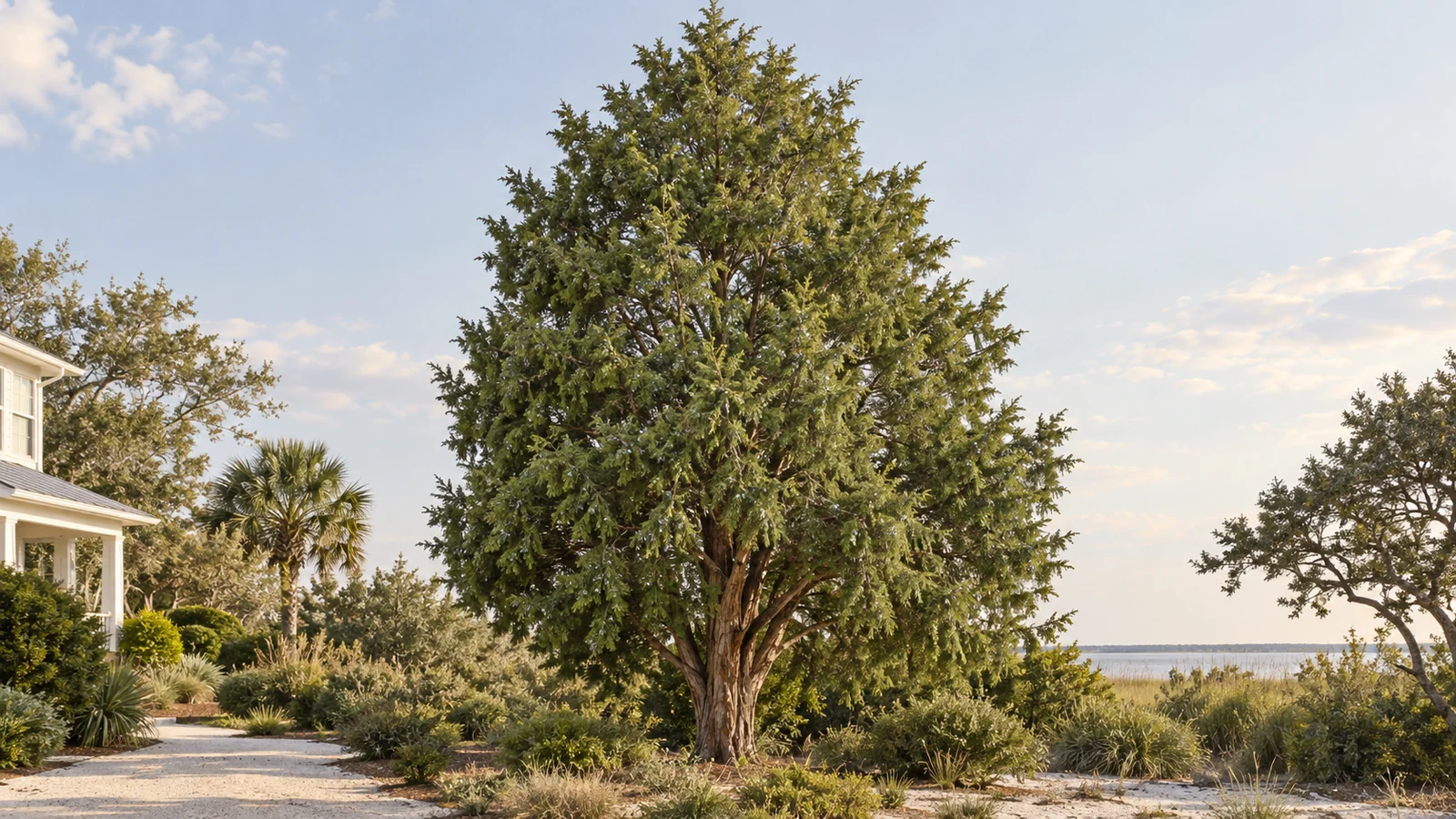
Illustrative planting concept
Size and space
Mature height: 30–40 ft. Mature spread: 20–25 ft.
NC State Extension gives 30–40 ft in height and up to 25 ft in width; the UF/IFAS Baker County guide also describes a 40 ft tree with a 25 ft spread. The diagram uses 20–25 ft of planning spread. Older specimens can become irregular and broader in character than a young pyramidal tree.
Installed example: 6 ft high × 3 ft wide. This is an illustrative size, not a pot-size or growth-timeline promise.
Full sun; tolerates part shade · Well-drained soil; establish carefully and avoid excessive irrigation · Evergreen scale-like foliage · blue berry-like cones on pollinated female trees
Care: Keep irrigation compatible with drainage and allow the natural crown to broaden
Know the whole plant
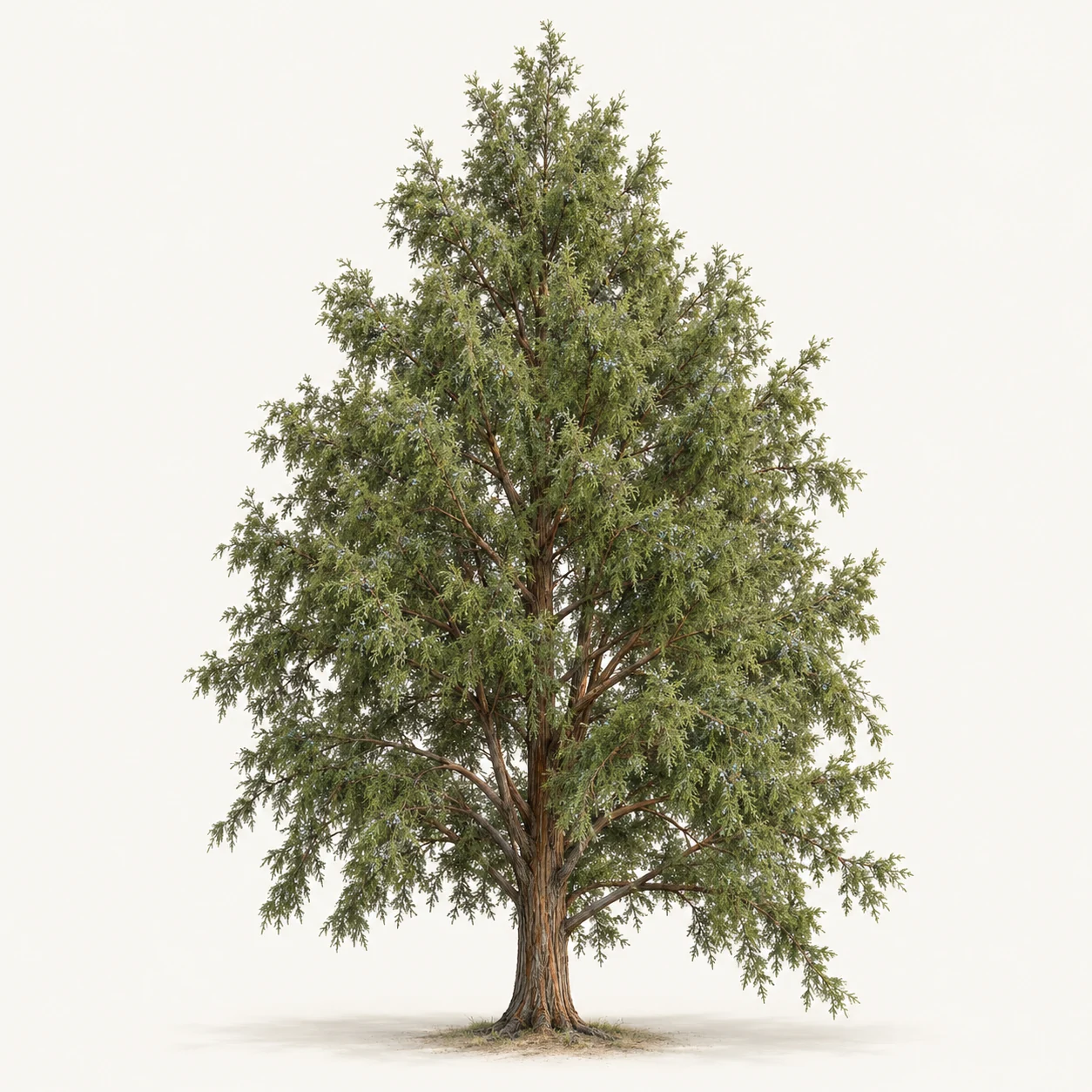
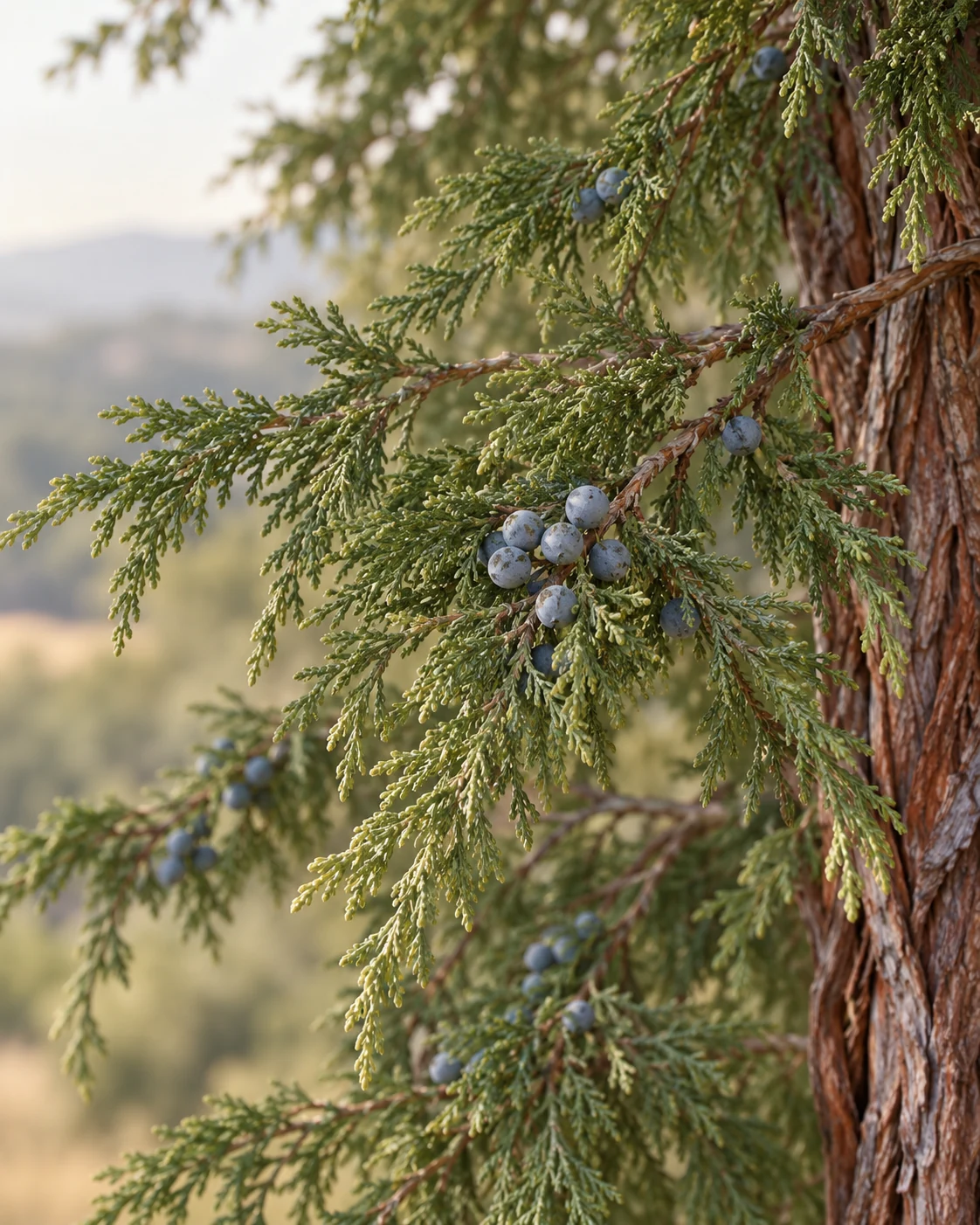
Illustrative Southern Redcedar with a natural evergreen crown; older trees can become more irregular or flat-topped.Illustrative fine scale-like foliage and small blue cones on a female Southern Redcedar.
Where it works around Pensacola
Southern Redcedar is a useful option to evaluate for a sunny Pensacola garden boundary with well-drained soil. Give a proposed screen enough depth for its mature width and access. Exposure, flooding history and irrigation should be checked separately, even when the planting is close to the coast.
A deep evergreen boundary planting
A native coastal garden backdrop
A natural windscreen with room to grow
A specimen with fine foliage texture
A mixed screen for wildlife cover
Does the screen have enough depth?
Lay out a full-width tree instead of a thin green line. Leave space on both sides for adjacent plants, maintenance and the way the crown broadens over time.
How often will this bed be watered?
Check whether the tree would share a heavily irrigated lawn zone. Match watering to the root area and drainage so the surrounding system supports the choice.
What kind of coastal exposure occurs?
Distinguish salty air from flooding by salty water. Review the actual property history before calling any evergreen a dependable choice for that spot.
Are nearby fruit trees part of the plan?
Mention apples and related rust concerns during selection. Think about the whole property planting rather than choosing the screen in isolation.
Before it goes on the plan
Is Southern Redcedar the same as Eastern Redcedar?
It is often treated as a variety of Juniperus virginiana and is also listed as Juniperus silicicola. The guide focuses on the southern coastal form; confirm nursery identity and avoid substituting a named narrow cultivar without checking its range.
Will every tree have blue cones?
No. The small berry-like structures are cones on female trees following pollination. They are a seasonal detail, not a feature every individual will display.
Can it be planted in a constantly wet lawn?
Excessive irrigation and poor drainage can cause problems. Start with a compatible root environment; being a coastal native does not make it suited to every wet location.
Pairing ideas
Yaupon Holly: Yaupon offers a different leaf and branching character for a compatible separate position. Plan each mature crown instead of crowding a mixed screen.
Pink Muhly Grass: Pink Muhly can provide seasonal texture where it will remain sunny and well drained. Place it outside the redcedar’s eventual shade and branch spread.
{"key":"southernredcedar","id":"PLT-JUNI-SILICICOLA","slug":"southern-redcedar","name":"Southern Redcedar","botanical":"Juniperus virginiana var. silicicola","h":[30,40],"w":[20,25],"install":[6,3],"treeForm":"pyramidal","color":"#697f65","native":true,"type":"trees","categoryLabel":"Trees","reviewDate":"2026-09-08","guideKind":"Native coastal evergreen guide","eyebrow":"FINE EVERGREEN TEXTURE + A BROAD NATURAL SCREEN","benefit":"Let a coastal evergreen keep its natural character.","intro":"Southern Redcedar can give a broad garden boundary a softer evergreen outline. Fine foliage and slightly drooping branch tips create a different texture from a wall of broad leaves. Use its natural shape where a screen can have depth and character, with enough space to remain a tree.","light":"Full sun; tolerates part shade","lightTags":["sun","part"],"water":"Well-drained soil; establish carefully and avoid excessive irrigation","season":"Evergreen scale-like foliage · blue berry-like cones on pollinated female trees","care":"Keep irrigation compatible with drainage and allow the natural crown to broaden","caution":"Specify the Southern Redcedar form, also called Juniperus silicicola. This is not a narrow hedge cultivar. Salt-spray tolerance is different from tolerance of brackish flooding, and repeated overwatering can undermine a suitable planting. Review cedar-apple rust if apples are grown nearby.","site":"Southern Redcedar is a useful option to evaluate for a sunny Pensacola garden boundary with well-drained soil. Give a proposed screen enough depth for its mature width and access. Exposure, flooding history and irrigation should be checked separately, even when the planting is close to the coast.","sizeNote":"NC State Extension gives 30–40 ft in height and up to 25 ft in width; the UF/IFAS Baker County guide also describes a 40 ft tree with a 25 ft spread. The diagram uses 20–25 ft of planning spread. Older specimens can become irregular and broader in character than a young pyramidal tree.","uses":["A deep evergreen boundary planting","A native coastal garden backdrop","A natural windscreen with room to grow","A specimen with fine foliage texture","A mixed screen for wildlife cover"],"checks":[["Does the screen have enough depth?","Lay out a full-width tree instead of a thin green line. Leave space on both sides for adjacent plants, maintenance and the way the crown broadens over time."],["How often will this bed be watered?","Check whether the tree would share a heavily irrigated lawn zone. Match watering to the root area and drainage so the surrounding system supports the choice."],["What kind of coastal exposure occurs?","Distinguish salty air from flooding by salty water. Review the actual property history before calling any evergreen a dependable choice for that spot."],["Are nearby fruit trees part of the plan?","Mention apples and related rust concerns during selection. Think about the whole property planting rather than choosing the screen in isolation."]],"faq":[["Is Southern Redcedar the same as Eastern Redcedar?","It is often treated as a variety of Juniperus virginiana and is also listed as Juniperus silicicola. The guide focuses on the southern coastal form; confirm nursery identity and avoid substituting a named narrow cultivar without checking its range."],["Will every tree have blue cones?","No. The small berry-like structures are cones on female trees following pollination. They are a seasonal detail, not a feature every individual will display."],["Can it be planted in a constantly wet lawn?","Excessive irrigation and poor drainage can cause problems. Start with a compatible root environment; being a coastal native does not make it suited to every wet location."]],"sources":[["NC State Extension · Southern Redcedar identity, size and foliage","https://plants.ces.ncsu.edu/plants/juniperus-virginiana-var-silicicola/"],["UF/IFAS Baker County · Southern Redcedar coastal use and watering","https://sfyl.ifas.ufl.edu/media/sfylifasufledu/baker/docs/pdf/horticulture/demonstration-gardens/Southern-Redcedar.pdf"],["Florida Native Plant Society · redcedar flooding and site distinctions","https://www.fnps.org/plant/juniperus-virginiana"]],"wholeCaption":"Illustrative Southern Redcedar with a natural evergreen crown; older trees can become more irregular or flat-topped.","detailCaption":"Illustrative fine scale-like foliage and small blue cones on a female Southern Redcedar.","aliases":["southern redcedar","southern red cedar","coastal redcedar","juniperus silicicola","evergreen","screen","privacy"],"goals":["privacy"],"images":{"context":{"id":"6aa0255bf03d0a936d69ea5e","url":"https://cdn.prod.website-files.com/6a975baac0f352647862d847/6aa0255bf03d0a936d69ea5e_landova-tree-southernredcedar-context.webp","alt":"Illustrative planting concept with Southern Redcedar","width":1600,"height":900},"whole":{"id":"6aa0255b19e1f11215df6ee8","url":"https://cdn.prod.website-files.com/6a975baac0f352647862d847/6aa0255b19e1f11215df6ee8_landova-tree-southernredcedar-whole.webp","alt":"Illustrative whole-plant form of Southern Redcedar","width":1254,"height":1254,"fit":"contain"},"detail":{"id":"6aa0255c11322ec0db360b95","url":"https://cdn.prod.website-files.com/6a975baac0f352647862d847/6aa0255c11322ec0db360b95_landova-tree-southernredcedar-detail.webp","alt":"Illustrative foliage and seasonal detail of Southern Redcedar","width":1122,"height":1402}},"companions":[{"slug":"yaupon-holly","name":"Yaupon Holly","title":"Vary the evergreen leaf texture","reason":"Yaupon offers a different leaf and branching character for a compatible separate position. Plan each mature crown instead of crowding a mixed screen.","image":{"id":"6aa0171262f370de12c071ea","url":"https://cdn.prod.website-files.com/6a975baac0f352647862d847/6aa0171262f370de12c071ea_landova-tree-yaupon-context.webp","alt":"Illustrative planting concept with Yaupon Holly","width":1600,"height":900}},{"slug":"pink-muhly-grass","name":"Pink Muhly Grass","title":"Soften a sunny outer edge","reason":"Pink Muhly can provide seasonal texture where it will remain sunny and well drained. Place it outside the redcedar’s eventual shade and branch spread.","image":{"id":"6aa00228430659e428d61061","url":"https://cdn.prod.website-files.com/6a975baac0f352647862d847/6aa00228430659e428d61061_landova-grass-muhly-context.webp","alt":"Illustrative planting concept with Pink Muhly Grass","width":1600,"height":900}}]}
LANDOVA / PLANTING DECISIONS
Choose plants with the whole space in mind.
Explore a planting goal, then compare the growing needs and mature size of individual plants.
LANDOVA is in beta
Join the launch waitlist.
We are not accepting paying clients yet. We expect to launch around January 2027 and may open sooner. Explore our free tools now, and sign up for launch updates and educational planning emails.
Thank you. Your waitlist signup has been received. We will email you with launch updates. No purchase or project booking has been made.
We could not save your signup. Please try again or email info@landovadesign.com.