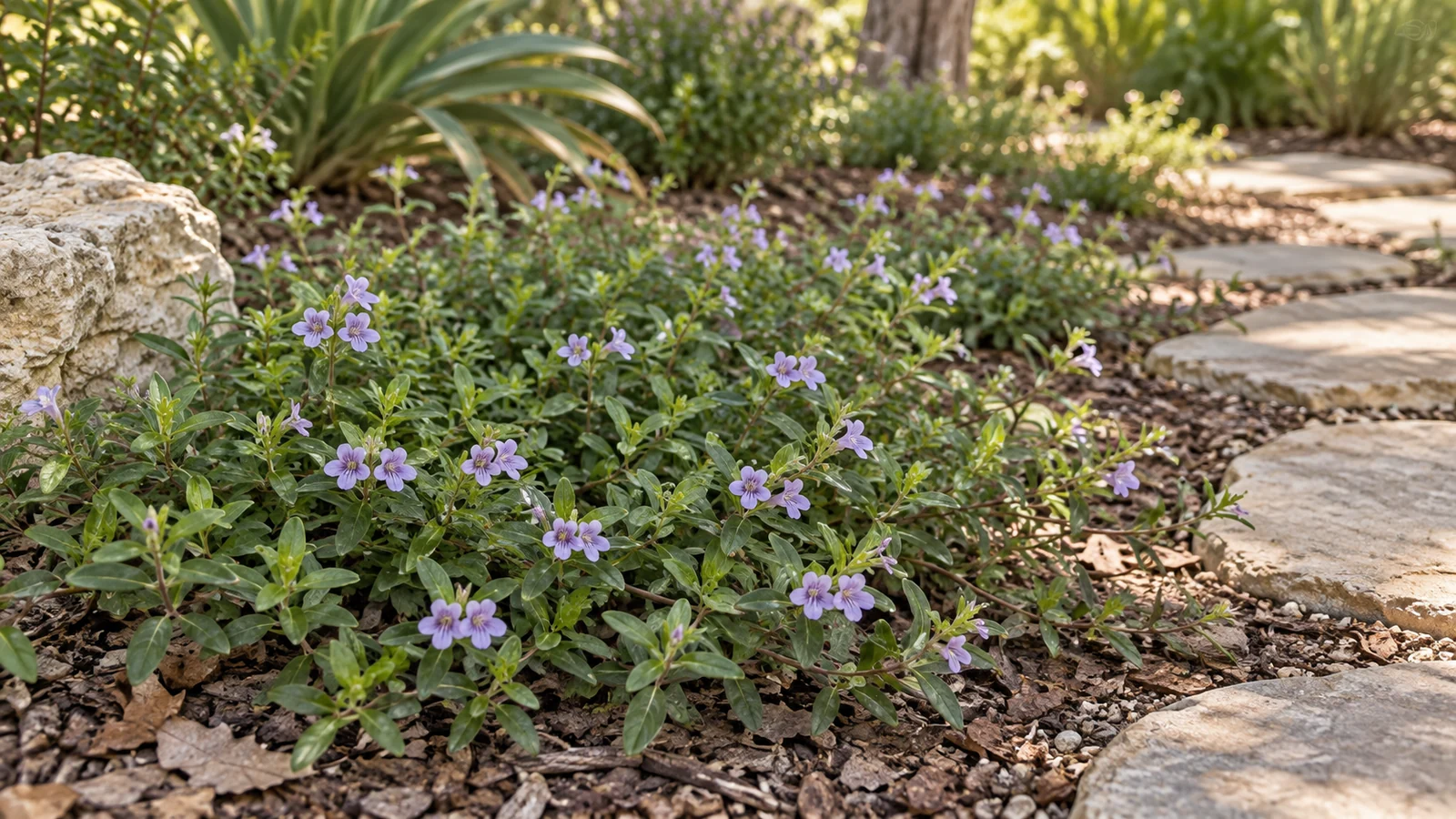
Add a low native layer with delicate lavender flowers.
Twinflower creates a low, loosely spreading planting with small oblong leaves and lavender flowers that appear in pairs. Its quiet texture works in an informal native bed where the flowers can be seen from a nearby path. It also serves as a host plant for the common buckeye butterfly, adding another reason to include a small patch.
Before you choose: This Florida native is winter dormant and may leave a more open bed during cool weather. It tolerates a range of moisture conditions, but extended extreme drought can make landscape performance unreliable. Use it as a planted ground layer with a separate route for regular walking.
Illustrative planting concept
Size and space
Typical height: 6–12 in. Spreading habit: Spreading colony; allow an accessible edge.
The Florida Native Plant Society gives a typical height of 6–12 in. Spreading growth can join into a colony, so the diagram shows a three-foot example patch rather than a fixed mature width. Use the height range to compare it with adjacent plants, then plan the actual colony boundary and nursery spacing with the grower.
Installed example: 3 in high × 6 in wide. This is an illustrative size, not a pot-size or growth-timeline promise.
Full sun to part shade · Moist to somewhat dry soil; water while establishing and through prolonged extreme drought · Small lavender flowers in the growing season; winter dormancy
Care: Allow a low colony; manage the edge and leave room for seasonal change
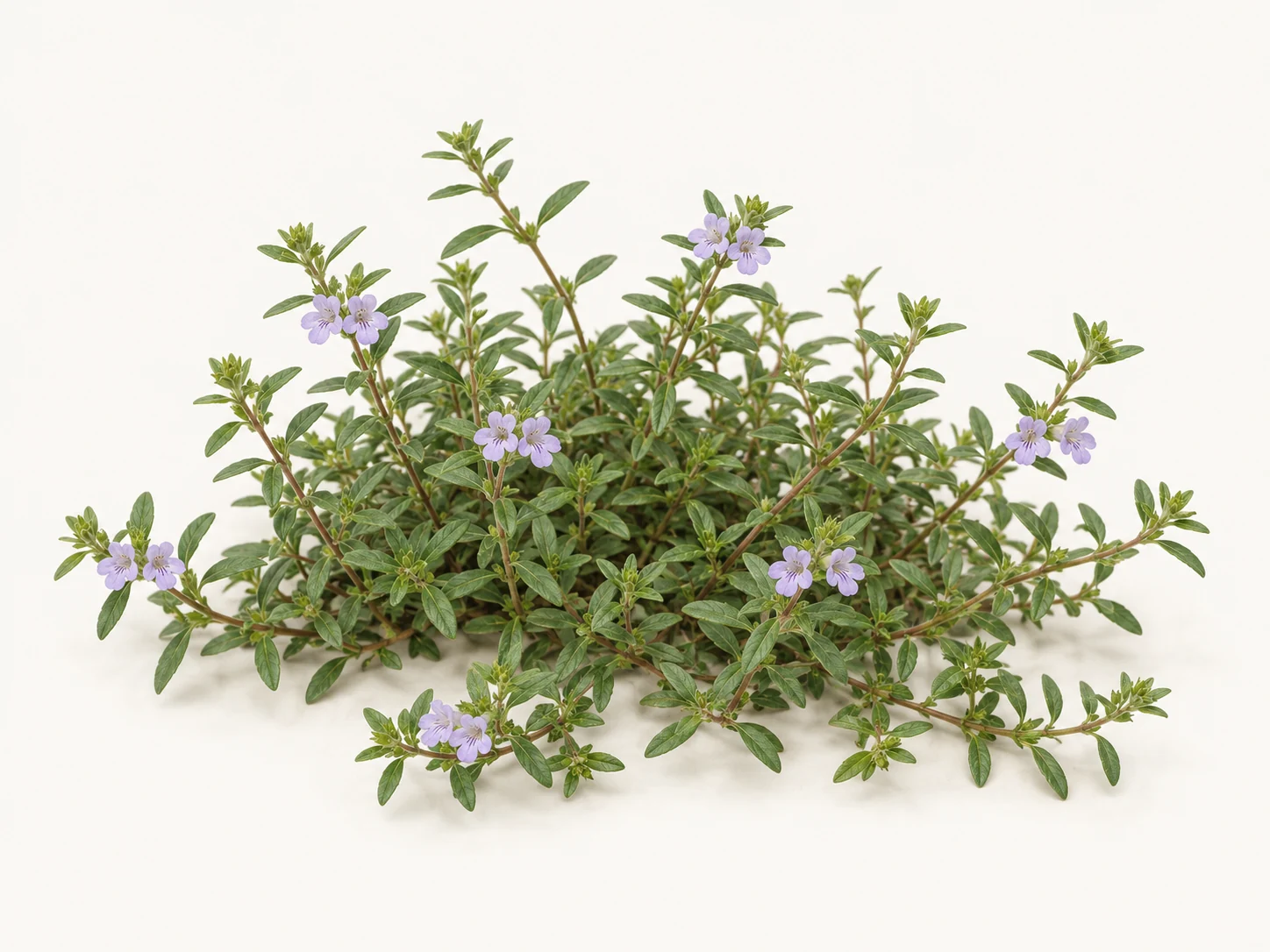
Know the whole plant
Illustrative overall form of Twinflower; appearance varies with season and the nursery plant.Illustrative foliage and seasonal detail of Twinflower. Confirm the botanical name on the nursery label.
Where it works around Pensacola
Explore Twinflower for a sunny or partly shaded Pensacola native garden. A position with some moisture and an accessible edge makes a manageable first planting. Check competition from tree roots and taller neighbors before assuming part shade alone makes a site suitable. Allow the garden’s appearance to change with dormancy, flowering and butterfly activity.
A low native flowering patch
A butterfly host-plant garden
An informal path-side bed
A partly shaded native foreground
A soft connecting layer between separate accents
Will moisture last through a dry spell?
Check the soil near the roots after hot weather. An established native can still need supplemental water during prolonged extreme drought, especially in a small new planting.
Where can the colony develop?
Set a reachable boundary and leave neighboring crowns clear. A three-foot drawing describes an example area, not the final spread of the planting.
Is year-round coverage required?
Winter dormancy is part of this plant’s local character. Use evergreen structure elsewhere if the street-facing view needs a consistently leafy outline.
Is this directly exposed to salt?
FNPS reports low salt-spray tolerance and no tolerance of saltwater flooding. A sheltered inland coastal garden is different from an exposed beachfront bed.
Before it goes on the plan
Is it the northern woodland twinflower?
No. This guide is for Dyschoriste oblongifolia. Linnaea borealis shares the common name but is a different plant with different growing requirements.
Will butterflies use it?
FNPS identifies it as a common buckeye host plant. Caterpillar feeding is compatible with that purpose; allow some leaf damage instead of expecting a flawless ornamental surface.
Can it make a formal lawn?
It is better considered an informal planted colony. Its open habit, small flowers and winter dormancy produce a different effect from turf, and everyday foot traffic belongs on a dedicated path.
Pairing ideas
Pink Muhly Grass: Pink Muhly can sit behind a Twinflower patch in a sunny, draining bed. Keep the colony clear of the grass crown and give both enough light.
Henry’s Garnet Sweetspire: Sweetspire can provide a taller layer where soil stays suitably moist. Reserve its full spread so Twinflower remains outside dense shade.
{"key":"twinflower","name":"Twinflower","botanical":"Dyschoriste oblongifolia","slug":"twinflower","id":"PLT-DYSC-OBLO","type":"groundcovers","h":[0.5,1],"w":[3,3],"install":[0.25,0.5],"native":true,"groundGroup":"small","light":"Full sun to part shade","lightTags":["sun","part"],"water":"Moist to somewhat dry soil; water while establishing and through prolonged extreme drought","season":"Small lavender flowers in the growing season; winter dormancy","care":"Allow a low colony; manage the edge and leave room for seasonal change","benefit":"Add a low native layer with delicate lavender flowers.","intro":"Twinflower creates a low, loosely spreading planting with small oblong leaves and lavender flowers that appear in pairs. Its quiet texture works in an informal native bed where the flowers can be seen from a nearby path. It also serves as a host plant for the common buckeye butterfly, adding another reason to include a small patch.","caution":"This Florida native is winter dormant and may leave a more open bed during cool weather. It tolerates a range of moisture conditions, but extended extreme drought can make landscape performance unreliable. Use it as a planted ground layer with a separate route for regular walking.","sizeNote":"The Florida Native Plant Society gives a typical height of 6–12 in. Spreading growth can join into a colony, so the diagram shows a three-foot example patch rather than a fixed mature width. Use the height range to compare it with adjacent plants, then plan the actual colony boundary and nursery spacing with the grower.","site":"Explore Twinflower for a sunny or partly shaded Pensacola native garden. A position with some moisture and an accessible edge makes a manageable first planting. Check competition from tree roots and taller neighbors before assuming part shade alone makes a site suitable. Allow the garden’s appearance to change with dormancy, flowering and butterfly activity.","uses":["A low native flowering patch","A butterfly host-plant garden","An informal path-side bed","A partly shaded native foreground","A soft connecting layer between separate accents"],"checks":[["Will moisture last through a dry spell?","Check the soil near the roots after hot weather. An established native can still need supplemental water during prolonged extreme drought, especially in a small new planting."],["Where can the colony develop?","Set a reachable boundary and leave neighboring crowns clear. A three-foot drawing describes an example area, not the final spread of the planting."],["Is year-round coverage required?","Winter dormancy is part of this plant’s local character. Use evergreen structure elsewhere if the street-facing view needs a consistently leafy outline."],["Is this directly exposed to salt?","FNPS reports low salt-spray tolerance and no tolerance of saltwater flooding. A sheltered inland coastal garden is different from an exposed beachfront bed."]],"faq":[["Is it the northern woodland twinflower?","No. This guide is for Dyschoriste oblongifolia. Linnaea borealis shares the common name but is a different plant with different growing requirements."],["Will butterflies use it?","FNPS identifies it as a common buckeye host plant. Caterpillar feeding is compatible with that purpose; allow some leaf damage instead of expecting a flawless ornamental surface."],["Can it make a formal lawn?","It is better considered an informal planted colony. Its open habit, small flowers and winter dormancy produce a different effect from turf, and everyday foot traffic belongs on a dedicated path."]],"sources":[["Florida Native Plant Society: Twinflower","https://www.fnps.org/plant/dyschoriste-oblongifolia"],["UF/IFAS: Groundcovers for Shade","https://gardeningsolutions.ifas.ufl.edu/design/landscaping-for-specific-sites/groundcovers-for-shade/"]],"unit":"in","heightLabel":"Typical height","spreadLabel":"Spreading habit","color":"#70815a","guideKind":"Native groundcover","eyebrow":"THE LOW LAYER / FORM + SEASON","aliases":["Twinflower","Dyschoriste oblongifolia","Oblongleaf Twinflower"],"goals":["color"],"wholeCaption":"Illustrative overall form of Twinflower; appearance varies with season and the nursery plant.","detailCaption":"Illustrative foliage and seasonal detail of Twinflower. Confirm the botanical name on the nursery label.","spreadText":"Spreading colony; allow an accessible edge","patch":true,"patchWidth":3,"sizeBasis":"Patch example","heightText":"6–12 in","sizeSummary":"6–12 in high · spreading colony","groundForm":"mat","images":{"context":{"id":"6aa066ee57525168fb8c99c7","url":"https://cdn.prod.website-files.com/6a975baac0f352647862d847/6aa066ee57525168fb8c99c7_landova-groundcover-twinflower-context.webp","alt":"Illustrative planting concept with Twinflower","width":1600,"height":900},"whole":{"id":"6aa066ee5015d5f2fa792016","url":"https://cdn.prod.website-files.com/6a975baac0f352647862d847/6aa066ee5015d5f2fa792016_landova-groundcover-twinflower-whole.webp","alt":"Illustrative whole-plant form of Twinflower","width":1448,"height":1086,"fit":"contain"},"detail":{"id":"6aa066ee5015d5f2fa792034","url":"https://cdn.prod.website-files.com/6a975baac0f352647862d847/6aa066ee5015d5f2fa792034_landova-groundcover-twinflower-detail.webp","alt":"Illustrative foliage and seasonal detail of Twinflower","width":1254,"height":1254}},"companions":[{"slug":"pink-muhly-grass","name":"Pink Muhly Grass","title":"Add an airy sunny background","reason":"Pink Muhly can sit behind a Twinflower patch in a sunny, draining bed. Keep the colony clear of the grass crown and give both enough light.","image":{"id":"6aa00228430659e428d61061","url":"https://cdn.prod.website-files.com/6a975baac0f352647862d847/6aa00228430659e428d61061_landova-grass-muhly-context.webp","alt":"Illustrative planting concept with Pink Muhly Grass","width":1600,"height":900}},{"slug":"henrys-garnet-sweetspire","name":"Henry’s Garnet Sweetspire","title":"Frame a partly shaded moist bed","reason":"Sweetspire can provide a taller layer where soil stays suitably moist. Reserve its full spread so Twinflower remains outside dense shade.","image":{"id":"6a9f5cd7d7f880ff25110b61","url":"https://cdn.prod.website-files.com/6a975baac0f352647862d847/6a9f5cd7d7f880ff25110b61_landova-henry-context-r05.webp","alt":"Illustrative planting concept with Henry’s Garnet Sweetspire"}}]}
LANDOVA / PLANTING DECISIONS
Choose plants with the whole space in mind.
Explore a planting goal, then compare the growing needs and mature size of individual plants.
LANDOVA is in beta
Join the launch waitlist.
We are not accepting paying clients yet. We expect to launch around January 2027 and may open sooner. Explore our free tools now, and sign up for launch updates and educational planning emails.
Thank you. Your waitlist signup has been received. We will email you with launch updates. No purchase or project booking has been made.
We could not save your signup. Please try again or email info@landovadesign.com.