Upright Japanese Plum Yew is useful when a garden needs height and evergreen texture without a large shade canopy. Its vertical stems and dark needles create a calm backdrop beside a sheltered entry or sitting area. It is naturally a broad upright shrub, so the leafy base can remain part of the composition.
Before you choose: Plum yew is different from traditional Taxus yews and better adapted to Southern heat and humidity. It is still a substantial upright shrub, not a tiny column. Foliage and seeds are poisonous if eaten; consider household use when placing it.
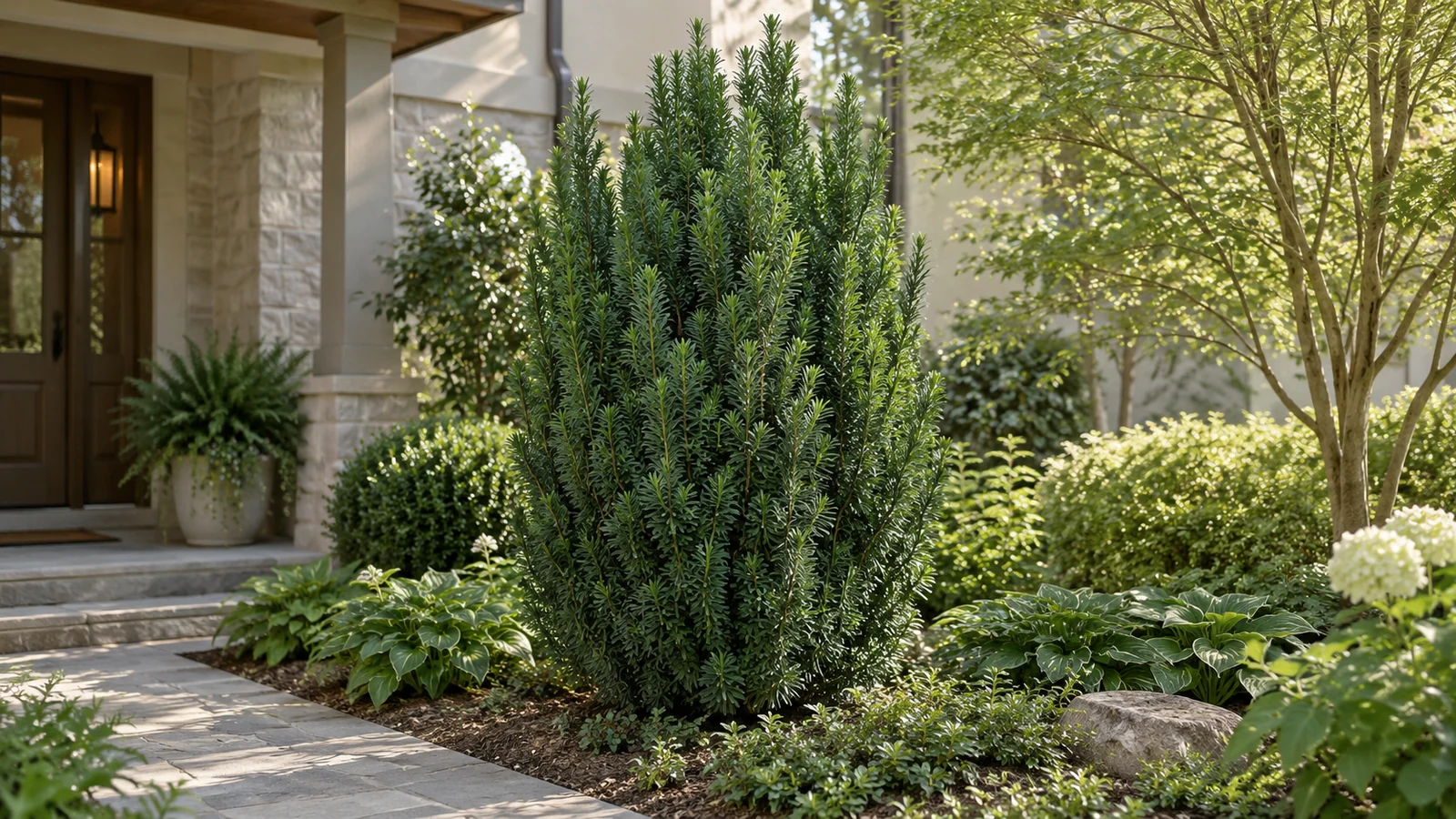
Illustrative planting concept
Size and space
Mature height: 10 ft. Mature spread: 5–8 ft.
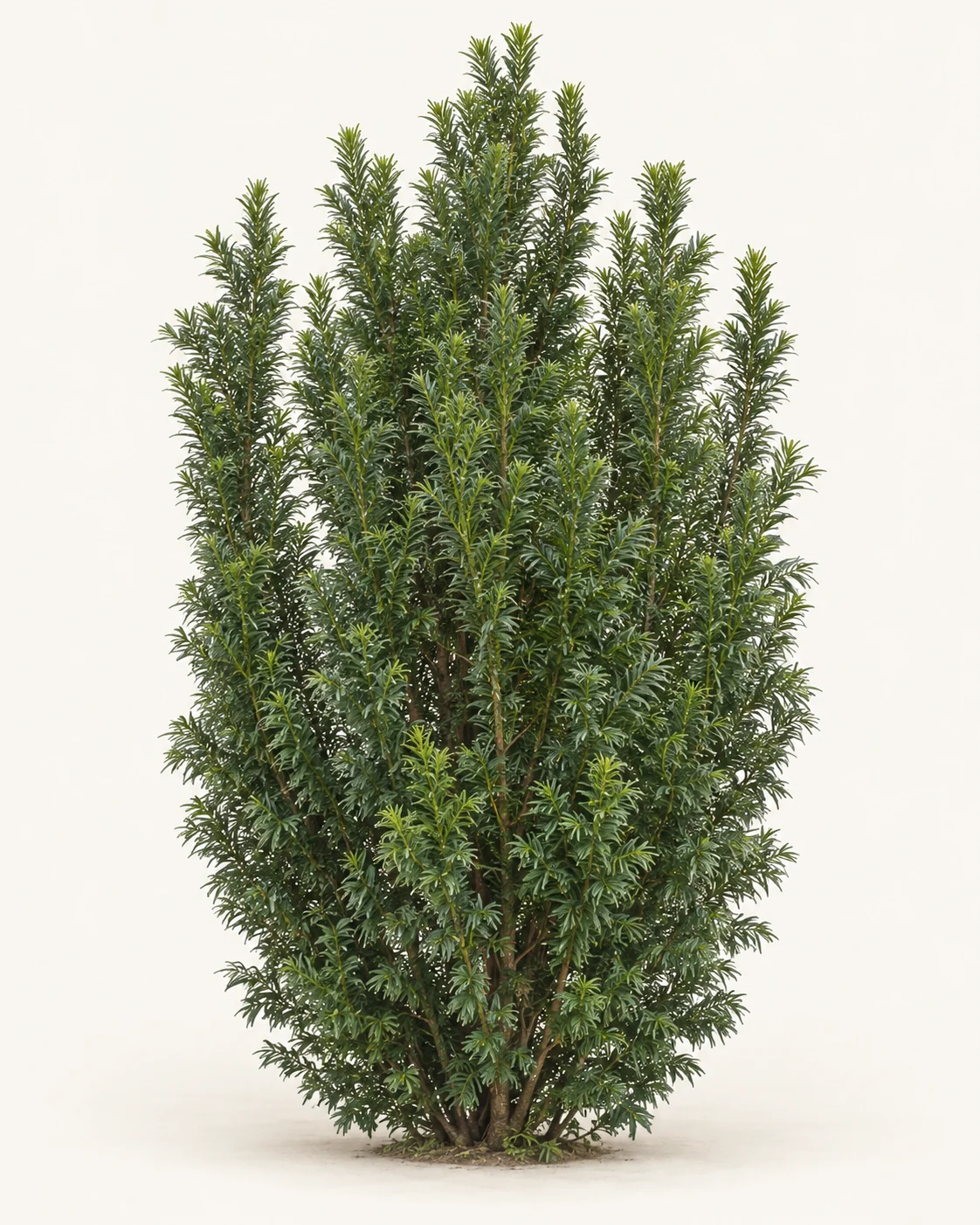
Pleasant Run lists 10 ft high and 5 ft wide, while Monrovia allows 10 ft high and 6–8 ft wide. The diagram uses 10 ft high and 5–8 ft wide for planning. The naturally leafy base is shown; buying or training a clear-trunk specimen changes appearance, not the plant’s need for growing space.
Installed example: 3 ft high × 2 ft wide. This is an illustrative size, not a pot-size or growth-timeline promise.
Part shade to shade; protect from strong afternoon heat · Moist, well-drained soil; water during establishment and extended dry spells · Dark evergreen foliage · upright branching · subtle new growth
Care: Allow a natural broad column; use light shaping if needed and keep soil from staying waterlogged
Know the whole plant
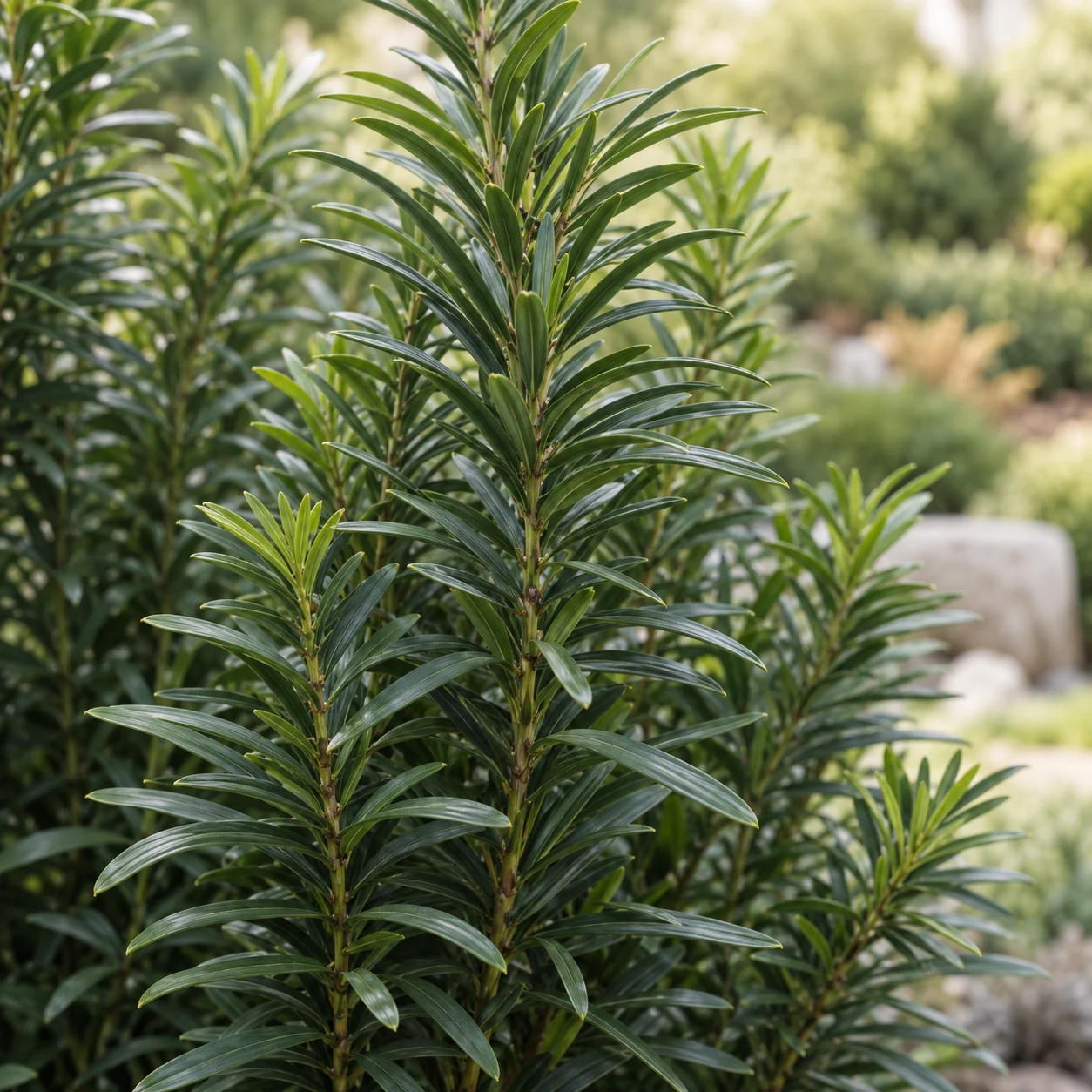
Illustrative upright plum yew with foliage retained low to the ground; a broad column rather than a clear-trunk tree.Illustrative flat needles around upright stems; plum yew is not Taxus.
Where it works around Pensacola
Consider a Pensacola courtyard, sheltered entry bed or garden receiving filtered light. Check reflected heat from walls and paving even where the bed seems shaded. Place the plant where its eventual width will not close the route, and keep access for modest maintenance without turning the planting into a tightly clipped wall.
An upright accent in partial shade
Evergreen structure beside an entry
A backdrop to a shaded border
A leafy screen in a sheltered garden
A conifer texture around an outdoor room
Does the site offer real afternoon shelter?
Observe the bed through the hottest part of the day. A nearby wall can intensify heat even when direct sun is limited.
Can a broad column fit?
Reserve the width shown, not just the nursery pot. Keep windows, handles and walking routes beyond the eventual foliage.
Is the soil draining between watering?
Coordinate irrigation with the surrounding plants. A shaded bed may dry more slowly than an adjacent sunny lawn.
Is household access appropriate?
Keep ingestion risk in mind around children and pets. This is an ornamental evergreen, not an edible fruiting plant.
Before it goes on the plan
Is this the same as Japanese yew?
No. This is Cephalotaxus, commonly called plum yew. Traditional Japanese yew is Taxus cuspidata; common names should not replace the botanical label.
Is it a tree or a shrub?
Fastigiata is an upright shrub used for a tree-like vertical role. This guide keeps that natural form clear so expectations match the plant purchased.
Can it be kept narrow by clipping?
Light shaping is possible, but choose a location that accommodates its natural width. A design that needs constant heavy reduction may need another plant.
Pairing ideas
Maki Podocarpus: Maki offers another yew-like texture for a compatible brighter site. Choose by exposure, drainage and eventual width.
Dwarf Mondo Grass: Dwarf Mondo can create a lower shaded edge in its own suitable soil. Leave the plum yew’s base open enough for inspection and care.
{"key":"plumyew","id":"PLT-CEPH-FASTIGIATA","slug":"upright-japanese-plum-yew","name":"Upright Japanese Plum Yew","botanical":"Cephalotaxus harringtonia ‘Fastigiata’","h":[10,10],"w":[5,8],"install":[3,2],"treeForm":"narrow","color":"#50694d","native":false,"type":"trees","categoryLabel":"Trees","reviewDate":"2026-09-08","guideKind":"Upright evergreen accent shrub","eyebrow":"A GREEN VERTICAL ACCENT FOR SHELTERED GARDENS","benefit":"Give a shaded planting a stronger upright shape.","intro":"Upright Japanese Plum Yew is useful when a garden needs height and evergreen texture without a large shade canopy. Its vertical stems and dark needles create a calm backdrop beside a sheltered entry or sitting area. It is naturally a broad upright shrub, so the leafy base can remain part of the composition.","light":"Part shade to shade; protect from strong afternoon heat","lightTags":["part","shade"],"water":"Moist, well-drained soil; water during establishment and extended dry spells","season":"Dark evergreen foliage · upright branching · subtle new growth","care":"Allow a natural broad column; use light shaping if needed and keep soil from staying waterlogged","caution":"Plum yew is different from traditional Taxus yews and better adapted to Southern heat and humidity. It is still a substantial upright shrub, not a tiny column. Foliage and seeds are poisonous if eaten; consider household use when placing it.","sizeNote":"Pleasant Run lists 10 ft high and 5 ft wide, while Monrovia allows 10 ft high and 6–8 ft wide. The diagram uses 10 ft high and 5–8 ft wide for planning. The naturally leafy base is shown; buying or training a clear-trunk specimen changes appearance, not the plant’s need for growing space.","site":"Consider a Pensacola courtyard, sheltered entry bed or garden receiving filtered light. Check reflected heat from walls and paving even where the bed seems shaded. Place the plant where its eventual width will not close the route, and keep access for modest maintenance without turning the planting into a tightly clipped wall.","uses":["An upright accent in partial shade","Evergreen structure beside an entry","A backdrop to a shaded border","A leafy screen in a sheltered garden","A conifer texture around an outdoor room"],"checks":[["Does the site offer real afternoon shelter?","Observe the bed through the hottest part of the day. A nearby wall can intensify heat even when direct sun is limited."],["Can a broad column fit?","Reserve the width shown, not just the nursery pot. Keep windows, handles and walking routes beyond the eventual foliage."],["Is the soil draining between watering?","Coordinate irrigation with the surrounding plants. A shaded bed may dry more slowly than an adjacent sunny lawn."],["Is household access appropriate?","Keep ingestion risk in mind around children and pets. This is an ornamental evergreen, not an edible fruiting plant."]],"faq":[["Is this the same as Japanese yew?","No. This is Cephalotaxus, commonly called plum yew. Traditional Japanese yew is Taxus cuspidata; common names should not replace the botanical label."],["Is it a tree or a shrub?","Fastigiata is an upright shrub used for a tree-like vertical role. This guide keeps that natural form clear so expectations match the plant purchased."],["Can it be kept narrow by clipping?","Light shaping is possible, but choose a location that accommodates its natural width. A design that needs constant heavy reduction may need another plant."]],"sources":[["NC State Extension · Plum yew and Southern climate suitability","https://plants.ces.ncsu.edu/plants/cephalotaxus-harringtonia/"],["Pleasant Run Nursery · Fastigiata reference dimensions","https://www.pleasantrunnursery.com/plant-name/Cephalotaxus-harringtonia-Fastigiata"],["Monrovia · Upright Japanese Plum Yew","https://www.monrovia.com/upright-japanese-plum-yew.html"]],"wholeCaption":"Illustrative upright plum yew with foliage retained low to the ground; a broad column rather than a clear-trunk tree.","detailCaption":"Illustrative flat needles around upright stems; plum yew is not Taxus.","aliases":["plum yew","upright yew","japanese plum yew","fastigiata","shade","small evergreen","column"],"goals":["privacy"],"images":{"context":{"id":"6aa02f17c5e92c52b487c502","url":"https://cdn.prod.website-files.com/6a975baac0f352647862d847/6aa02f17c5e92c52b487c502_landova-tree-plumyew-context.webp","alt":"Illustrative planting concept with Upright Japanese Plum Yew","width":1600,"height":900},"whole":{"id":"6aa02f1708b9365b30056665","url":"https://cdn.prod.website-files.com/6a975baac0f352647862d847/6aa02f1708b9365b30056665_landova-tree-plumyew-whole.webp","alt":"Illustrative whole-plant form of Upright Japanese Plum Yew","width":1122,"height":1402,"fit":"contain"},"detail":{"id":"6aa02f17e32bc580a4eb1093","url":"https://cdn.prod.website-files.com/6a975baac0f352647862d847/6aa02f17e32bc580a4eb1093_landova-tree-plumyew-detail.webp","alt":"Illustrative foliage and seasonal detail of Upright Japanese Plum Yew","width":1254,"height":1254}},"companions":[{"slug":"maki-podocarpus","name":"Maki Podocarpus","title":"Compare a sunnier upright evergreen","reason":"Maki offers another yew-like texture for a compatible brighter site. Choose by exposure, drainage and eventual width.","image":{"id":"6aa02f17e4f87427291a2e70","url":"https://cdn.prod.website-files.com/6a975baac0f352647862d847/6aa02f17e4f87427291a2e70_landova-tree-maki-context.webp","alt":"Illustrative planting concept with Maki Podocarpus","width":1600,"height":900}},{"slug":"dwarf-mondo-grass","name":"Dwarf Mondo Grass","title":"Keep the foreground low","reason":"Dwarf Mondo can create a lower shaded edge in its own suitable soil. Leave the plum yew’s base open enough for inspection and care.","image":{"id":"6aa00d183fe0798c1efa78ee","url":"https://cdn.prod.website-files.com/6a975baac0f352647862d847/6aa00d183fe0798c1efa78ee_landova-grass-mondo-context.webp","alt":"Illustrative planting concept with Dwarf Mondo Grass","width":1600,"height":900}}]}
LANDOVA / PLANTING DECISIONS
Choose plants with the whole space in mind.
Explore a planting goal, then compare the growing needs and mature size of individual plants.
LANDOVA is in beta
Join the launch waitlist.
We are not accepting paying clients yet. We expect to launch around January 2027 and may open sooner. Explore our free tools now, and sign up for launch updates and educational planning emails.
Thank you. Your waitlist signup has been received. We will email you with launch updates. No purchase or project booking has been made.
We could not save your signup. Please try again or email info@landovadesign.com.