
Published by LANDOVA Design & Planning. Updated October 6, 2026.
Useful design updates give homeowners a chance to make decisions while the design is taking shape. They should explain what changed, what still needs an answer and which decision moves the project forward. A final presentation becomes more meaningful when it reflects that earlier conversation.
LANDOVA provides video updates at the major design stages and frequent progress checks. The first checkpoint is the layout: form, function and lifestyle before detailed materials and colors. After the homeowner approves the arrangement, the design develops further detail.
Why a video update needs a purpose
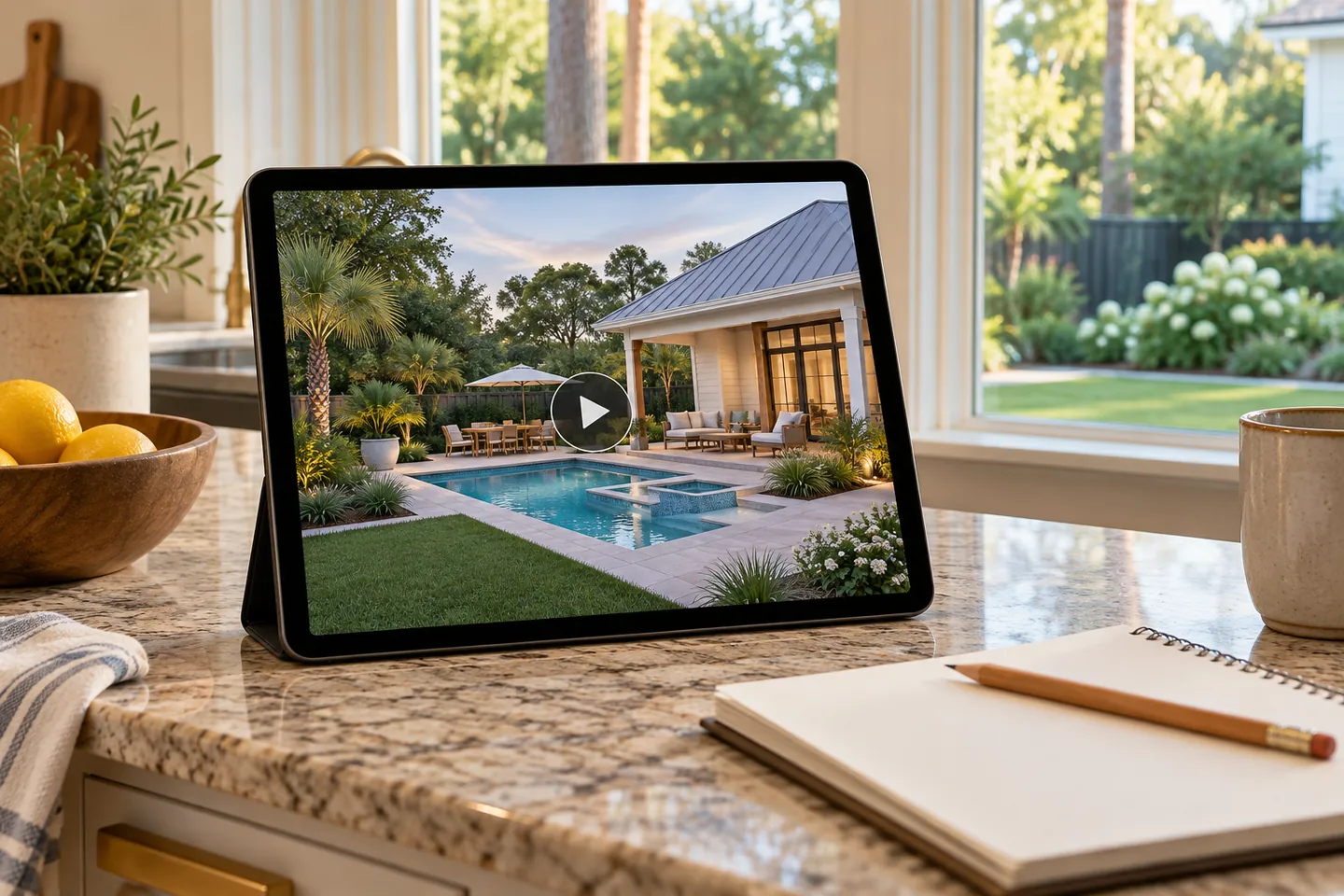
A camera moving through a model can show relationships that are harder to follow in one still image. A useful review might trace the path from the house to the dining area, show how a kitchen faces the gathering space or look back toward the house from a proposed lounge.
Those views need an explanation. What should the homeowner evaluate? Is the purpose to approve the arrangement or compare a material direction? Which elements are intentionally simple? Without that framing, an early update can invite detailed finish comments while an important layout question remains unsettled.
Review one stage at a time
At layout review, concentrate on placement, space and everyday use. At the details stage, consider the character, care and relationships of the proposed selections. During the experience review, discuss how the spaces connect and how the yard will feel at the times you expect to use it. The final review brings the agreed direction and remaining questions together.
These checkpoints are decision categories, not a claim that every project has identical complexity or that revisions are unlimited. The selected engagement defines deliverables, included revisions and any additional work.
Give feedback the designer can act on
Pause the update at the relevant view and note the timestamp. Explain the use or concern behind your preference. “At 1:20, can we review the route behind the dining chairs?” is easier to act on than “the patio feels small.” Add a photo, furniture measurement or marked image when it helps explain the question.
Collect input from the household before sending a consolidated response. If two preferences conflict, identify the tradeoff directly. One person may want sun beside the pool while another prefers a shaded place to read. That is useful design information, not a problem to hide in separate messages.
Keep a simple decision record
For each review, record the version, the topic, the decision and anything still open. A practical status set is “approved,” “change requested” and “needs information.” Add who will provide missing information and when it is needed before the next design step.
For example, in an illustrative layout review, a homeowner approves the dining location but asks to verify a table’s dimensions. The record should preserve both facts. It should not treat the whole plan as fully resolved or allow the measurement question to disappear as finishes develop.
Separate design decisions from technical confirmation
A homeowner can approve where a structure belongs in the preferred arrangement while a qualified professional still needs to assess its requirements. Keep those two decisions distinct. A compelling video is not evidence of a completed survey, engineering review, equipment selection or permit approval.
Similarly, a review update is not automatically the final presentation deliverable. Its purpose is to help you respond and decide. Final renderings or cinematic media follow the approved design and the deliverables defined for the project.
What if you change your mind later?
Raise the change as soon as possible. Ask what it affects: the layout, related features, completed design work, future phases and agreed scope. A change to a kitchen location may also change serving routes and utility discussions. The useful response is to understand those relationships before approving the revision.
Checkpoints cannot remove every surprise or prevent every change. They make the questions and decisions visible earlier. That is the practical benefit: you stay involved in shaping the direction, and the final review confirms a design developed through a series of understandable choices.
Bring these questions to your design review
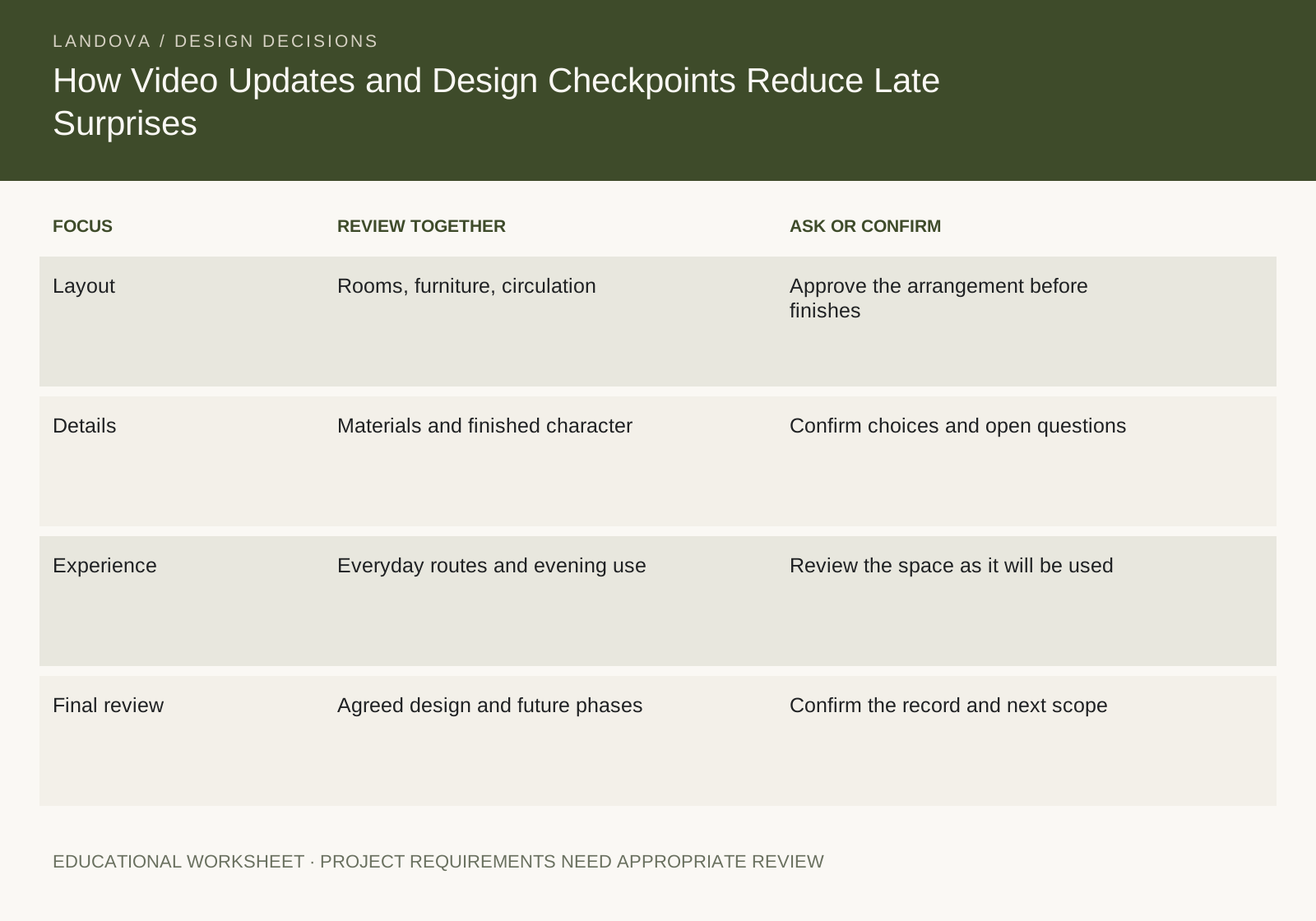
- Layout · Rooms, furniture, circulationApprove the arrangement before finishes
- Details · Materials and finished characterConfirm choices and open questions
- Experience · Everyday routes and evening useReview the space as it will be used
- Final review · Agreed design and future phasesConfirm the record and next scope
Keep planning the whole project
These decisions connect to other parts of the yard. Continue with:
