
Published by LANDOVA Design & Planning. Updated October 6, 2026.
By Jeremy Ruben · A chapter in the LANDOVA origin story
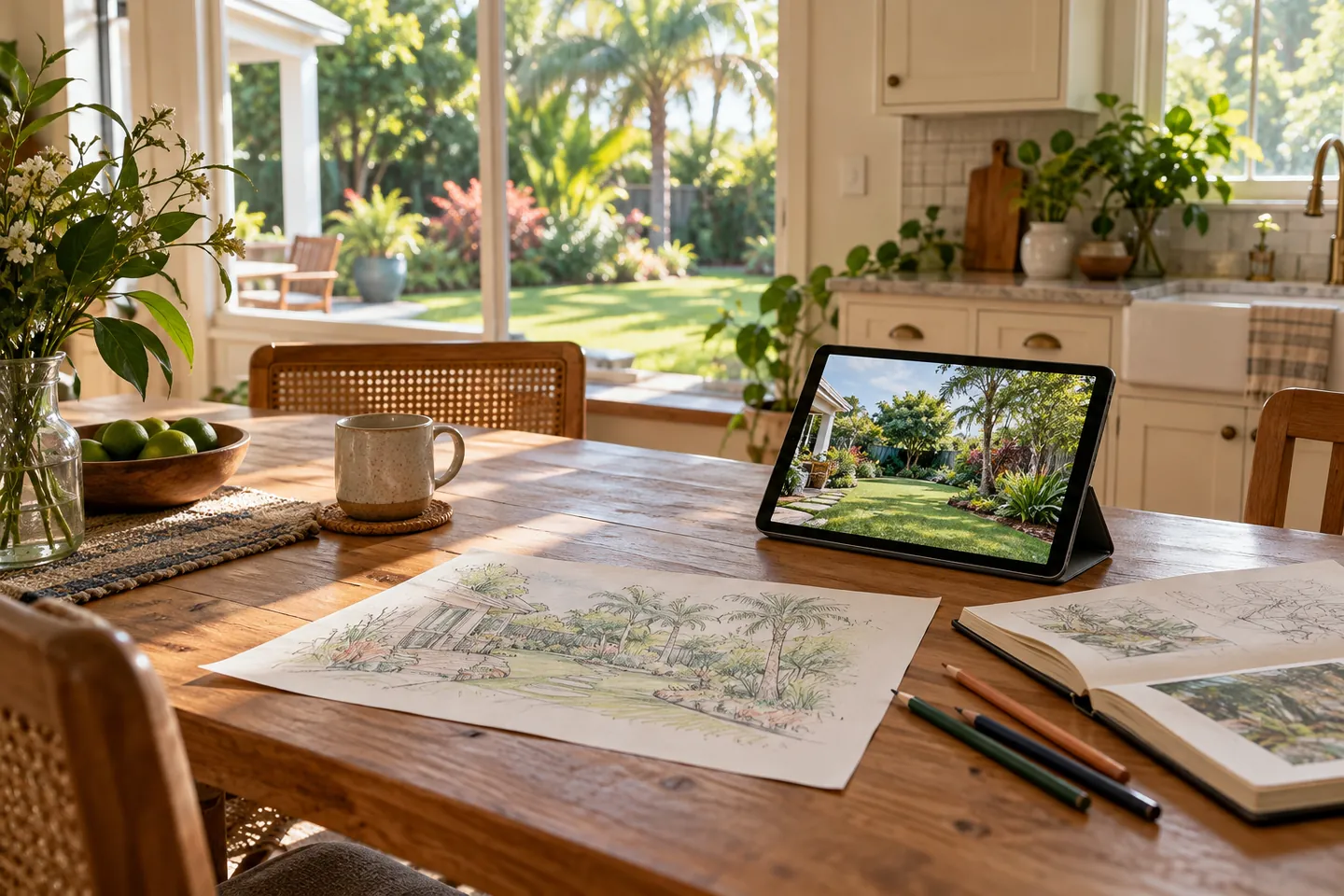
One of the most rewarding changes in my work was designing with homeowners at their kitchen tables. We could look at a backyard concept together, move an element, and see what that changed.
The spa could move. The patio could grow. A future pavilion could enter the picture. Planting could change a view. The homeowner could point to something and ask a question while the idea was still easy to adjust.
That participation mattered. I could see the conversation shift as people began to understand how their choices related to one another.
A drawing gives a question somewhere to land
It is difficult to respond to a space you cannot picture. Even a careful explanation leaves work for the listener: translate the words, imagine the scale, remember the other choices, and decide whether it all feels right.
Put the ideas into a shared view and the questions become more specific. Is this where we would sit? Does that route feel crowded? What happens to the view from the window? Can this part wait until a later phase?
These are useful design questions. The homeowner is bringing knowledge about their own life that the designer cannot supply alone.
Ordinary life deserves space in the presentation
Consider a simple design exercise: place a dining table, pull the chairs away from it, and trace the route from the house to the pool. This is an example to try on a plan, not a story about a particular client.
The beautiful empty patio suddenly has a lot going on. Someone is carrying dinner. Someone else wants to walk through. A chair has developed ambitions beyond its assigned square footage.
The point is to make everyday use visible while changes can still happen on the drawing. The same exercise works for lounging, shade, cooking, maintenance access, and future additions.
Feedback belongs throughout the design
A homeowner should have opportunities to understand and respond as the design develops. At LANDOVA, the process moves through layout, details, experience, and final review. Video updates at major stages help explain what changed and what needs attention next.
A helpful update gives context. It shows the decision being made, explains a tradeoff, and invites a focused response. Asking someone to approve everything at once can bury the question that matters most.
These checkpoints support clearer decisions; the scope and revision terms still belong in the service agreement.
The lesson I kept
I wanted homeowners to feel involved in shaping their outdoor space. That means making room for questions, showing the effect of a choice, and carrying agreed decisions into the next stage.
If you are reviewing a design, ask the person presenting it to identify what you are deciding today and what will be decided later. You should be able to explain the choice in your own words.
That kitchen-table experience helped shape LANDOVA's approach: understand the household, make the options visible, and keep the homeowner in the conversation.
Keep exploring
Read the practical planning guide →
Next in the story: Why Pool Quotes Can Describe Different Projects →
