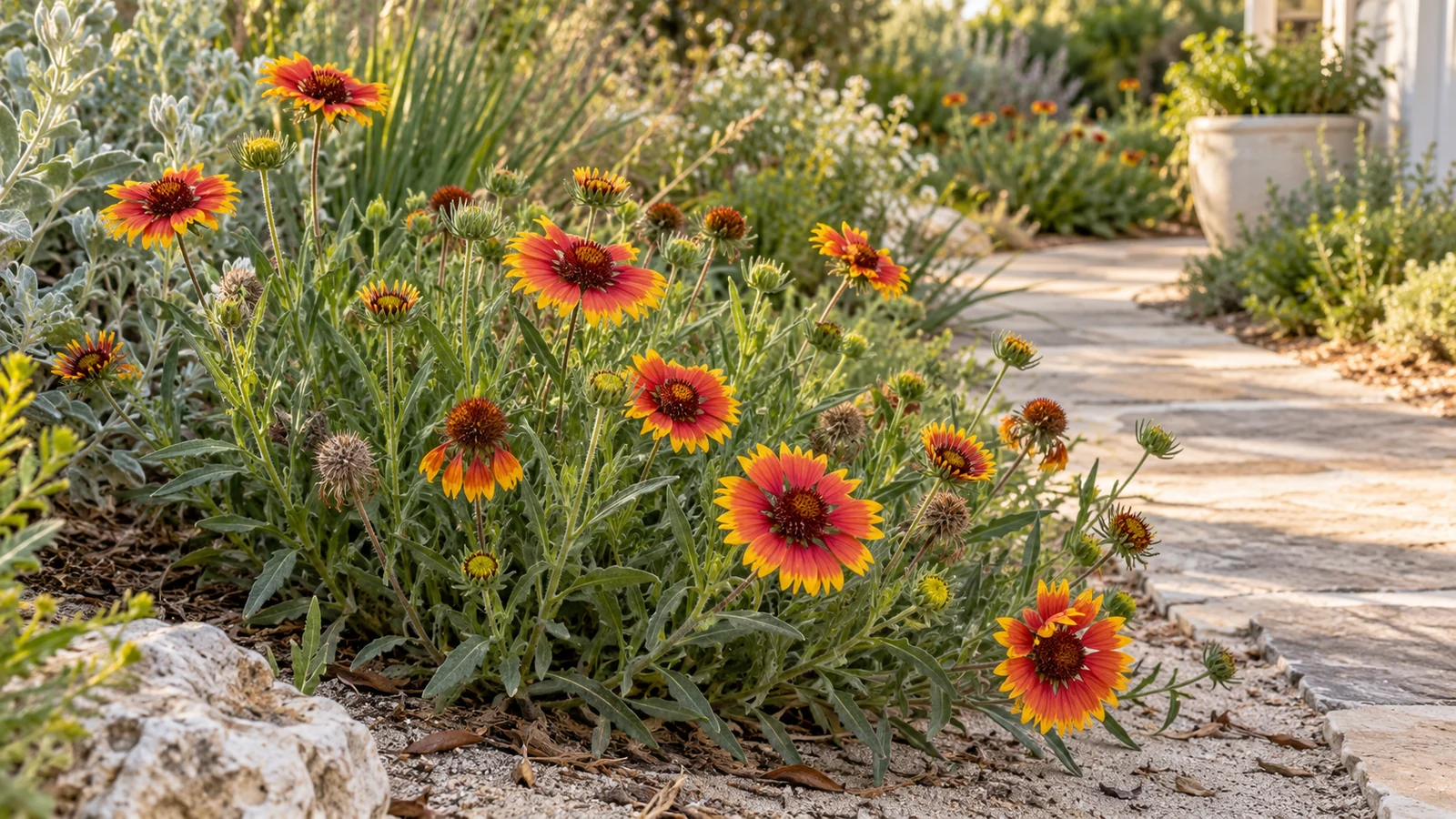
Blanket Flower brings red, orange and yellow daisy-like flowers to a loose mound of gray-green foliage. Its relaxed shape fits a cottage-style bed or a sunny pollinator planting where a few seedheads and changing flowers belong in the picture. The open form is part of its appeal; it will not look like a tightly clipped shrub.
Before you choose: This is usually an annual or short-lived perennial, so plan for replacement or reseeding rather than permanent evergreen coverage. Wet roots are a poor fit. The species in this guide is Gaillardia pulchella; named perennial hybrids may have different dimensions and persistence.
Illustrative planting concept
Size and space
Typical height: 12–24 in. Typical spread: 10–12 in.
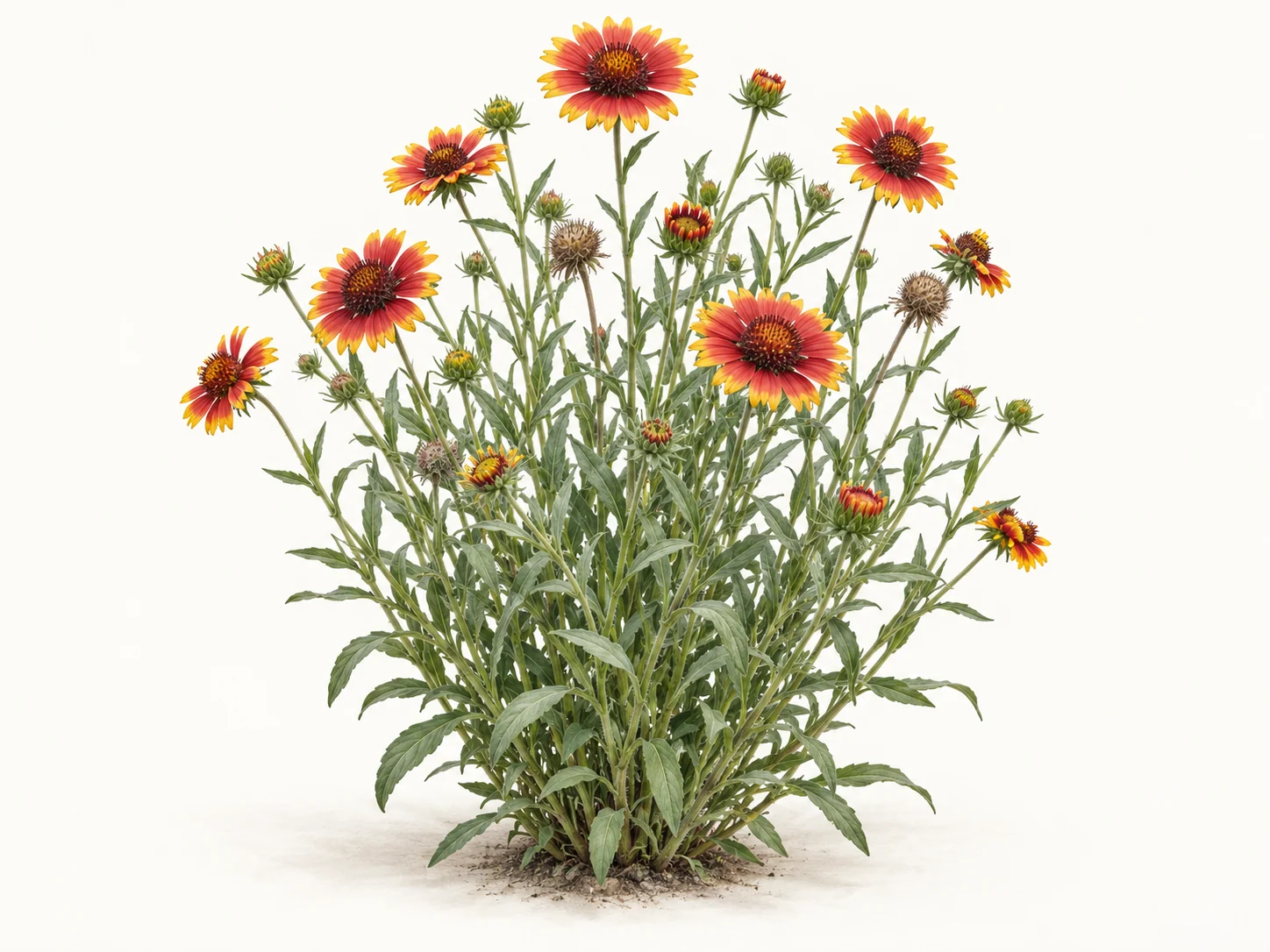
NC State lists plants at 1–2 ft high and 10–12 in wide. The measured drawing uses that individual-plant range, including flower stems. Seedlings can occupy additional ground, so this width does not define the eventual flowering patch. Confirm the nursery label before using dimensions from a different Gaillardia hybrid.
Installed example: 6 in high × 6 in wide. This is an illustrative size, not a pot-size or growth-timeline promise.
Full sun · Freely draining soil; water new plants, then allow the soil to dry between waterings · Red and yellow flowers through warm weather; seedheads and seasonal decline
Care: Allow selected seedlings; remove spent flowers for a tidier display
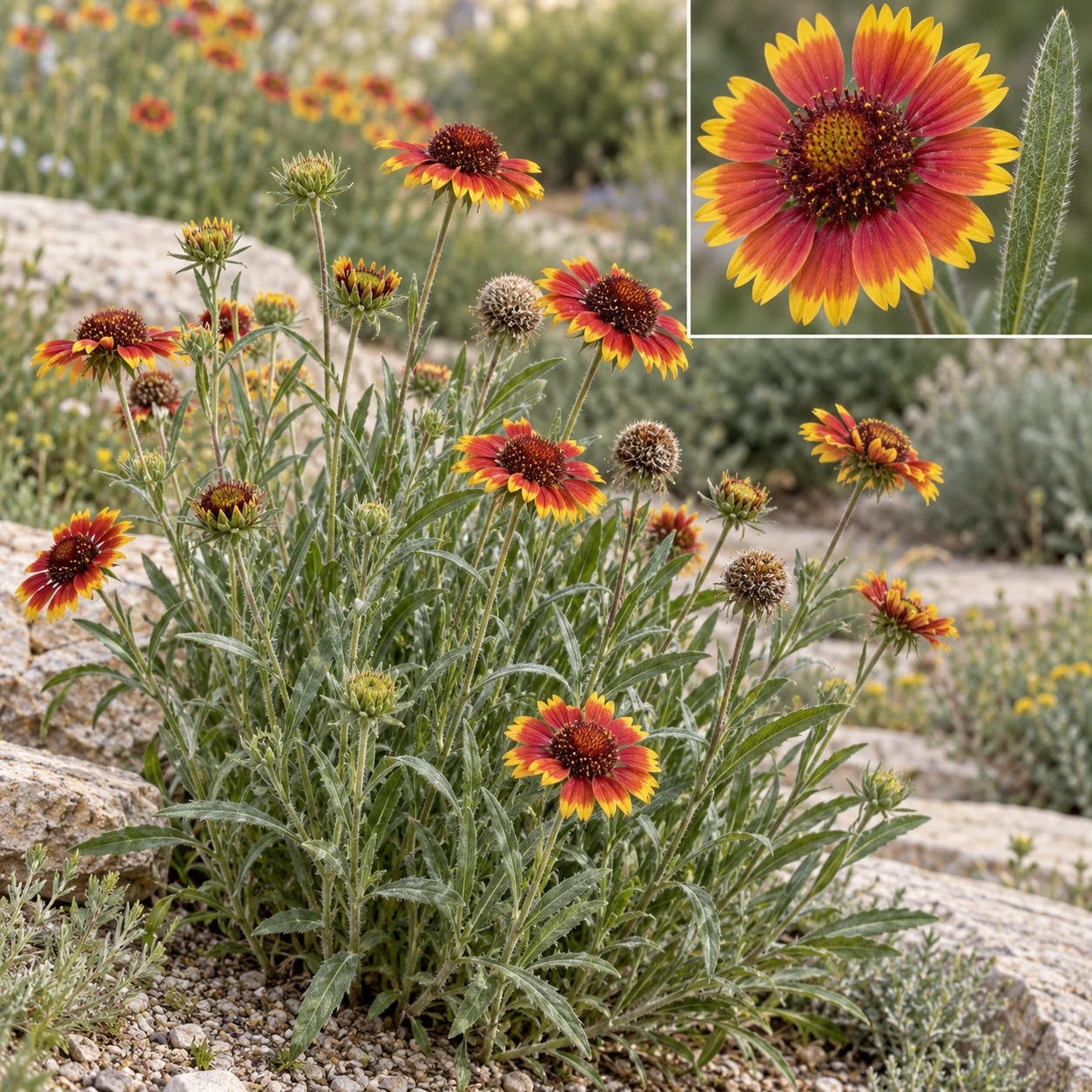
Know the whole plant
Illustrative overall form of Blanket Flower. The nursery selection, season and site affect appearance.Illustrative foliage and seasonal detail of Blanket Flower; confirm the botanical name and selection on the nursery label.
Where it works around Pensacola
Use Blanket Flower in a sunny Pensacola bed with sand or other soil that drains freely. Keep the planting separate from areas watered frequently for moisture-loving foliage. A small group near a path can offer flowers without overwhelming the rest of the garden. Establishment water and early weed control still matter, even when the mature planting is tolerant of dry conditions.
A sunny cottage-style border
A warm-color pollinator patch
A freely draining container
A small informal cutting garden
A seasonal foreground near upright grasses
Does water drain after a storm?
Check the actual root zone, including roof runoff and low spots. A dry-looking surface can hide persistently wet soil below it.
Can seedlings appear nearby?
Let a few seedheads mature where natural renewal is welcome. Remove unwanted seedlings while small to keep the planting within its intended area.
Which Gaillardia is being sold?
Match the botanical name and cultivar. A compact hybrid selected for a container may not have the habit, height or life cycle described here.
How tidy should this bed look?
Deadheading removes fading flowers; leaving seedheads offers a more natural look and food for birds. Choose the balance that suits the view from the house.
Before it goes on the plan
Is it a permanent perennial?
Treat this species as annual or short-lived in the landscape. A patch that returns from seed can look persistent even when individual plants have been replaced.
Why does the botanical name matter?
Gaillardia includes different species and garden hybrids. Match Gaillardia pulchella on the nursery label to use this guide’s size and life-cycle reference. Verify provenance separately if the planting must be strictly local-native.
Will it flower in a shady bed?
Full sun is the useful starting point for a strong display. For a shaded entry, consider the shade-tolerant foliage and flowering choices elsewhere in this collection.
Pairing ideas
Pink Muhly Grass: Pink Muhly suits sun and draining soil. Keep the flower planting outside its full mature footprint.
Schilling’s Dwarf Yaupon Holly: Dwarf Yaupon can frame the seasonal flowers from a separate, larger planting position without shading them.
Society Garlic: Society Garlic offers a separate upright clump in sun and draining soil. Leave room around both plants and match watering to establishment needs.
{"key":"blanket","name":"Blanket Flower","botanical":"Gaillardia pulchella","slug":"blanket-flower","id":"PLT-GAIL-PULC","type":"accents","h":[1,2],"w":[0.8333333333333334,1],"install":[0.5,0.5],"native":false,"accentGroup":"wildflower","accentForm":"daisy","light":"Full sun","lightTags":["sun"],"water":"Freely draining soil; water new plants, then allow the soil to dry between waterings","season":"Red and yellow flowers through warm weather; seedheads and seasonal decline","care":"Allow selected seedlings; remove spent flowers for a tidier display","benefit":"Bring warm, easygoing color to a sunny garden.","intro":"Blanket Flower brings red, orange and yellow daisy-like flowers to a loose mound of gray-green foliage. Its relaxed shape fits a cottage-style bed or a sunny pollinator planting where a few seedheads and changing flowers belong in the picture. The open form is part of its appeal; it will not look like a tightly clipped shrub.","caution":"This is usually an annual or short-lived perennial, so plan for replacement or reseeding rather than permanent evergreen coverage. Wet roots are a poor fit. The species in this guide is Gaillardia pulchella; named perennial hybrids may have different dimensions and persistence.","sizeNote":"NC State lists plants at 1–2 ft high and 10–12 in wide. The measured drawing uses that individual-plant range, including flower stems. Seedlings can occupy additional ground, so this width does not define the eventual flowering patch. Confirm the nursery label before using dimensions from a different Gaillardia hybrid.","site":"Use Blanket Flower in a sunny Pensacola bed with sand or other soil that drains freely. Keep the planting separate from areas watered frequently for moisture-loving foliage. A small group near a path can offer flowers without overwhelming the rest of the garden. Establishment water and early weed control still matter, even when the mature planting is tolerant of dry conditions.","uses":["A sunny cottage-style border","A warm-color pollinator patch","A freely draining container","A small informal cutting garden","A seasonal foreground near upright grasses"],"checks":[["Does water drain after a storm?","Check the actual root zone, including roof runoff and low spots. A dry-looking surface can hide persistently wet soil below it."],["Can seedlings appear nearby?","Let a few seedheads mature where natural renewal is welcome. Remove unwanted seedlings while small to keep the planting within its intended area."],["Which Gaillardia is being sold?","Match the botanical name and cultivar. A compact hybrid selected for a container may not have the habit, height or life cycle described here."],["How tidy should this bed look?","Deadheading removes fading flowers; leaving seedheads offers a more natural look and food for birds. Choose the balance that suits the view from the house."]],"faq":[["Is it a permanent perennial?","Treat this species as annual or short-lived in the landscape. A patch that returns from seed can look persistent even when individual plants have been replaced."],["Why does the botanical name matter?","Gaillardia includes different species and garden hybrids. Match Gaillardia pulchella on the nursery label to use this guide’s size and life-cycle reference. Verify provenance separately if the planting must be strictly local-native."],["Will it flower in a shady bed?","Full sun is the useful starting point for a strong display. For a shaded entry, consider the shade-tolerant foliage and flowering choices elsewhere in this collection."]],"sources":[["NC State Extension: Blanket Flower","https://plants.ces.ncsu.edu/plants/gaillardia-pulchella/"]],"unit":"in","heightLabel":"Typical height","spreadLabel":"Typical spread","heightText":"12–24 in","spreadText":"10–12 in","sizeSummary":"12–24 in high × 10–12 in wide","color":"#70815a","bloomColor":"#cd8e38","guideKind":"Flowering + accent plant","eyebrow":"FLOWERS + FOLIAGE / FORM + SEASON","aliases":["Blanket Flower","Gaillardia pulchella","Firewheel","Indian Blanket Flower"],"goals":["color"],"wholeCaption":"Illustrative overall form of Blanket Flower. The nursery selection, season and site affect appearance.","detailCaption":"Illustrative foliage and seasonal detail of Blanket Flower; confirm the botanical name and selection on the nursery label.","images":{"context":{"id":"6aa093d53783fcdd7c479a46","url":"https://cdn.prod.website-files.com/6a975baac0f352647862d847/6aa093d53783fcdd7c479a46_landova-accent-blanket-context.webp","alt":"Illustrative planting concept with Blanket Flower","width":1600,"height":900},"whole":{"id":"6aa093d6cfe212e8ad2f633e","url":"https://cdn.prod.website-files.com/6a975baac0f352647862d847/6aa093d6cfe212e8ad2f633e_landova-accent-blanket-whole.webp","alt":"Illustrative whole-plant form of Blanket Flower","width":1448,"height":1086,"fit":"contain"},"detail":{"id":"6aa093d6e788bb371fe2c358","url":"https://cdn.prod.website-files.com/6a975baac0f352647862d847/6aa093d6e788bb371fe2c358_landova-accent-blanket-detail.webp","alt":"Illustrative foliage and seasonal detail of Blanket Flower","width":1254,"height":1254}},"companions":[{"slug":"pink-muhly-grass","name":"Pink Muhly Grass","title":"Add a fine-textured background","reason":"Pink Muhly suits sun and draining soil. Keep the flower planting outside its full mature footprint.","image":{"id":"6aa00228430659e428d61061","url":"https://cdn.prod.website-files.com/6a975baac0f352647862d847/6aa00228430659e428d61061_landova-grass-muhly-context.webp","alt":"Illustrative planting concept with Pink Muhly Grass","width":1600,"height":900}},{"slug":"schillings-dwarf-yaupon-holly","name":"Schilling’s Dwarf Yaupon Holly","title":"Keep evergreen structure nearby","reason":"Dwarf Yaupon can frame the seasonal flowers from a separate, larger planting position without shading them.","image":{"id":"6a9f5cd31fbbc23ce58d34ef","url":"https://cdn.prod.website-files.com/6a975baac0f352647862d847/6a9f5cd31fbbc23ce58d34ef_landova-schilling-context-r05.webp","alt":"Illustrative planting concept with Schilling’s Dwarf Yaupon Holly"}},{"slug":"society-garlic","name":"Society Garlic","title":"Contrast warm flowers with lilac","reason":"Society Garlic offers a separate upright clump in sun and draining soil. Leave room around both plants and match watering to establishment needs.","image":{"id":"6aa093dee788bb371fe2c6d5","url":"https://cdn.prod.website-files.com/6a975baac0f352647862d847/6aa093dee788bb371fe2c6d5_landova-accent-society-context.webp","alt":"Illustrative planting concept with Society Garlic","width":1600,"height":900}}]}
LANDOVA / PLANTING DECISIONS
Choose plants with the whole space in mind.
Explore a planting goal, then compare the growing needs and mature size of individual plants.
LANDOVA is in beta
Join the launch waitlist.
We are not accepting paying clients yet. We expect to launch around January 2027 and may open sooner. Explore our free tools now, and sign up for launch updates and educational planning emails.
Thank you. Your waitlist signup has been received. We will email you with launch updates. No purchase or project booking has been made.
We could not save your signup. Please try again or email info@landovadesign.com.