Use a low blue carpet to soften a sunny garden edge.
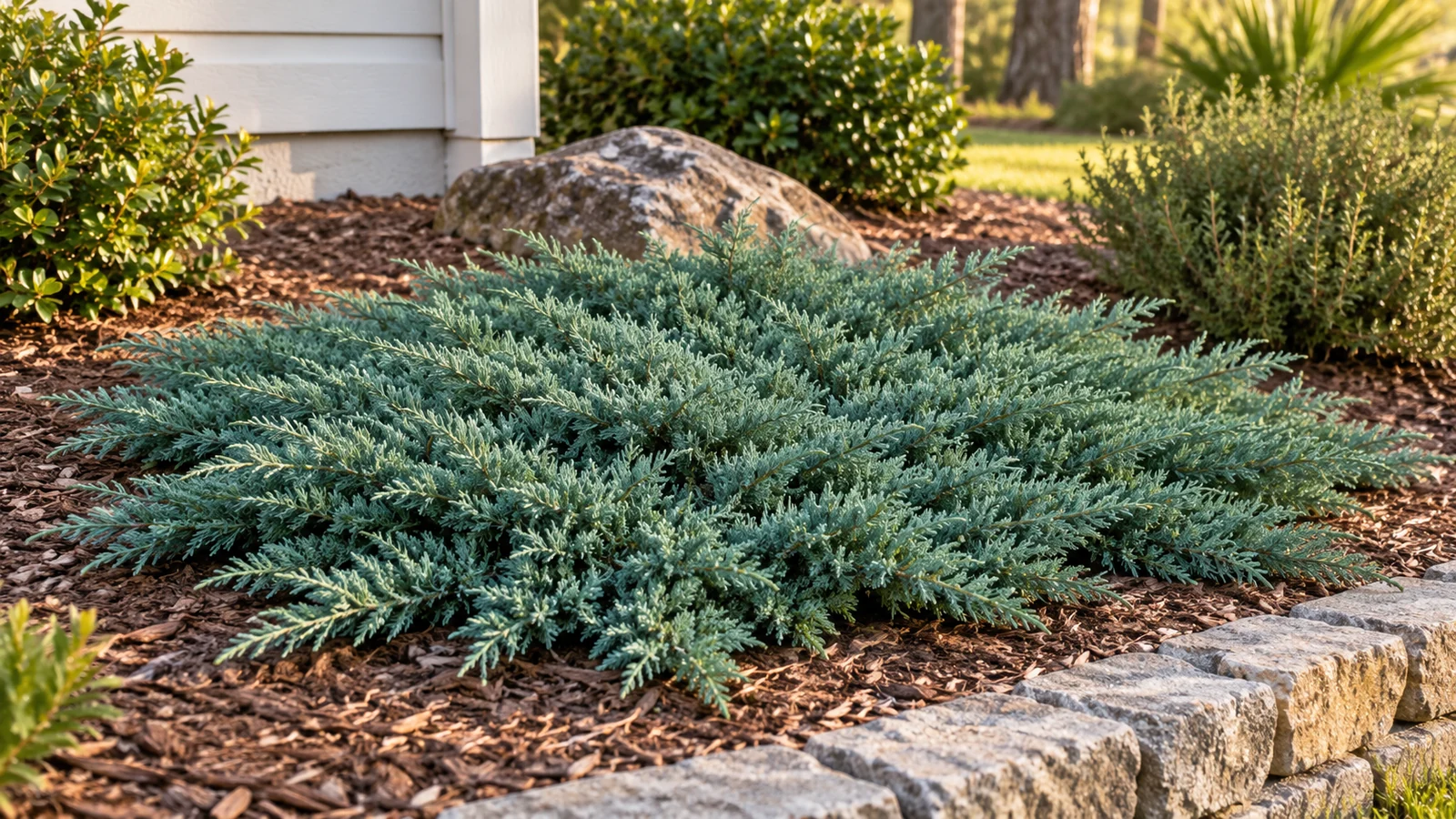
Blue Rug Juniper spreads its branches close to the ground, creating a broad layer of fine blue foliage. It works best where the horizontal shape can remain visible: above a low wall, beside open paving or in a sunny, freely draining bed. Its low height can be deceptive because one established plant takes up several feet of width.
Before you choose: Good drainage is essential. Persistently wet soil and crowded, humid foliage can lead to problems, and a narrow irrigated foundation strip is often a poor fit. The foliage is not a walking surface. Confirm the cultivar Wiltonii instead of substituting a taller blue juniper.
Illustrative planting concept
Size and space
Typical height: 4–6 in. Mature spread: 4–6 ft wide.
NC State lists Wiltonii at 4–6 in high and 4–6 ft wide. The mature diagram uses the upper end of that range. A young one-foot-wide example is only a scale comparison; it does not specify a container size, nursery age or date by which the bed will fill.
Installed example: 3 in high × 12 in wide. This is an illustrative size, not a pot-size or growth-timeline promise.
Full sun · Freely draining soil; avoid persistently wet roots · Silvery blue evergreen foliage; a purplish winter cast is possible
Care: Allow horizontal growth; inspect for dieback and keep foliage ventilated
Know the whole plant
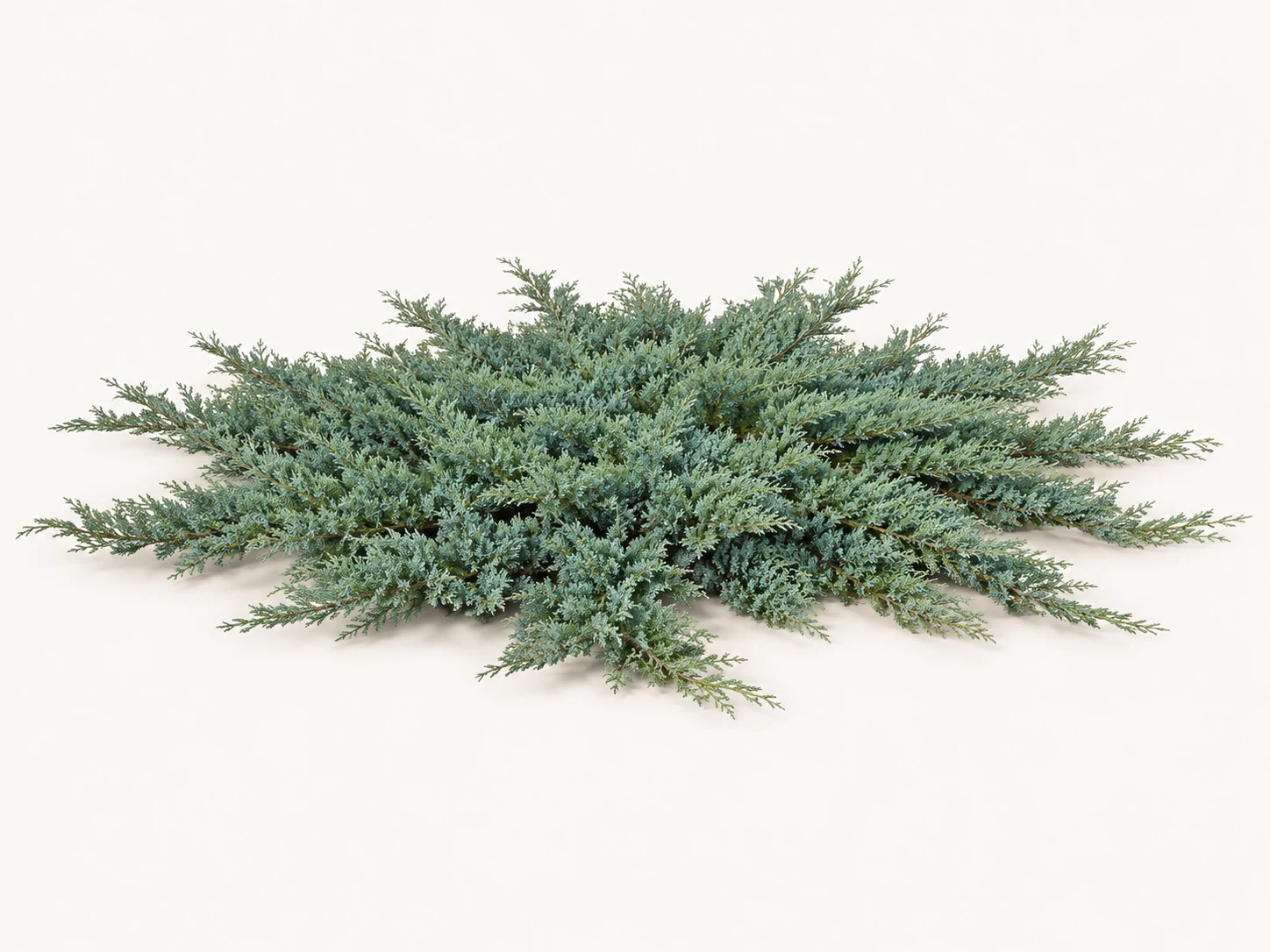
Illustrative overall form of Blue Rug Juniper; the nursery plant, season and growing conditions will affect its appearance.Illustrative foliage and seasonal detail of Blue Rug Juniper. Confirm the botanical name on the nursery label.
Where it works around Pensacola
Consider Blue Rug Juniper in a sunny Pensacola garden where sand or another well-drained soil keeps the roots from staying wet. Give it space to spread away from neighboring crowns. It can soften a small change in level, but a groundcover choice does not replace proper grading or erosion-control design on a problem slope.
A low blue evergreen foreground
A sunny bed beside paving
A soft edge above a low wall
A broad dry-soil planting accent
A contrasting layer beside upright grasses
Is there enough sun?
Choose an open site with good light and air movement. Shade and crowded planting can weaken the dense carpet that makes this cultivar useful.
Where does irrigation land?
Keep it out of a zone that stays wet for moisture-loving plants. Check the actual root area after rain rather than judging only the surface.
Can the branches spread naturally?
Reserve four to six feet and access beyond that footprint. Repeatedly cutting the plant back to fit a tiny space will work against its natural habit.
Is the foliage healthy?
Inspect nursery plants and established branches for browning or dieback. Junipers can have blight, mite and root problems; investigate the cause before simply adding more water.
Before it goes on the plan
Is this a Florida native?
No. The parent species is native to parts of North America, but this named cultivar is not presented as a Florida-native selection.
Can I plant it between stepping stones?
Its branches can be damaged by regular walking. Place it beside the path where it can spread without becoming the surface people step on.
Does blue foliage mean no maintenance?
No. It still needs establishment watering, weed control, drainage and occasional checks for damaged growth. Its natural spreading form reduces the need for shaping when given enough room.
Pairing ideas
Little Bluestem: Little Bluestem can share a sunny, draining bed. Keep its crown free and allow both plants their mature space.
Coastal False Rosemary: Coastal False Rosemary suits freely draining sand and sun. Place the juniper outside its eventual canopy and avoid routine overwatering.
{"key":"bluerug","name":"Blue Rug Juniper","botanical":"Juniperus horizontalis ‘Wiltonii’","slug":"blue-rug-juniper","id":"PLT-JUNI-WILT","type":"groundcovers","h":[0.3333333333333333,0.5],"w":[4,6],"install":[0.25,1],"native":false,"groundGroup":"medium","light":"Full sun","lightTags":["sun"],"water":"Freely draining soil; avoid persistently wet roots","season":"Silvery blue evergreen foliage; a purplish winter cast is possible","care":"Allow horizontal growth; inspect for dieback and keep foliage ventilated","benefit":"Use a low blue carpet to soften a sunny garden edge.","intro":"Blue Rug Juniper spreads its branches close to the ground, creating a broad layer of fine blue foliage. It works best where the horizontal shape can remain visible: above a low wall, beside open paving or in a sunny, freely draining bed. Its low height can be deceptive because one established plant takes up several feet of width.","caution":"Good drainage is essential. Persistently wet soil and crowded, humid foliage can lead to problems, and a narrow irrigated foundation strip is often a poor fit. The foliage is not a walking surface. Confirm the cultivar Wiltonii instead of substituting a taller blue juniper.","sizeNote":"NC State lists Wiltonii at 4–6 in high and 4–6 ft wide. The mature diagram uses the upper end of that range. A young one-foot-wide example is only a scale comparison; it does not specify a container size, nursery age or date by which the bed will fill.","site":"Consider Blue Rug Juniper in a sunny Pensacola garden where sand or another well-drained soil keeps the roots from staying wet. Give it space to spread away from neighboring crowns. It can soften a small change in level, but a groundcover choice does not replace proper grading or erosion-control design on a problem slope.","uses":["A low blue evergreen foreground","A sunny bed beside paving","A soft edge above a low wall","A broad dry-soil planting accent","A contrasting layer beside upright grasses"],"checks":[["Is there enough sun?","Choose an open site with good light and air movement. Shade and crowded planting can weaken the dense carpet that makes this cultivar useful."],["Where does irrigation land?","Keep it out of a zone that stays wet for moisture-loving plants. Check the actual root area after rain rather than judging only the surface."],["Can the branches spread naturally?","Reserve four to six feet and access beyond that footprint. Repeatedly cutting the plant back to fit a tiny space will work against its natural habit."],["Is the foliage healthy?","Inspect nursery plants and established branches for browning or dieback. Junipers can have blight, mite and root problems; investigate the cause before simply adding more water."]],"faq":[["Is this a Florida native?","No. The parent species is native to parts of North America, but this named cultivar is not presented as a Florida-native selection."],["Can I plant it between stepping stones?","Its branches can be damaged by regular walking. Place it beside the path where it can spread without becoming the surface people step on."],["Does blue foliage mean no maintenance?","No. It still needs establishment watering, weed control, drainage and occasional checks for damaged growth. Its natural spreading form reduces the need for shaping when given enough room."]],"sources":[["NC State Extension: Blue Rug Juniper","https://plants.ces.ncsu.edu/plants/juniperus-horizontalis-wiltonii/"]],"unit":"in","heightLabel":"Typical height","spreadLabel":"Mature spread","color":"#72908c","guideKind":"Groundcover","eyebrow":"THE LOW LAYER / FORM + SEASON","aliases":["Blue Rug Juniper","Juniperus horizontalis ‘Wiltonii’"],"goals":["color"],"wholeCaption":"Illustrative overall form of Blue Rug Juniper; the nursery plant, season and growing conditions will affect its appearance.","detailCaption":"Illustrative foliage and seasonal detail of Blue Rug Juniper. Confirm the botanical name on the nursery label.","groundForm":"conifer","spreadText":"4–6 ft wide","heightText":"4–6 in","sizeSummary":"4–6 in high · 4–6 ft wide","images":{"context":{"id":"6aa052e38c44eb05710cacca","url":"https://cdn.prod.website-files.com/6a975baac0f352647862d847/6aa052e38c44eb05710cacca_landova-groundcover-bluerug-context.webp","alt":"Illustrative planting concept with Blue Rug Juniper","width":1600,"height":900},"whole":{"id":"6aa052e3982d6e748e904ed6","url":"https://cdn.prod.website-files.com/6a975baac0f352647862d847/6aa052e3982d6e748e904ed6_landova-groundcover-bluerug-whole.webp","alt":"Illustrative whole-plant form of Blue Rug Juniper","width":1448,"height":1086,"fit":"contain"},"detail":{"id":"6aa052e3f80ae2cce5623175","url":"https://cdn.prod.website-files.com/6a975baac0f352647862d847/6aa052e3f80ae2cce5623175_landova-groundcover-bluerug-detail.webp","alt":"Illustrative foliage and seasonal detail of Blue Rug Juniper","width":1254,"height":1254}},"companions":[{"slug":"little-bluestem","name":"Little Bluestem","title":"Contrast the low carpet with upright stems","reason":"Little Bluestem can share a sunny, draining bed. Keep its crown free and allow both plants their mature space.","image":{"id":"6aa00d166a78cbdca0ff1a4e","url":"https://cdn.prod.website-files.com/6a975baac0f352647862d847/6aa00d166a78cbdca0ff1a4e_landova-grass-bluestem-context.webp","alt":"Illustrative planting concept with Little Bluestem","width":1600,"height":900}},{"slug":"coastal-false-rosemary","name":"Coastal False Rosemary","title":"Add a taller dry-garden shape","reason":"Coastal False Rosemary suits freely draining sand and sun. Place the juniper outside its eventual canopy and avoid routine overwatering.","image":{"id":"6a9fefd2b5d71773d64bf03b","url":"https://cdn.prod.website-files.com/6a975baac0f352647862d847/6a9fefd2b5d71773d64bf03b_landova-rosemary-context-r07.webp","alt":"Illustrative planting concept with Coastal False Rosemary"}}]}
LANDOVA / PLANTING DECISIONS
Choose plants with the whole space in mind.
Explore a planting goal, then compare the growing needs and mature size of individual plants.
LANDOVA is in beta
Join the launch waitlist.
We are not accepting paying clients yet. We expect to launch around January 2027 and may open sooner. Explore our free tools now, and sign up for launch updates and educational planning emails.
Thank you. Your waitlist signup has been received. We will email you with launch updates. No purchase or project booking has been made.
We could not save your signup. Please try again or email info@landovadesign.com.