Coontie gives a residential planting the orderly texture of a cycad close to the ground. Its arching fronds can repeat through a bed or form one quiet accent below taller planting. It is a useful Florida-native option where the design needs evergreen shape without a tree canopy.
Before you choose: Seeds, foliage and roots are toxic if eaten. Choose another plant where children or pets may chew plants or collect seeds. Coontie is a cycad, not a true palm; a native label does not make it safe to ingest.
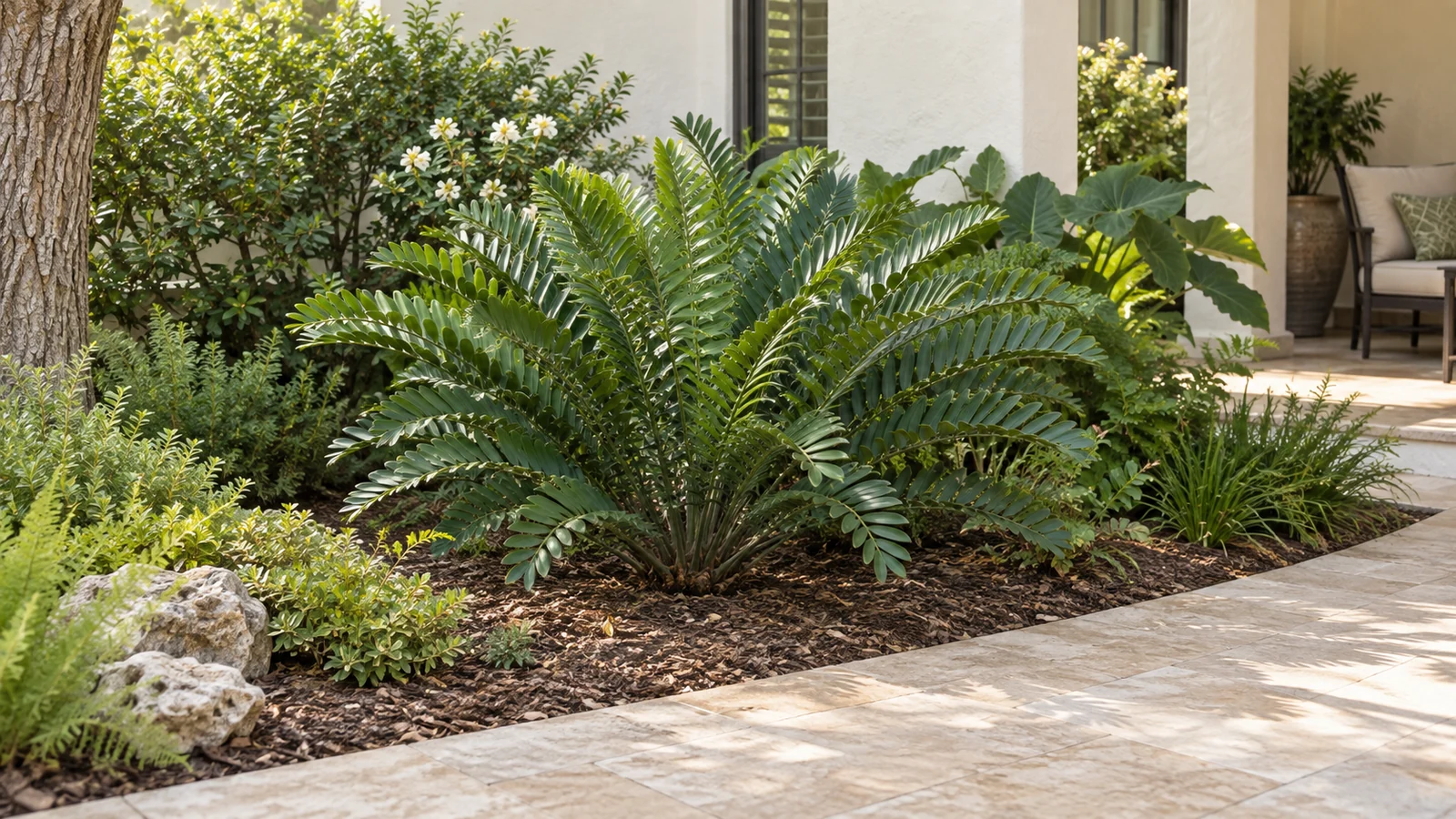
Illustrative planting concept
Size and space
Total mature height: 2–3 ft. Mature frond spread: 3–5 ft.
The 2–3 ft height and 3–5 ft spread describe a typical established clump. Measure the full arch of the fronds when setting the bed edge. The installed example is simply a smaller plant, not a promised container size or growth schedule.
Installed example: 1 ft high × 1.5 ft wide. This is an illustrative size, not a pot-size or growth-timeline promise.
Sun to part shade; sheltered shade is also possible · Well-drained soil; water to establish, then adjust to rainfall · Evergreen fronds · cones on mature plants
Care: Light cleanup and space for an expanding clump
Know the whole plant
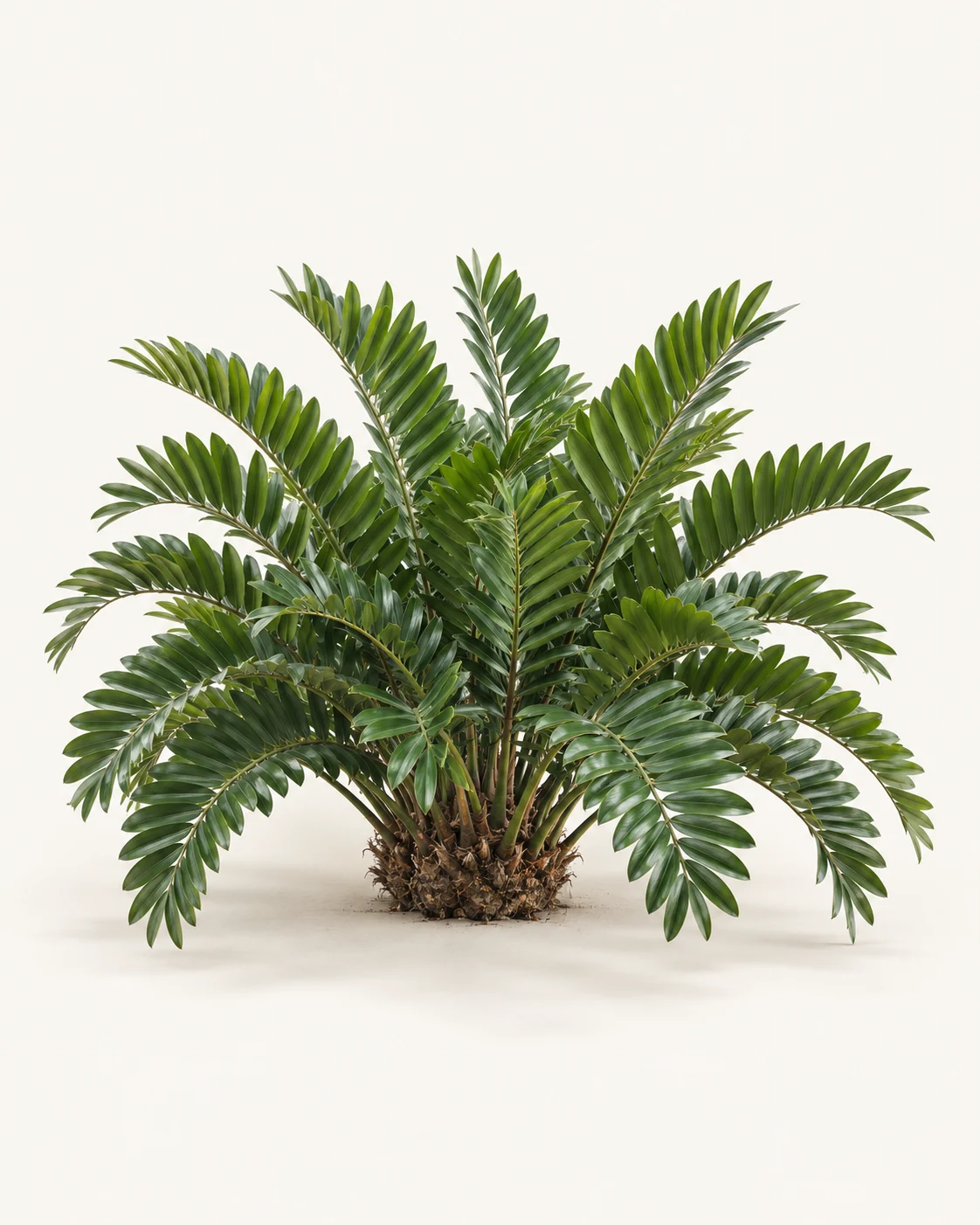
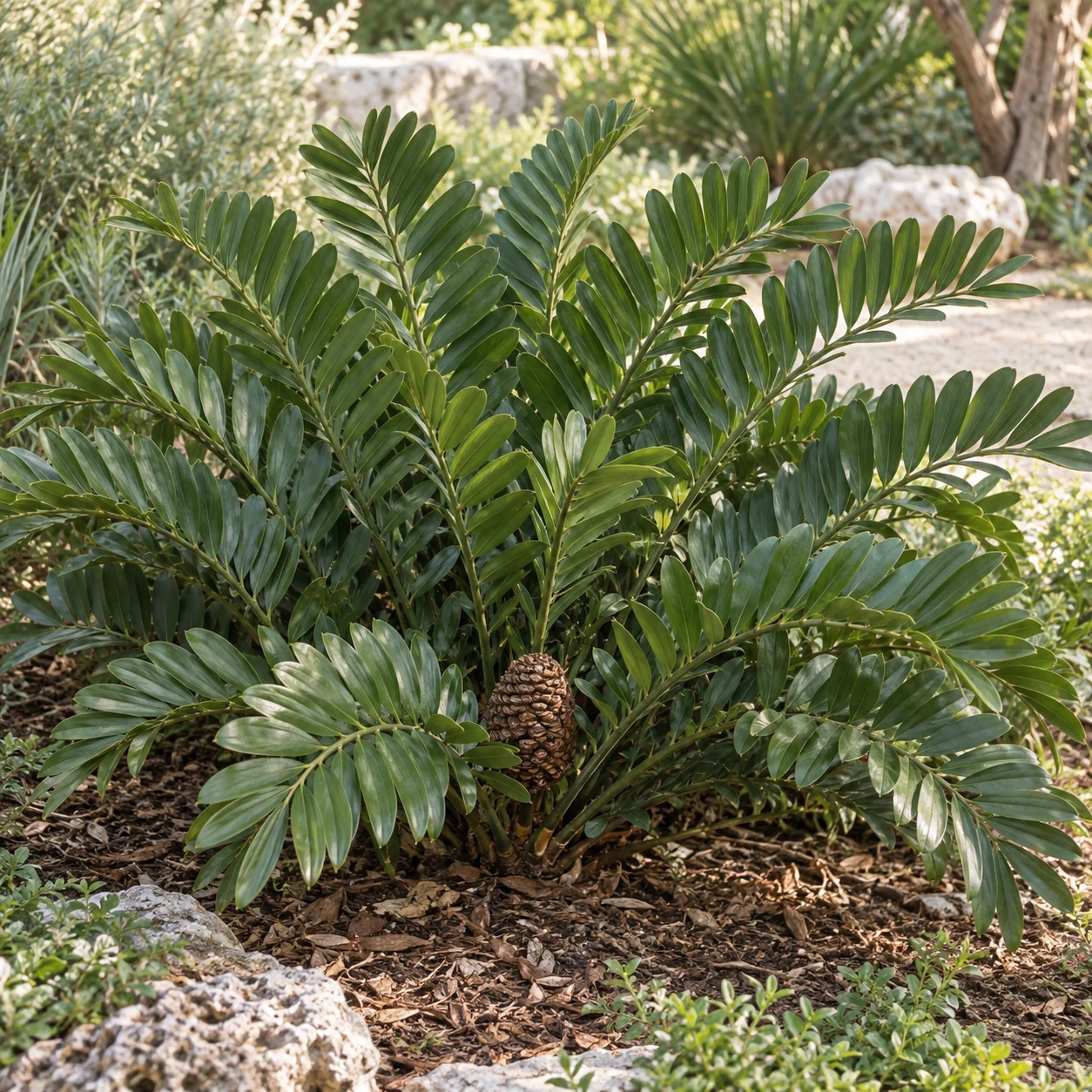
Illustrative whole-plant form of Coontie; fronds, stems and overall proportions vary with age and growing conditions.Illustrative foliage detail of Coontie. Use the botanical name and nursery label to confirm the plant.
Where it works around Pensacola
Use coontie in a Pensacola garden bed with drainage and breathing room around each clump. It can sit below windows or connect larger plants across a border. Keep maintenance access in the layout, and assess household use before repeating it near a patio or play space.
A low evergreen accent
A repeated layer below windows
A sculptural courtyard planting
A native mixed border
A transition beneath taller planting
Who uses this bed?
Consider pets, children and visiting families before choosing a toxic cycad. Placement matters more than the appearance of a tidy border.
Will the full spread fit?
Set out the eventual frond footprint and leave walking and maintenance space beyond it. A small nursery clump can occupy much more of the bed later.
Does water leave the root zone?
Check where roof runoff and irrigation collect. A dry-looking surface can hide wet soil below; match the plant to the whole root area.
What reaches the foliage?
Shelter is useful near the coast. Some salty wind tolerance should not be treated as tolerance of direct salt spray or saltwater flooding.
Before it goes on the plan
Is Coontie a palm?
No. It is a cone-bearing cycad with a palm-like outline. The named plant in this guide is Zamia integrifolia, also listed under older names such as Zamia pumila or Zamia floridana.
Will it attract Atala butterflies in Pensacola?
Coontie is an Atala host plant, but that does not promise Atalas on a Pensacola property. Their occurrence is strongly associated with South Florida; choose this plant for its fit in your own garden.
Is it a good choice around dogs?
It is toxic, including the leaves, roots and seeds. Where chewing or seed access is likely, select a different plant rather than relying on cleanup alone.
Pairing ideas
Dwarf Palmetto: Dwarf Palmetto has a bolder fan shape and a different moisture preference. Compare both footprints before choosing the lower layer.
Dwarf Mondo Grass: Dwarf Mondo Grass can provide a finer texture in its own suitable shaded area. Keep its irrigation and spacing needs separate.
{"key":"coontie","name":"Coontie","botanical":"Zamia integrifolia","slug":"coontie","id":"PLT-ZAMI-INTE","type":"palms","h":[2,3],"w":[3,5],"install":[1,1.5],"palmForm":"cycad-low","trunkRatio":0.08,"native":true,"light":"Sun to part shade; sheltered shade is also possible","lightTags":["sun","part","shade"],"water":"Well-drained soil; water to establish, then adjust to rainfall","season":"Evergreen fronds · cones on mature plants","care":"Light cleanup and space for an expanding clump","benefit":"Bring a low, sculptural layer into the garden.","intro":"Coontie gives a residential planting the orderly texture of a cycad close to the ground. Its arching fronds can repeat through a bed or form one quiet accent below taller planting. It is a useful Florida-native option where the design needs evergreen shape without a tree canopy.","caution":"Seeds, foliage and roots are toxic if eaten. Choose another plant where children or pets may chew plants or collect seeds. Coontie is a cycad, not a true palm; a native label does not make it safe to ingest.","sizeNote":"The 2–3 ft height and 3–5 ft spread describe a typical established clump. Measure the full arch of the fronds when setting the bed edge. The installed example is simply a smaller plant, not a promised container size or growth schedule.","site":"Use coontie in a Pensacola garden bed with drainage and breathing room around each clump. It can sit below windows or connect larger plants across a border. Keep maintenance access in the layout, and assess household use before repeating it near a patio or play space.","uses":["A low evergreen accent","A repeated layer below windows","A sculptural courtyard planting","A native mixed border","A transition beneath taller planting"],"checks":[["Who uses this bed?","Consider pets, children and visiting families before choosing a toxic cycad. Placement matters more than the appearance of a tidy border."],["Will the full spread fit?","Set out the eventual frond footprint and leave walking and maintenance space beyond it. A small nursery clump can occupy much more of the bed later."],["Does water leave the root zone?","Check where roof runoff and irrigation collect. A dry-looking surface can hide wet soil below; match the plant to the whole root area."],["What reaches the foliage?","Shelter is useful near the coast. Some salty wind tolerance should not be treated as tolerance of direct salt spray or saltwater flooding."]],"faq":[["Is Coontie a palm?","No. It is a cone-bearing cycad with a palm-like outline. The named plant in this guide is Zamia integrifolia, also listed under older names such as Zamia pumila or Zamia floridana."],["Will it attract Atala butterflies in Pensacola?","Coontie is an Atala host plant, but that does not promise Atalas on a Pensacola property. Their occurrence is strongly associated with South Florida; choose this plant for its fit in your own garden."],["Is it a good choice around dogs?","It is toxic, including the leaves, roots and seeds. Where chewing or seed access is likely, select a different plant rather than relying on cleanup alone."]],"sources":[["UF/IFAS: Coontie","https://gardeningsolutions.ifas.ufl.edu/plants/trees-and-shrubs/palms-and-cycads/coontie/"],["Florida Native Plant Society: Coontie","https://www.fnps.org/plant/zamia-integrifolia"]],"unit":"ft","heightLabel":"Total mature height","spreadLabel":"Mature frond spread","color":"#70815a","guideKind":"Native cycad","eyebrow":"EVERGREEN FORM + THOUGHTFUL PLACEMENT","wholeCaption":"Illustrative whole-plant form of Coontie; fronds, stems and overall proportions vary with age and growing conditions.","detailCaption":"Illustrative foliage detail of Coontie. Use the botanical name and nursery label to confirm the plant.","aliases":["Coontie","Zamia integrifolia","Zamia pumila","Zamia floridana","Florida arrowroot"],"goals":["pool"],"palmSizeGroup":"small","images":{"context":{"id":"6aa03e15876c821d804ed501","url":"https://cdn.prod.website-files.com/6a975baac0f352647862d847/6aa03e15876c821d804ed501_landova-palm-coontie-context.webp","alt":"Illustrative planting concept with Coontie","width":1600,"height":900},"whole":{"id":"6aa03d81ef196d01201da259","url":"https://cdn.prod.website-files.com/6a975baac0f352647862d847/6aa03d81ef196d01201da259_landova-palm-coontie-whole.webp","alt":"Illustrative whole-plant form of Coontie","width":1122,"height":1402,"fit":"contain"},"detail":{"id":"6aa03d82784c76b20773bcdf","url":"https://cdn.prod.website-files.com/6a975baac0f352647862d847/6aa03d82784c76b20773bcdf_landova-palm-coontie-detail.webp","alt":"Illustrative foliage and seasonal detail of Coontie","width":1254,"height":1254}},"companions":[{"slug":"dwarf-palmetto","name":"Dwarf Palmetto","title":"Compare a low true palm","reason":"Dwarf Palmetto has a bolder fan shape and a different moisture preference. Compare both footprints before choosing the lower layer.","image":{"id":"6aa03d82f08181b5baeebc1d","url":"https://cdn.prod.website-files.com/6a975baac0f352647862d847/6aa03d82f08181b5baeebc1d_landova-palm-dwarfpalmetto-context.webp","alt":"Illustrative planting concept with Dwarf Palmetto","width":1600,"height":900}},{"slug":"dwarf-mondo-grass","name":"Dwarf Mondo Grass","title":"Explore a finer shaded edge","reason":"Dwarf Mondo Grass can provide a finer texture in its own suitable shaded area. Keep its irrigation and spacing needs separate.","image":{"id":"6aa00d183fe0798c1efa78ee","url":"https://cdn.prod.website-files.com/6a975baac0f352647862d847/6aa00d183fe0798c1efa78ee_landova-grass-mondo-context.webp","alt":"Illustrative planting concept with Dwarf Mondo Grass","width":1600,"height":900}}]}
LANDOVA / PLANTING DECISIONS
Choose plants with the whole space in mind.
Explore a planting goal, then compare the growing needs and mature size of individual plants.
LANDOVA is in beta
Join the launch waitlist.
We are not accepting paying clients yet. We expect to launch around January 2027 and may open sooner. Explore our free tools now, and sign up for launch updates and educational planning emails.
Thank you. Your waitlist signup has been received. We will email you with launch updates. No purchase or project booking has been made.
We could not save your signup. Please try again or email info@landovadesign.com.