Dianthus adds crisp, fringed flowers and narrow leaves to the cool-season garden. This guide focuses on Dianthus chinensis, often called Chinese pinks, rather than treating every dianthus species and hybrid as the same plant. It works well as a deliberate winter-to-spring color layer near an entry or patio.
Before you choose: Do not plan on this as dependable summer bedding in the Pensacola heat. UF/IFAS notes that dianthus often declines as temperatures rise toward May. Confirm the species or hybrid and cultivar, since plants sold simply as dianthus can differ considerably.
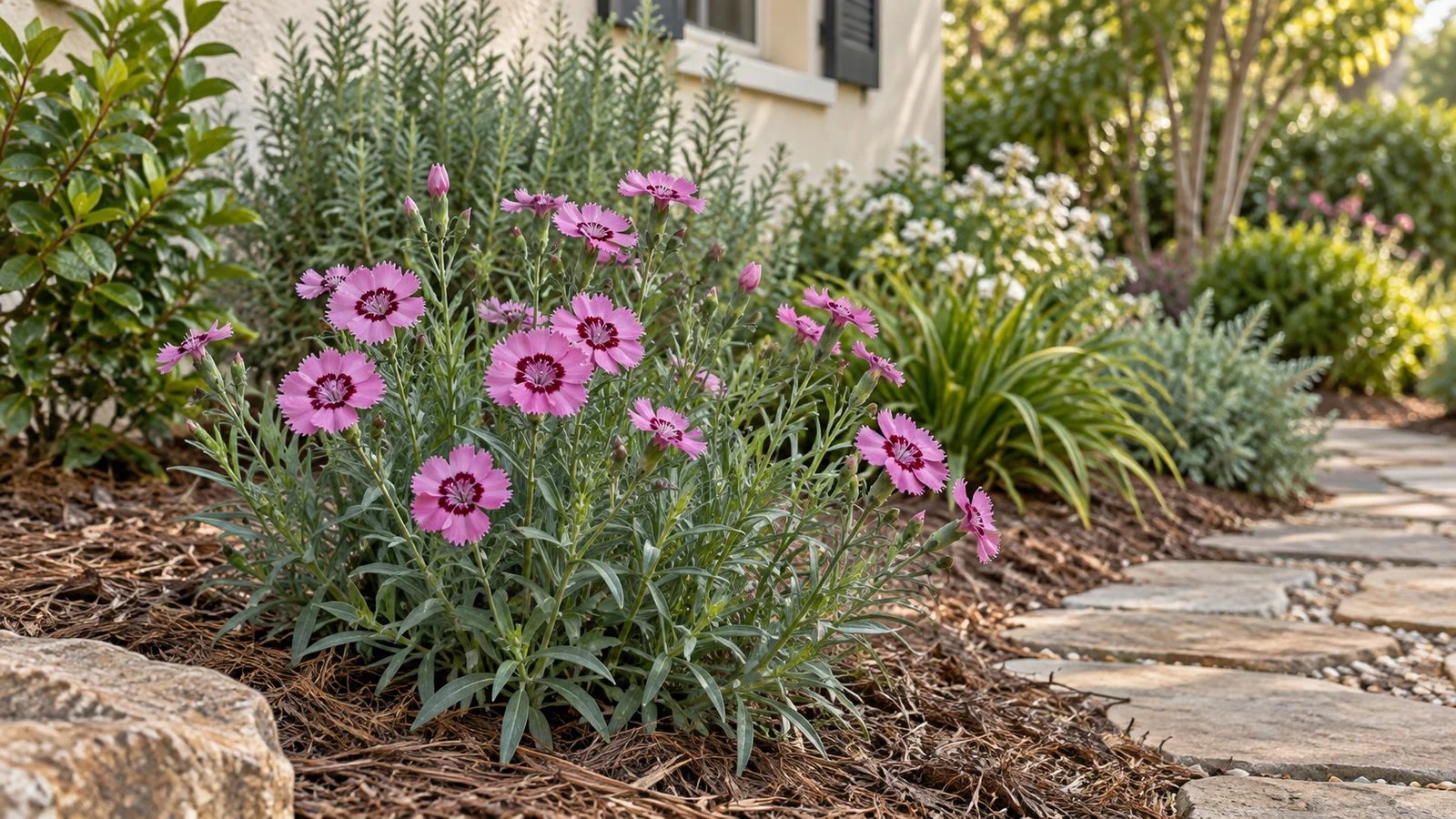
Illustrative planting concept
Size and space
Typical height: 6–30 in. Typical spread: 6–12 in.
For Dianthus chinensis, the broad reference is 6–30 inches tall and 6–12 inches wide. Many bedding selections are shorter than the top of that range. Select a compact named form when a low edge is essential, and use the nursery dimensions to finalize spacing. The pink flowers shown represent one color form.
Installed example: 6 in high × 6 in wide. This is an illustrative size, not a pot-size or growth-timeline promise.
Sun to part shade · Moderate; rich, well-drained soil · Cool-season flowers; often declines with summer heat
Care: Remove spent flowers; plan seasonal replacement
Know the whole plant
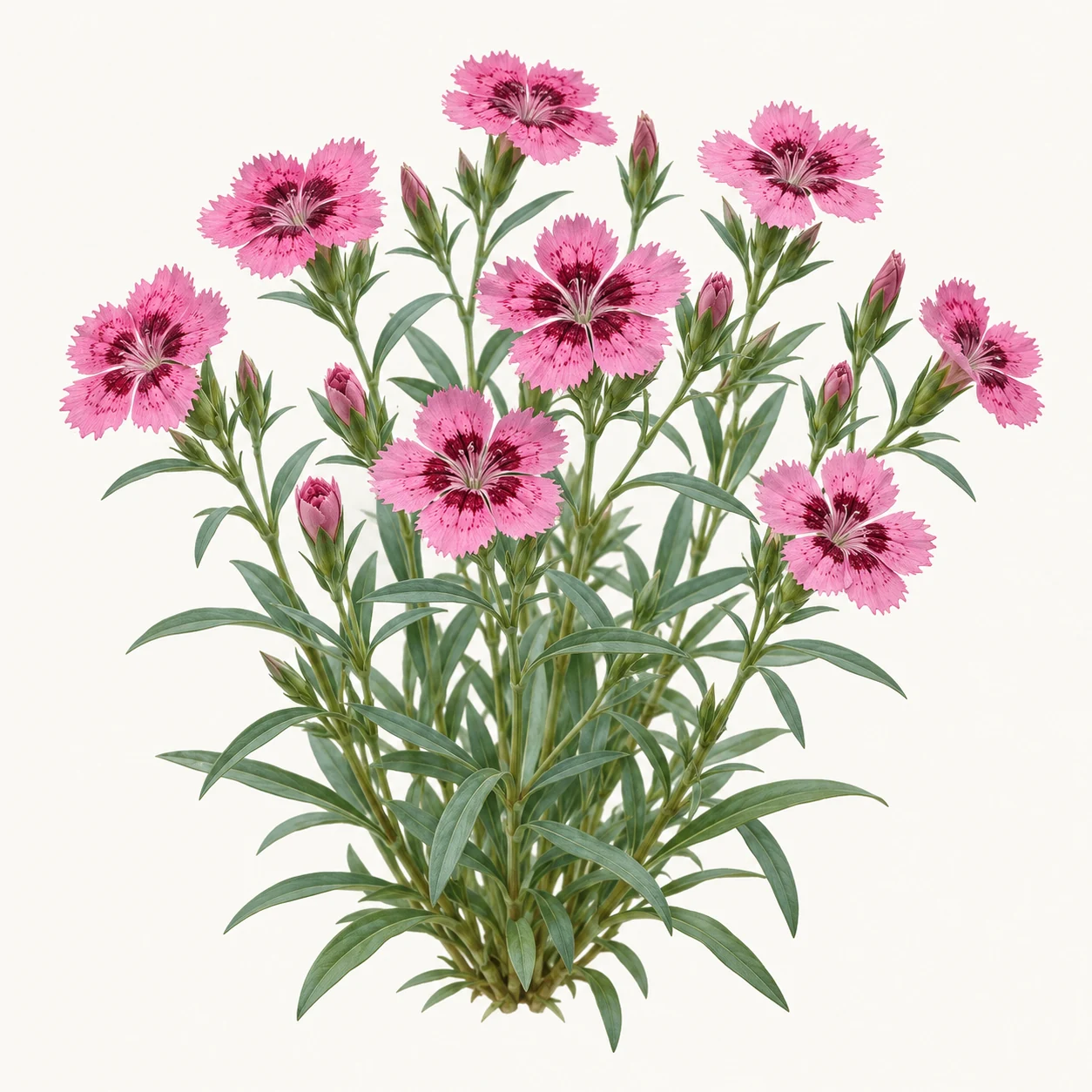
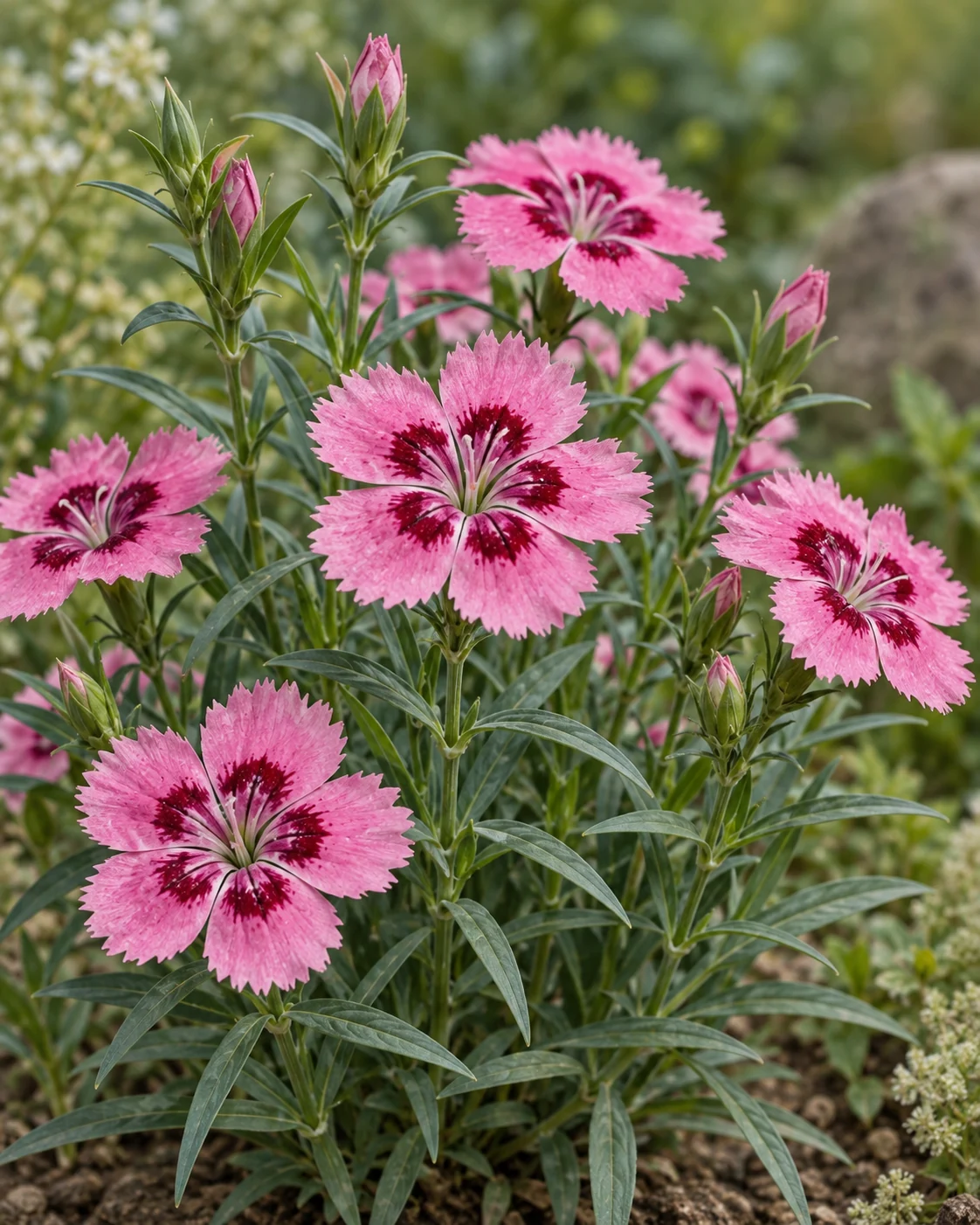
Illustrative overall form of Dianthus. The nursery selection, season and site affect appearance.Illustrative foliage and seasonal detail of Dianthus; confirm the botanical name and selection on the nursery label.
Where it works around Pensacola
Choose a bright, well-drained bed that is easy to refresh seasonally. A small repeated group can give an entry a clear color theme without filling the entire property with replaceable plants. Keep permanent shrubs or ground covers around the seasonal pocket so the design remains coherent during the change to summer planting.
Add winter and spring flowers to a sunny entry bed.
Repeat a single pink, red or white selection along a small border.
Fill a cool-season patio container with reliable drainage.
Contrast narrow gray-green leaves with broader evergreen foliage.
Plan a seasonal pocket that can transition to summer flowers later.
Which season fits locally?
Treat it primarily as a cool-season flower in North Florida. The length of the display depends on planting date, weather and selection, with heat bringing an eventual decline.
What light does it need?
Sun to part shade is suitable. Check how winter shadows change the light near buildings and evergreen shrubs before choosing the bed.
What soil works?
Use fertile, well-drained soil and avoid a constantly wet crown. Water as needed without keeping the planting saturated.
How is it kept tidy?
Remove spent blooms and damaged foliage as appropriate. When heat ends the display, replace the seasonal planting rather than expecting pruning to overcome an unsuitable season.
Before it goes on the plan
Is all dianthus the same?
No. The genus includes several species and many hybrids. This guide uses Dianthus chinensis; a different nursery label needs its own size and season check.
Will it flower all year?
Do not rely on year-round flowering locally. Its role is cooler-season color, with another plant or permanent foliage taking over during hot weather.
Can it fit a small front garden?
Yes. Use a compact selection in a defined pocket, leave room for its mature width and keep the rest of the planting supported by lasting structure.
Pairing ideas
Pentas: Pentas can take over a suitable color pocket in warm weather after dianthus declines; this is a seasonal changeover idea, not a shared bloom-time promise.
Society Garlic: Society garlic supplies a separate clumping layer nearby while dianthus fills a smaller cool-season space.
{"key":"dianthus","name":"Dianthus","botanical":"Dianthus chinensis","slug":"dianthus","id":"PLT-DIAN-CHIN","type":"accents","h":[0.5,2.5],"w":[0.5,1],"install":[0.5,0.5],"native":false,"accentGroup":"seasonal","accentForm":"daisy","light":"Sun to part shade","lightTags":["sun","part"],"water":"Moderate; rich, well-drained soil","season":"Cool-season flowers; often declines with summer heat","care":"Remove spent flowers; plan seasonal replacement","benefit":"Fringed pink flowers for the cooler garden season","intro":"Dianthus adds crisp, fringed flowers and narrow leaves to the cool-season garden. This guide focuses on Dianthus chinensis, often called Chinese pinks, rather than treating every dianthus species and hybrid as the same plant. It works well as a deliberate winter-to-spring color layer near an entry or patio.","caution":"Do not plan on this as dependable summer bedding in the Pensacola heat. UF/IFAS notes that dianthus often declines as temperatures rise toward May. Confirm the species or hybrid and cultivar, since plants sold simply as dianthus can differ considerably.","sizeNote":"For Dianthus chinensis, the broad reference is 6–30 inches tall and 6–12 inches wide. Many bedding selections are shorter than the top of that range. Select a compact named form when a low edge is essential, and use the nursery dimensions to finalize spacing. The pink flowers shown represent one color form.","site":"Choose a bright, well-drained bed that is easy to refresh seasonally. A small repeated group can give an entry a clear color theme without filling the entire property with replaceable plants. Keep permanent shrubs or ground covers around the seasonal pocket so the design remains coherent during the change to summer planting.","uses":["Add winter and spring flowers to a sunny entry bed.","Repeat a single pink, red or white selection along a small border.","Fill a cool-season patio container with reliable drainage.","Contrast narrow gray-green leaves with broader evergreen foliage.","Plan a seasonal pocket that can transition to summer flowers later."],"checks":[["Which season fits locally?","Treat it primarily as a cool-season flower in North Florida. The length of the display depends on planting date, weather and selection, with heat bringing an eventual decline."],["What light does it need?","Sun to part shade is suitable. Check how winter shadows change the light near buildings and evergreen shrubs before choosing the bed."],["What soil works?","Use fertile, well-drained soil and avoid a constantly wet crown. Water as needed without keeping the planting saturated."],["How is it kept tidy?","Remove spent blooms and damaged foliage as appropriate. When heat ends the display, replace the seasonal planting rather than expecting pruning to overcome an unsuitable season."]],"faq":[["Is all dianthus the same?","No. The genus includes several species and many hybrids. This guide uses Dianthus chinensis; a different nursery label needs its own size and season check."],["Will it flower all year?","Do not rely on year-round flowering locally. Its role is cooler-season color, with another plant or permanent foliage taking over during hot weather."],["Can it fit a small front garden?","Yes. Use a compact selection in a defined pocket, leave room for its mature width and keep the rest of the planting supported by lasting structure."]],"sources":[["UF/IFAS: Dianthus","https://gardeningsolutions.ifas.ufl.edu/plants/ornamentals/dianthus/"],["NC State Extension: Dianthus chinensis","https://plants.ces.ncsu.edu/plants/dianthus-chinensis/"]],"unit":"in","heightLabel":"Typical height","spreadLabel":"Typical spread","heightText":"6–30 in","spreadText":"6–12 in","sizeSummary":"6–30 in high × 6–12 in wide; selection varies","color":"#70815a","bloomColor":"#c77599","guideKind":"Flowering + accent plant","eyebrow":"FLOWERS + FOLIAGE / FORM + SEASON","aliases":["Chinese pinks","China pink","cool-season flowers","pink","red","white","winter","spring"],"goals":["color"],"wholeCaption":"Illustrative overall form of Dianthus. The nursery selection, season and site affect appearance.","detailCaption":"Illustrative foliage and seasonal detail of Dianthus; confirm the botanical name and selection on the nursery label.","images":{"context":{"id":"6aa09dc5cedf2f2af1d71c16","url":"https://cdn.prod.website-files.com/6a975baac0f352647862d847/6aa09dc5cedf2f2af1d71c16_landova-accent-dianthus-context.webp","alt":"Illustrative planting concept with Dianthus","width":1600,"height":900},"whole":{"id":"6aa09dc57e06f5dfffb02750","url":"https://cdn.prod.website-files.com/6a975baac0f352647862d847/6aa09dc57e06f5dfffb02750_landova-accent-dianthus-whole.webp","alt":"Illustrative whole-plant form of Dianthus","width":1254,"height":1254,"fit":"contain"},"detail":{"id":"6aa09dc57aa85159b8ac164c","url":"https://cdn.prod.website-files.com/6a975baac0f352647862d847/6aa09dc57aa85159b8ac164c_landova-accent-dianthus-detail.webp","alt":"Illustrative foliage and seasonal detail of Dianthus","width":1122,"height":1402}},"companions":[{"slug":"pentas","name":"Pentas","title":"Planned seasonal succession","reason":"Pentas can take over a suitable color pocket in warm weather after dianthus declines; this is a seasonal changeover idea, not a shared bloom-time promise.","image":{"id":"6aa093dc338a15df0952e9f3","url":"https://cdn.prod.website-files.com/6a975baac0f352647862d847/6aa093dc338a15df0952e9f3_landova-accent-pentas-context.webp","alt":"Illustrative planting concept with Pentas","width":1600,"height":900}},{"slug":"society-garlic","name":"Society Garlic","title":"Longer-lived clumps","reason":"Society garlic supplies a separate clumping layer nearby while dianthus fills a smaller cool-season space.","image":{"id":"6aa093dee788bb371fe2c6d5","url":"https://cdn.prod.website-files.com/6a975baac0f352647862d847/6aa093dee788bb371fe2c6d5_landova-accent-society-context.webp","alt":"Illustrative planting concept with Society Garlic","width":1600,"height":900}},{"slug":"schillings-dwarf-yaupon-holly","name":"Schilling’s Dwarf Yaupon Holly","title":"Evergreen outline","reason":"Dwarf yaupon gives the garden a lasting outline around replaceable seasonal flowers.","image":{"id":"6a9f5cd31fbbc23ce58d34ef","url":"https://cdn.prod.website-files.com/6a975baac0f352647862d847/6a9f5cd31fbbc23ce58d34ef_landova-schilling-context-r05.webp","alt":"Illustrative planting concept with Schilling’s Dwarf Yaupon Holly"}}]}
LANDOVA / PLANTING DECISIONS
Choose plants with the whole space in mind.
Explore a planting goal, then compare the growing needs and mature size of individual plants.
LANDOVA is in beta
Join the launch waitlist.
We are not accepting paying clients yet. We expect to launch around January 2027 and may open sooner. Explore our free tools now, and sign up for launch updates and educational planning emails.
Thank you. Your waitlist signup has been received. We will email you with launch updates. No purchase or project booking has been made.
We could not save your signup. Please try again or email info@landovadesign.com.