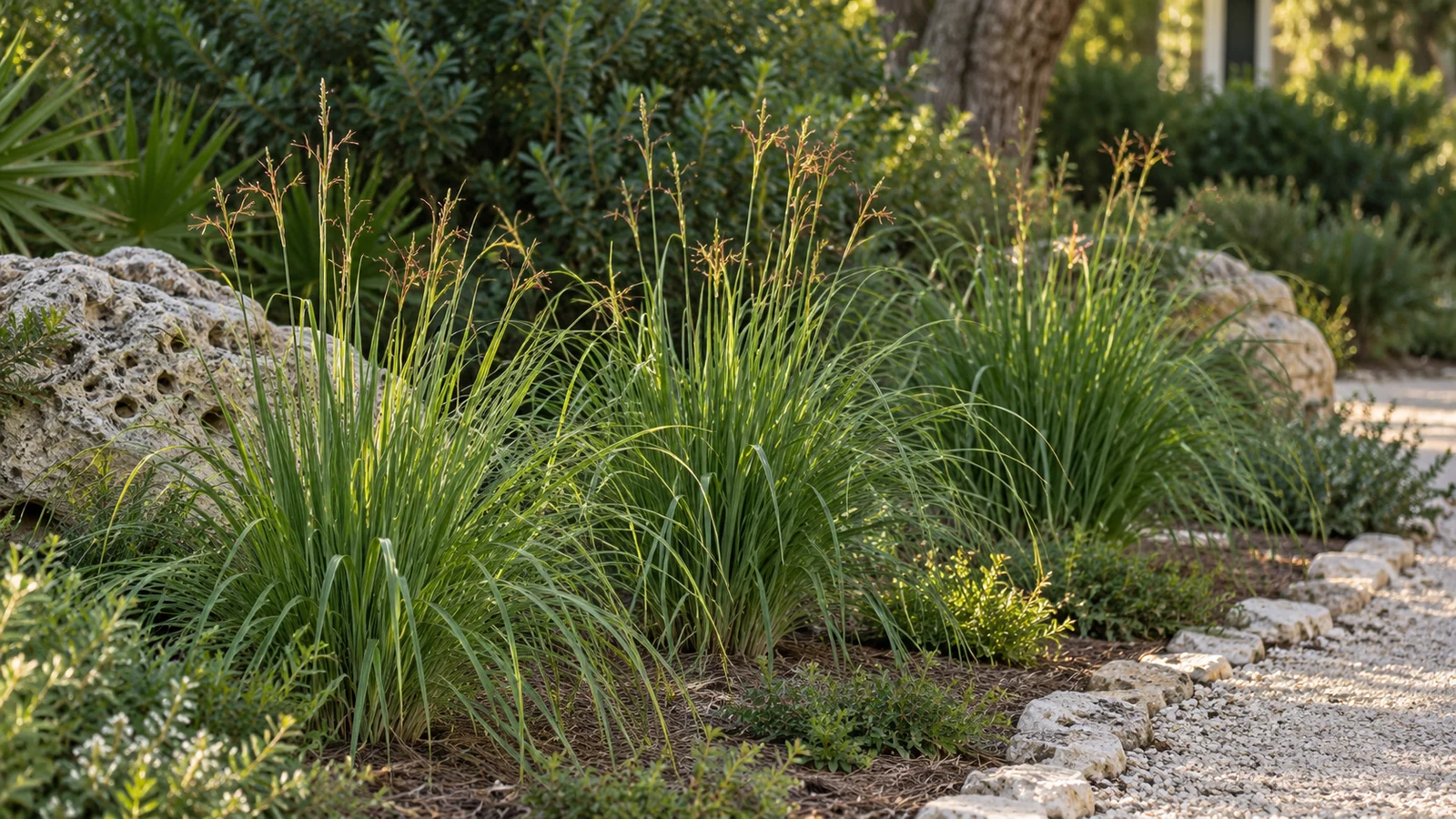
Dwarf Fakahatchee brings arching green leaves into a garden at a more manageable scale than its larger relative. Its value is the everyday foliage and clumping rhythm. Use it where a medium-low planting can connect shrubs, open ground and a clearly defined path.
Before you choose: Confirm Tripsacum floridanum, not full-size Fakahatchee. A wet-tolerant plant does not repair drainage or establish tolerance of saltwater flooding.
Illustrative planting concept
Size and space
Mature height: 2–3 ft. Mature spread: 2–3 ft.
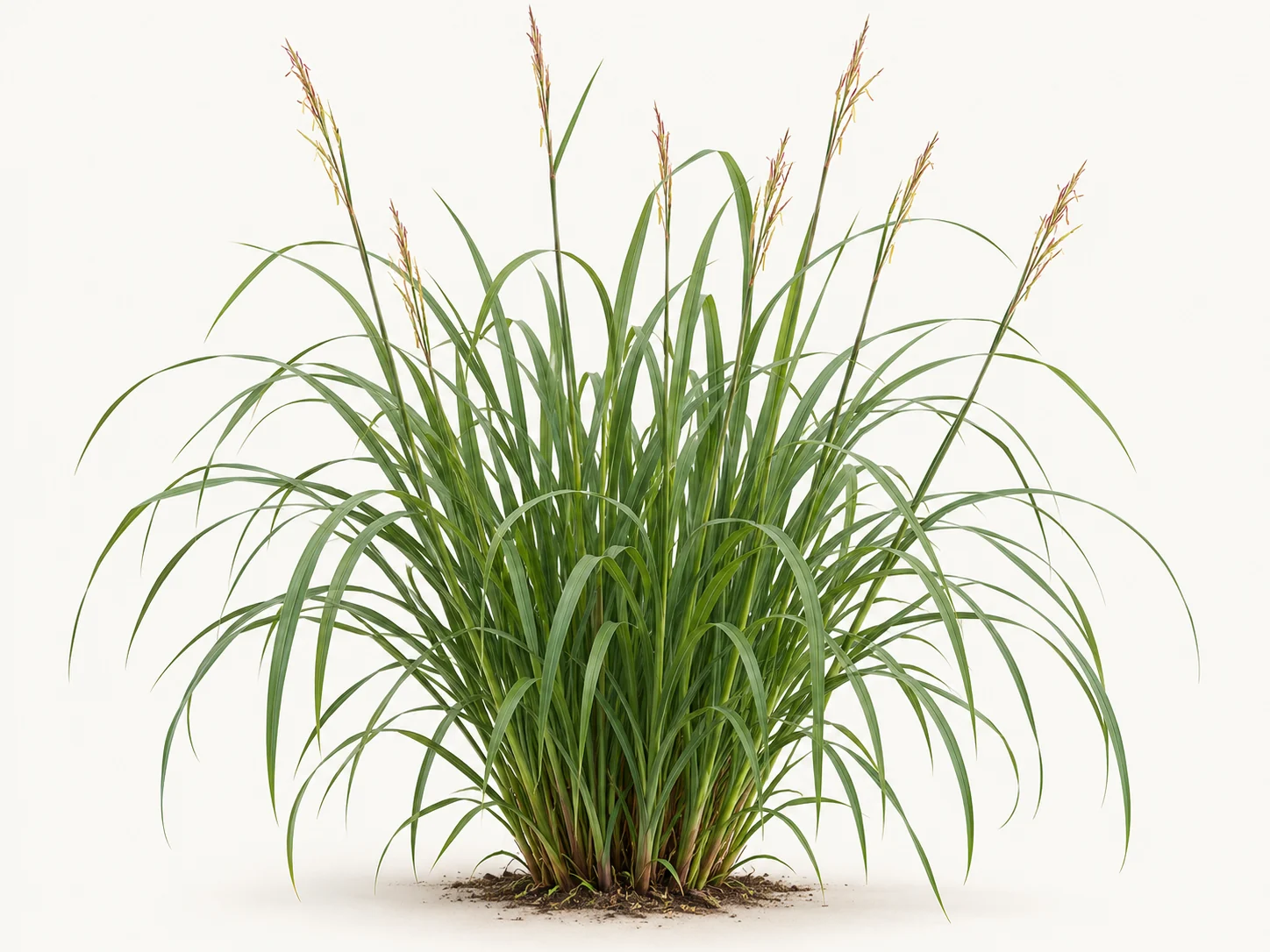
UF/IFAS describes the dwarf plant at roughly 2–3 ft in size, with slender flower spikes a little above the foliage. This guide uses 2–3 ft for the main clump in both directions. It is distinct from full-sized Tripsacum dactyloides, which can create a much larger planting.
Installed example: 1 ft high × 1 ft wide. This is an illustrative size, not a pot-size or growth-timeline promise.
Full sun to light shade · Prefers moisture; can suit seasonally wet freshwater beds after site review · Green clumping foliage · subtle spring flower spikes · possible winter browning
Care: Remove brown or winter-damaged foliage in spring; divide as clumps expand
Know the whole plant
Illustrative compact dwarf clump; full-sized Fakahatchee has its own larger space requirements.Illustrative folded green leaves and inconspicuous slender flower spikes.
Where it works around Pensacola
This Florida-native grass is used in regional planting guidance, including a UF/IFAS Bay County demonstration garden. For Pensacola, review winter exposure, the duration of wet conditions and the available width. Reserve a clear route for maintaining the bed without walking through wet ground.
A moist native border
Rain-garden planting after site review
A lower green shrub foreground
Repeated compact grass groups
A roomy container accent
Why does the bed stay wet?
Understand runoff and drainage before choosing plants. Match the grass to a suitable water pattern rather than using planting to hide a site problem.
How wide is the usable planting area?
Allow the arching leaves their full clump width. Keep them clear of the route needed for walking, equipment and routine garden care.
Is subtle flowering enough?
The flower spikes are small and understated. Choose this grass for its green texture and form instead of expecting a muhly-like colored cloud.
Will the winter view still work?
Weather can brown foliage. Include enough other structure that seasonal cleanup does not leave an important view or edge unfinished.
Before it goes on the plan
Is this just full-size Fakahatchee kept short?
No. The guide is for Tripsacum floridanum. Confirm that botanical name; keeping a larger plant cut down creates a different maintenance commitment.
Can it grow in a rain garden?
It can be considered for an appropriate seasonally wet freshwater planting. First check the source and duration of water, access and the overall drainage plan.
Does Florida native mean no care?
No. New plants still need establishment care, mature clumps need room, and brown or damaged foliage may need seasonal removal.
Pairing ideas
Walter’s Viburnum: Walter’s Viburnum can provide larger evergreen structure in a compatible setting. Keep its broad mature canopy beyond the grass clumps.
Henry’s Garnet Sweetspire: Henry’s Garnet Sweetspire can join an appropriate moist bed with compatible soil and light. It adds arching shrub branches and seasonal leaf change, with separate space for each plant.
{"key":"fakahatchee","id":"PLT-TRIP-FLORIDANUM","slug":"dwarf-fakahatchee-grass","name":"Dwarf Fakahatchee Grass","botanical":"Tripsacum floridanum","eyebrow":"A COMPACT NATIVE CLUMP + GREEN TEXTURE","benefit":"Give a moist garden a softer green layer.","intro":"Dwarf Fakahatchee brings arching green leaves into a garden at a more manageable scale than its larger relative. Its value is the everyday foliage and clumping rhythm. Use it where a medium-low planting can connect shrubs, open ground and a clearly defined path.","h":[2,3],"w":[2,3],"install":[1,1],"color":"#5c7851","plantKind":"grass","light":"Full sun to light shade","lightTags":["sun","part"],"water":"Prefers moisture; can suit seasonally wet freshwater beds after site review","season":"Green clumping foliage · subtle spring flower spikes · possible winter browning","care":"Remove brown or winter-damaged foliage in spring; divide as clumps expand","caution":"Confirm Tripsacum floridanum, not full-size Fakahatchee. A wet-tolerant plant does not repair drainage or establish tolerance of saltwater flooding.","site":"This Florida-native grass is used in regional planting guidance, including a UF/IFAS Bay County demonstration garden. For Pensacola, review winter exposure, the duration of wet conditions and the available width. Reserve a clear route for maintaining the bed without walking through wet ground.","sizeNote":"UF/IFAS describes the dwarf plant at roughly 2–3 ft in size, with slender flower spikes a little above the foliage. This guide uses 2–3 ft for the main clump in both directions. It is distinct from full-sized Tripsacum dactyloides, which can create a much larger planting.","uses":["A moist native border","Rain-garden planting after site review","A lower green shrub foreground","Repeated compact grass groups","A roomy container accent"],"checks":[["Why does the bed stay wet?","Understand runoff and drainage before choosing plants. Match the grass to a suitable water pattern rather than using planting to hide a site problem."],["How wide is the usable planting area?","Allow the arching leaves their full clump width. Keep them clear of the route needed for walking, equipment and routine garden care."],["Is subtle flowering enough?","The flower spikes are small and understated. Choose this grass for its green texture and form instead of expecting a muhly-like colored cloud."],["Will the winter view still work?","Weather can brown foliage. Include enough other structure that seasonal cleanup does not leave an important view or edge unfinished."]],"faq":[["Is this just full-size Fakahatchee kept short?","No. The guide is for Tripsacum floridanum. Confirm that botanical name; keeping a larger plant cut down creates a different maintenance commitment."],["Can it grow in a rain garden?","It can be considered for an appropriate seasonally wet freshwater planting. First check the source and duration of water, access and the overall drainage plan."],["Does Florida native mean no care?","No. New plants still need establishment care, mature clumps need room, and brown or damaged foliage may need seasonal removal."]],"sources":[["UF/IFAS · Dwarf Fakahatchee growing guide","https://blogs.ifas.ufl.edu/charlotteco/2022/05/26/fakahatchees-little-cousin/"],["UF/IFAS · Fakahatchee and dwarf distinction","https://gardeningsolutions.ifas.ufl.edu/plants/ornamentals/fakahatchee-grass/"],["UF/IFAS Bay County · regional demonstration garden","https://sites.google.com/ufl.edu/ufifas-extension-bay-county-dg/foundation-bed-native-plants/dwarf-fakahatchee-grass-tripsacum-floridanum"]],"wholeCaption":"Illustrative compact dwarf clump; full-sized Fakahatchee has its own larger space requirements.","detailCaption":"Illustrative folded green leaves and inconspicuous slender flower spikes.","native":true,"guideKind":"Native grass guide","aliases":["dwarf fakahatchee","Florida gamagrass","Tripsacum","rain garden","green grass"],"goals":["color"],"type":"grasses","categoryLabel":"Grasses + grass-like plants","habit":"grass","reviewDate":"2026-09-08","images":{"context":{"id":"6aa002296f67b3d818b2c1dc","url":"https://cdn.prod.website-files.com/6a975baac0f352647862d847/6aa002296f67b3d818b2c1dc_landova-grass-fakahatchee-context.webp","alt":"Illustrative planting concept with Dwarf Fakahatchee Grass","width":1600,"height":900},"whole":{"id":"6aa0022ac10411418b816a3f","url":"https://cdn.prod.website-files.com/6a975baac0f352647862d847/6aa0022ac10411418b816a3f_landova-grass-fakahatchee-whole.webp","alt":"Illustrative whole-plant form of Dwarf Fakahatchee Grass","width":1448,"height":1086,"fit":"contain"},"detail":{"id":"6aa0022aa12cce6406a47224","url":"https://cdn.prod.website-files.com/6a975baac0f352647862d847/6aa0022aa12cce6406a47224_landova-grass-fakahatchee-detail.webp","alt":"Illustrative foliage and seasonal detail of Dwarf Fakahatchee Grass","width":1254,"height":1254}},"companions":[{"slug":"walters-viburnum","name":"Walter’s Viburnum","title":"Build a taller native backdrop","reason":"Walter’s Viburnum can provide larger evergreen structure in a compatible setting. Keep its broad mature canopy beyond the grass clumps.","image":{"id":"6a9f5cd5ed7b89a06a969071","url":"https://cdn.prod.website-files.com/6a975baac0f352647862d847/6a9f5cd5ed7b89a06a969071_landova-walter-context-r05.webp","alt":"Illustrative planting concept with Walter’s Viburnum"}},{"slug":"henrys-garnet-sweetspire","name":"Henry’s Garnet Sweetspire","title":"Add a different seasonal texture","reason":"Henry’s Garnet Sweetspire can join an appropriate moist bed with compatible soil and light. It adds arching shrub branches and seasonal leaf change, with separate space for each plant.","image":{"id":"6a9f5cd7d7f880ff25110b61","url":"https://cdn.prod.website-files.com/6a975baac0f352647862d847/6a9f5cd7d7f880ff25110b61_landova-henry-context-r05.webp","alt":"Illustrative planting concept with Henry’s Garnet Sweetspire"}}]}
LANDOVA / PLANTING DECISIONS
Choose plants with the whole space in mind.
Explore a planting goal, then compare the growing needs and mature size of individual plants.
LANDOVA is in beta
Join the launch waitlist.
We are not accepting paying clients yet. We expect to launch around January 2027 and may open sooner. Explore our free tools now, and sign up for launch updates and educational planning emails.
Thank you. Your waitlist signup has been received. We will email you with launch updates. No purchase or project booking has been made.
We could not save your signup. Please try again or email info@landovadesign.com.