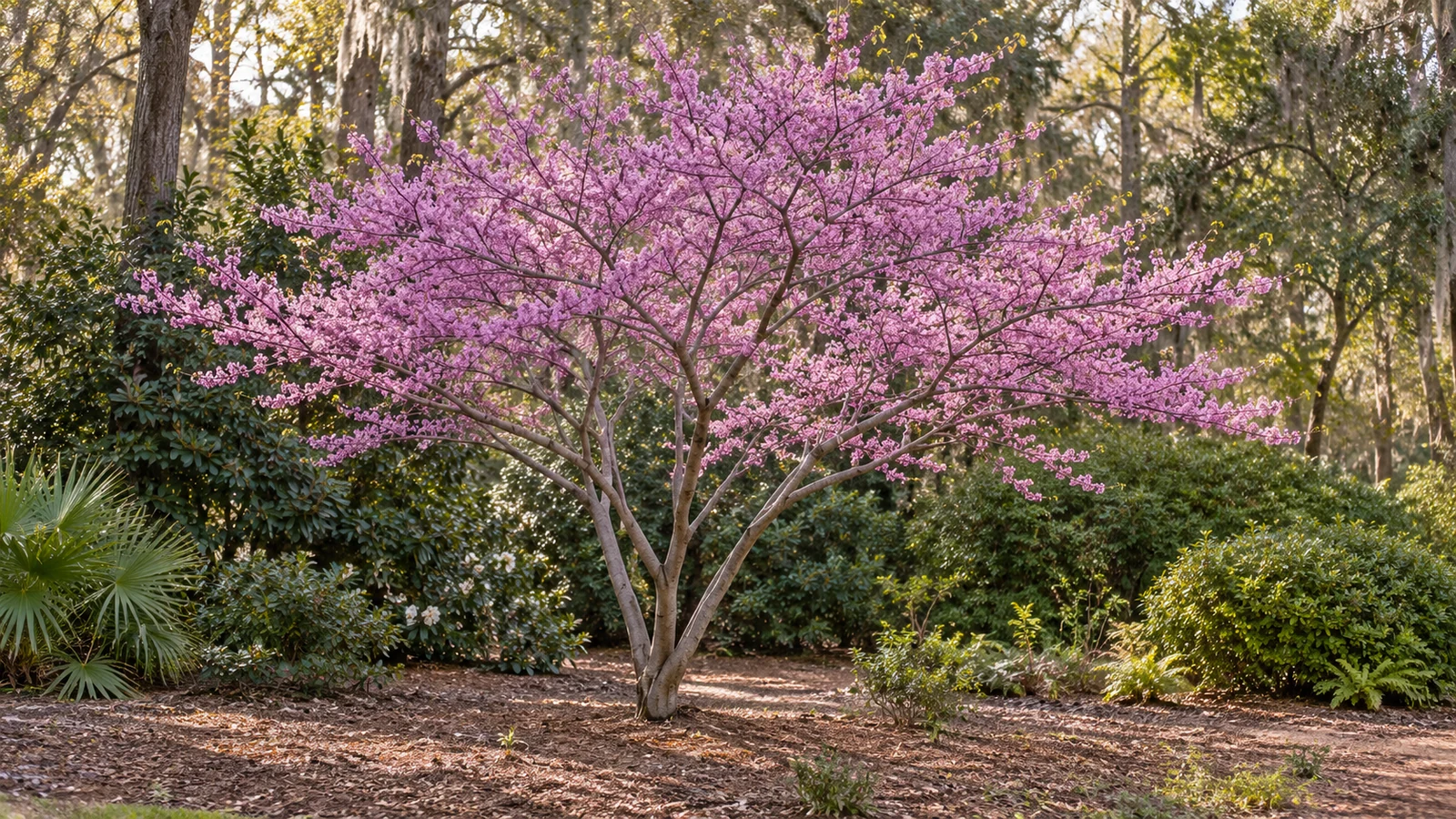
Eastern Redbud carries purple-pink flowers along its branches before the leafy summer crown develops. Its spreading form and heart-shaped green leaves can soften the edge of a sheltered garden. Place it where that early-season display has a clear view, with enough room for the branch framework to remain graceful as the tree grows.
Before you choose: Choose locally appropriate Eastern Redbud stock and shelter it from direct salt spray. It is deciduous and needs attention to stress, branch structure and canker; purple-leaf cultivars are separate selections.
Illustrative planting concept
Size and space
Mature height: 20–30 ft. Mature spread: 15–25 ft.
The UF/IFAS range is 20–30 ft high and 15–25 ft wide. Older specimens can exceed that height. The diagram represents the green-leaf species in a simplified tree form; a named dwarf, weeping or purple-leaf cultivar requires its own size and performance review.
Installed example: 6 ft high × 4 ft wide. This is an illustrative size, not a pot-size or growth-timeline promise.
Sun to part shade; afternoon shade is useful in hot settings · Prefer suitable moist, well-drained soil; monitor summer dry spells · Purple-pink early spring flowers · heart-shaped green leaves · winter branching
Care: Guide young branch structure and inspect stressed or dying branches; protect from trunk damage
Know the whole plant
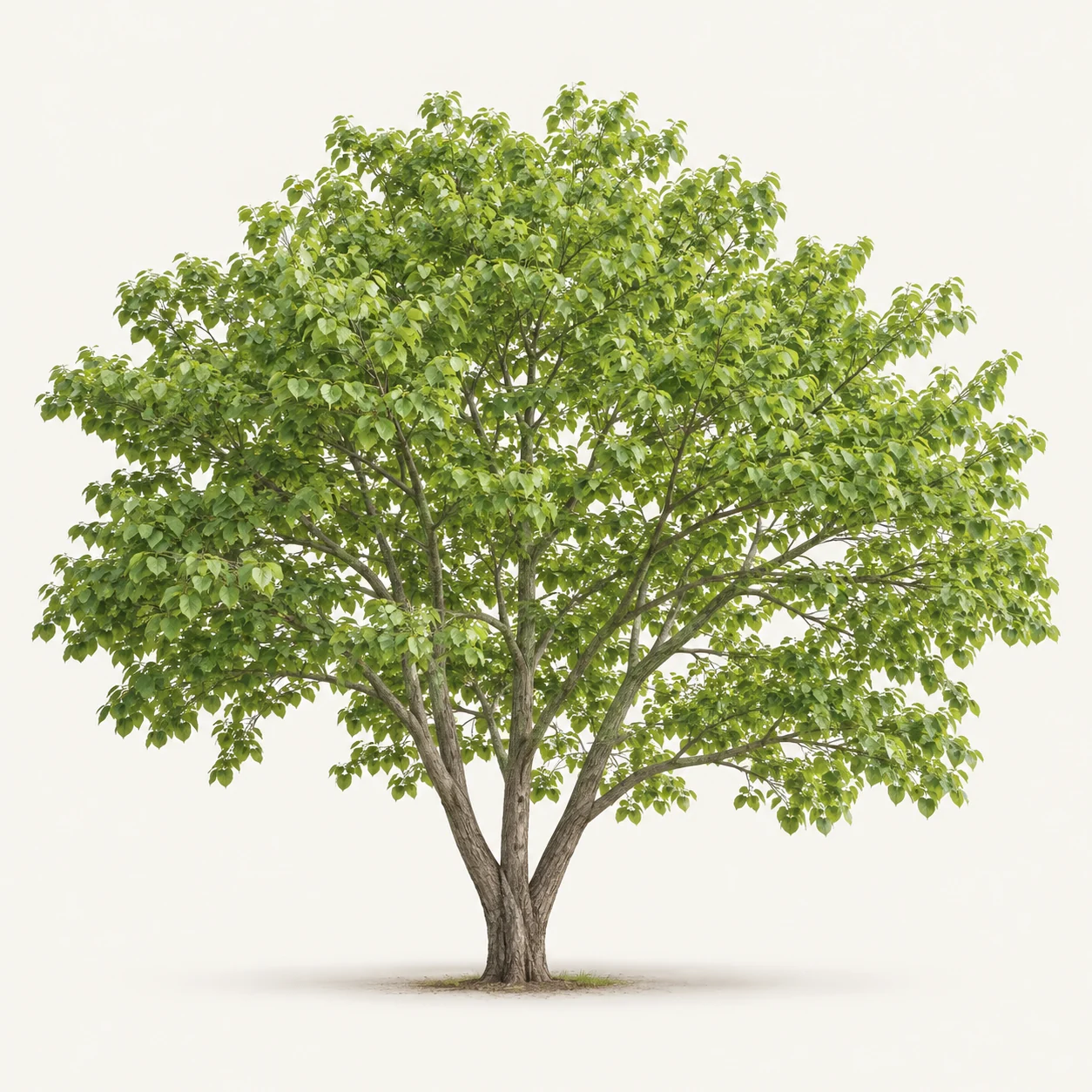
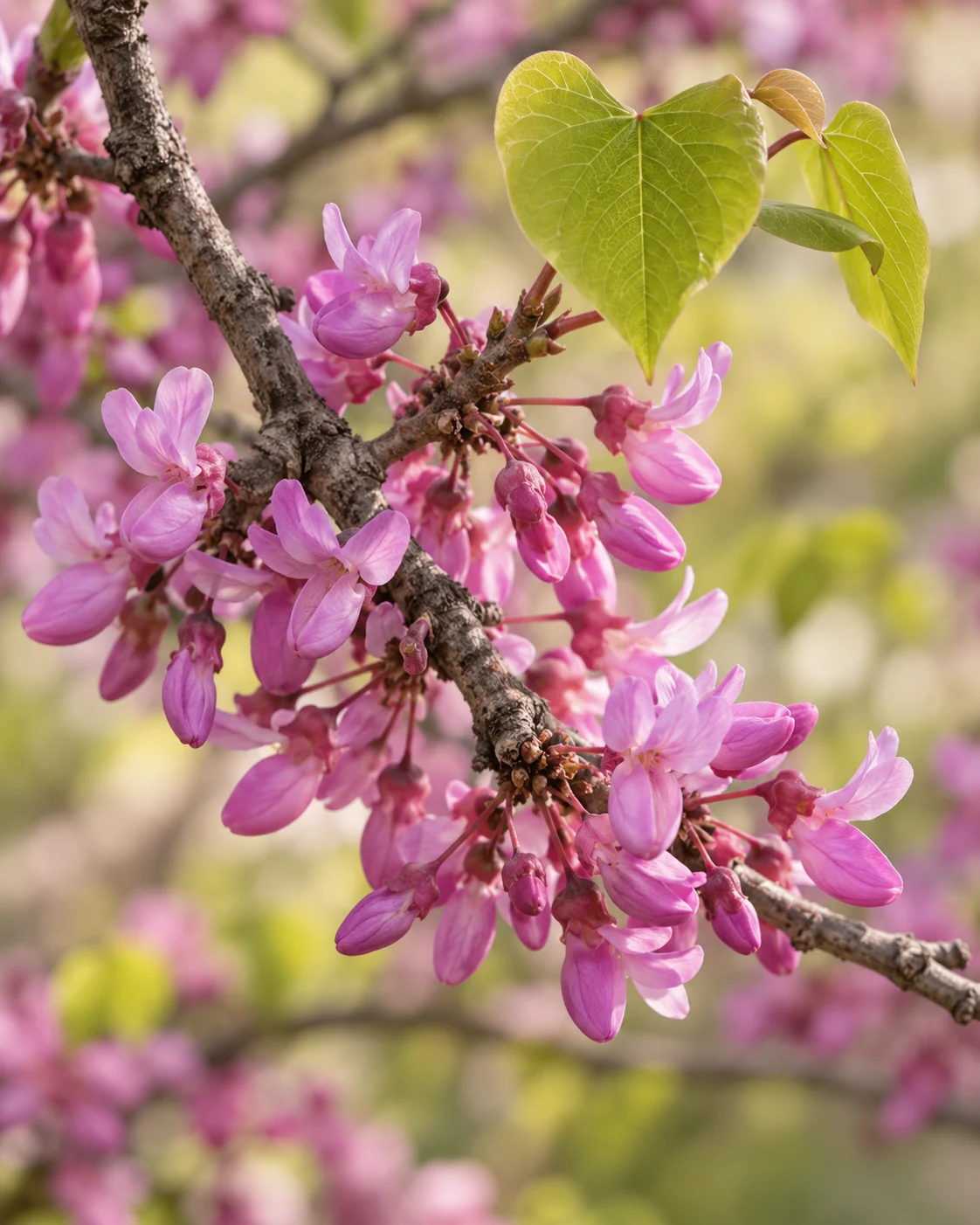
Illustrative green summer Eastern Redbud with heart-shaped leaves; spring bloom does not persist all year.Illustrative small purple-pink flowers borne directly along redbud twigs, with emerging heart-shaped leaves.
Where it works around Pensacola
Eastern Redbud is documented in Escambia County’s plant education, and local seed-source guidance matters for this wide-ranging species. In Pensacola, consider a sheltered garden edge with compatible moisture and some relief from harsh afternoon exposure. Use it as a seasonal feature rather than a permanent privacy barrier.
A native early-spring accent
Color at a sheltered woodland edge
A spreading small-tree composition
Seasonal interest viewed from the house
A leafy summer layer above low planting
Where did the nursery stock originate?
Ask for locally appropriate seed-grown stock or documented regional cultivar performance. A broad native range does not make all nursery selections equally suitable for the same climate.
Does the location reduce avoidable stress?
Review moisture, afternoon exposure and physical damage from mowing or nearby work. Give the tree a settled root area and a planting setting that can be maintained consistently.
Can the broad branch form develop?
Keep the mature width clear of walls and busy routes. Choose nursery structure carefully and arrange qualified guidance if the young branches need correction.
Is the garden relying on permanent purple foliage?
This species has green summer leaves. The pink bloom is seasonal; choose and verify a specific cultivar separately if a different foliage color is essential.
Before it goes on the plan
Will it stay pink through summer?
No. Pink flowers appear in early spring, followed by green heart-shaped leaves. The whole-plant illustration shows the normal leafy season.
Is any redbud from the nursery a good local choice?
Confirm the species, cultivar and regional suitability. Florida Wildflower Foundation recommends stock grown from local seed sources for best results.
Is it a long-term evergreen screen?
No. Redbud loses its leaves, and its role is a seasonal flowering and foliage tree. Use a separate suitable evergreen layer where winter screening is required.
Pairing ideas
Shi Shi Gashira Camellia: Shi Shi Gashira can supply a lower evergreen element in a compatible sheltered bed. Leave separate spaces and consider the shade cast by the mature redbud.
Dwarf Mondo Grass: Dwarf Mondo offers a low foreground where moisture and drainage fit. Keep the main route paved and protect the tree’s root area during planting.
{"key":"redbud","id":"PLT-CERC-CANADENSIS","slug":"eastern-redbud","name":"Eastern Redbud","botanical":"Cercis canadensis","h":[20,30],"w":[15,25],"install":[6,4],"treeForm":"vase","color":"#82906d","native":true,"type":"trees","categoryLabel":"Trees","reviewDate":"2026-09-08","guideKind":"Native flowering species guide","eyebrow":"PINK SPRING BRANCHES + HEART-SHAPED LEAVES","benefit":"Let the first spring color announce the garden.","intro":"Eastern Redbud carries purple-pink flowers along its branches before the leafy summer crown develops. Its spreading form and heart-shaped green leaves can soften the edge of a sheltered garden. Place it where that early-season display has a clear view, with enough room for the branch framework to remain graceful as the tree grows.","light":"Sun to part shade; afternoon shade is useful in hot settings","lightTags":["sun","part"],"water":"Prefer suitable moist, well-drained soil; monitor summer dry spells","season":"Purple-pink early spring flowers · heart-shaped green leaves · winter branching","care":"Guide young branch structure and inspect stressed or dying branches; protect from trunk damage","caution":"Choose locally appropriate Eastern Redbud stock and shelter it from direct salt spray. It is deciduous and needs attention to stress, branch structure and canker; purple-leaf cultivars are separate selections.","site":"Eastern Redbud is documented in Escambia County’s plant education, and local seed-source guidance matters for this wide-ranging species. In Pensacola, consider a sheltered garden edge with compatible moisture and some relief from harsh afternoon exposure. Use it as a seasonal feature rather than a permanent privacy barrier.","sizeNote":"The UF/IFAS range is 20–30 ft high and 15–25 ft wide. Older specimens can exceed that height. The diagram represents the green-leaf species in a simplified tree form; a named dwarf, weeping or purple-leaf cultivar requires its own size and performance review.","uses":["A native early-spring accent","Color at a sheltered woodland edge","A spreading small-tree composition","Seasonal interest viewed from the house","A leafy summer layer above low planting"],"checks":[["Where did the nursery stock originate?","Ask for locally appropriate seed-grown stock or documented regional cultivar performance. A broad native range does not make all nursery selections equally suitable for the same climate."],["Does the location reduce avoidable stress?","Review moisture, afternoon exposure and physical damage from mowing or nearby work. Give the tree a settled root area and a planting setting that can be maintained consistently."],["Can the broad branch form develop?","Keep the mature width clear of walls and busy routes. Choose nursery structure carefully and arrange qualified guidance if the young branches need correction."],["Is the garden relying on permanent purple foliage?","This species has green summer leaves. The pink bloom is seasonal; choose and verify a specific cultivar separately if a different foliage color is essential."]],"faq":[["Will it stay pink through summer?","No. Pink flowers appear in early spring, followed by green heart-shaped leaves. The whole-plant illustration shows the normal leafy season."],["Is any redbud from the nursery a good local choice?","Confirm the species, cultivar and regional suitability. Florida Wildflower Foundation recommends stock grown from local seed sources for best results."],["Is it a long-term evergreen screen?","No. Redbud loses its leaves, and its role is a seasonal flowering and foliage tree. Use a separate suitable evergreen layer where winter screening is required."]],"sources":[["UF/IFAS · Eastern Redbud dimensions and care","https://ask.ifas.ufl.edu/publication/ST145"],["Florida Wildflower Foundation · local seed-source guidance","https://www.flawildflowers.org/flower-friday-cercis-canadensis/"],["UF/IFAS Escambia County · Eastern Redbud locally","https://blogs.ifas.ufl.edu/escambiaco/2024/03/27/weekly-what-is-it-eastern-redbud/"]],"wholeCaption":"Illustrative green summer Eastern Redbud with heart-shaped leaves; spring bloom does not persist all year.","detailCaption":"Illustrative small purple-pink flowers borne directly along redbud twigs, with emerging heart-shaped leaves.","aliases":["redbud","Eastern Redbud","Cercis","pink","purple","spring","native"],"goals":["color"],"images":{"context":{"id":"6aa01714c9115bfd1b0eac7b","url":"https://cdn.prod.website-files.com/6a975baac0f352647862d847/6aa01714c9115bfd1b0eac7b_landova-tree-redbud-context.webp","alt":"Illustrative planting concept with Eastern Redbud","width":1600,"height":900},"whole":{"id":"6aa01715432a95e80f8b0d9a","url":"https://cdn.prod.website-files.com/6a975baac0f352647862d847/6aa01715432a95e80f8b0d9a_landova-tree-redbud-whole.webp","alt":"Illustrative whole-plant form of Eastern Redbud","width":1254,"height":1254,"fit":"contain"},"detail":{"id":"6aa01715c9115bfd1b0eace2","url":"https://cdn.prod.website-files.com/6a975baac0f352647862d847/6aa01715c9115bfd1b0eace2_landova-tree-redbud-detail.webp","alt":"Illustrative foliage and seasonal detail of Eastern Redbud","width":1122,"height":1402}},"companions":[{"slug":"shi-shi-gashira-camellia","name":"Shi Shi Gashira Camellia","title":"Hold a green layer through winter","reason":"Shi Shi Gashira can supply a lower evergreen element in a compatible sheltered bed. Leave separate spaces and consider the shade cast by the mature redbud.","image":{"id":"6a9f34851fbbc23ce57e8e85","url":"https://cdn.prod.website-files.com/6a975baac0f352647862d847/6a9f34851fbbc23ce57e8e85_landova-shrub-shishi-context-r02.webp","alt":"Illustrative planting concept with Shi Shi Gashira Camellia"}},{"slug":"dwarf-mondo-grass","name":"Dwarf Mondo Grass","title":"Compare a very low shaded edge","reason":"Dwarf Mondo offers a low foreground where moisture and drainage fit. Keep the main route paved and protect the tree’s root area during planting.","image":{"id":"6aa00d183fe0798c1efa78ee","url":"https://cdn.prod.website-files.com/6a975baac0f352647862d847/6aa00d183fe0798c1efa78ee_landova-grass-mondo-context.webp","alt":"Illustrative planting concept with Dwarf Mondo Grass","width":1600,"height":900}}]}
LANDOVA / PLANTING DECISIONS
Choose plants with the whole space in mind.
Explore a planting goal, then compare the growing needs and mature size of individual plants.
LANDOVA is in beta
Join the launch waitlist.
We are not accepting paying clients yet. We expect to launch around January 2027 and may open sooner. Explore our free tools now, and sign up for launch updates and educational planning emails.
Thank you. Your waitlist signup has been received. We will email you with launch updates. No purchase or project booking has been made.
We could not save your signup. Please try again or email info@landovadesign.com.