Make room for shade that changes with the seasons.
Florida Maple brings a rounded green crown and a softer seasonal change to an inland garden. Its fall tones can be muted yellow and orange rather than the brilliant red of northern postcard scenes. Choose it for the shape and shade it can contribute through the year, with autumn color as an added pleasure.
Before you choose: Florida Maple is not salt-tolerant and can develop shallow surface roots. Use it in a sheltered inland setting with generous soil space. A tree often seen at 20–30 ft can eventually reach 60 ft, so small early size should not drive placement.
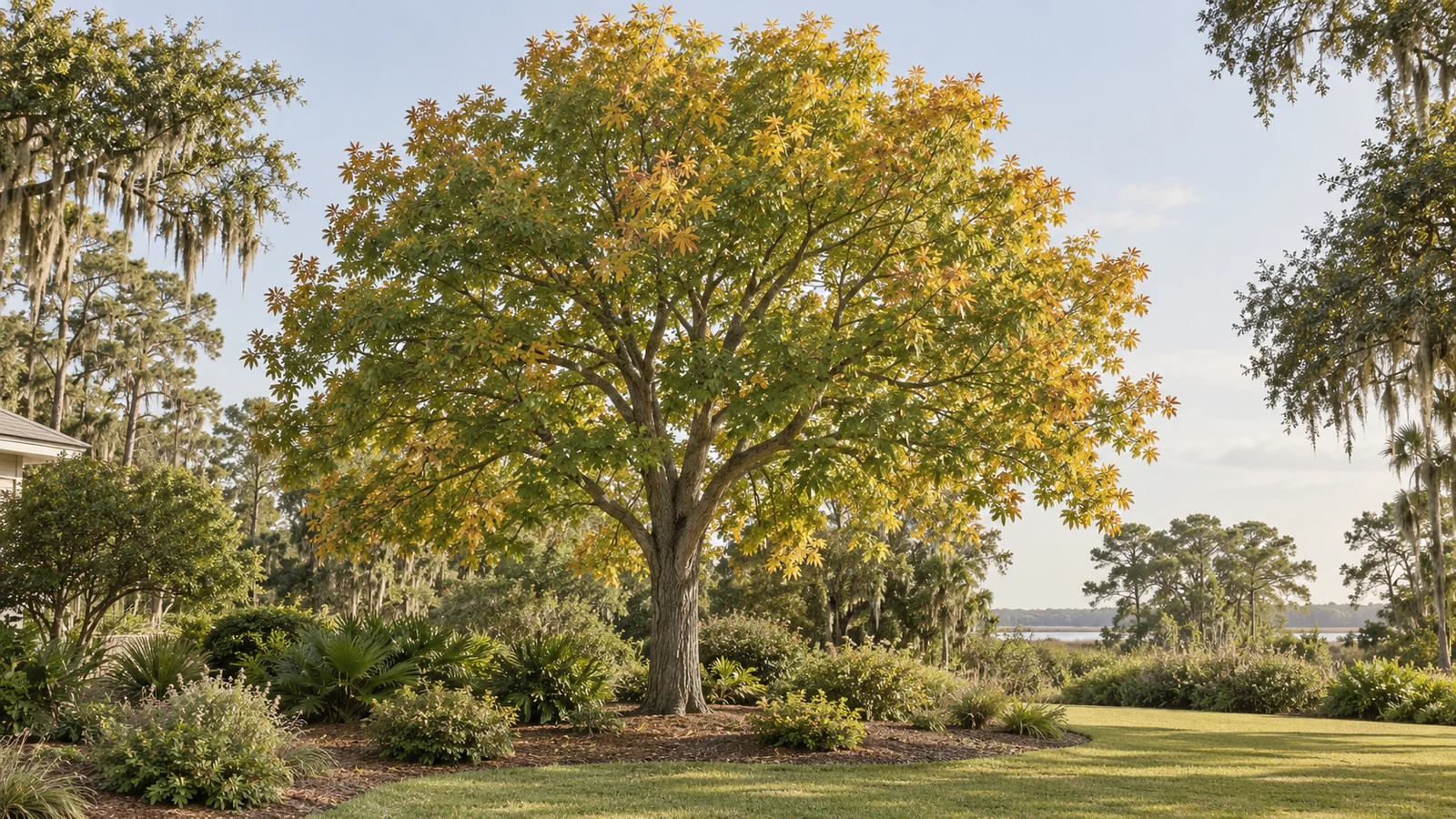
Illustrative planting concept
Size and space
Mature height: 20–60 ft. Mature spread: 25–40 ft.
UF/IFAS lists 20–60 ft high and 25–40 ft wide, while noting that many landscape trees are seen at 20–30 ft. The diagram keeps that broad range visible so an apparently modest maple is not mistaken for a permanently small tree. This is Florida Maple, not a generic northern sugar maple selection.
Installed example: 7 ft high × 4 ft wide. This is an illustrative size, not a pot-size or growth-timeline promise.
Full sun to part shade · Adaptable to several soil types; provide establishment water and support through extended dry spells · Green summer leaves · variable yellow-orange fall color · a deciduous winter outline
Care: Protect surface roots from mowing and plan a sound branch framework while young
Know the whole plant
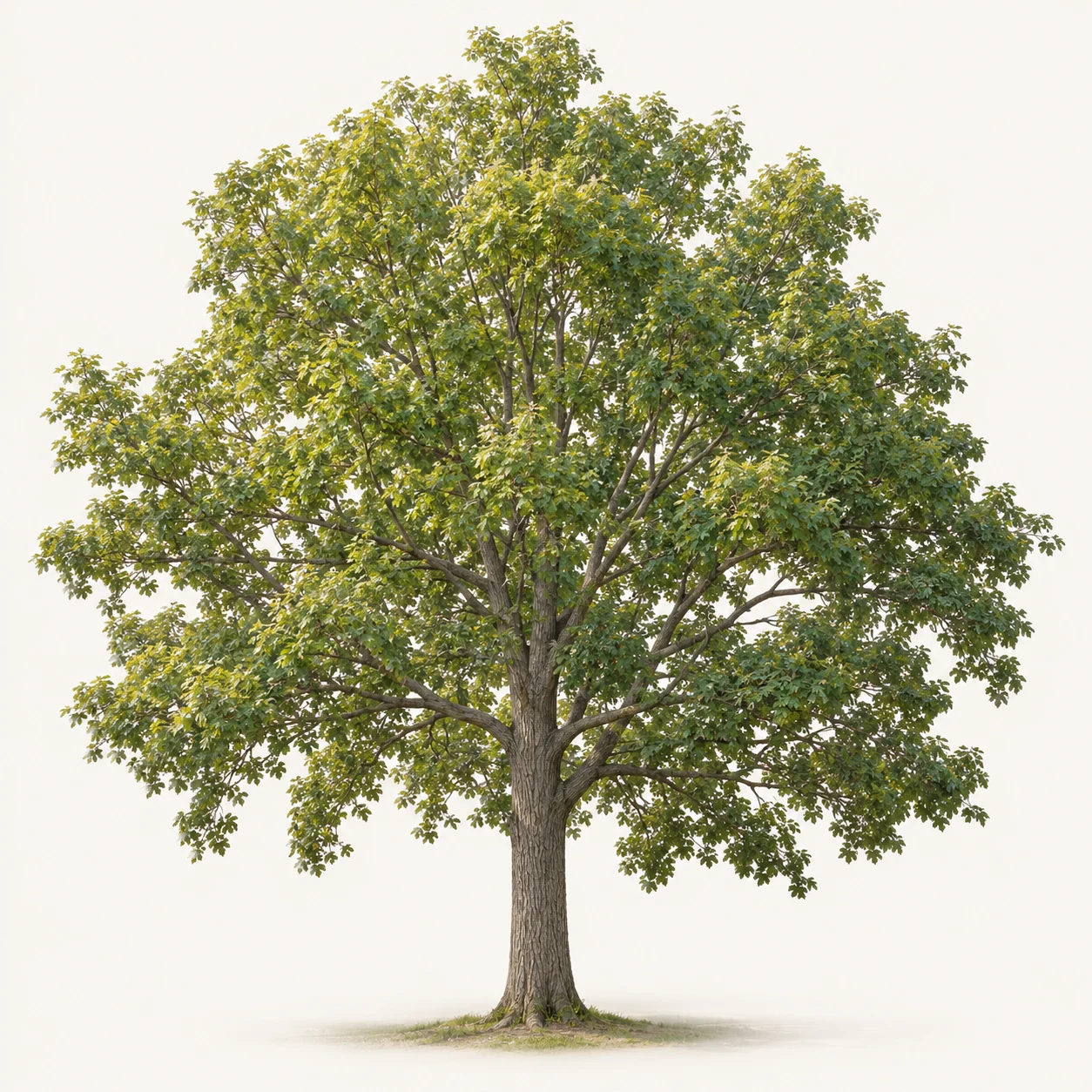
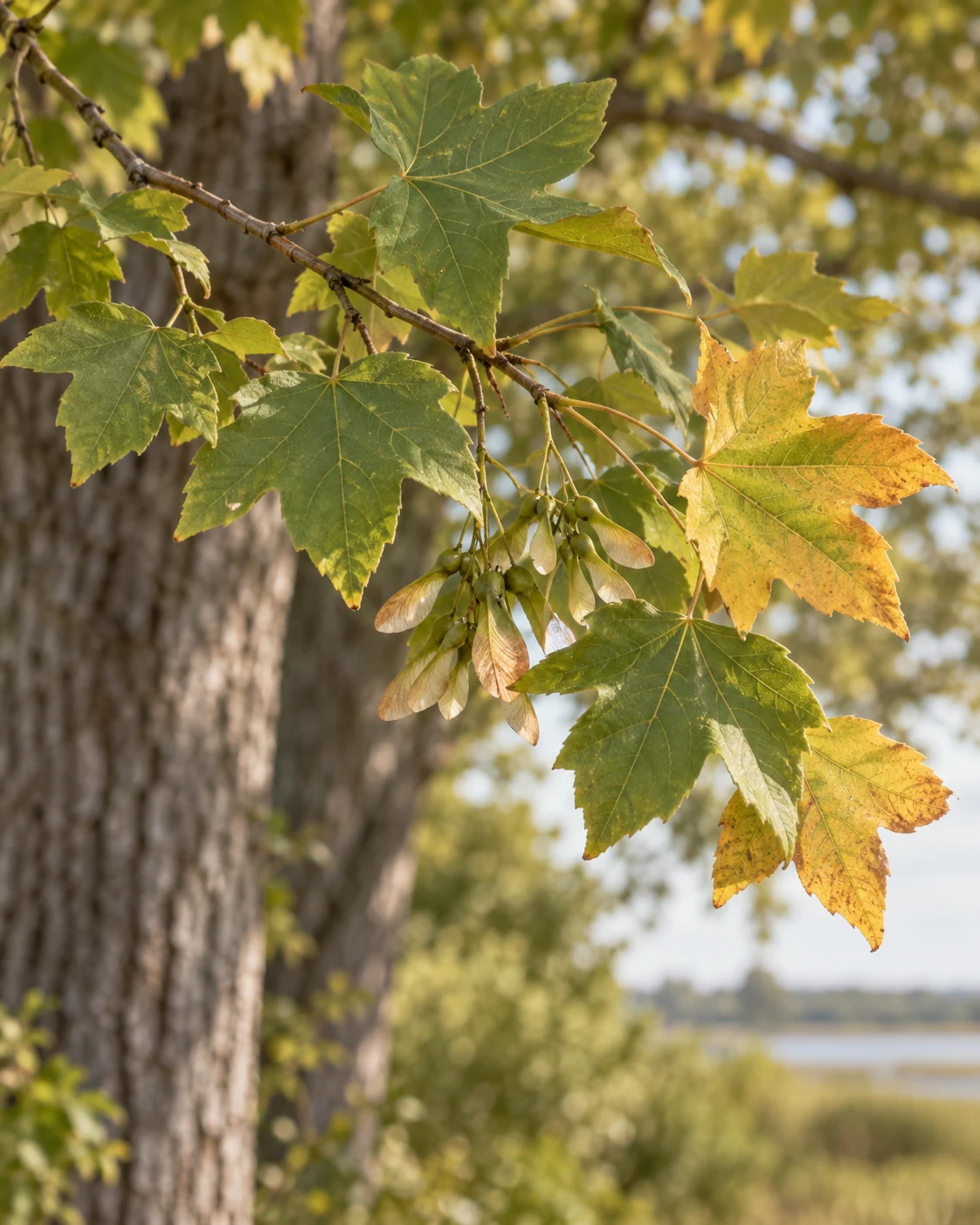
Illustrative Florida Maple in normal green summer foliage; autumn tones and the timing of leaf fall vary.Illustrative small lobed Florida Maple leaves with a restrained seasonal yellow-orange change.
Where it works around Pensacola
A Pensacola property with shelter from direct coastal exposure can offer a place for Florida Maple. Think of the tree and its surrounding ground as one design decision. A broad planting or mulch area can make the future surface-root pattern easier to accommodate than a small island in frequently mown turf.
Seasonal shade in an inland garden
A rounded tree beyond a patio
A woodland-edge focal point
A broad lawn-edge planting with protected roots
Muted autumn color above lower planting
Is the site sheltered from salt?
Treat direct spray and salty flooding as separate site constraints. Pick the tree for the actual exposure rather than assuming every Florida native belongs at the beach.
Can roots reach the surface without conflict?
Plan the ground under the future canopy. Avoid putting the tree where its long-term success depends on cutting exposed roots or repeatedly driving a mower over them.
What size are you planning around?
Use the upper range when checking overhead space and future additions. Ask about the exact nursery stock, but do not let a small container determine the mature layout.
What seasonal look do you prefer?
Review the green summer crown and the bare or partly leaf-retaining winter outline. Choose a nearby evergreen layer if the view needs a consistent backdrop.
Before it goes on the plan
Is Florida Maple native to the Panhandle?
Yes. UF/IFAS identifies the Panhandle as its main natural Florida range. It is also called southern sugar maple, with several botanical synonyms in use.
Will it turn bright red every fall?
No. Yellow and orange are more characteristic, and the display varies with weather and the individual tree. The illustrative autumn view is a seasonal possibility, not a color guarantee.
Can grass be maintained right to the trunk?
A protected mulch area is more practical. Surface roots can develop early, and mowing around them can damage the tree and complicate routine maintenance.
Pairing ideas
Eastern Redbud: Eastern Redbud offers a lower flowering layer for a compatible sheltered site. Reserve its own space and consider how the maple’s future shade will change the composition.
Oakleaf Hydrangea: Oakleaf Hydrangea can provide a separate leaf shape and seasonal interest at a suitable garden edge. Place it with care around established roots and its own mature spread.
{"key":"floridamaple","id":"PLT-ACER-FLORIDANUM","slug":"florida-maple","name":"Florida Maple","botanical":"Acer floridanum","h":[20,60],"w":[25,40],"install":[7,4],"treeForm":"rounded","color":"#7e8c60","native":true,"type":"trees","categoryLabel":"Trees","reviewDate":"2026-09-08","guideKind":"Native deciduous shade guide","eyebrow":"A ROUNDED CANOPY + A QUIETER FALL SEASON","benefit":"Make room for shade that changes with the seasons.","intro":"Florida Maple brings a rounded green crown and a softer seasonal change to an inland garden. Its fall tones can be muted yellow and orange rather than the brilliant red of northern postcard scenes. Choose it for the shape and shade it can contribute through the year, with autumn color as an added pleasure.","light":"Full sun to part shade","lightTags":["sun","part"],"water":"Adaptable to several soil types; provide establishment water and support through extended dry spells","season":"Green summer leaves · variable yellow-orange fall color · a deciduous winter outline","care":"Protect surface roots from mowing and plan a sound branch framework while young","caution":"Florida Maple is not salt-tolerant and can develop shallow surface roots. Use it in a sheltered inland setting with generous soil space. A tree often seen at 20–30 ft can eventually reach 60 ft, so small early size should not drive placement.","site":"A Pensacola property with shelter from direct coastal exposure can offer a place for Florida Maple. Think of the tree and its surrounding ground as one design decision. A broad planting or mulch area can make the future surface-root pattern easier to accommodate than a small island in frequently mown turf.","sizeNote":"UF/IFAS lists 20–60 ft high and 25–40 ft wide, while noting that many landscape trees are seen at 20–30 ft. The diagram keeps that broad range visible so an apparently modest maple is not mistaken for a permanently small tree. This is Florida Maple, not a generic northern sugar maple selection.","uses":["Seasonal shade in an inland garden","A rounded tree beyond a patio","A woodland-edge focal point","A broad lawn-edge planting with protected roots","Muted autumn color above lower planting"],"checks":[["Is the site sheltered from salt?","Treat direct spray and salty flooding as separate site constraints. Pick the tree for the actual exposure rather than assuming every Florida native belongs at the beach."],["Can roots reach the surface without conflict?","Plan the ground under the future canopy. Avoid putting the tree where its long-term success depends on cutting exposed roots or repeatedly driving a mower over them."],["What size are you planning around?","Use the upper range when checking overhead space and future additions. Ask about the exact nursery stock, but do not let a small container determine the mature layout."],["What seasonal look do you prefer?","Review the green summer crown and the bare or partly leaf-retaining winter outline. Choose a nearby evergreen layer if the view needs a consistent backdrop."]],"faq":[["Is Florida Maple native to the Panhandle?","Yes. UF/IFAS identifies the Panhandle as its main natural Florida range. It is also called southern sugar maple, with several botanical synonyms in use."],["Will it turn bright red every fall?","No. Yellow and orange are more characteristic, and the display varies with weather and the individual tree. The illustrative autumn view is a seasonal possibility, not a color guarantee."],["Can grass be maintained right to the trunk?","A protected mulch area is more practical. Surface roots can develop early, and mowing around them can damage the tree and complicate routine maintenance."]],"sources":[["UF/IFAS · Florida Maple size, surface roots and salt sensitivity","https://ask.ifas.ufl.edu/publication/ST007"],["UF/IFAS Gardening Solutions · Florida Maple","https://gardeningsolutions.ifas.ufl.edu/plants/trees-and-shrubs/trees/florida-maple/"]],"wholeCaption":"Illustrative Florida Maple in normal green summer foliage; autumn tones and the timing of leaf fall vary.","detailCaption":"Illustrative small lobed Florida Maple leaves with a restrained seasonal yellow-orange change.","aliases":["florida maple","southern sugar maple","acer barbatum","acer saccharum subsp. floridanum","fall color","shade"],"goals":["color"],"images":{"context":{"id":"6aa02558b2724c46d3387338","url":"https://cdn.prod.website-files.com/6a975baac0f352647862d847/6aa02558b2724c46d3387338_landova-tree-floridamaple-context.webp","alt":"Illustrative planting concept with Florida Maple","width":1600,"height":900},"whole":{"id":"6aa02558104d5b0342dccd19","url":"https://cdn.prod.website-files.com/6a975baac0f352647862d847/6aa02558104d5b0342dccd19_landova-tree-floridamaple-whole.webp","alt":"Illustrative whole-plant form of Florida Maple","width":1254,"height":1254,"fit":"contain"},"detail":{"id":"6aa025580f005b5bf5012b41","url":"https://cdn.prod.website-files.com/6a975baac0f352647862d847/6aa025580f005b5bf5012b41_landova-tree-floridamaple-detail.webp","alt":"Illustrative foliage and seasonal detail of Florida Maple","width":1122,"height":1402}},"companions":[{"slug":"eastern-redbud","name":"Eastern Redbud","title":"Compare a smaller seasonal tree","reason":"Eastern Redbud offers a lower flowering layer for a compatible sheltered site. Reserve its own space and consider how the maple’s future shade will change the composition.","image":{"id":"6aa01714c9115bfd1b0eac7b","url":"https://cdn.prod.website-files.com/6a975baac0f352647862d847/6aa01714c9115bfd1b0eac7b_landova-tree-redbud-context.webp","alt":"Illustrative planting concept with Eastern Redbud","width":1600,"height":900}},{"slug":"oakleaf-hydrangea","name":"Oakleaf Hydrangea","title":"Explore a distinct lower canopy","reason":"Oakleaf Hydrangea can provide a separate leaf shape and seasonal interest at a suitable garden edge. Place it with care around established roots and its own mature spread.","image":{"id":"6a9f5cd62a41d062f4f88b9c","url":"https://cdn.prod.website-files.com/6a975baac0f352647862d847/6a9f5cd62a41d062f4f88b9c_landova-oakleaf-context-r05.webp","alt":"Illustrative planting concept with Oakleaf Hydrangea"}}]}
LANDOVA / PLANTING DECISIONS
Choose plants with the whole space in mind.
Explore a planting goal, then compare the growing needs and mature size of individual plants.
LANDOVA is in beta
Join the launch waitlist.
We are not accepting paying clients yet. We expect to launch around January 2027 and may open sooner. Explore our free tools now, and sign up for launch updates and educational planning emails.
Thank you. Your waitlist signup has been received. We will email you with launch updates. No purchase or project booking has been made.
We could not save your signup. Please try again or email info@landovadesign.com.