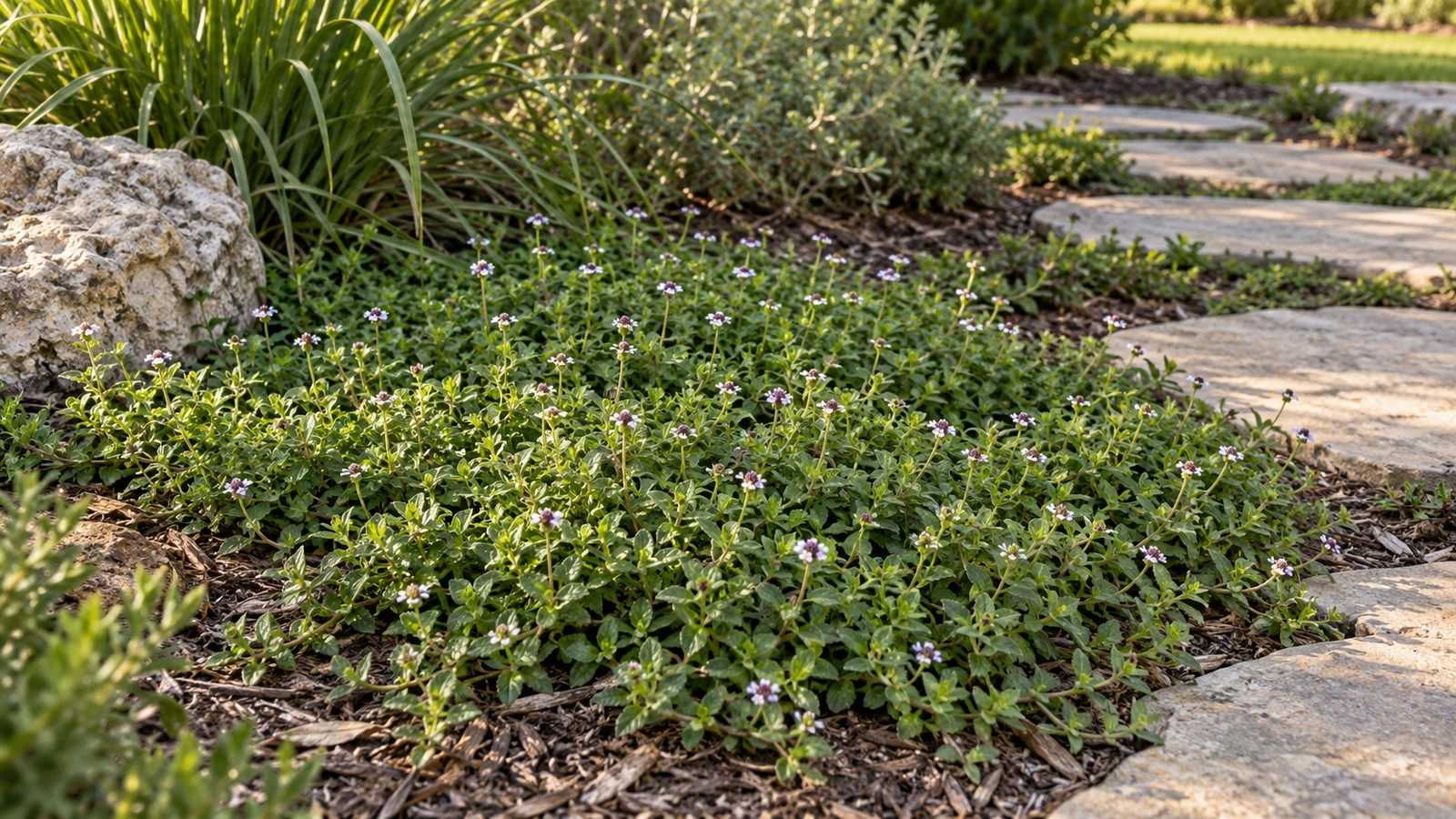
Make room for small flowers and a lively native carpet.
Frogfruit spreads by stems that root as they move across the ground. Small flower clusters rise above the leaves and attract pollinators through much of the warm season. Its informal texture works well in a native garden where the planting can change with weather and season, rather than staying as even as a clipped lawn.
Before you choose: Frogfruit can spread well beyond its starting spot and may go dormant during cold or dry weather. References differ on traffic tolerance; plan for occasional foot traffic and use a durable path where people walk repeatedly. Flowering patches may bring bees close to bare feet.
Illustrative planting concept
Size and space
Typical height: 6–12 in. Spreading habit: Stems spread 8–10 ft and can form larger colonies.
UF/IFAS describes plants 6–12 in high with stems spreading 8–10 ft. Rooting stems can join into a larger colony, so that width is not a permanent bed boundary. The diagram shows a three-foot patch reference, not the maximum spread of an established planting.
Installed example: 3 in high × 9 in wide. This is an illustrative size, not a pot-size or growth-timeline promise.
Full sun to part shade · Adaptable from moist to dry soil; water while establishing · Small white and purple flowers in the warm season; winter dormancy possible
Care: Trim wandering stems; optional mowing at 4 in or higher
Know the whole plant
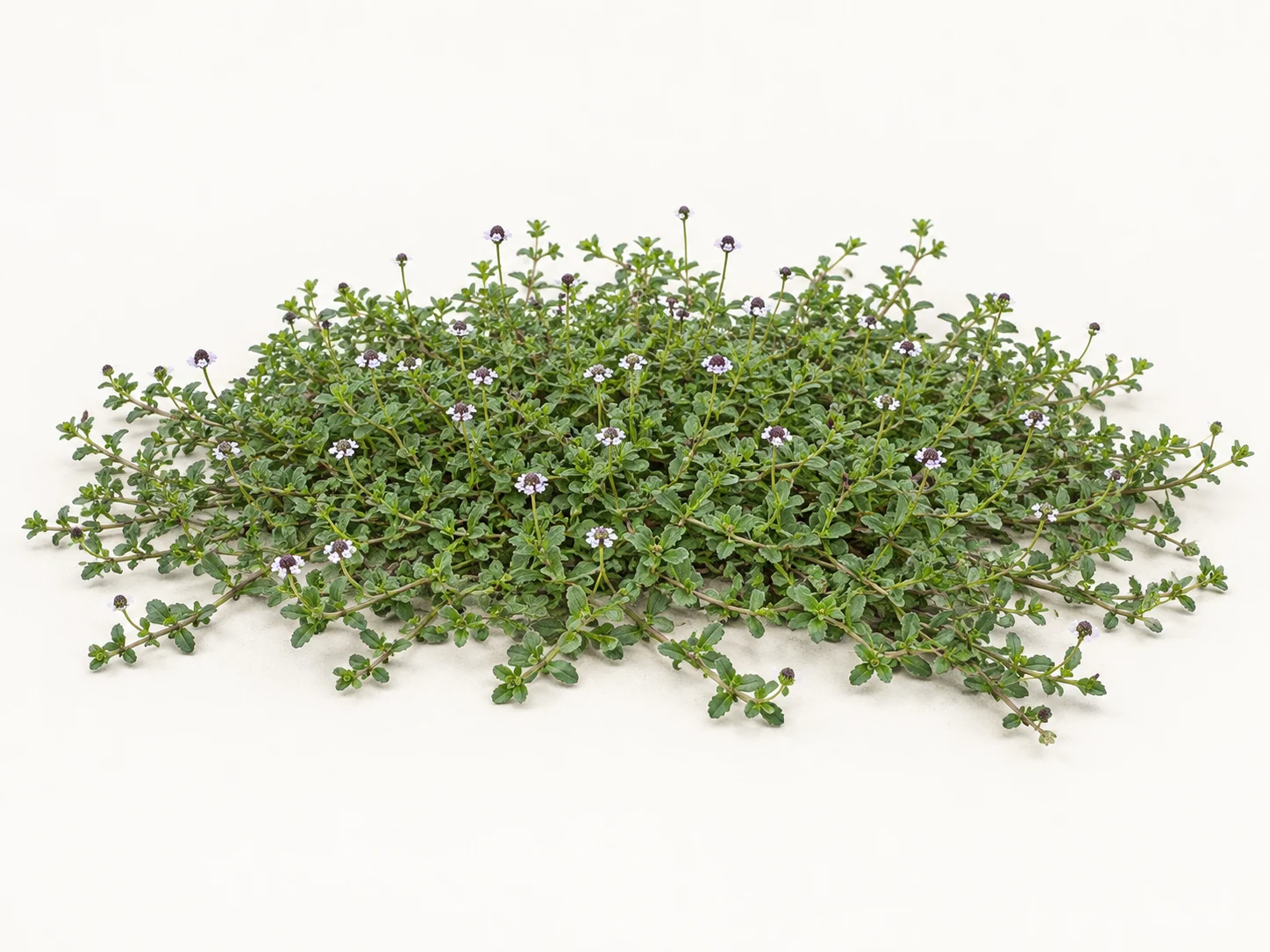
Illustrative overall form of Frogfruit; the nursery plant, season and growing conditions will affect its appearance.Illustrative foliage and seasonal detail of Frogfruit. Confirm the botanical name on the nursery label.
Where it works around Pensacola
In Pensacola, consider Frogfruit for a sunny or partly shaded native bed, including a site that is sometimes moist. Match the nearby planting to the actual moisture conditions; adaptability does not make every wet location suitable. Keep an edge accessible for trimming and allow for a less leafy appearance after freezes.
A native flowering ground layer
A lightly used lawn-alternative patch
An informal edge beside a path
A pollinator garden opening
A low layer in a seasonally moist bed
Where do the stems go next?
Look beyond the first planting hole. Stems root at nodes, so regularly lift or trim growth that reaches paving or neighboring plant crowns.
Will people walk through the flowers?
Allow a route around the flowering patch. For a frequently used space, stepping stones or paving can carry traffic while plants occupy the gaps beside it.
Is the moisture fresh water?
Some tolerance of salty wind does not establish tolerance of saltwater flooding. Evaluate drainage and water quality separately on coastal properties.
Is winter coverage essential?
Freeze injury or dormancy can reduce coverage. Use evergreen plants elsewhere in the composition if the view must stay structured through winter.
Before it goes on the plan
Is it the same as Lippia?
Phyla nodiflora is also encountered under the older name Lippia nodiflora. Confirm the full botanical name; common names can refer to different groundcovers.
Does it need mowing?
Mowing is optional. UF/IFAS suggests 4 in or higher when mowing is desired. A cut can reduce flowers temporarily and does not substitute for controlling the patch edges.
Will it stay only six inches wide?
No. Its low height and broad spread are different measurements. Plan the entire colony area and leave room to maintain the boundary.
Pairing ideas
Henry’s Garnet Sweetspire: Sweetspire can provide a taller layer in a suitable moist bed. Keep Frogfruit away from the shrub’s base and allow its full spread.
Soft Rush: Soft Rush can occupy its own moist area where freshwater and light suit it. Confirm moisture across the bed instead of assuming all positions stay equally wet.
{"key":"frogfruit","name":"Frogfruit","botanical":"Phyla nodiflora","slug":"frogfruit","id":"PLT-PHYL-NODI","type":"groundcovers","h":[0.5,1],"w":[8,10],"install":[0.25,0.75],"native":true,"groundGroup":"small","light":"Full sun to part shade","lightTags":["sun","part"],"water":"Adaptable from moist to dry soil; water while establishing","season":"Small white and purple flowers in the warm season; winter dormancy possible","care":"Trim wandering stems; optional mowing at 4 in or higher","benefit":"Make room for small flowers and a lively native carpet.","intro":"Frogfruit spreads by stems that root as they move across the ground. Small flower clusters rise above the leaves and attract pollinators through much of the warm season. Its informal texture works well in a native garden where the planting can change with weather and season, rather than staying as even as a clipped lawn.","caution":"Frogfruit can spread well beyond its starting spot and may go dormant during cold or dry weather. References differ on traffic tolerance; plan for occasional foot traffic and use a durable path where people walk repeatedly. Flowering patches may bring bees close to bare feet.","sizeNote":"UF/IFAS describes plants 6–12 in high with stems spreading 8–10 ft. Rooting stems can join into a larger colony, so that width is not a permanent bed boundary. The diagram shows a three-foot patch reference, not the maximum spread of an established planting.","site":"In Pensacola, consider Frogfruit for a sunny or partly shaded native bed, including a site that is sometimes moist. Match the nearby planting to the actual moisture conditions; adaptability does not make every wet location suitable. Keep an edge accessible for trimming and allow for a less leafy appearance after freezes.","uses":["A native flowering ground layer","A lightly used lawn-alternative patch","An informal edge beside a path","A pollinator garden opening","A low layer in a seasonally moist bed"],"checks":[["Where do the stems go next?","Look beyond the first planting hole. Stems root at nodes, so regularly lift or trim growth that reaches paving or neighboring plant crowns."],["Will people walk through the flowers?","Allow a route around the flowering patch. For a frequently used space, stepping stones or paving can carry traffic while plants occupy the gaps beside it."],["Is the moisture fresh water?","Some tolerance of salty wind does not establish tolerance of saltwater flooding. Evaluate drainage and water quality separately on coastal properties."],["Is winter coverage essential?","Freeze injury or dormancy can reduce coverage. Use evergreen plants elsewhere in the composition if the view must stay structured through winter."]],"faq":[["Is it the same as Lippia?","Phyla nodiflora is also encountered under the older name Lippia nodiflora. Confirm the full botanical name; common names can refer to different groundcovers."],["Does it need mowing?","Mowing is optional. UF/IFAS suggests 4 in or higher when mowing is desired. A cut can reduce flowers temporarily and does not substitute for controlling the patch edges."],["Will it stay only six inches wide?","No. Its low height and broad spread are different measurements. Plan the entire colony area and leave room to maintain the boundary."]],"sources":[["UF/IFAS: Frogfruit","https://gardeningsolutions.ifas.ufl.edu/plants/ornamentals/frogfruit/"],["Florida Native Plant Society: Frogfruit","https://www.fnps.org/plant/phyla-nodiflora"]],"unit":"in","heightLabel":"Typical height","spreadLabel":"Spreading habit","color":"#70815a","guideKind":"Native groundcover","eyebrow":"THE LOW LAYER / FORM + SEASON","aliases":["Frogfruit","Phyla nodiflora","Lippia nodiflora"],"goals":["color"],"wholeCaption":"Illustrative overall form of Frogfruit; the nursery plant, season and growing conditions will affect its appearance.","detailCaption":"Illustrative foliage and seasonal detail of Frogfruit. Confirm the botanical name on the nursery label.","spreadText":"Stems spread 8–10 ft and can form larger colonies","patch":true,"patchWidth":3,"sizeBasis":"Patch example","heightText":"6–12 in","sizeSummary":"6–12 in high · spreading colony","groundForm":"mat","images":{"context":{"id":"6aa052e28c44eb05710cac36","url":"https://cdn.prod.website-files.com/6a975baac0f352647862d847/6aa052e28c44eb05710cac36_landova-groundcover-frogfruit-context.webp","alt":"Illustrative planting concept with Frogfruit","width":1600,"height":900},"whole":{"id":"6aa052e2b4f6da65732241f7","url":"https://cdn.prod.website-files.com/6a975baac0f352647862d847/6aa052e2b4f6da65732241f7_landova-groundcover-frogfruit-whole.webp","alt":"Illustrative whole-plant form of Frogfruit","width":1448,"height":1086,"fit":"contain"},"detail":{"id":"6aa052e2981a6388390a2c37","url":"https://cdn.prod.website-files.com/6a975baac0f352647862d847/6aa052e2981a6388390a2c37_landova-groundcover-frogfruit-detail.webp","alt":"Illustrative foliage and seasonal detail of Frogfruit","width":1254,"height":1254}},"companions":[{"slug":"henrys-garnet-sweetspire","name":"Henry’s Garnet Sweetspire","title":"Build a moist-bed background","reason":"Sweetspire can provide a taller layer in a suitable moist bed. Keep Frogfruit away from the shrub’s base and allow its full spread.","image":{"id":"6a9f5cd7d7f880ff25110b61","url":"https://cdn.prod.website-files.com/6a975baac0f352647862d847/6a9f5cd7d7f880ff25110b61_landova-henry-context-r05.webp","alt":"Illustrative planting concept with Henry’s Garnet Sweetspire"}},{"slug":"soft-rush","name":"Soft Rush","title":"Add an upright wet-area texture","reason":"Soft Rush can occupy its own moist area where freshwater and light suit it. Confirm moisture across the bed instead of assuming all positions stay equally wet.","image":{"id":"6aa00d1713cf571cf7f1bdb3","url":"https://cdn.prod.website-files.com/6a975baac0f352647862d847/6aa00d1713cf571cf7f1bdb3_landova-grass-softrush-context.webp","alt":"Illustrative planting concept with Soft Rush","width":1600,"height":900}}]}
LANDOVA / PLANTING DECISIONS
Choose plants with the whole space in mind.
Explore a planting goal, then compare the growing needs and mature size of individual plants.
LANDOVA is in beta
Join the launch waitlist.
We are not accepting paying clients yet. We expect to launch around January 2027 and may open sooner. Explore our free tools now, and sign up for launch updates and educational planning emails.
Thank you. Your waitlist signup has been received. We will email you with launch updates. No purchase or project booking has been made.
We could not save your signup. Please try again or email info@landovadesign.com.