Soft rush offers a simple contrast: smooth green stems rising above lower, leafier plants. The straight upright form can make a moist garden feel composed and deliberate. Use it where the water conditions already suit the plant and where the clump can be kept separate from paths and access points.
Before you choose: A moisture-tolerant plant does not solve a drainage problem. Confirm the native upright form and plan for spread; corkscrew rush and other Juncus selections need their own guidance.
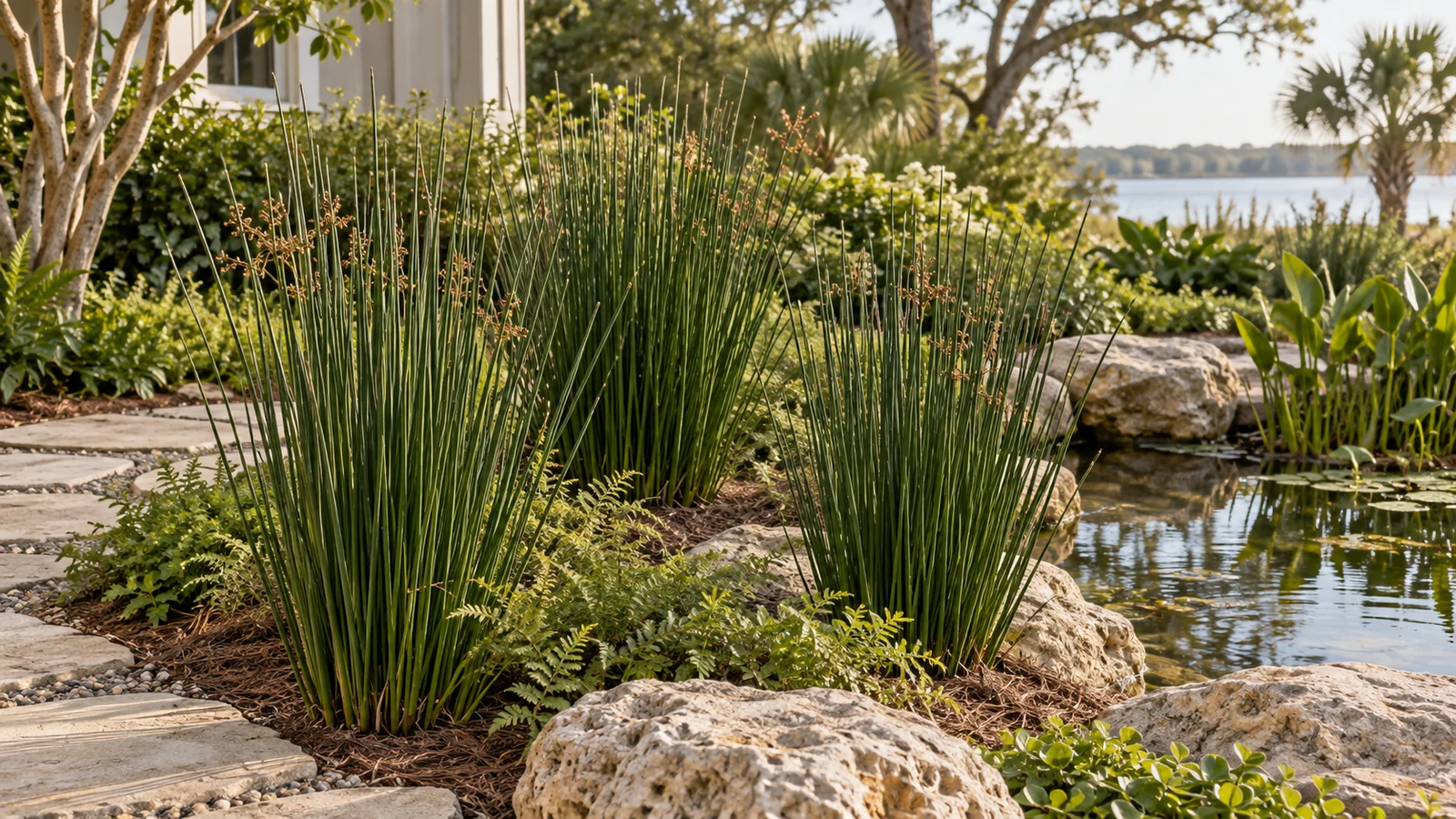
Illustrative planting concept
Size and space
Mature height: 1–4 ft. Mature spread: 1–2 ft.
NC State lists the native solutus form at 1–4 ft high and 1–2 ft wide. The diagram uses those dimensions; it is not a size guide for every Juncus sold as soft rush. UF/IFAS notes that the broader species can reach about 5 ft and form colonies. One clump’s spread is not a permanent boundary.
Installed example: 1 ft high × 0.5 ft wide. This is an illustrative size, not a pot-size or growth-timeline promise.
Full sun to part shade · Moist to wet soil; suitable for some freshwater margins and planned rain gardens · Smooth green stems · small brown flower clusters · winter appearance varies
Care: Remove tired stems and manage expanding clumps; confirm the upright nursery form
Know the whole plant
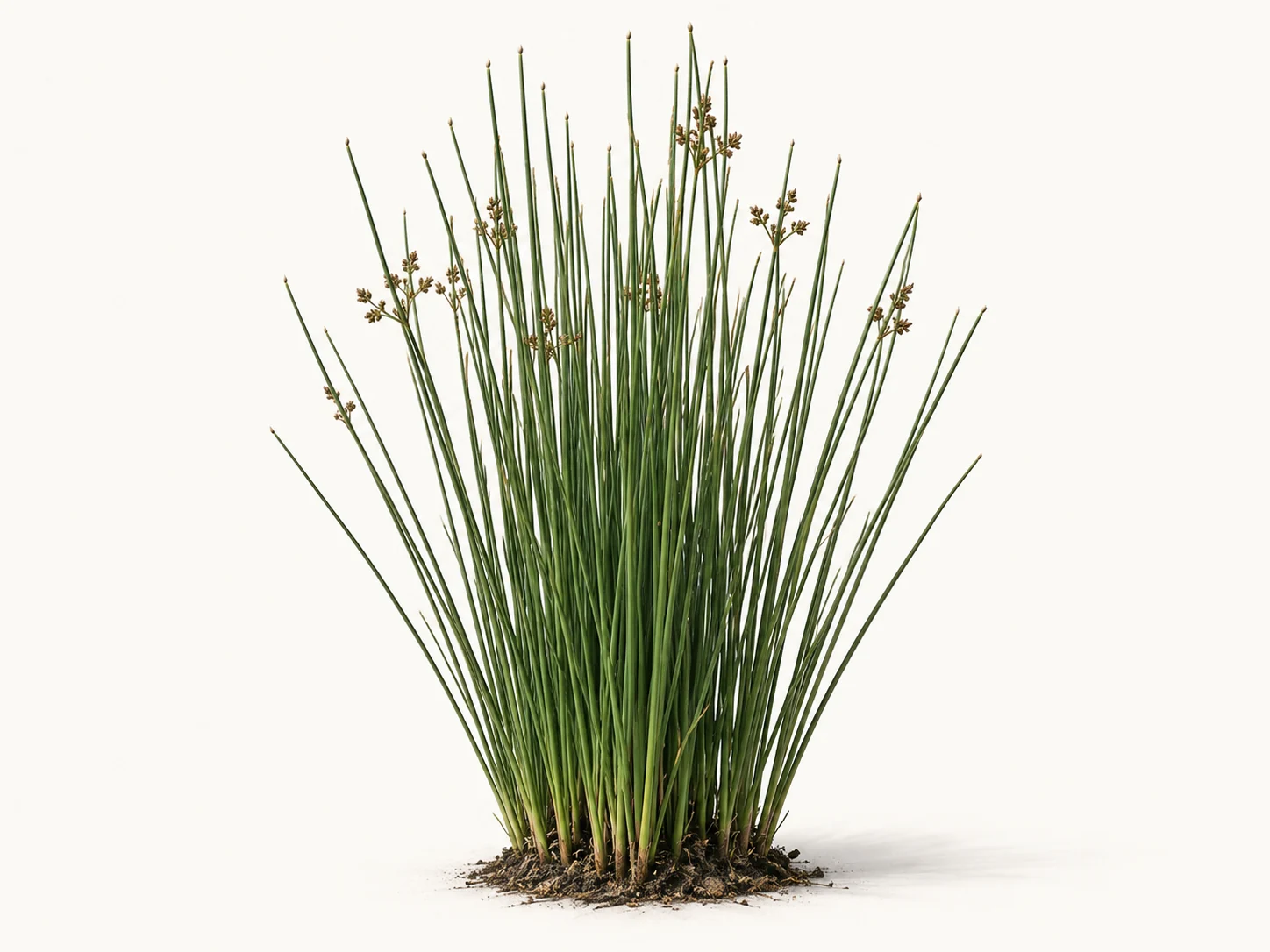
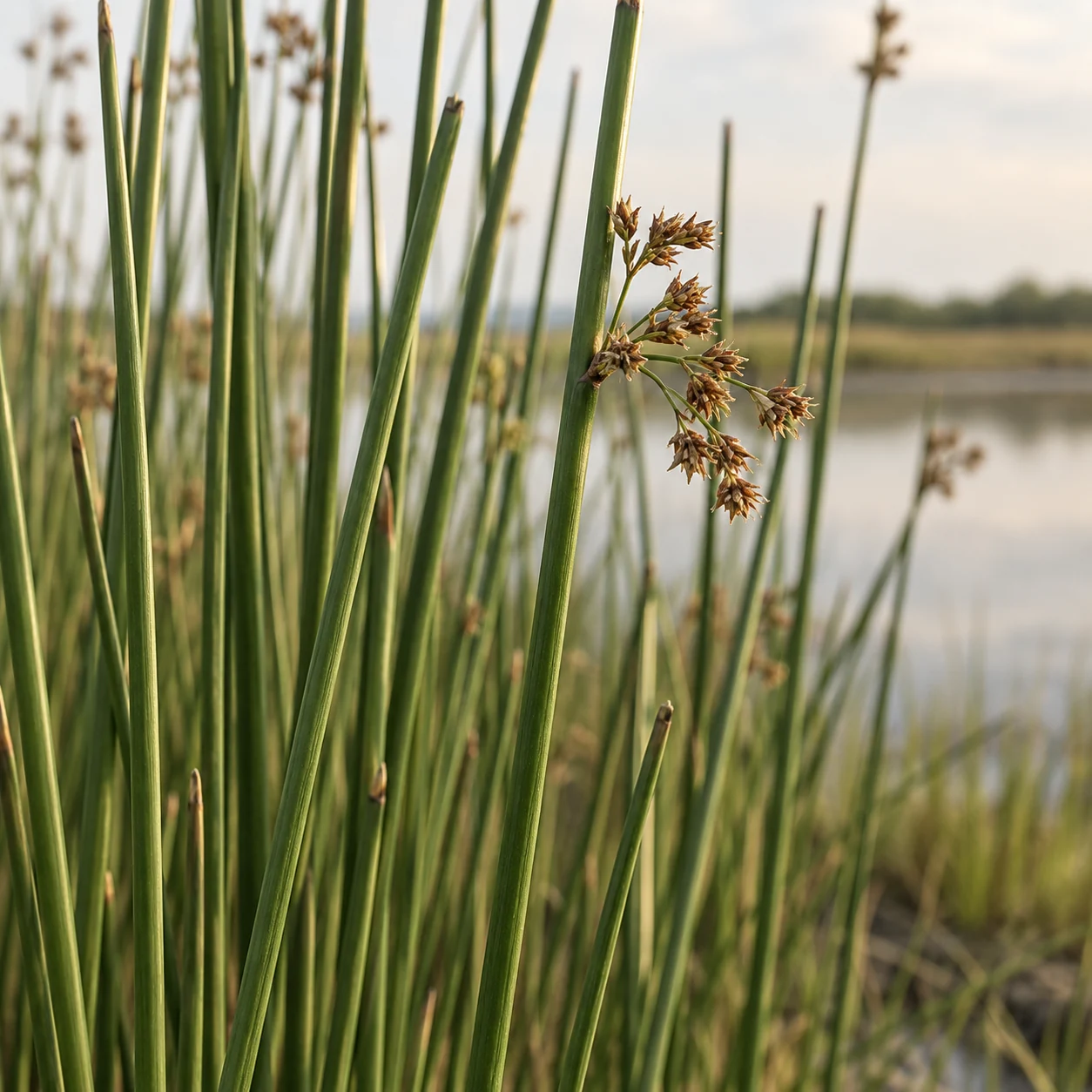
Illustrative straight-stemmed soft rush; the measured guide is for the native solutus form.Illustrative round green stems with small lateral flower clusters; this is a rush rather than a flat-bladed grass.
Where it works around Pensacola
Soft rush is a useful candidate for a deliberately planned moist Pensacola bed. First understand where the water comes from, where it goes and how the area dries between storms. Keep drainage outlets, inspection points and any route needed to maintain a water feature open.
Upright texture in a moist bed
A planned rain-garden accent
A freshwater garden margin
Contrast beside broad leaves
A moisture-managed container
Is the moisture pattern understood?
Review normal conditions as well as storm runoff. Choose plants after the drainage layout is understood, particularly near a home, pool equipment or neighboring property.
Does the planting leave access?
Leave room to inspect drains and reach a pond edge. Upright stems can make a small installation appear open even when its future base will fill the work area.
What is beside the rush?
Group plants with compatible moisture needs. Avoid using one irrigation schedule for a wet-bed rush and nearby dry-site shrubs simply because their textures look good together.
How will expansion be handled?
Plan a reachable edge and a practical maintenance routine. Review new stems and seedlings before the planting crosses into a path, outlet or a neighboring plant’s space.
Before it goes on the plan
Is soft rush a true grass?
No. It is a rush, grouped here for its landscape use. The green upright parts are round stems, which give it a different texture from flat grass leaves.
Is it the same as corkscrew rush?
No. This guide covers a native straight-stemmed form. Spiral and other named selections should be confirmed on the nursery label before substitution.
Can I plant it in a puddle to fix drainage?
It may tolerate the moisture, but it does not establish that the drainage is working. Understand the grade, soil and water route before treating the area as a planting opportunity.
Pairing ideas
Dwarf Fakahatchee Grass: Dwarf Fakahatchee can supply a broader fountain form in a compatible moist sunny bed. Give each clump its own mature space.
Buttonbush: Buttonbush may suit a generous freshwater planting area, but its mature shrub size is very different. Use it only where the full layout and access can accommodate it.
{"key":"softrush","id":"PLT-JUNC-EFFUSUS-SOLUTUS","slug":"soft-rush","name":"Soft Rush","botanical":"Juncus effusus subsp. solutus","eyebrow":"UPRIGHT GREEN STEMS + MOIST-SITE TEXTURE","benefit":"Give a damp planting area a clear vertical line.","intro":"Soft rush offers a simple contrast: smooth green stems rising above lower, leafier plants. The straight upright form can make a moist garden feel composed and deliberate. Use it where the water conditions already suit the plant and where the clump can be kept separate from paths and access points.","h":[1,4],"w":[1,2],"install":[1,0.5],"color":"#6f8557","habit":"rush","plantKind":"rush","light":"Full sun to part shade","lightTags":["sun","part"],"water":"Moist to wet soil; suitable for some freshwater margins and planned rain gardens","season":"Smooth green stems · small brown flower clusters · winter appearance varies","care":"Remove tired stems and manage expanding clumps; confirm the upright nursery form","caution":"A moisture-tolerant plant does not solve a drainage problem. Confirm the native upright form and plan for spread; corkscrew rush and other Juncus selections need their own guidance.","site":"Soft rush is a useful candidate for a deliberately planned moist Pensacola bed. First understand where the water comes from, where it goes and how the area dries between storms. Keep drainage outlets, inspection points and any route needed to maintain a water feature open.","sizeNote":"NC State lists the native solutus form at 1–4 ft high and 1–2 ft wide. The diagram uses those dimensions; it is not a size guide for every Juncus sold as soft rush. UF/IFAS notes that the broader species can reach about 5 ft and form colonies. One clump’s spread is not a permanent boundary.","uses":["Upright texture in a moist bed","A planned rain-garden accent","A freshwater garden margin","Contrast beside broad leaves","A moisture-managed container"],"checks":[["Is the moisture pattern understood?","Review normal conditions as well as storm runoff. Choose plants after the drainage layout is understood, particularly near a home, pool equipment or neighboring property."],["Does the planting leave access?","Leave room to inspect drains and reach a pond edge. Upright stems can make a small installation appear open even when its future base will fill the work area."],["What is beside the rush?","Group plants with compatible moisture needs. Avoid using one irrigation schedule for a wet-bed rush and nearby dry-site shrubs simply because their textures look good together."],["How will expansion be handled?","Plan a reachable edge and a practical maintenance routine. Review new stems and seedlings before the planting crosses into a path, outlet or a neighboring plant’s space."]],"faq":[["Is soft rush a true grass?","No. It is a rush, grouped here for its landscape use. The green upright parts are round stems, which give it a different texture from flat grass leaves."],["Is it the same as corkscrew rush?","No. This guide covers a native straight-stemmed form. Spiral and other named selections should be confirmed on the nursery label before substitution."],["Can I plant it in a puddle to fix drainage?","It may tolerate the moisture, but it does not establish that the drainage is working. Understand the grade, soil and water route before treating the area as a planting opportunity."]],"sources":[["NC State Extension · native solutus form and dimensions","https://plants.ces.ncsu.edu/plants/juncus-effusus-subsp-solutus/"],["UF/IFAS Plant Directory · soft rush in Florida","https://plant-directory.ifas.ufl.edu/plant-directory/juncus-effusus/"],["Hoffman Nursery · upright soft rush and landscape use","https://hoffmannursery.com/plants/details/juncus-effusus"]],"wholeCaption":"Illustrative straight-stemmed soft rush; the measured guide is for the native solutus form.","detailCaption":"Illustrative round green stems with small lateral flower clusters; this is a rush rather than a flat-bladed grass.","native":true,"guideKind":"Native rush guide","aliases":["soft rush","common rush","Juncus","solutus","wet","moist","rain garden","upright"],"goals":["color"],"type":"grasses","categoryLabel":"Grasses + grasslike plants","reviewDate":"2026-09-08","images":{"context":{"id":"6aa00d1713cf571cf7f1bdb3","url":"https://cdn.prod.website-files.com/6a975baac0f352647862d847/6aa00d1713cf571cf7f1bdb3_landova-grass-softrush-context.webp","alt":"Illustrative planting concept with Soft Rush","width":1600,"height":900},"whole":{"id":"6aa00d172e2cf09d7c332ccf","url":"https://cdn.prod.website-files.com/6a975baac0f352647862d847/6aa00d172e2cf09d7c332ccf_landova-grass-softrush-whole.webp","alt":"Illustrative whole-plant form of Soft Rush","width":1448,"height":1086,"fit":"contain"},"detail":{"id":"6aa00d171c0b570afb8bfe20","url":"https://cdn.prod.website-files.com/6a975baac0f352647862d847/6aa00d171c0b570afb8bfe20_landova-grass-softrush-detail.webp","alt":"Illustrative foliage and seasonal detail of Soft Rush","width":1254,"height":1254}},"companions":[{"slug":"dwarf-fakahatchee-grass","name":"Dwarf Fakahatchee Grass","title":"Contrast straight stems with arching leaves","reason":"Dwarf Fakahatchee can supply a broader fountain form in a compatible moist sunny bed. Give each clump its own mature space.","image":{"id":"6aa002296f67b3d818b2c1dc","url":"https://cdn.prod.website-files.com/6a975baac0f352647862d847/6aa002296f67b3d818b2c1dc_landova-grass-fakahatchee-context.webp","alt":"Illustrative planting concept with Dwarf Fakahatchee Grass","width":1600,"height":900}},{"slug":"buttonbush","name":"Buttonbush","title":"Compare a much larger wet-site layer","reason":"Buttonbush may suit a generous freshwater planting area, but its mature shrub size is very different. Use it only where the full layout and access can accommodate it.","image":{"id":"6a9fefd510a56c43d4c56ee0","url":"https://cdn.prod.website-files.com/6a975baac0f352647862d847/6a9fefd510a56c43d4c56ee0_landova-button-context-r07.webp","alt":"Illustrative planting concept with Buttonbush"}}]}
LANDOVA / PLANTING DECISIONS
Choose plants with the whole space in mind.
Explore a planting goal, then compare the growing needs and mature size of individual plants.
LANDOVA is in beta
Join the launch waitlist.
We are not accepting paying clients yet. We expect to launch around January 2027 and may open sooner. Explore our free tools now, and sign up for launch updates and educational planning emails.
Thank you. Your waitlist signup has been received. We will email you with launch updates. No purchase or project booking has been made.
We could not save your signup. Please try again or email info@landovadesign.com.