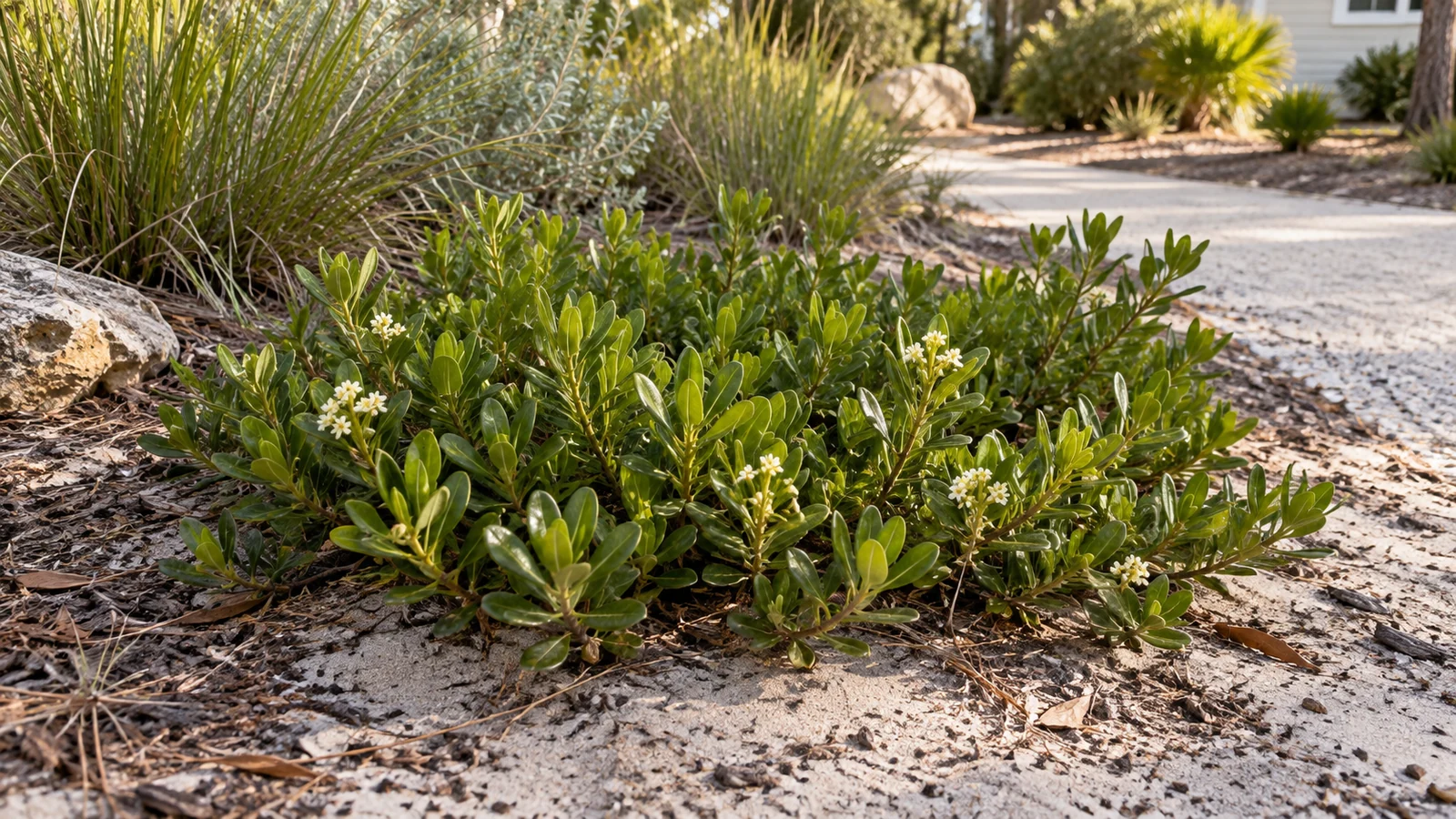
Use a low native colony where sunny sand shapes the garden.
Gopher Apple is a low, woody native that spreads through underground stems. Its glossy oblong leaves create a bolder texture than many fine-leaved groundcovers, while small flowers and seasonal fruit add detail. It belongs on the shortlist for an open, sandy landscape where the soil and exposure suit its natural habit.
Before you choose: This is a specialist dry-sand choice, not a general substitute for every irrigated bed. Colonies can cover several square yards. High salt-spray tolerance does not establish tolerance of saltwater flooding, and local nursery availability may be more limited than common landscape groundcovers.
Illustrative planting concept
Size and space
Typical height: 3–12 in. Spreading habit: Spreading colony; keep a managed boundary.
UF/IFAS describes plants 3–12 in high, with underground stems forming colonies over several square yards. The three-foot patch in the diagram gives a readable height and footprint reference only. It is not a mature spread limit, a fixed plant count or a promise about how quickly the colony develops.
Installed example: 3 in high × 8 in wide. This is an illustrative size, not a pot-size or growth-timeline promise.
Full sun · Dry, freely draining sandy soil; avoid routine overwatering · Evergreen leaves; small summer flowers and seasonal fruit
Care: Allow a native colony to develop; keep access to its boundary
Know the whole plant
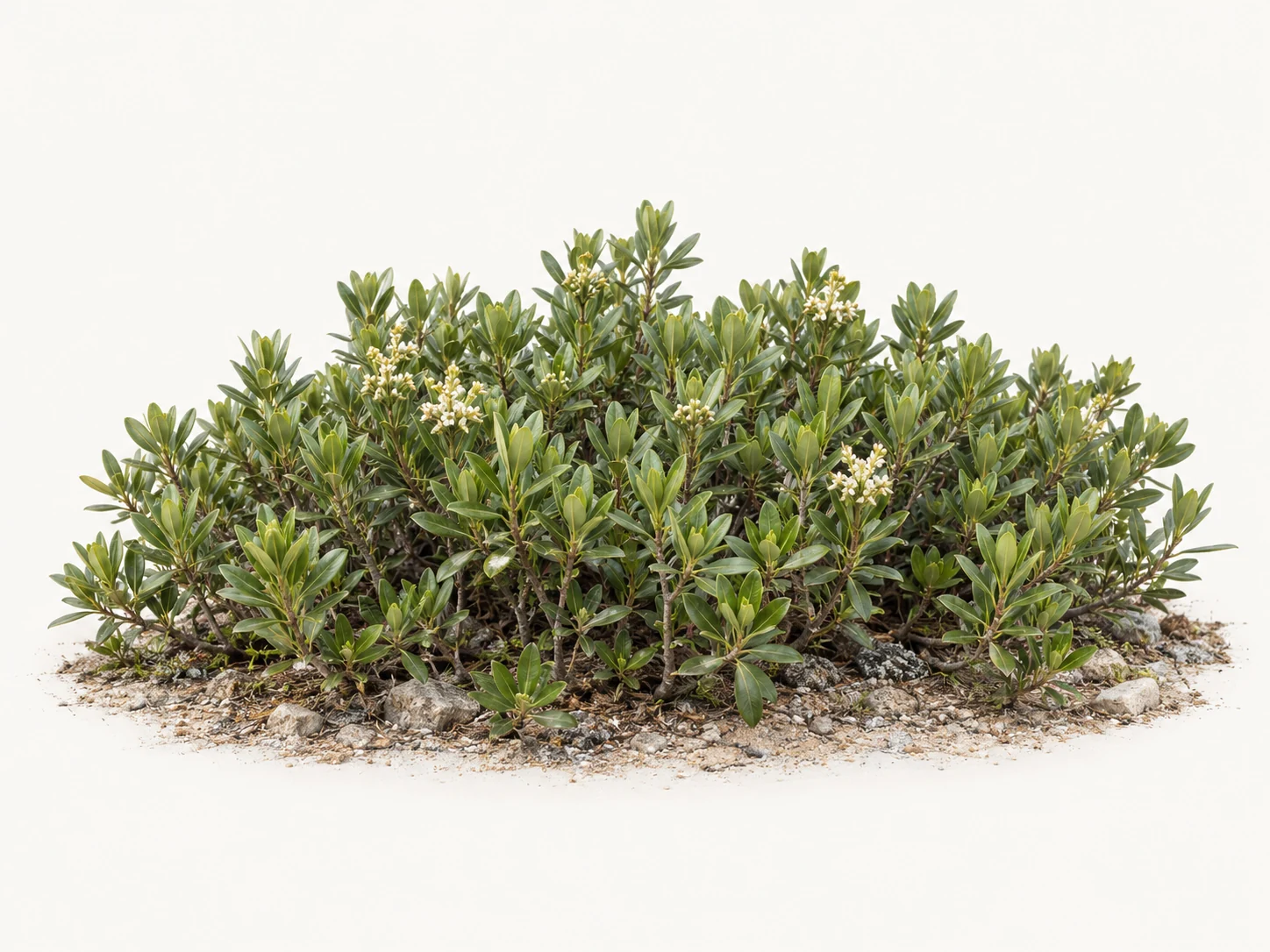
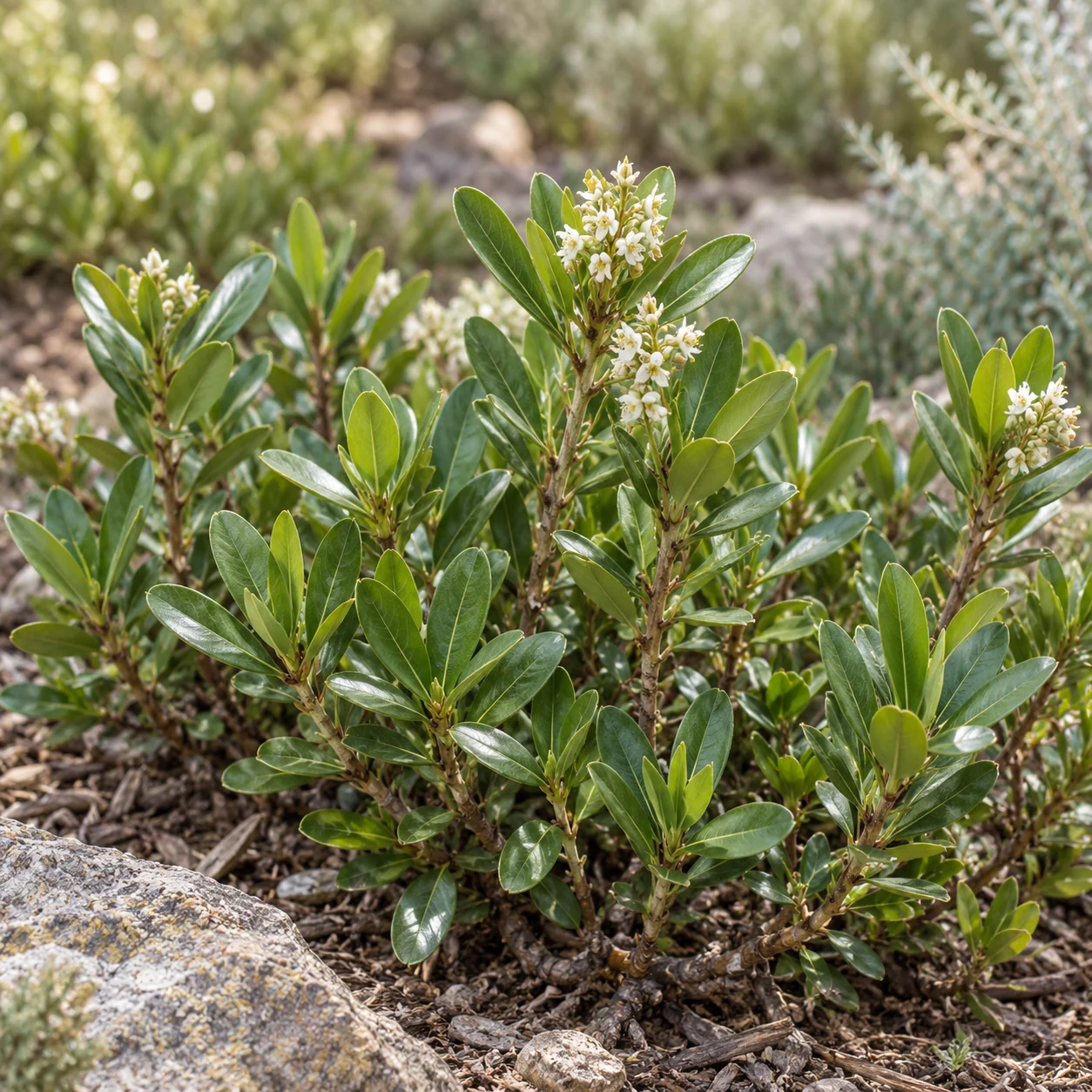
Illustrative overall form of Gopher Apple; the nursery plant, season and growing conditions will affect its appearance.Illustrative foliage and seasonal detail of Gopher Apple. Confirm the botanical name on the nursery label.
Where it works around Pensacola
Explore Gopher Apple for sunny Pensacola gardens with deep, freely draining sand. It can form a low layer near other plants suited to lean, dry conditions. Buy nursery-grown material and plan around the natural site instead of heavily amending one small hole in an otherwise unsuitable bed. Keep a route beside the planting for maintenance.
A native dry-sand ground layer
A low planting in a sunny coastal garden
A naturalistic sandy bed
A wildlife-oriented native border
A connecting colony around separate dry-garden accents
Is the soil genuinely sandy and drained?
Check the soil profile and where water collects after rain. A sandy surface over a wet lower layer may not behave like the dry site this plant prefers.
Will nearby irrigation keep it too wet?
Group it with plants whose water needs are compatible. Avoid placing it in a bed watered frequently for moisture-loving flowers.
Where can the colony expand?
Leave an accessible edge and keep the underground spreading habit in mind when placing small neighboring plants or paving.
Is the nursery name familiar?
Older references and labels may use Licania michauxii. Match the plant’s identity carefully and use reputable nursery-grown stock rather than collecting wild plants.
Before it goes on the plan
Why is it called Gopher Apple?
The fruit is associated with wildlife, including gopher tortoises. The common name is part of its natural-history interest, not a reason to expect tortoises in every residential garden.
Will it tolerate the beach?
UF/IFAS reports high salt-spray tolerance. Still assess dune protection, drainage, wind and saltwater exposure; a spray-tolerant plant is not automatically appropriate for every beachfront position.
Can it be used as a walking lawn?
Use it as a planted native ground layer with a separate route for regular traffic. Its low height does not make the woody stems a comfortable, durable walking surface.
Pairing ideas
Coastal False Rosemary: Coastal False Rosemary shares a preference for full sun and freely draining sand. Allow its larger shape and keep access between the plants.
Little Bluestem: Little Bluestem can supply upright stems in a sunny, draining setting. Keep the expanding colony from crowding its crown.
{"key":"gopher","name":"Gopher Apple","botanical":"Geobalanus oblongifolius","slug":"gopher-apple","id":"PLT-GEOB-OBLO","type":"groundcovers","h":[0.25,1],"w":[3,3],"install":[0.25,0.7],"native":true,"groundGroup":"small","light":"Full sun","lightTags":["sun"],"water":"Dry, freely draining sandy soil; avoid routine overwatering","season":"Evergreen leaves; small summer flowers and seasonal fruit","care":"Allow a native colony to develop; keep access to its boundary","benefit":"Use a low native colony where sunny sand shapes the garden.","intro":"Gopher Apple is a low, woody native that spreads through underground stems. Its glossy oblong leaves create a bolder texture than many fine-leaved groundcovers, while small flowers and seasonal fruit add detail. It belongs on the shortlist for an open, sandy landscape where the soil and exposure suit its natural habit.","caution":"This is a specialist dry-sand choice, not a general substitute for every irrigated bed. Colonies can cover several square yards. High salt-spray tolerance does not establish tolerance of saltwater flooding, and local nursery availability may be more limited than common landscape groundcovers.","sizeNote":"UF/IFAS describes plants 3–12 in high, with underground stems forming colonies over several square yards. The three-foot patch in the diagram gives a readable height and footprint reference only. It is not a mature spread limit, a fixed plant count or a promise about how quickly the colony develops.","site":"Explore Gopher Apple for sunny Pensacola gardens with deep, freely draining sand. It can form a low layer near other plants suited to lean, dry conditions. Buy nursery-grown material and plan around the natural site instead of heavily amending one small hole in an otherwise unsuitable bed. Keep a route beside the planting for maintenance.","uses":["A native dry-sand ground layer","A low planting in a sunny coastal garden","A naturalistic sandy bed","A wildlife-oriented native border","A connecting colony around separate dry-garden accents"],"checks":[["Is the soil genuinely sandy and drained?","Check the soil profile and where water collects after rain. A sandy surface over a wet lower layer may not behave like the dry site this plant prefers."],["Will nearby irrigation keep it too wet?","Group it with plants whose water needs are compatible. Avoid placing it in a bed watered frequently for moisture-loving flowers."],["Where can the colony expand?","Leave an accessible edge and keep the underground spreading habit in mind when placing small neighboring plants or paving."],["Is the nursery name familiar?","Older references and labels may use Licania michauxii. Match the plant’s identity carefully and use reputable nursery-grown stock rather than collecting wild plants."]],"faq":[["Why is it called Gopher Apple?","The fruit is associated with wildlife, including gopher tortoises. The common name is part of its natural-history interest, not a reason to expect tortoises in every residential garden."],["Will it tolerate the beach?","UF/IFAS reports high salt-spray tolerance. Still assess dune protection, drainage, wind and saltwater exposure; a spray-tolerant plant is not automatically appropriate for every beachfront position."],["Can it be used as a walking lawn?","Use it as a planted native ground layer with a separate route for regular traffic. Its low height does not make the woody stems a comfortable, durable walking surface."]],"sources":[["UF/IFAS: Gopher Apple","https://gardeningsolutions.ifas.ufl.edu/plants/ornamentals/gopher-apple/"]],"unit":"in","heightLabel":"Typical height","spreadLabel":"Spreading habit","color":"#70815a","guideKind":"Native groundcover","eyebrow":"THE LOW LAYER / FORM + SEASON","aliases":["Gopher Apple","Geobalanus oblongifolius","Licania michauxii"],"goals":["color"],"wholeCaption":"Illustrative overall form of Gopher Apple; the nursery plant, season and growing conditions will affect its appearance.","detailCaption":"Illustrative foliage and seasonal detail of Gopher Apple. Confirm the botanical name on the nursery label.","patch":true,"patchWidth":3,"spreadText":"Spreading colony; keep a managed boundary","sizeBasis":"Patch example","heightText":"3–12 in","sizeSummary":"3–12 in high · spreading colony","groundForm":"mat","images":{"context":{"id":"6aa052e4ef939579d484428d","url":"https://cdn.prod.website-files.com/6a975baac0f352647862d847/6aa052e4ef939579d484428d_landova-groundcover-gopher-context.webp","alt":"Illustrative planting concept with Gopher Apple","width":1600,"height":900},"whole":{"id":"6aa052e5ca5bad632633cd75","url":"https://cdn.prod.website-files.com/6a975baac0f352647862d847/6aa052e5ca5bad632633cd75_landova-groundcover-gopher-whole.webp","alt":"Illustrative whole-plant form of Gopher Apple","width":1448,"height":1086,"fit":"contain"},"detail":{"id":"6aa052e534d9502d7205dc64","url":"https://cdn.prod.website-files.com/6a975baac0f352647862d847/6aa052e534d9502d7205dc64_landova-groundcover-gopher-detail.webp","alt":"Illustrative foliage and seasonal detail of Gopher Apple","width":1254,"height":1254}},"companions":[{"slug":"coastal-false-rosemary","name":"Coastal False Rosemary","title":"Build a native dry-sand planting","reason":"Coastal False Rosemary shares a preference for full sun and freely draining sand. Allow its larger shape and keep access between the plants.","image":{"id":"6a9fefd2b5d71773d64bf03b","url":"https://cdn.prod.website-files.com/6a975baac0f352647862d847/6a9fefd2b5d71773d64bf03b_landova-rosemary-context-r07.webp","alt":"Illustrative planting concept with Coastal False Rosemary"}},{"slug":"little-bluestem","name":"Little Bluestem","title":"Add seasonal vertical texture","reason":"Little Bluestem can supply upright stems in a sunny, draining setting. Keep the expanding colony from crowding its crown.","image":{"id":"6aa00d166a78cbdca0ff1a4e","url":"https://cdn.prod.website-files.com/6a975baac0f352647862d847/6aa00d166a78cbdca0ff1a4e_landova-grass-bluestem-context.webp","alt":"Illustrative planting concept with Little Bluestem","width":1600,"height":900}}]}
LANDOVA / PLANTING DECISIONS
Choose plants with the whole space in mind.
Explore a planting goal, then compare the growing needs and mature size of individual plants.
LANDOVA is in beta
Join the launch waitlist.
We are not accepting paying clients yet. We expect to launch around January 2027 and may open sooner. Explore our free tools now, and sign up for launch updates and educational planning emails.
Thank you. Your waitlist signup has been received. We will email you with launch updates. No purchase or project booking has been made.
We could not save your signup. Please try again or email info@landovadesign.com.