Bring a lighter palm texture into a shaded garden.
Hardy Bamboo Palm offers slender canes and soft-looking feather fronds for a sheltered residential bed. It can add height and light screening near a shaded sitting area without the heavy trunk of a larger palm. Use it where the garden already provides protection and suitable moisture.
Before you choose: This guide is for Chamaedorea microspadix, not every palm sold as bamboo palm. UF/IFAS lists it for zone 9a with low salt-spray tolerance and a need for shade. Treat colder inland sites as a microclimate decision; the word hardy is not a guarantee against freeze damage.
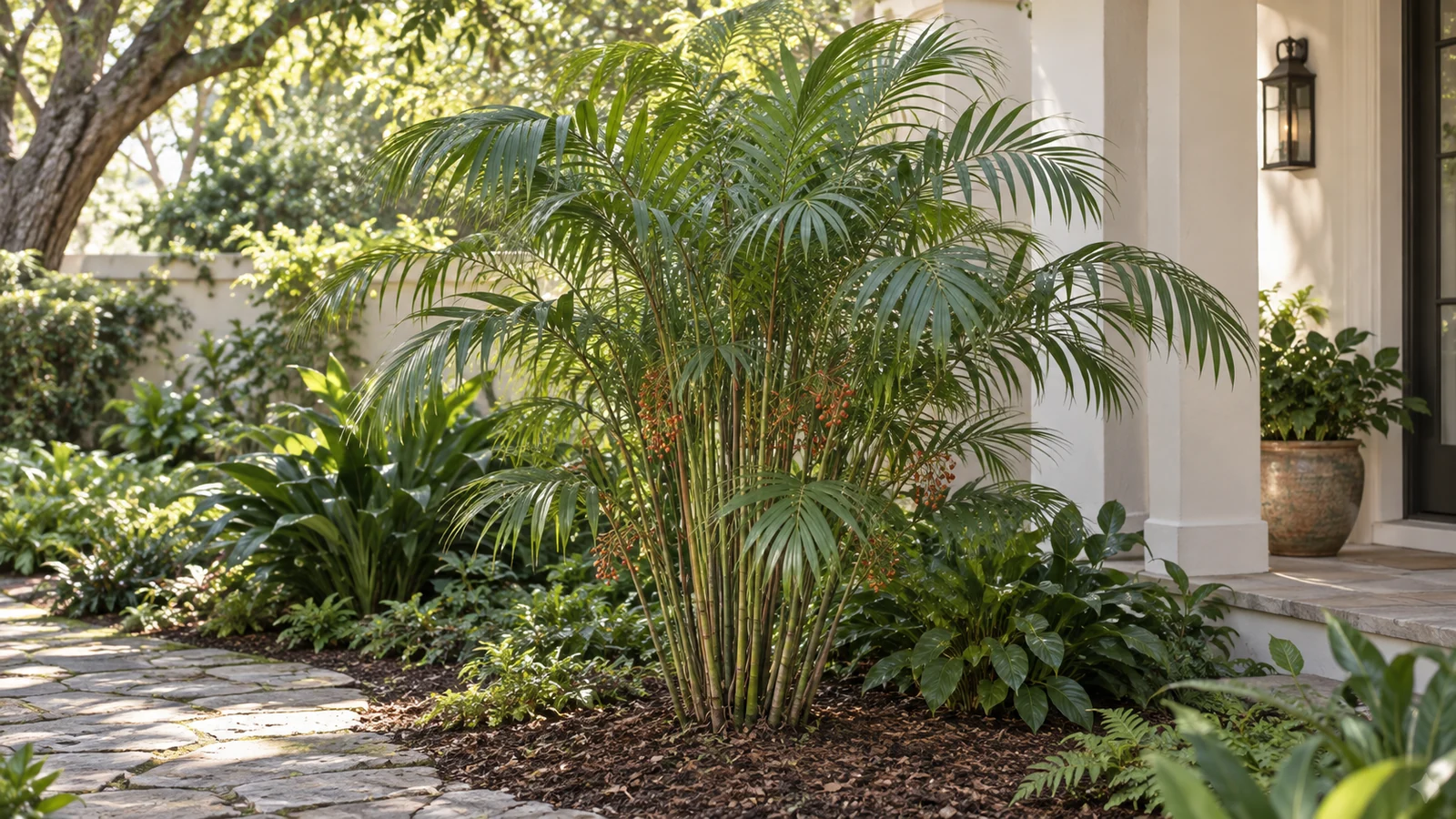
Illustrative planting concept
Size and space
Typical total height: 6 ft. Typical frond spread: 6 ft.
The diagram uses the UF/IFAS typical landscape reference of about 6 ft high × 6 ft wide. These are estimates, not a hard growth limit. A clump can develop differently with age and site conditions; ask the nursery about the supplied stock and allow flexibility.
Installed example: 3 ft high × 2 ft wide. This is an illustrative size, not a pot-size or growth-timeline promise.
Part shade to shade; protect from strong afternoon sun · Moist, well-drained soil; avoid letting a shaded container dry out · Evergreen feather fronds · slender canes · seasonal red-orange fruit
Care: Maintain a sheltered clump and monitor moisture and cold exposure
Know the whole plant
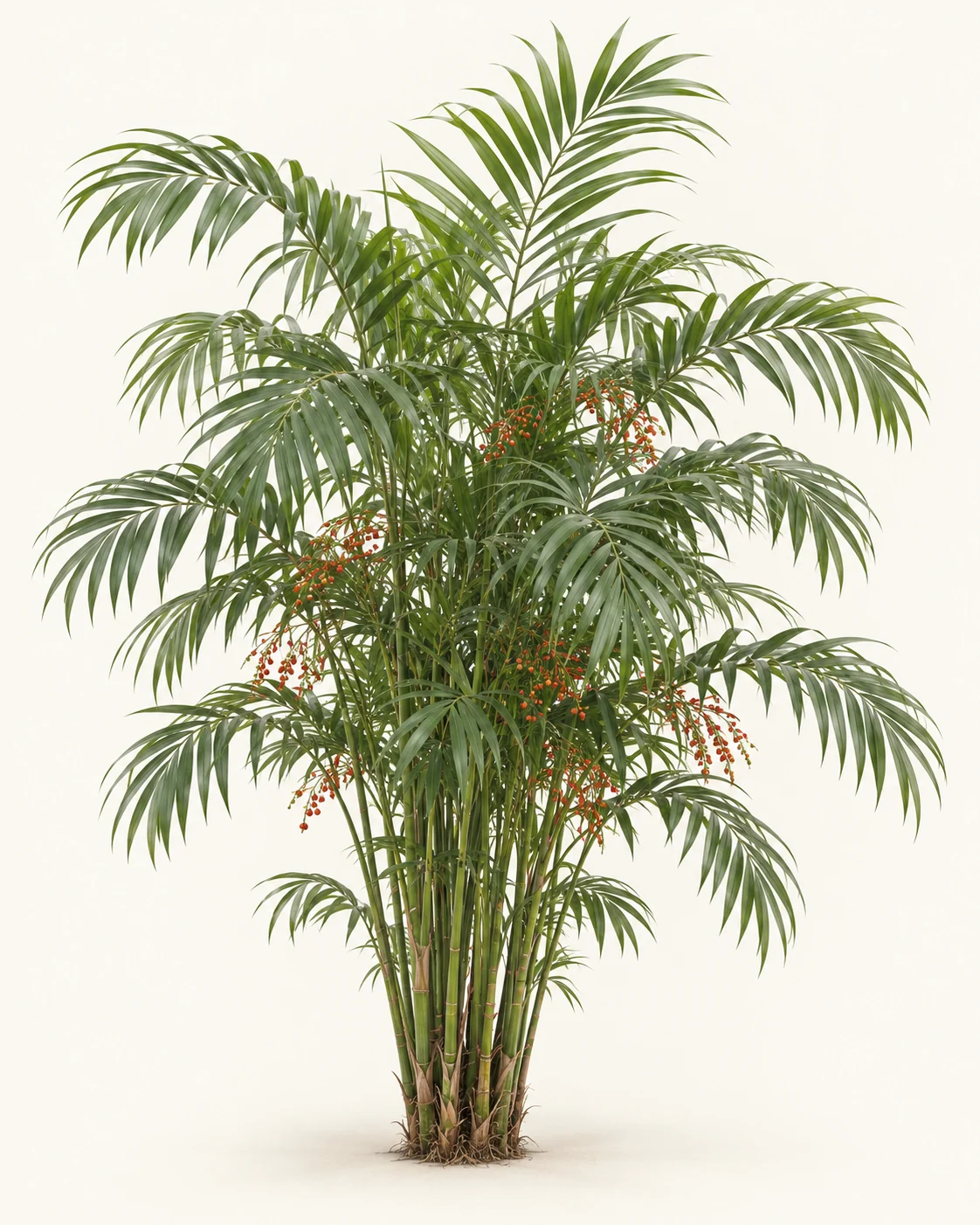
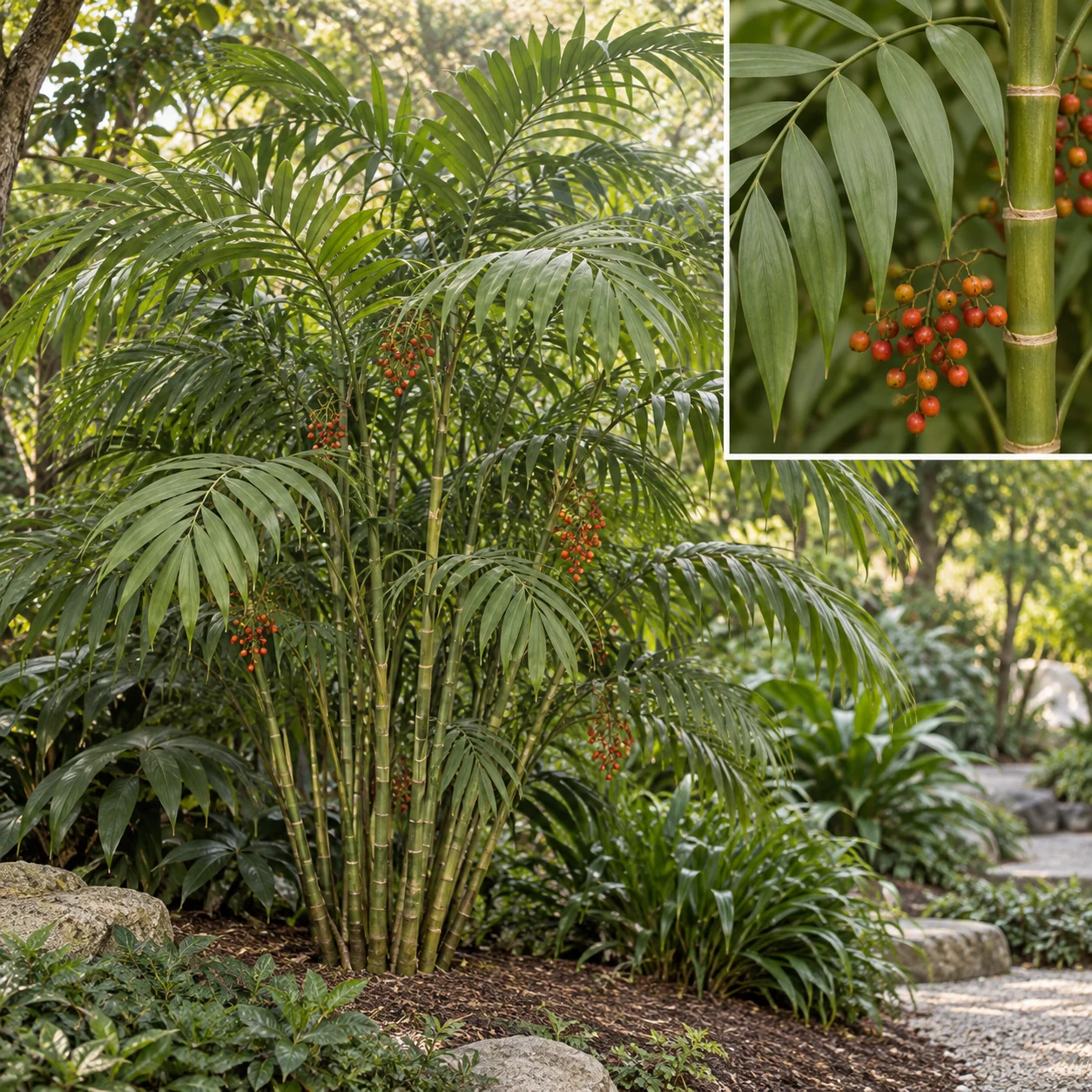
Illustrative whole-plant form of Hardy Bamboo Palm; fronds, stems and overall proportions vary with age and growing conditions.Illustrative foliage detail of Hardy Bamboo Palm. Use the botanical name and nursery label to confirm the plant.
Where it works around Pensacola
Consider this palm for a sheltered Pensacola courtyard or partly shaded garden bed where tall open canes would soften a wall or fence. Maintain an access gap and give the clump its own soil area. An exposed beach garden or a cold open inland site needs a different selection discussion.
A sheltered courtyard accent
A feather-textured shade layer
Light screening in a shaded bed
A garden feature beside a covered sitting area
A movable container where winter protection is practical
Is the species confirmed?
Several unrelated palms share the name bamboo palm. Ask for Chamaedorea microspadix and compare the leaf and cane form with the nursery label.
Is the site warm and sheltered enough?
Evaluate the property’s cold pockets and wind exposure. A protected courtyard and an open inland lawn can behave very differently during freezes.
Will shade and moisture remain suitable?
Consider future tree removal, seasonal sun angles and irrigation changes. A sheltered planting should not depend on a temporary source of shade.
Can the canes have their own space?
Leave access behind the clump and avoid squeezing it between paving and a wall. Keep fruit and pruning cleanup part of normal garden care.
Before it goes on the plan
Is it the same as Areca Palm?
No. Areca, Lady Palm and several Chamaedorea species can be called bamboo palms in trade. The botanical name is the clearest way to specify this selection.
Is six feet a final maximum?
No. It is the typical size listed in the UF/IFAS reference used here. Individual clumps, container plants and older specimens may differ.
Can it go in full afternoon sun?
This collection presents it as a sheltered shade choice. Choose a sunnier-site palm if the bed receives strong reflected afternoon heat.
Pairing ideas
Upright Japanese Plum Yew: Upright Plum Yew gives a denser evergreen effect and has its own toxicity and space considerations.
Dwarf Mondo Grass: Dwarf Mondo Grass can provide a low texture nearby where soil moisture and drainage suit both, with space between their root areas.
{"key":"bamboo","name":"Hardy Bamboo Palm","botanical":"Chamaedorea microspadix","slug":"hardy-bamboo-palm","id":"PLT-CHAM-MICR","type":"palms","h":[6,6],"w":[6,6],"install":[3,2],"palmForm":"feather-clump","trunkRatio":0.36,"native":false,"light":"Part shade to shade; protect from strong afternoon sun","lightTags":["part","shade"],"water":"Moist, well-drained soil; avoid letting a shaded container dry out","season":"Evergreen feather fronds · slender canes · seasonal red-orange fruit","care":"Maintain a sheltered clump and monitor moisture and cold exposure","benefit":"Bring a lighter palm texture into a shaded garden.","intro":"Hardy Bamboo Palm offers slender canes and soft-looking feather fronds for a sheltered residential bed. It can add height and light screening near a shaded sitting area without the heavy trunk of a larger palm. Use it where the garden already provides protection and suitable moisture.","caution":"This guide is for Chamaedorea microspadix, not every palm sold as bamboo palm. UF/IFAS lists it for zone 9a with low salt-spray tolerance and a need for shade. Treat colder inland sites as a microclimate decision; the word hardy is not a guarantee against freeze damage.","sizeNote":"The diagram uses the UF/IFAS typical landscape reference of about 6 ft high × 6 ft wide. These are estimates, not a hard growth limit. A clump can develop differently with age and site conditions; ask the nursery about the supplied stock and allow flexibility.","site":"Consider this palm for a sheltered Pensacola courtyard or partly shaded garden bed where tall open canes would soften a wall or fence. Maintain an access gap and give the clump its own soil area. An exposed beach garden or a cold open inland site needs a different selection discussion.","uses":["A sheltered courtyard accent","A feather-textured shade layer","Light screening in a shaded bed","A garden feature beside a covered sitting area","A movable container where winter protection is practical"],"checks":[["Is the species confirmed?","Several unrelated palms share the name bamboo palm. Ask for Chamaedorea microspadix and compare the leaf and cane form with the nursery label."],["Is the site warm and sheltered enough?","Evaluate the property’s cold pockets and wind exposure. A protected courtyard and an open inland lawn can behave very differently during freezes."],["Will shade and moisture remain suitable?","Consider future tree removal, seasonal sun angles and irrigation changes. A sheltered planting should not depend on a temporary source of shade."],["Can the canes have their own space?","Leave access behind the clump and avoid squeezing it between paving and a wall. Keep fruit and pruning cleanup part of normal garden care."]],"faq":[["Is it the same as Areca Palm?","No. Areca, Lady Palm and several Chamaedorea species can be called bamboo palms in trade. The botanical name is the clearest way to specify this selection."],["Is six feet a final maximum?","No. It is the typical size listed in the UF/IFAS reference used here. Individual clumps, container plants and older specimens may differ."],["Can it go in full afternoon sun?","This collection presents it as a sheltered shade choice. Choose a sunnier-site palm if the bed receives strong reflected afternoon heat."]],"sources":[["UF/IFAS: Hardy Bamboo Palm selection data","https://ask.ifas.ufl.edu/publication/EP020"],["RHS: Chamaedorea microspadix","https://www.rhs.org.uk/plants/76646/chamaedorea-microspadix/details"]],"unit":"ft","heightLabel":"Typical total height","spreadLabel":"Typical frond spread","color":"#70815a","guideKind":"Palm","eyebrow":"EVERGREEN FORM + THOUGHTFUL PLACEMENT","wholeCaption":"Illustrative whole-plant form of Hardy Bamboo Palm; fronds, stems and overall proportions vary with age and growing conditions.","detailCaption":"Illustrative foliage detail of Hardy Bamboo Palm. Use the botanical name and nursery label to confirm the plant.","aliases":["Hardy Bamboo Palm","Chamaedorea microspadix","bamboo palm","hardy bamboo"],"goals":["privacy"],"sizeBasis":"Typical landscape reference","palmSizeGroup":"small","images":{"context":{"id":"6aa03d88c527c2729128110b","url":"https://cdn.prod.website-files.com/6a975baac0f352647862d847/6aa03d88c527c2729128110b_landova-palm-bamboo-context.webp","alt":"Illustrative planting concept with Hardy Bamboo Palm","width":1600,"height":900},"whole":{"id":"6aa03d8ac527c272912811f3","url":"https://cdn.prod.website-files.com/6a975baac0f352647862d847/6aa03d8ac527c272912811f3_landova-palm-bamboo-whole.webp","alt":"Illustrative whole-plant form of Hardy Bamboo Palm","width":1122,"height":1402,"fit":"contain"},"detail":{"id":"6aa03d8a77d67a92285feb9d","url":"https://cdn.prod.website-files.com/6a975baac0f352647862d847/6aa03d8a77d67a92285feb9d_landova-palm-bamboo-detail.webp","alt":"Illustrative foliage and seasonal detail of Hardy Bamboo Palm","width":1254,"height":1254}},"companions":[{"slug":"upright-japanese-plum-yew","name":"Upright Japanese Plum Yew","title":"Compare another shaded upright accent","reason":"Upright Plum Yew gives a denser evergreen effect and has its own toxicity and space considerations.","image":{"id":"6aa02f17c5e92c52b487c502","url":"https://cdn.prod.website-files.com/6a975baac0f352647862d847/6aa02f17c5e92c52b487c502_landova-tree-plumyew-context.webp","alt":"Illustrative planting concept with Upright Japanese Plum Yew","width":1600,"height":900}},{"slug":"dwarf-mondo-grass","name":"Dwarf Mondo Grass","title":"Explore a lower shaded edge","reason":"Dwarf Mondo Grass can provide a low texture nearby where soil moisture and drainage suit both, with space between their root areas.","image":{"id":"6aa00d183fe0798c1efa78ee","url":"https://cdn.prod.website-files.com/6a975baac0f352647862d847/6aa00d183fe0798c1efa78ee_landova-grass-mondo-context.webp","alt":"Illustrative planting concept with Dwarf Mondo Grass","width":1600,"height":900}}]}
LANDOVA / PLANTING DECISIONS
Choose plants with the whole space in mind.
Explore a planting goal, then compare the growing needs and mature size of individual plants.
LANDOVA is in beta
Join the launch waitlist.
We are not accepting paying clients yet. We expect to launch around January 2027 and may open sooner. Explore our free tools now, and sign up for launch updates and educational planning emails.
Thank you. Your waitlist signup has been received. We will email you with launch updates. No purchase or project booking has been made.
We could not save your signup. Please try again or email info@landovadesign.com.