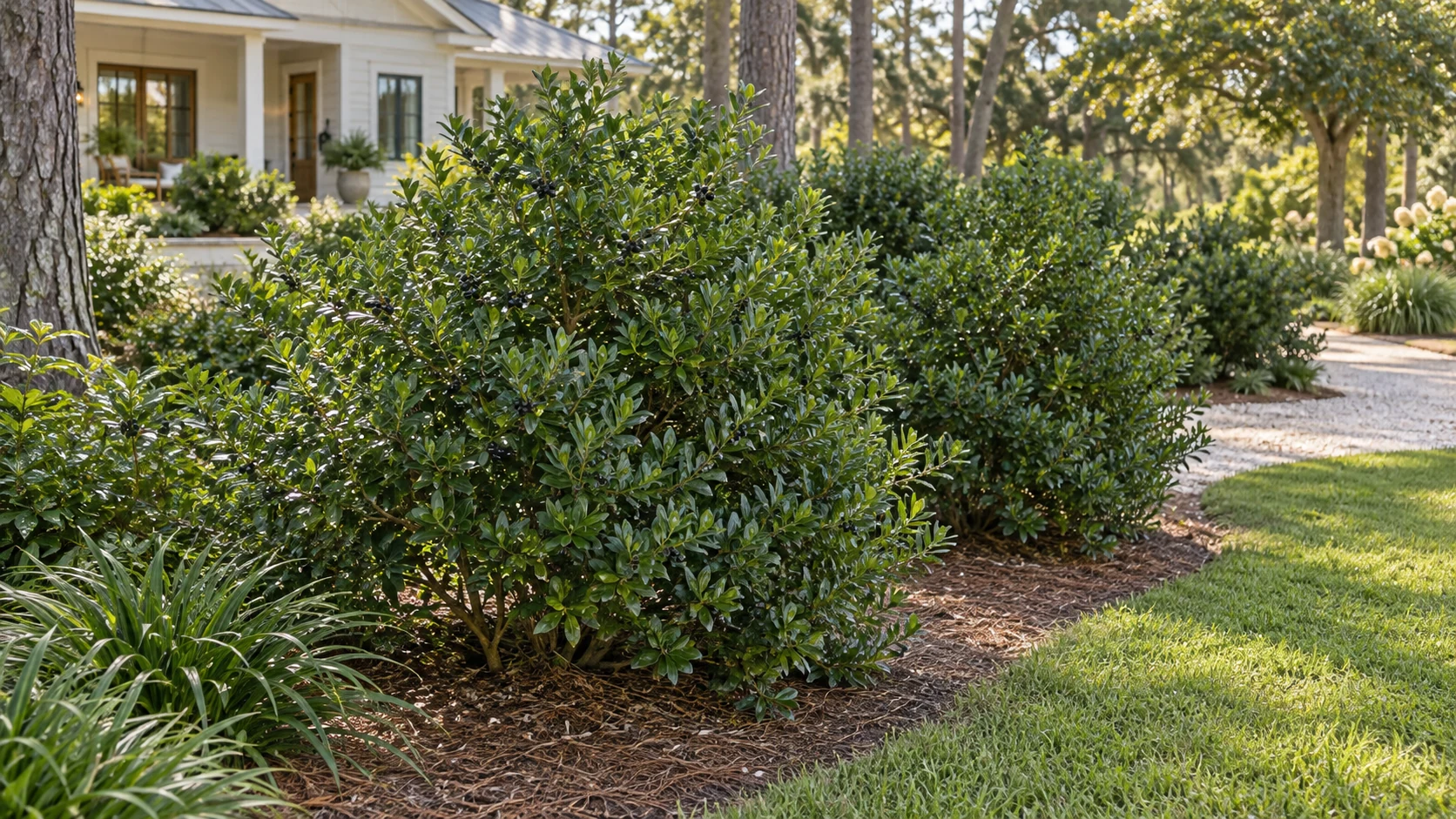
Also called gallberry, this native evergreen brings quiet structure to a generous planting bed. Think of an informal green backdrop with room to expand, rather than a tight row pressed against the house.
Illustrative planting concept
Size and space
Mature range: 5–10 ft high × 5–10 ft wide.
Published species dimensions vary; this broad 5–10 ft planning range includes UF/IFAS and NC State guidance. Spreading shoots can create a wider colony. Named dwarf cultivars need their own dimensions and should not be ordered from this species example.
Compare with a six-foot person: installed example 2 ft high by 2 ft wide. This example is not a fixed pot size or a growth timeline.
Sun to part shade · Moist acidic soil; tolerates occasional wet periods · Evergreen · seasonal black fruit on pollinated females
Where it works around Pensacola
Consider inkberry for a moist, acidic bed in the Pensacola region. Native does not mean every planting spot fits: the soil, available width and distance from buildings all matter.
An informal privacy layer
A roomy native garden border
A backdrop for seasonal color
A moist planting zone
A wildlife garden away from busy edges
Give the screen its own space
Place its mature footprint before the path, seating and maintenance route. A screen should provide privacy while leaving the rest of the garden comfortable to use.
Separate plants from fire exposure
Inkberry has a high flammability rating. Keep it out of the home’s defensible space and away from fire features; choose another planting approach for those areas.
Check the soil before the purchase
Review acidity and how the bed behaves after rain. A rendering cannot show whether imported fill, irrigation or a nearby drain makes that location unsuitable.
Plan for the colony
Allow space for spreading shoots, or include their removal in the maintenance plan. A lower layer can also soften exposed stems without forcing an unnaturally dense hedge.
Before it goes on the plan
Will every inkberry have black berries?
Fruit needs a female plant and compatible male pollen. The illustration shows seasonal possibilities, not a fruit guarantee. Treat the berries as wildlife interest, not food for the family.
Is this the same plant as Distylium?
No. They are different plants with different site needs. Similar-looking shapes in a design library are not interchangeable nursery selections.
Can it solve a drainage problem?
It can suit an occasionally wet planting zone, but plant selection does not fix a faulty stormwater route. Work out where water goes before assigning plants to the bed.
Pairing ideas
Henry’s Garnet Sweetspire: Consider sweetspire in its own sunny-to-part-shade footprint where the soil moisture suits both. Allow the sweetspire room to spread.
Florida Anise: Florida anise can join a larger native planting scheme in a moist, sheltered area. Place it according to its own shade and space needs.
{"key":"inkberry","id":"PLT-ILEX-GLABRA","slug":"inkberry-holly-gallberry","name":"Inkberry Holly","botanical":"Ilex glabra","eyebrow":"A native green backdrop","benefit":"Privacy that belongs in a natural garden.","intro":"Also called gallberry, this native evergreen brings quiet structure to a generous planting bed. Think of an informal green backdrop with room to expand, rather than a tight row pressed against the house.","h":[5,10],"w":[5,10],"install":[2,2],"color":"#42573c","habit":"upright","light":"Sun to part shade","lightTags":["sun","part"],"water":"Moist acidic soil; tolerates occasional wet periods","season":"Evergreen · seasonal black fruit on pollinated females","care":"Monitor spreading shoots; shape only as needed","site":"Consider inkberry for a moist, acidic bed in the Pensacola region. Native does not mean every planting spot fits: the soil, available width and distance from buildings all matter.","sizeNote":"Published species dimensions vary; this broad 5–10 ft planning range includes UF/IFAS and NC State guidance. Spreading shoots can create a wider colony. Named dwarf cultivars need their own dimensions and should not be ordered from this species example.","uses":["An informal privacy layer","A roomy native garden border","A backdrop for seasonal color","A moist planting zone","A wildlife garden away from busy edges"],"checks":[["Give the screen its own space","Place its mature footprint before the path, seating and maintenance route. A screen should provide privacy while leaving the rest of the garden comfortable to use."],["Separate plants from fire exposure","Inkberry has a high flammability rating. Keep it out of the home’s defensible space and away from fire features; choose another planting approach for those areas."],["Check the soil before the purchase","Review acidity and how the bed behaves after rain. A rendering cannot show whether imported fill, irrigation or a nearby drain makes that location unsuitable."],["Plan for the colony","Allow space for spreading shoots, or include their removal in the maintenance plan. A lower layer can also soften exposed stems without forcing an unnaturally dense hedge."]],"faq":[["Will every inkberry have black berries?","Fruit needs a female plant and compatible male pollen. The illustration shows seasonal possibilities, not a fruit guarantee. Treat the berries as wildlife interest, not food for the family."],["Is this the same plant as Distylium?","No. They are different plants with different site needs. Similar-looking shapes in a design library are not interchangeable nursery selections."],["Can it solve a drainage problem?","It can suit an occasionally wet planting zone, but plant selection does not fix a faulty stormwater route. Work out where water goes before assigning plants to the bed."]],"sources":[["Species, growing conditions + fire placement · NC State Extension","https://plants.ces.ncsu.edu/plants/ilex-glabra/"],["Florida landscape size reference · UF/IFAS FFL Plant Guide","https://ffl.ifas.ufl.edu/media/fflifasufledu/docs/publications/FFL-Plant-Guide_Web.pdf"]],"companions":[{"slug":"henrys-garnet-sweetspire","name":"Henry’s Garnet Sweetspire","title":"A softer flowering foreground","reason":"Consider sweetspire in its own sunny-to-part-shade footprint where the soil moisture suits both. Allow the sweetspire room to spread.","image":{"id":"6a9f5cd7d7f880ff25110b61","url":"https://cdn.prod.website-files.com/6a975baac0f352647862d847/6a9f5cd7d7f880ff25110b61_landova-henry-context-r05.webp","alt":"Illustrative planting concept with Henry’s Garnet Sweetspire"}},{"slug":"florida-anise","name":"Florida Anise","title":"A sheltered shaded layer","reason":"Florida anise can join a larger native planting scheme in a moist, sheltered area. Place it according to its own shade and space needs.","image":{"id":"6a9f3484598f07756d53faf0","url":"https://cdn.prod.website-files.com/6a975baac0f352647862d847/6a9f3484598f07756d53faf0_landova-shrub-anise-context-r02.webp","alt":"Illustrative planting concept with Florida Anise"}}],"wholeFit":"contain","wholeCaption":"Illustrative whole-plant study. Use the measured comparison for installed and mature size.","detailCaption":"Illustrative foliage and seasonal detail; appearance varies by season and growing conditions.","native":true,"guideKind":"Native species guide","aliases":["Gallberry"],"images":{"context":{"id":"6a9f5cd42a41d062f4f88b28","url":"https://cdn.prod.website-files.com/6a975baac0f352647862d847/6a9f5cd42a41d062f4f88b28_landova-inkberry-context-r05.webp","alt":"Illustrative planting concept with Inkberry Holly"},"whole":{"id":"6a9f5cd59abf8bef4ff90da7","url":"https://cdn.prod.website-files.com/6a975baac0f352647862d847/6a9f5cd59abf8bef4ff90da7_landova-inkberry-whole-r05.webp","alt":"Illustrative view of Inkberry Holly overall form","fit":"contain"},"detail":{"id":"6a9f5cd5ed7b89a06a96904c","url":"https://cdn.prod.website-files.com/6a975baac0f352647862d847/6a9f5cd5ed7b89a06a96904c_landova-inkberry-detail-r05.webp","alt":"Illustrative view of Inkberry Holly foliage and seasonal detail"}},"caution":"Allow spreading growth, check acidic soil and keep this flammable shrub away from buildings and fire features."}
LANDOVA / PLANTING DECISIONS
Choose plants with the whole space in mind.
Explore a planting goal, then compare the growing needs and mature size of individual plants.
LANDOVA is in beta
Join the launch waitlist.
We are not accepting paying clients yet. We expect to launch around January 2027 and may open sooner. Explore our free tools now, and sign up for launch updates and educational planning emails.
Thank you. Your waitlist signup has been received. We will email you with launch updates. No purchase or project booking has been made.
We could not save your signup. Please try again or email info@landovadesign.com.