Lady Palm adds layered fans and slender canes to a shaded residential garden. Its upright clump can soften an entry, frame a sitting area or provide gentle screening without a tall tree crown. Around Pensacola, treat it as a sheltered-site choice and check the winter exposure before committing to an outdoor bed.
Before you choose: UF/IFAS lists zone 9a and low salt-spray tolerance. Exposed inland cold pockets and beachfront conditions are poor starting points. Choose a protected shaded site, or a container that can be moved to suitable winter shelter.
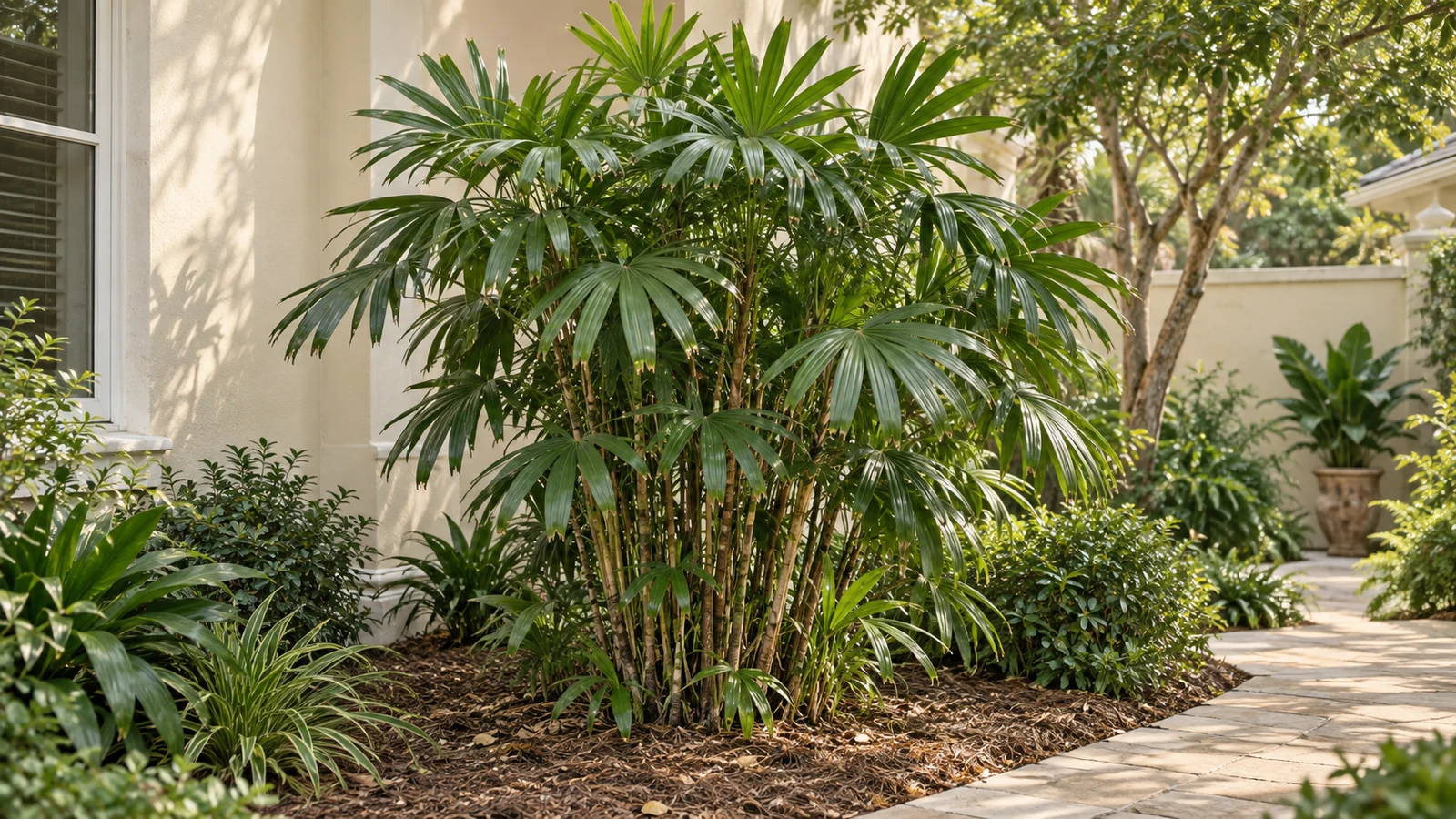
Illustrative planting concept
Size and space
Typical total height: 8 ft. Typical frond spread: 8 ft.
UF/IFAS lists a typical landscape size of 8 ft high × 8 ft wide. This is a comparison reference, not a lifetime maximum or a promise for every clump. Leave extra room around the fans for access and future shoots. The 3 × 2 ft installed example represents a smaller plant, not a specified pot size.
Installed example: 3 ft high × 2 ft wide. This is an illustrative size, not a pot-size or growth-timeline promise.
Shade to filtered part shade; protect from harsh afternoon sun · Even moisture with good drainage; adjust irrigation to shade and rainfall · Evergreen divided fans · slender canes · small seasonal flowers
Care: Light selective cleanup; leave room for an expanding clump
Know the whole plant
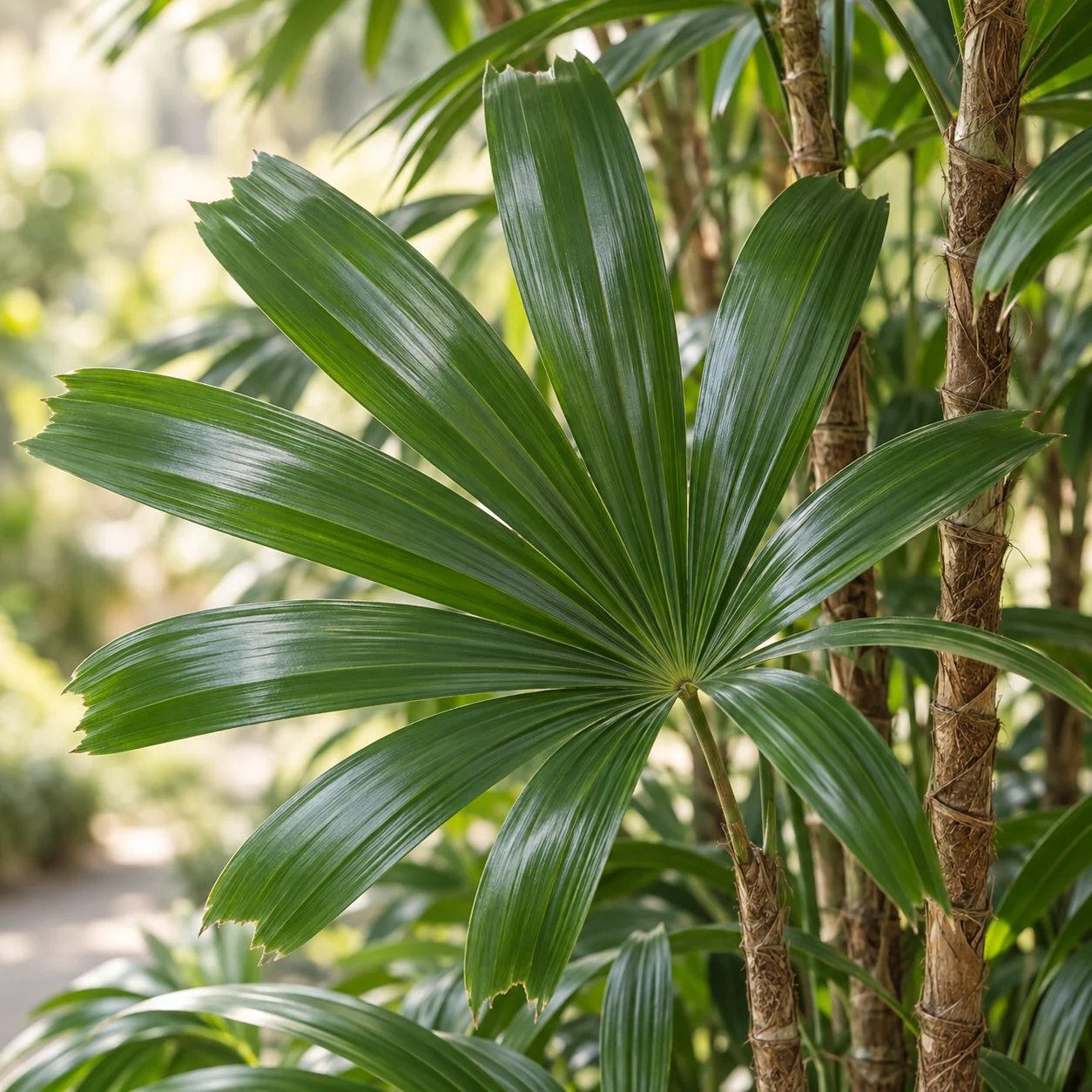
Illustrative whole-plant form of Lady Palm; fronds, stems and overall proportions vary with age and growing conditions.Illustrative foliage detail of Lady Palm. Use the botanical name and nursery label to confirm the plant.
Where it works around Pensacola
Explore Lady Palm for a sheltered Pensacola courtyard, shaded entry garden or covered sitting area with enough light for healthy foliage. Its cane-like stems can remain visible above a low planting layer. Match the site to local winter conditions; a warm wall does not guarantee protection through every freeze.
Leafy screening in a sheltered courtyard
A shaded entry-garden accent
An upright backdrop beside a sitting area
A movable container in a protected space
A layered understory bed with generous access
How cold and exposed is this spot?
Look at wind, low areas where cold air collects and the history of nearby plants. Ask the nursery about outdoor performance in the property's specific Pensacola-area microclimate.
Is the light filtered?
Prioritize shade or filtered light. A west-facing wall or hot paving can make an apparently sheltered location much harsher than the plant's understory setting.
Can water drain from the roots?
Provide moisture without persistent saturation. For containers, use drainage holes and a suitable freely draining mix; check the root zone before adding water.
Can the clump expand?
Rhizomes produce additional stems. Set the planting beyond gates, door swings and utility access, and allow space for selective stem removal as it develops.
Before it goes on the plan
Is Lady Palm the same as Hardy Bamboo Palm?
No. Lady Palm is Rhapis excelsa, with divided fan-shaped leaves. The Hardy Bamboo Palm in this library is Chamaedorea microspadix, with feather-shaped leaves. Confirm the botanical name on the nursery label.
Will it provide instant privacy?
That depends on the actual plant supplied. A small container plant will not immediately match the eight-foot landscape reference. Measure the delivered clump and consider the sightline you want to soften.
Can I grow it in a container?
Yes. A container can suit a sheltered shaded setting and make winter relocation possible while the plant is manageable. Include room for the container, drainage and safe movement; an established clump can become heavy.
Pairing ideas
Hardy Bamboo Palm: Compare the finer feather foliage of Hardy Bamboo Palm with Lady Palm's broader fans. Check each plant's cold exposure and eventual footprint before choosing.
Dwarf Mondo Grass: Dwarf Mondo Grass can form a fine-textured lower layer in its own suitable shaded space, leaving the palm's canes and access route clear.
{"type":"palms","unit":"ft","color":"#70815a","native":false,"eyebrow":"EVERGREEN FORM + THOUGHTFUL PLACEMENT","heightLabel":"Typical total height","spreadLabel":"Typical frond spread","sizeBasis":"Typical landscape reference","key":"lady","name":"Lady Palm","botanical":"Rhapis excelsa","slug":"lady-palm","id":"PLT-RHAP-EXCE","h":[8,8],"w":[8,8],"install":[3,2],"palmForm":"fan-clump","trunkRatio":0.33,"guideKind":"Palm","aliases":["Lady Palm","Broadleaf Lady Palm","Rhapis","Rhapis excelsa"],"goals":["privacy"],"light":"Shade to filtered part shade; protect from harsh afternoon sun","lightTags":["shade","part"],"water":"Even moisture with good drainage; adjust irrigation to shade and rainfall","season":"Evergreen divided fans · slender canes · small seasonal flowers","care":"Light selective cleanup; leave room for an expanding clump","benefit":"Bring leafy privacy into a sheltered courtyard.","intro":"Lady Palm adds layered fans and slender canes to a shaded residential garden. Its upright clump can soften an entry, frame a sitting area or provide gentle screening without a tall tree crown. Around Pensacola, treat it as a sheltered-site choice and check the winter exposure before committing to an outdoor bed.","caution":"UF/IFAS lists zone 9a and low salt-spray tolerance. Exposed inland cold pockets and beachfront conditions are poor starting points. Choose a protected shaded site, or a container that can be moved to suitable winter shelter.","sizeNote":"UF/IFAS lists a typical landscape size of 8 ft high × 8 ft wide. This is a comparison reference, not a lifetime maximum or a promise for every clump. Leave extra room around the fans for access and future shoots. The 3 × 2 ft installed example represents a smaller plant, not a specified pot size.","site":"Explore Lady Palm for a sheltered Pensacola courtyard, shaded entry garden or covered sitting area with enough light for healthy foliage. Its cane-like stems can remain visible above a low planting layer. Match the site to local winter conditions; a warm wall does not guarantee protection through every freeze.","uses":["Leafy screening in a sheltered courtyard","A shaded entry-garden accent","An upright backdrop beside a sitting area","A movable container in a protected space","A layered understory bed with generous access"],"checks":[["How cold and exposed is this spot?","Look at wind, low areas where cold air collects and the history of nearby plants. Ask the nursery about outdoor performance in the property's specific Pensacola-area microclimate."],["Is the light filtered?","Prioritize shade or filtered light. A west-facing wall or hot paving can make an apparently sheltered location much harsher than the plant's understory setting."],["Can water drain from the roots?","Provide moisture without persistent saturation. For containers, use drainage holes and a suitable freely draining mix; check the root zone before adding water."],["Can the clump expand?","Rhizomes produce additional stems. Set the planting beyond gates, door swings and utility access, and allow space for selective stem removal as it develops."]],"faq":[["Is Lady Palm the same as Hardy Bamboo Palm?","No. Lady Palm is Rhapis excelsa, with divided fan-shaped leaves. The Hardy Bamboo Palm in this library is Chamaedorea microspadix, with feather-shaped leaves. Confirm the botanical name on the nursery label."],["Will it provide instant privacy?","That depends on the actual plant supplied. A small container plant will not immediately match the eight-foot landscape reference. Measure the delivered clump and consider the sightline you want to soften."],["Can I grow it in a container?","Yes. A container can suit a sheltered shaded setting and make winter relocation possible while the plant is manageable. Include room for the container, drainage and safe movement; an established clump can become heavy."]],"sources":[["UF/IFAS: Ornamental Palms for Central Florida","https://ask.ifas.ufl.edu/publication/EP020"],["NC State Extension: Lady Palm","https://plants.ces.ncsu.edu/plants/rhapis-excelsa/"]],"wholeCaption":"Illustrative whole-plant form of Lady Palm; fronds, stems and overall proportions vary with age and growing conditions.","detailCaption":"Illustrative foliage detail of Lady Palm. Use the botanical name and nursery label to confirm the plant.","images":{"context":{"id":"6aa04575031642a205297260","url":"https://cdn.prod.website-files.com/6a975baac0f352647862d847/6aa04575031642a205297260_landova-palm-lady-context.webp","alt":"Illustrative planting concept with Lady Palm","width":1600,"height":900},"whole":{"id":"6aa04576031642a205297288","url":"https://cdn.prod.website-files.com/6a975baac0f352647862d847/6aa04576031642a205297288_landova-palm-lady-whole.webp","alt":"Illustrative whole-plant form of Lady Palm","width":1122,"height":1402,"fit":"contain"},"detail":{"id":"6aa04576f900b2d78e62ad67","url":"https://cdn.prod.website-files.com/6a975baac0f352647862d847/6aa04576f900b2d78e62ad67_landova-palm-lady-detail.webp","alt":"Illustrative foliage and seasonal detail of Lady Palm","width":1254,"height":1254}},"companions":[{"slug":"hardy-bamboo-palm","name":"Hardy Bamboo Palm","title":"Compare another sheltered shade palm","reason":"Compare the finer feather foliage of Hardy Bamboo Palm with Lady Palm's broader fans. Check each plant's cold exposure and eventual footprint before choosing.","image":{"id":"6aa03d88c527c2729128110b","url":"https://cdn.prod.website-files.com/6a975baac0f352647862d847/6aa03d88c527c2729128110b_landova-palm-bamboo-context.webp","alt":"Illustrative planting concept with Hardy Bamboo Palm","width":1600,"height":900}},{"slug":"dwarf-mondo-grass","name":"Dwarf Mondo Grass","title":"Explore a low shaded edge","reason":"Dwarf Mondo Grass can form a fine-textured lower layer in its own suitable shaded space, leaving the palm's canes and access route clear.","image":{"id":"6aa00d183fe0798c1efa78ee","url":"https://cdn.prod.website-files.com/6a975baac0f352647862d847/6aa00d183fe0798c1efa78ee_landova-grass-mondo-context.webp","alt":"Illustrative planting concept with Dwarf Mondo Grass","width":1600,"height":900}}]}
LANDOVA / PLANTING DECISIONS
Choose plants with the whole space in mind.
Explore a planting goal, then compare the growing needs and mature size of individual plants.
LANDOVA is in beta
Join the launch waitlist.
We are not accepting paying clients yet. We expect to launch around January 2027 and may open sooner. Explore our free tools now, and sign up for launch updates and educational planning emails.
Thank you. Your waitlist signup has been received. We will email you with launch updates. No purchase or project booking has been made.
We could not save your signup. Please try again or email info@landovadesign.com.