Let airy native flowers rise above a low leafy rosette.
Lyreleaf Sage starts with a low rosette of lobed leaves, often marked with burgundy, then sends up slender stems carrying pale blue to lavender flowers. The difference between its low leaves and airy flowering height makes it useful in a naturalistic garden. UF/IFAS documents it locally in Escambia County, including sunny spring-flowering patches.
Before you choose: It reseeds readily and can move beyond the original planting, particularly in loose sandy soil. Choose it for an informal native bed where seedlings can be welcomed or thinned. The flowering stems are much taller than the basal foliage, so do not judge clearance from the leafy rosette alone.
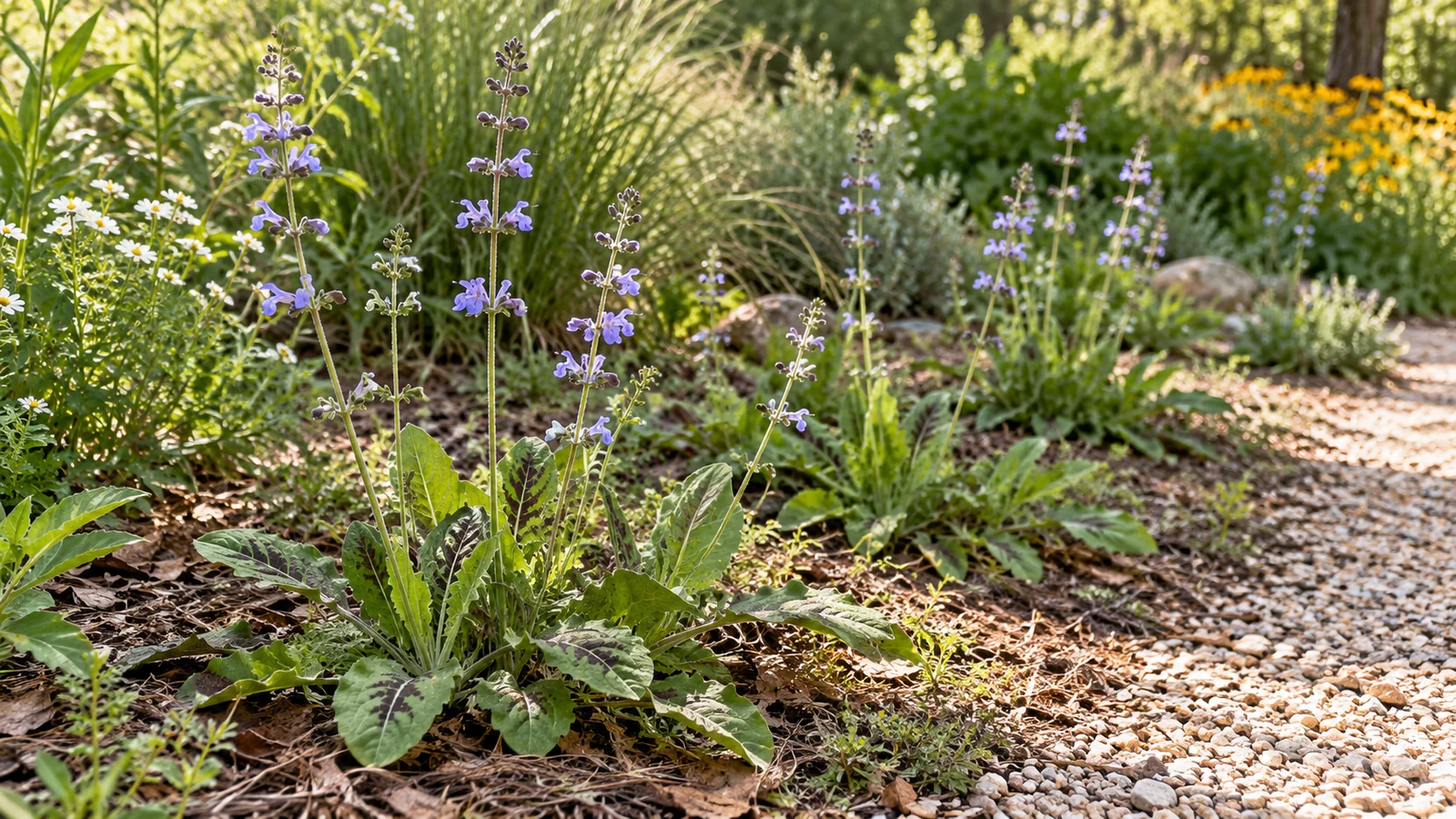
Illustrative planting concept
Size and space
Height in flower: 12–24 in in flower; basal foliage stays lower. Mature spread: 6–12 in per individual plant.
NC State gives a flowering height of 1–2 ft and an individual width of 6–12 in. The diagram’s 24 in height includes flower stems; the low rosette is drawn schematically and does not have a separately verified height here. Individual width is not the eventual area occupied by self-sown seedlings. Plan access to edit the patch as it develops.
Installed example: 3 in high × 6 in wide. This is an illustrative size, not a pot-size or growth-timeline promise.
Full sun to part shade · Adaptable soil; moderate moisture with drainage, drought tolerant once established · Spring flowers above low leafy rosettes; winter foliage varies
Care: Allow selected seedlings; cut spent stems when less reseeding is desired
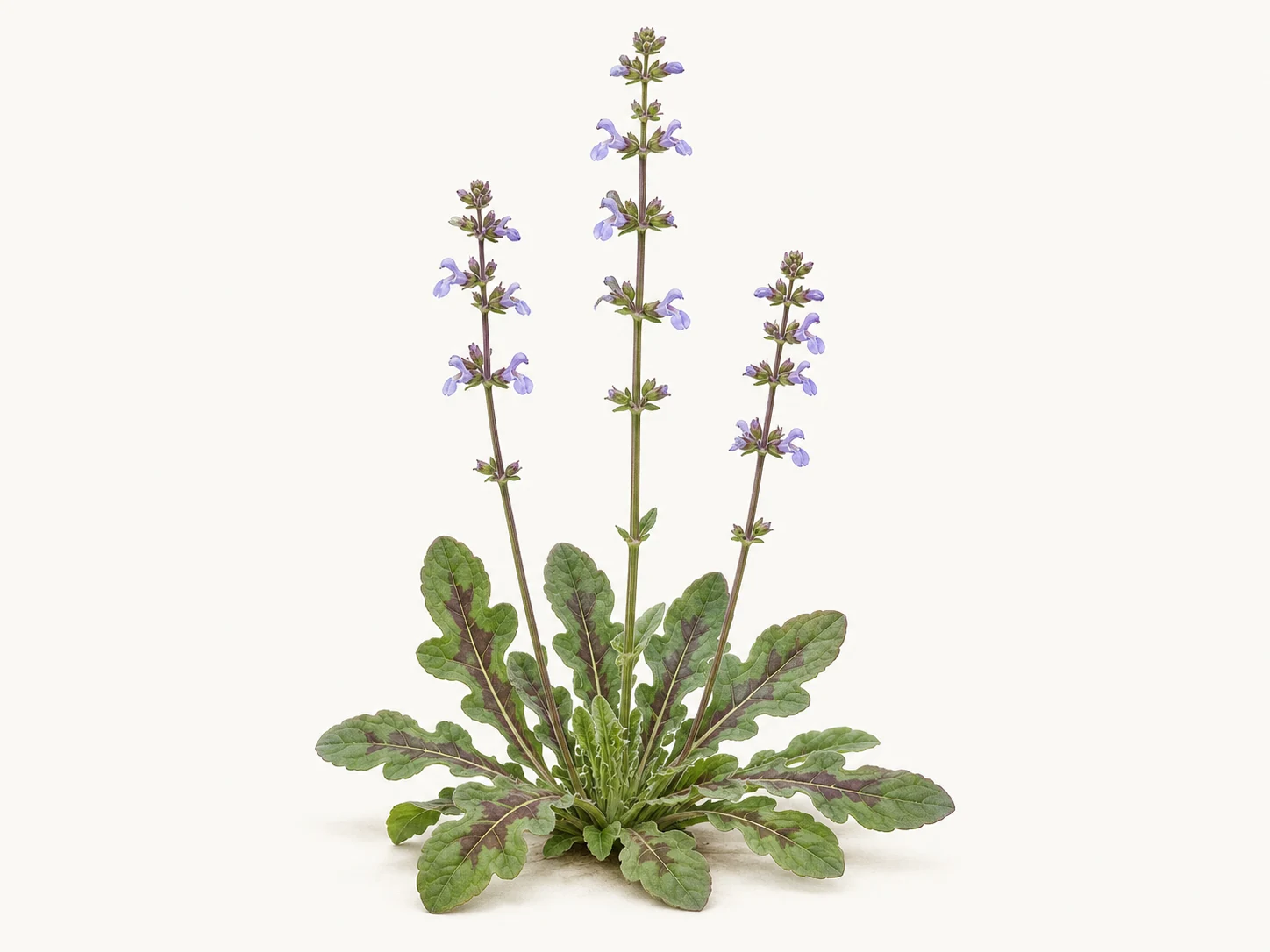
Know the whole plant
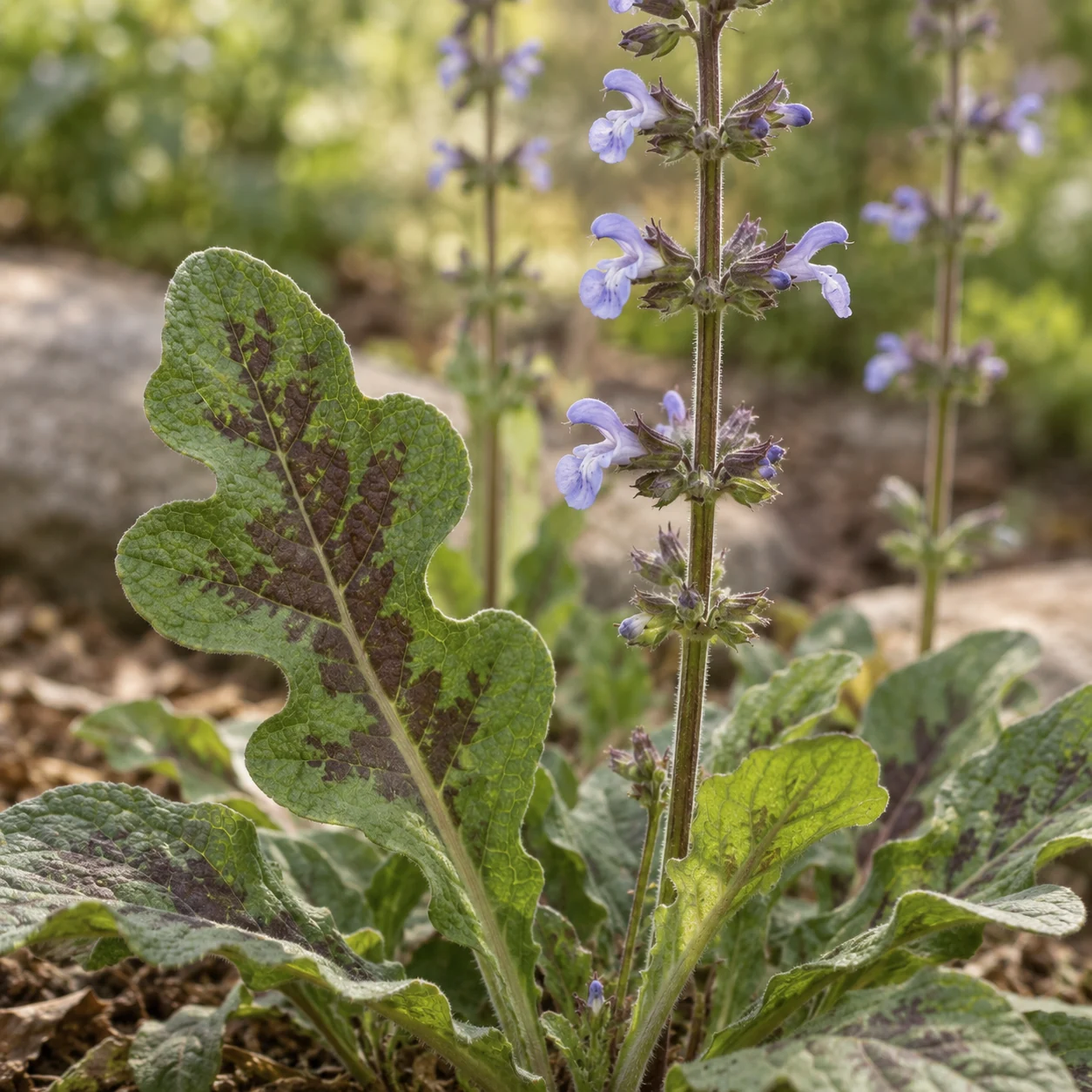
Illustrative overall form of Lyreleaf Sage; appearance varies with season and the nursery plant.Illustrative foliage and seasonal detail of Lyreleaf Sage. Confirm the botanical name on the nursery label.
Where it works around Pensacola
Use Lyreleaf Sage in a sunny or partly shaded Pensacola native bed, beside a clear path or in a suitable rain-garden planting zone. Its adaptability does not mean every wet site will work. Start with a small group, observe seasonal moisture, and decide how much reseeding suits the design before allowing a larger colony.
An informal native spring-flower bed
A pollinator-focused path edge
A low rosette layer with airy flower stems
A suitable rain-garden planting zone
A naturalistic opening beside upright grasses
How many seedlings are welcome?
Decide whether the bed should expand naturally or retain a few individual plants. Remove unwanted seedlings early and monitor nearby bare soil.
Does the flowering height fit?
Allow room for stems up to two feet high near low windows and path edges. The foliage and flower stems occupy different parts of the view.
What happens after the flowers fade?
Leaving seed supports natural renewal. Cutting spent stems can reduce unwanted spread, but continued observation is needed because later flowers can also set seed.
How does winter affect the leaves?
Regional references describe persistent basal rosettes or dormancy. Treat winter appearance as variable, and use other structure where permanent foliage is essential.
Before it goes on the plan
Is this culinary sage?
No. This ornamental native is Salvia lyrata, not the common kitchen sage Salvia officinalis. Select it for its landscape form and flowers.
Can I mow it?
Lyreleaf Sage can tolerate mowing, but mowing changes the flower display and seed production. For a garden bed, manage individual stems and seedlings around the desired spring effect.
Will it stay in one small clump?
The individual rosette is compact, but seed can create additional plants nearby. A six-to-twelve-inch width describes one plant, not a permanent limit on the whole planting.
Pairing ideas
Pink Muhly Grass: Pink Muhly adds a separate upright layer in sun and draining soil. Keep sage seedlings away from its crown and allow the grass its full width.
Schilling’s Dwarf Yaupon Holly: Dwarf Yaupon can supply evergreen structure in its own larger footprint. Keep an accessible margin for editing the sage seedlings.
{"key":"lyreleaf","name":"Lyreleaf Sage","botanical":"Salvia lyrata","slug":"lyreleaf-sage","id":"PLT-SALV-LYRA","type":"groundcovers","h":[1,2],"w":[0.5,1],"install":[0.25,0.5],"native":true,"groundGroup":"large","light":"Full sun to part shade","lightTags":["sun","part"],"water":"Adaptable soil; moderate moisture with drainage, drought tolerant once established","season":"Spring flowers above low leafy rosettes; winter foliage varies","care":"Allow selected seedlings; cut spent stems when less reseeding is desired","benefit":"Let airy native flowers rise above a low leafy rosette.","intro":"Lyreleaf Sage starts with a low rosette of lobed leaves, often marked with burgundy, then sends up slender stems carrying pale blue to lavender flowers. The difference between its low leaves and airy flowering height makes it useful in a naturalistic garden. UF/IFAS documents it locally in Escambia County, including sunny spring-flowering patches.","caution":"It reseeds readily and can move beyond the original planting, particularly in loose sandy soil. Choose it for an informal native bed where seedlings can be welcomed or thinned. The flowering stems are much taller than the basal foliage, so do not judge clearance from the leafy rosette alone.","sizeNote":"NC State gives a flowering height of 1–2 ft and an individual width of 6–12 in. The diagram’s 24 in height includes flower stems; the low rosette is drawn schematically and does not have a separately verified height here. Individual width is not the eventual area occupied by self-sown seedlings. Plan access to edit the patch as it develops.","site":"Use Lyreleaf Sage in a sunny or partly shaded Pensacola native bed, beside a clear path or in a suitable rain-garden planting zone. Its adaptability does not mean every wet site will work. Start with a small group, observe seasonal moisture, and decide how much reseeding suits the design before allowing a larger colony.","uses":["An informal native spring-flower bed","A pollinator-focused path edge","A low rosette layer with airy flower stems","A suitable rain-garden planting zone","A naturalistic opening beside upright grasses"],"checks":[["How many seedlings are welcome?","Decide whether the bed should expand naturally or retain a few individual plants. Remove unwanted seedlings early and monitor nearby bare soil."],["Does the flowering height fit?","Allow room for stems up to two feet high near low windows and path edges. The foliage and flower stems occupy different parts of the view."],["What happens after the flowers fade?","Leaving seed supports natural renewal. Cutting spent stems can reduce unwanted spread, but continued observation is needed because later flowers can also set seed."],["How does winter affect the leaves?","Regional references describe persistent basal rosettes or dormancy. Treat winter appearance as variable, and use other structure where permanent foliage is essential."]],"faq":[["Is this culinary sage?","No. This ornamental native is Salvia lyrata, not the common kitchen sage Salvia officinalis. Select it for its landscape form and flowers."],["Can I mow it?","Lyreleaf Sage can tolerate mowing, but mowing changes the flower display and seed production. For a garden bed, manage individual stems and seedlings around the desired spring effect."],["Will it stay in one small clump?","The individual rosette is compact, but seed can create additional plants nearby. A six-to-twelve-inch width describes one plant, not a permanent limit on the whole planting."]],"sources":[["NC State Extension: Lyreleaf Sage","https://plants.ces.ncsu.edu/plants/salvia-lyrata/"],["UF/IFAS Escambia County: Lyreleaf Sage","https://blogs.ifas.ufl.edu/escambiaco/2021/04/14/weekly-what-is-it-lyreleaf-sage/"],["Florida Native Plant Society: Lyreleaf Sage","https://www.fnps.org/plant/salvia-lyrata"]],"unit":"in","heightLabel":"Height in flower","spreadLabel":"Mature spread","color":"#70815a","guideKind":"Native groundcover","eyebrow":"THE LOW LAYER / FORM + SEASON","aliases":["Lyreleaf Sage","Salvia lyrata","Lyre-leaved Sage"],"goals":["color"],"wholeCaption":"Illustrative overall form of Lyreleaf Sage; appearance varies with season and the nursery plant.","detailCaption":"Illustrative foliage and seasonal detail of Lyreleaf Sage. Confirm the botanical name on the nursery label.","groundForm":"flower-rosette","heightText":"12–24 in in flower; basal foliage stays lower","sizeSummary":"12–24 in in flower · individual rosette 6–12 in wide","referenceNote":"The measured height includes flower stems. Basal foliage is shown schematically, without a separate height claim.","spreadText":"6–12 in per individual plant","images":{"context":{"id":"6aa066ee9814d853cac3921b","url":"https://cdn.prod.website-files.com/6a975baac0f352647862d847/6aa066ee9814d853cac3921b_landova-groundcover-lyreleaf-context.webp","alt":"Illustrative planting concept with Lyreleaf Sage","width":1600,"height":900},"whole":{"id":"6aa066eec9ee32dbd177f997","url":"https://cdn.prod.website-files.com/6a975baac0f352647862d847/6aa066eec9ee32dbd177f997_landova-groundcover-lyreleaf-whole.webp","alt":"Illustrative whole-plant form of Lyreleaf Sage","width":1448,"height":1086,"fit":"contain"},"detail":{"id":"6aa066ee48cd8909f4fca1b2","url":"https://cdn.prod.website-files.com/6a975baac0f352647862d847/6aa066ee48cd8909f4fca1b2_landova-groundcover-lyreleaf-detail.webp","alt":"Illustrative foliage and seasonal detail of Lyreleaf Sage","width":1254,"height":1254}},"companions":[{"slug":"pink-muhly-grass","name":"Pink Muhly Grass","title":"Contrast spring flowers with autumn texture","reason":"Pink Muhly adds a separate upright layer in sun and draining soil. Keep sage seedlings away from its crown and allow the grass its full width.","image":{"id":"6aa00228430659e428d61061","url":"https://cdn.prod.website-files.com/6a975baac0f352647862d847/6aa00228430659e428d61061_landova-grass-muhly-context.webp","alt":"Illustrative planting concept with Pink Muhly Grass","width":1600,"height":900}},{"slug":"schillings-dwarf-yaupon-holly","name":"Schilling’s Dwarf Yaupon Holly","title":"Anchor an informal flowering foreground","reason":"Dwarf Yaupon can supply evergreen structure in its own larger footprint. Keep an accessible margin for editing the sage seedlings.","image":{"id":"6a9f5cd31fbbc23ce58d34ef","url":"https://cdn.prod.website-files.com/6a975baac0f352647862d847/6a9f5cd31fbbc23ce58d34ef_landova-schilling-context-r05.webp","alt":"Illustrative planting concept with Schilling’s Dwarf Yaupon Holly"}}]}
LANDOVA / PLANTING DECISIONS
Choose plants with the whole space in mind.
Explore a planting goal, then compare the growing needs and mature size of individual plants.
LANDOVA is in beta
Join the launch waitlist.
We are not accepting paying clients yet. We expect to launch around January 2027 and may open sooner. Explore our free tools now, and sign up for launch updates and educational planning emails.
Thank you. Your waitlist signup has been received. We will email you with launch updates. No purchase or project booking has been made.
We could not save your signup. Please try again or email info@landovadesign.com.