Miscanthus can create a tall, moving layer with arching foliage and silky seasonal flower heads. The name covers plants of very different sizes and seed production. This comparison guide begins with that variation so a striking image does not become a vague plant specification.
Before you choose: Confirm the species and cultivar, seed behavior and local guidance. Dry foliage adds fuel, and leaf edges can be sharp; keep it away from fire features and contact areas.
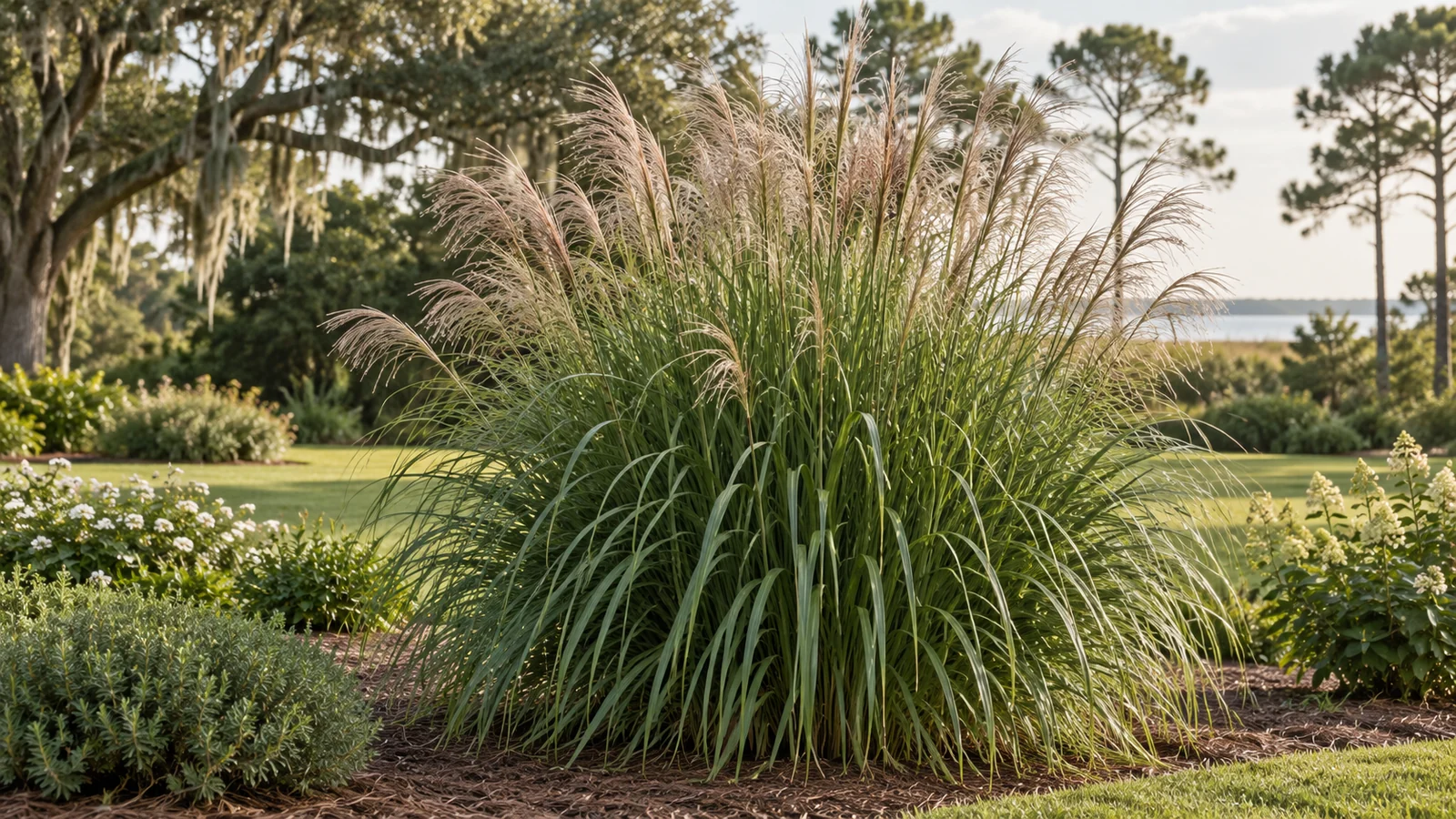
Illustrative planting concept
Size and space
Overall species height range: 4–12 ft. Mature spread: 4–6 ft.
NC State lists a broad species range of 4–12 ft high and 4–6 ft wide. The diagram intentionally shows that variation, including tall flowering forms. It is not a mature-size promise for an unnamed nursery plant. A named compact or reduced-fertility selection needs its own verified dimensions.
Installed example: 2 ft high × 1.5 ft wide. This is an illustrative size, not a pot-size or growth-timeline promise.
Full sun · Establishment water; match moisture and drainage to the exact selection · Seasonal plumes · foliage becomes dormant and brown in winter
Care: Annual dormant-growth cleanup; monitor seedlings and expanding clumps
Know the whole plant
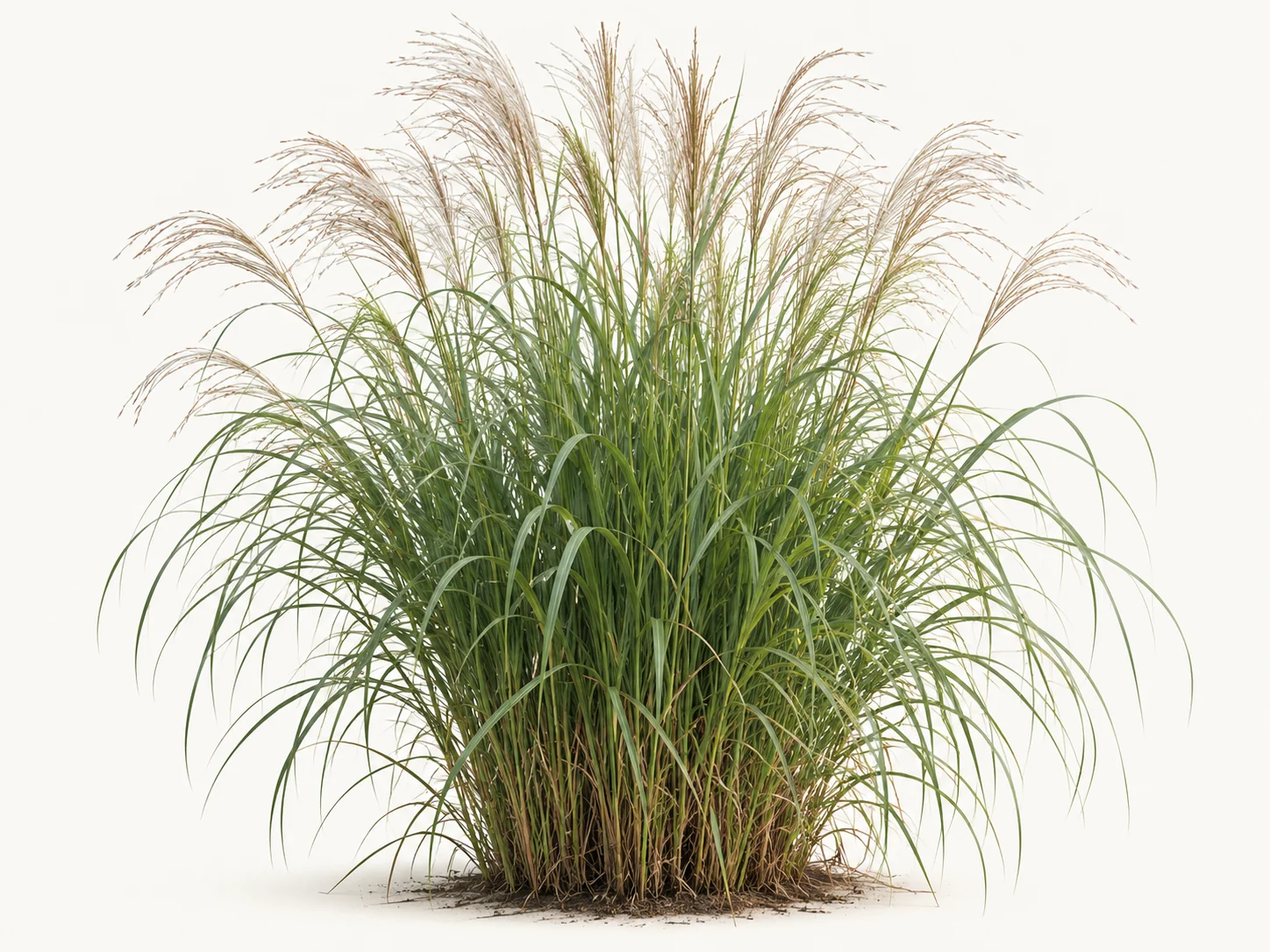
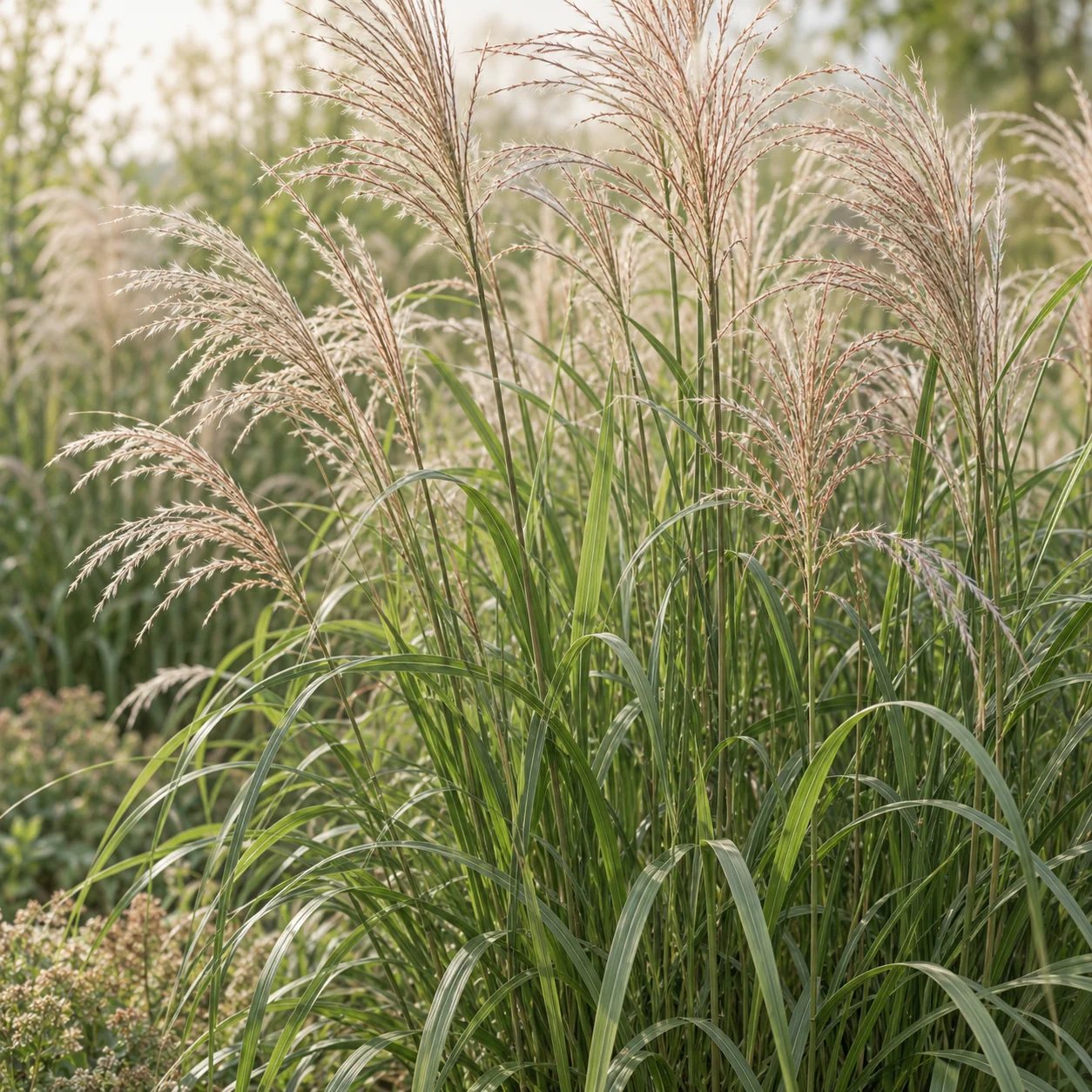
Illustrative species form; the image does not identify a cultivar or establish its final height.Illustrative silky seasonal panicles and narrow blades with pale midribs.
Where it works around Pensacola
This is a selection-comparison page for Pensacola and the Gulf Coast. UF/IFAS currently lists Miscanthus sinensis as not a problem species (un-documented), while NC State flags invasive behavior in North Carolina. Those are different regional assessments. Review the named plant and local advice before specifying it, especially near natural areas.
Comparison of tall grass forms
A distant seasonal focal point
A broad open planting bed
Review of plume and winter structure
A native-alternative discussion
What plant is actually being offered?
Record the species and full cultivar name before deciding on spacing. Miscanthus sinensis is not the same as Miscanthus sacchariflorus, and a common name alone does not establish suitability.
What happens after the flower season?
Review the winter-brown clump and the temporary low period after cleanup. A seasonal grass should not be the only element providing a needed year-round screen.
Where is the ignition source?
Keep dry grass away from fire features, grills and places requiring defensible-space planning. NC State identifies a high flammability concern for this species.
Could a native grass meet the goal?
Compare the desired height, movement and flowering effect with Pink Muhly or Dwarf Fakahatchee. A smaller appropriate plant may fit the garden with less ongoing work.
Before it goes on the plan
Is all Miscanthus invasive?
Species, cultivar and region matter. Florida’s current sinensis assessment and North Carolina’s warning differ; neither proves that every selection is suitable everywhere. Check the current local assessment and exact plant.
Can I buy it simply as Miscanthus?
Ask for a complete label. An image cannot establish cultivar size, fertility or regional behavior, and the wide range shown here is not a purchase specification.
Can it provide permanent privacy?
Plan for seasonal dormancy and cutting back old growth. If privacy is essential throughout the year, include an appropriate evergreen layer elsewhere in the design.
Compare these native grass options.
Pink Muhly Grass: Pink Muhly can supply movement and pink fall flowers in a sunny setting. It provides a lower effect than the larger maiden-grass forms.
Dwarf Fakahatchee Grass: Dwarf Fakahatchee offers a smaller Florida-native clump and suits compatible moist conditions. Choose it for foliage texture rather than a large showy plume.
{"key":"miscanthus","id":"PLT-MISC-SINENSIS","slug":"miscanthus-maiden-grass","name":"Miscanthus / Maiden Grass","botanical":"Miscanthus sinensis","eyebrow":"A TALL GRASS · START WITH THE EXACT SELECTION","benefit":"Choose the height before choosing the plume.","intro":"Miscanthus can create a tall, moving layer with arching foliage and silky seasonal flower heads. The name covers plants of very different sizes and seed production. This comparison guide begins with that variation so a striking image does not become a vague plant specification.","h":[4,12],"w":[4,6],"install":[2,1.5],"color":"#7d825a","plantKind":"grass","heightLabel":"Overall species height range","light":"Full sun","lightTags":["sun"],"water":"Establishment water; match moisture and drainage to the exact selection","season":"Seasonal plumes · foliage becomes dormant and brown in winter","care":"Annual dormant-growth cleanup; monitor seedlings and expanding clumps","caution":"Confirm the species and cultivar, seed behavior and local guidance. Dry foliage adds fuel, and leaf edges can be sharp; keep it away from fire features and contact areas.","site":"This is a selection-comparison page for Pensacola and the Gulf Coast. UF/IFAS currently lists Miscanthus sinensis as not a problem species (un-documented), while NC State flags invasive behavior in North Carolina. Those are different regional assessments. Review the named plant and local advice before specifying it, especially near natural areas.","sizeNote":"NC State lists a broad species range of 4–12 ft high and 4–6 ft wide. The diagram intentionally shows that variation, including tall flowering forms. It is not a mature-size promise for an unnamed nursery plant. A named compact or reduced-fertility selection needs its own verified dimensions.","uses":["Comparison of tall grass forms","A distant seasonal focal point","A broad open planting bed","Review of plume and winter structure","A native-alternative discussion"],"checks":[["What plant is actually being offered?","Record the species and full cultivar name before deciding on spacing. Miscanthus sinensis is not the same as Miscanthus sacchariflorus, and a common name alone does not establish suitability."],["What happens after the flower season?","Review the winter-brown clump and the temporary low period after cleanup. A seasonal grass should not be the only element providing a needed year-round screen."],["Where is the ignition source?","Keep dry grass away from fire features, grills and places requiring defensible-space planning. NC State identifies a high flammability concern for this species."],["Could a native grass meet the goal?","Compare the desired height, movement and flowering effect with Pink Muhly or Dwarf Fakahatchee. A smaller appropriate plant may fit the garden with less ongoing work."]],"faq":[["Is all Miscanthus invasive?","Species, cultivar and region matter. Florida’s current sinensis assessment and North Carolina’s warning differ; neither proves that every selection is suitable everywhere. Check the current local assessment and exact plant."],["Can I buy it simply as Miscanthus?","Ask for a complete label. An image cannot establish cultivar size, fertility or regional behavior, and the wide range shown here is not a purchase specification."],["Can it provide permanent privacy?","Plan for seasonal dormancy and cutting back old growth. If privacy is essential throughout the year, include an appropriate evergreen layer elsewhere in the design."]],"sources":[["UF/IFAS · current Miscanthus sinensis assessment","https://assessment.ifas.ufl.edu/assessments/miscanthus-sinensis/"],["NC State Extension · size, season and regional cautions","https://plants.ces.ncsu.edu/plants/miscanthus-sinensis/"],["UF/IFAS · Miscanthus sacchariflorus is a separate species","https://assessment.ifas.ufl.edu/assessments/miscanthus-sacchariflorus/"]],"pairHeading":"Compare these native grass options.","pairIntro":"Start with the effect you want, then match the plant to the property. These alternatives have different sizes and moisture needs.","wholeCaption":"Illustrative species form; the image does not identify a cultivar or establish its final height.","detailCaption":"Illustrative silky seasonal panicles and narrow blades with pale midribs.","native":false,"guideKind":"Species comparison · verify selection","aliases":["maiden grass","Chinese silvergrass","silver grass","Miscanthus","plumes"],"goals":[],"type":"grasses","categoryLabel":"Grasses + grass-like plants","habit":"grass","reviewDate":"2026-09-08","images":{"context":{"id":"6aa0022955d1a61ffd4072d8","url":"https://cdn.prod.website-files.com/6a975baac0f352647862d847/6aa0022955d1a61ffd4072d8_landova-grass-miscanthus-context.webp","alt":"Illustrative planting concept with Miscanthus / Maiden Grass","width":1600,"height":900},"whole":{"id":"6aa00229c10411418b816a0b","url":"https://cdn.prod.website-files.com/6a975baac0f352647862d847/6aa00229c10411418b816a0b_landova-grass-miscanthus-whole.webp","alt":"Illustrative whole-plant form of Miscanthus / Maiden Grass","width":1448,"height":1086,"fit":"contain"},"detail":{"id":"6aa00229eaac2d852c0e025b","url":"https://cdn.prod.website-files.com/6a975baac0f352647862d847/6aa00229eaac2d852c0e025b_landova-grass-miscanthus-detail.webp","alt":"Illustrative foliage and seasonal detail of Miscanthus / Maiden Grass","width":1254,"height":1254}},"companions":[{"slug":"pink-muhly-grass","name":"Pink Muhly Grass","title":"A lower, airy fall display","reason":"Pink Muhly can supply movement and pink fall flowers in a sunny setting. It provides a lower effect than the larger maiden-grass forms.","image":{"id":"6aa00228430659e428d61061","url":"https://cdn.prod.website-files.com/6a975baac0f352647862d847/6aa00228430659e428d61061_landova-grass-muhly-context.webp","alt":"Illustrative planting concept with Pink Muhly Grass","width":1600,"height":900}},{"slug":"dwarf-fakahatchee-grass","name":"Dwarf Fakahatchee Grass","title":"A compact green clump","reason":"Dwarf Fakahatchee offers a smaller Florida-native clump and suits compatible moist conditions. Choose it for foliage texture rather than a large showy plume.","image":{"id":"6aa002296f67b3d818b2c1dc","url":"https://cdn.prod.website-files.com/6a975baac0f352647862d847/6aa002296f67b3d818b2c1dc_landova-grass-fakahatchee-context.webp","alt":"Illustrative planting concept with Dwarf Fakahatchee Grass","width":1600,"height":900}}]}
LANDOVA / PLANTING DECISIONS
Choose plants with the whole space in mind.
Explore a planting goal, then compare the growing needs and mature size of individual plants.
LANDOVA is in beta
Join the launch waitlist.
We are not accepting paying clients yet. We expect to launch around January 2027 and may open sooner. Explore our free tools now, and sign up for launch updates and educational planning emails.
Thank you. Your waitlist signup has been received. We will email you with launch updates. No purchase or project booking has been made.
We could not save your signup. Please try again or email info@landovadesign.com.