Bring patterned foliage to a sheltered shaded bed.
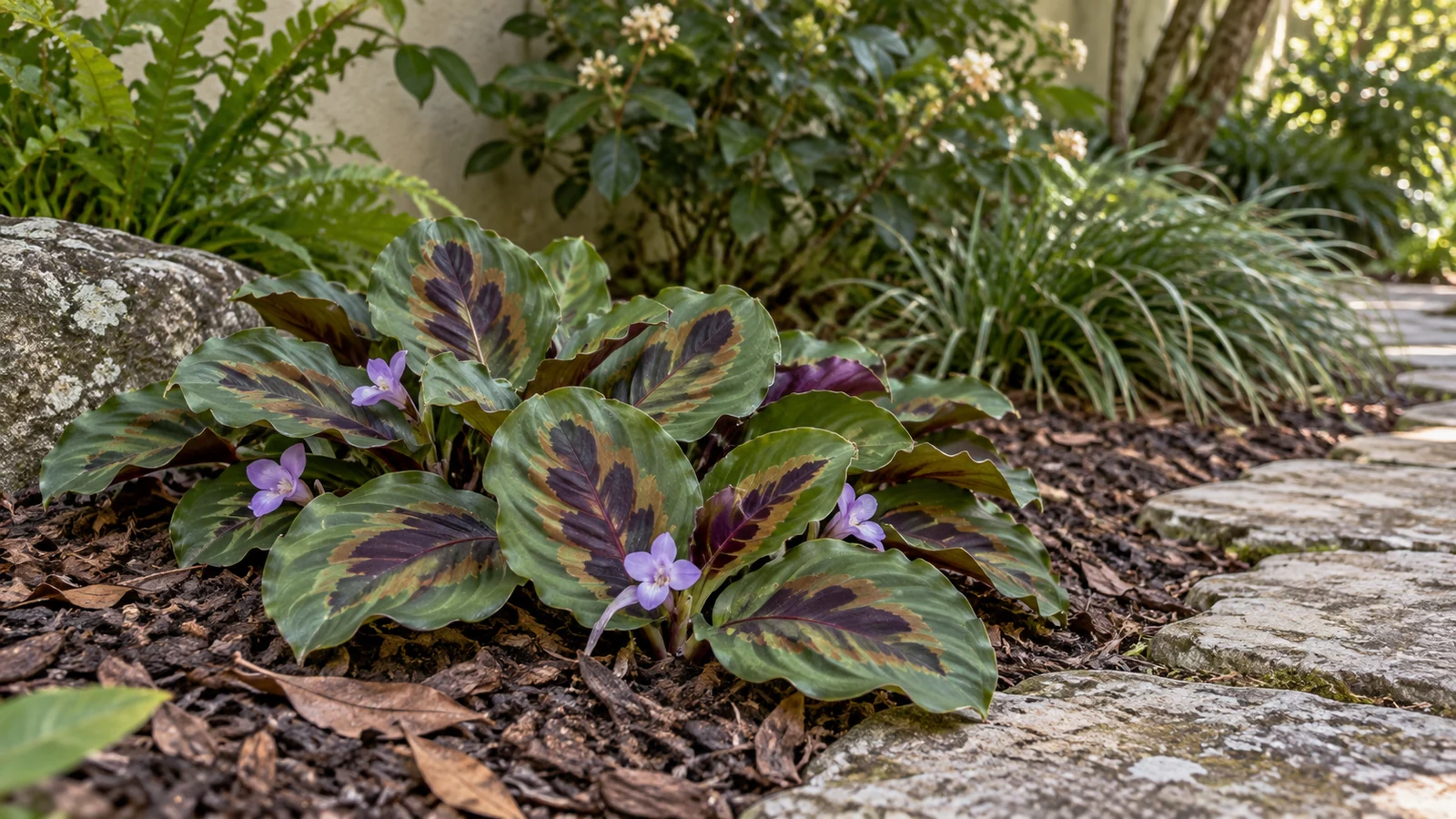
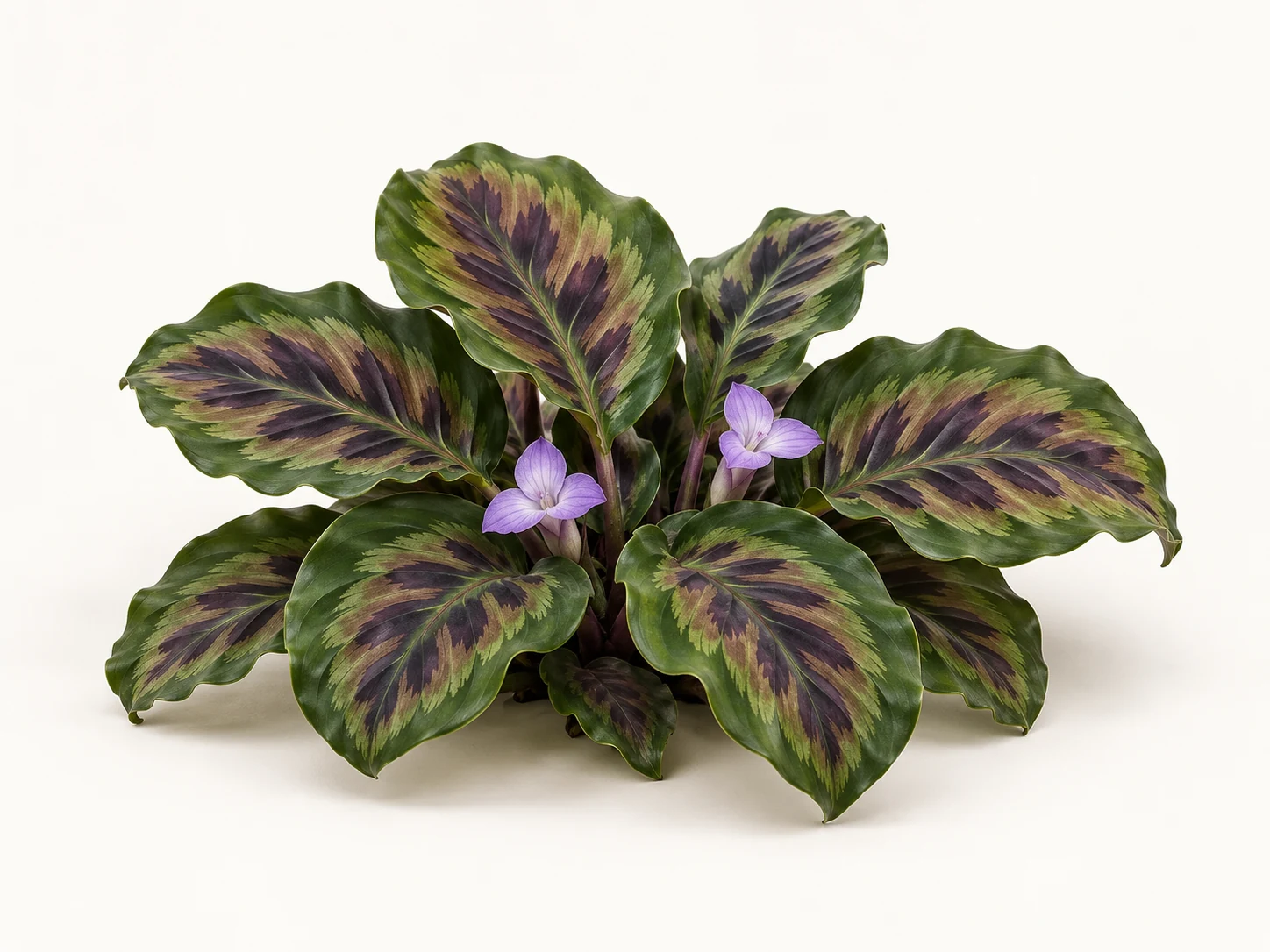
Peacock Ginger brings broad, patterned leaves close to the ground, creating a rich contrast with fine foliage and plain green shrubs. This guide focuses on the compact Kaempferia pulchra, one of the smaller peacock gingers described by UF/IFAS. Bronze and purple markings and small summer flowers make it useful beside a shaded path where the detail can be enjoyed.
Before you choose: Expect the leaves to disappear in winter and return in late spring. Peacock Ginger is a shared common name for several species with different sizes; confirm Kaempferia pulchra on the nursery label. Do not substitute a taller ginger and expect the same low effect.
Illustrative planting concept
Size and space
Typical height: Varies by selection; confirm nursery dimensions. Spreading habit: Spreading colony; keep a managed boundary.
The references establish a compact, rhizomatous habit but do not give a reliable mature height and width for this exact species. The diagram therefore uses a 12 in height and three-foot patch only as illustrative scale references. Neither is a mature-size claim. Ask the grower for the selection’s expected height, clump width and eventual spread before laying out the bed.
Installed example: 3 in high × 6 in wide. This is an illustrative size, not a pot-size or growth-timeline promise.
Part shade to full shade · Moist, organic soil with drainage; water through establishment and growing-season dry spells · Patterned warm-season leaves and small summer flowers; winter dormancy
Care: Choose a compact species; mark dormant clumps and divide rhizomes when needed
Know the whole plant
Illustrative compact Kaempferia pulchra form. Confirm the nursery species and its expected dimensions; this image does not establish mature size.Illustrative foliage and seasonal detail of Peacock Ginger. Confirm the botanical name on the nursery label.
Where it works around Pensacola
Consider a sheltered Pensacola courtyard or shaded garden edge with organic soil and drainage. Check summer afternoon light and moisture under surrounding trees. The foliage suits a seasonal lower layer, while separate evergreen planting can keep the garden defined during dormancy. Start with a small grouping where establishment water and seasonal changes are easy to monitor.
A patterned shade-garden foreground
A seasonal layer beside a courtyard path
A low contrast beneath open-canopy planting
A shaded container with drainage
A small foliage collection near a sitting area
Which peacock ginger is supplied?
Read the botanical label. UF/IFAS also describes larger species, including Kaempferia rotunda; their dimensions should not be transferred to this compact species.
Does strong sun reach this spot?
Watch the bed through the afternoon. Part or full shade protects the foliage from scorching; bright open paving can make a nearby planting hotter.
Can the soil stay moist without staying soggy?
Water new roots and check moisture during active growth. Good drainage matters, and winter dormancy changes the plant’s watering needs.
Will winter gaps be acceptable?
Mark the planting position so dormant rhizomes are not dug up. Plan the winter view with nearby evergreen structure and avoid promising year-round leafy coverage.
Before it goes on the plan
Will it stay green all winter?
No. UF/IFAS describes winter leaf loss and a late-spring return. Its value is a patterned warm-season ground layer, with a dormant interval in the garden.
Is every peacock ginger the same size?
No. The common name covers several Kaempferia species and selections. This guide’s illustration is representative of compact K. pulchra; verify the actual nursery plant before using a spacing figure.
Will it spread?
Rhizomes gradually enlarge the planting, and established material can be divided. Leave access to manage the grouping; a diagram patch is not a permanent spread boundary or a plant-count formula.
Pairing ideas
Cast Iron Plant: Cast Iron Plant adds taller plain green leaves in its own shaded, draining area. Keep the ginger outside its expanding clumps.
Dwarf Mondo Grass: Dwarf Mondo can define a separate shaded edge. Leave each planting its own space and check moisture rather than crowding their roots together.
{"key":"peacock","name":"Peacock Ginger","botanical":"Kaempferia pulchra","slug":"peacock-ginger","id":"PLT-KAEM-PULC","type":"groundcovers","h":[1,1],"w":[3,3],"install":[0.25,0.5],"native":false,"groundGroup":"small","light":"Part shade to full shade","lightTags":["part","shade"],"water":"Moist, organic soil with drainage; water through establishment and growing-season dry spells","season":"Patterned warm-season leaves and small summer flowers; winter dormancy","care":"Choose a compact species; mark dormant clumps and divide rhizomes when needed","benefit":"Bring patterned foliage to a sheltered shaded bed.","intro":"Peacock Ginger brings broad, patterned leaves close to the ground, creating a rich contrast with fine foliage and plain green shrubs. This guide focuses on the compact Kaempferia pulchra, one of the smaller peacock gingers described by UF/IFAS. Bronze and purple markings and small summer flowers make it useful beside a shaded path where the detail can be enjoyed.","caution":"Expect the leaves to disappear in winter and return in late spring. Peacock Ginger is a shared common name for several species with different sizes; confirm Kaempferia pulchra on the nursery label. Do not substitute a taller ginger and expect the same low effect.","sizeNote":"The references establish a compact, rhizomatous habit but do not give a reliable mature height and width for this exact species. The diagram therefore uses a 12 in height and three-foot patch only as illustrative scale references. Neither is a mature-size claim. Ask the grower for the selection’s expected height, clump width and eventual spread before laying out the bed.","site":"Consider a sheltered Pensacola courtyard or shaded garden edge with organic soil and drainage. Check summer afternoon light and moisture under surrounding trees. The foliage suits a seasonal lower layer, while separate evergreen planting can keep the garden defined during dormancy. Start with a small grouping where establishment water and seasonal changes are easy to monitor.","uses":["A patterned shade-garden foreground","A seasonal layer beside a courtyard path","A low contrast beneath open-canopy planting","A shaded container with drainage","A small foliage collection near a sitting area"],"checks":[["Which peacock ginger is supplied?","Read the botanical label. UF/IFAS also describes larger species, including Kaempferia rotunda; their dimensions should not be transferred to this compact species."],["Does strong sun reach this spot?","Watch the bed through the afternoon. Part or full shade protects the foliage from scorching; bright open paving can make a nearby planting hotter."],["Can the soil stay moist without staying soggy?","Water new roots and check moisture during active growth. Good drainage matters, and winter dormancy changes the plant’s watering needs."],["Will winter gaps be acceptable?","Mark the planting position so dormant rhizomes are not dug up. Plan the winter view with nearby evergreen structure and avoid promising year-round leafy coverage."]],"faq":[["Will it stay green all winter?","No. UF/IFAS describes winter leaf loss and a late-spring return. Its value is a patterned warm-season ground layer, with a dormant interval in the garden."],["Is every peacock ginger the same size?","No. The common name covers several Kaempferia species and selections. This guide’s illustration is representative of compact K. pulchra; verify the actual nursery plant before using a spacing figure."],["Will it spread?","Rhizomes gradually enlarge the planting, and established material can be divided. Leave access to manage the grouping; a diagram patch is not a permanent spread boundary or a plant-count formula."]],"sources":[["UF/IFAS: Peacock Ginger","https://gardeningsolutions.ifas.ufl.edu/plants/ornamentals/peacock-ginger/"],["NC State Extension: Kaempferia","https://plants.ces.ncsu.edu/plants/kaempferia/"]],"unit":"in","heightLabel":"Typical height","spreadLabel":"Spreading habit","color":"#70815a","guideKind":"Groundcover","eyebrow":"THE LOW LAYER / FORM + SEASON","aliases":["Peacock Ginger","Kaempferia pulchra","Compact Peacock Ginger"],"goals":["color"],"wholeCaption":"Illustrative compact Kaempferia pulchra form. Confirm the nursery species and its expected dimensions; this image does not establish mature size.","detailCaption":"Illustrative foliage and seasonal detail of Peacock Ginger. Confirm the botanical name on the nursery label.","heightText":"Varies by selection; confirm nursery dimensions","heightReferenceOnly":true,"sizeBasis":"Illustrative size reference","sizeSummary":"Compact seasonal foliage · confirm selection size","referenceNote":"The 12 in height is an illustrative scale reference, not a verified mature height for this species.","groundForm":"ginger","patch":true,"patchWidth":3,"spreadText":"Spreading colony; keep a managed boundary","images":{"context":{"id":"6aa066edaa518d22c81058bb","url":"https://cdn.prod.website-files.com/6a975baac0f352647862d847/6aa066edaa518d22c81058bb_landova-groundcover-peacock-context.webp","alt":"Illustrative planting concept with Peacock Ginger","width":1600,"height":900},"whole":{"id":"6aa066ed5015d5f2fa791fb0","url":"https://cdn.prod.website-files.com/6a975baac0f352647862d847/6aa066ed5015d5f2fa791fb0_landova-groundcover-peacock-whole.webp","alt":"Illustrative whole-plant form of Peacock Ginger","width":1448,"height":1086,"fit":"contain"},"detail":{"id":"6aa066ee5663a9d1569f50d5","url":"https://cdn.prod.website-files.com/6a975baac0f352647862d847/6aa066ee5663a9d1569f50d5_landova-groundcover-peacock-detail.webp","alt":"Illustrative foliage and seasonal detail of Peacock Ginger","width":1254,"height":1254}},"companions":[{"slug":"cast-iron-plant","name":"Cast Iron Plant","title":"Keep an evergreen shade backdrop","reason":"Cast Iron Plant adds taller plain green leaves in its own shaded, draining area. Keep the ginger outside its expanding clumps.","image":{"id":"6aa052e4beb1621af788dce7","url":"https://cdn.prod.website-files.com/6a975baac0f352647862d847/6aa052e4beb1621af788dce7_landova-groundcover-castiron-context.webp","alt":"Illustrative planting concept with Cast Iron Plant","width":1600,"height":900}},{"slug":"dwarf-mondo-grass","name":"Dwarf Mondo Grass","title":"Contrast patterned and fine foliage","reason":"Dwarf Mondo can define a separate shaded edge. Leave each planting its own space and check moisture rather than crowding their roots together.","image":{"id":"6aa00d183fe0798c1efa78ee","url":"https://cdn.prod.website-files.com/6a975baac0f352647862d847/6aa00d183fe0798c1efa78ee_landova-grass-mondo-context.webp","alt":"Illustrative planting concept with Dwarf Mondo Grass","width":1600,"height":900}}]}
LANDOVA / PLANTING DECISIONS
Choose plants with the whole space in mind.
Explore a planting goal, then compare the growing needs and mature size of individual plants.
LANDOVA is in beta
Join the launch waitlist.
We are not accepting paying clients yet. We expect to launch around January 2027 and may open sooner. Explore our free tools now, and sign up for launch updates and educational planning emails.
Thank you. Your waitlist signup has been received. We will email you with launch updates. No purchase or project booking has been made.
We could not save your signup. Please try again or email info@landovadesign.com.