Fill a sunny area with green foliage and yellow flowers.
Perennial Peanut offers a broad, spreading ground layer for a sunny landscape. Its yellow pea-like flowers brighten the foliage in warm weather, and rhizomes gradually connect the planting below the soil. UF/IFAS has used Arachis glabrata at the Escambia County Extension office, making it a useful local option to explore with the right nursery selection.
Before you choose: Choose a low-growing landscape selection, not an unspecified forage type. It is not intended for heavy foot traffic, and North Florida cold can take away the foliage. A new planting needs weed control and irrigation while it fills in; established drought tolerance does not mean instant coverage.
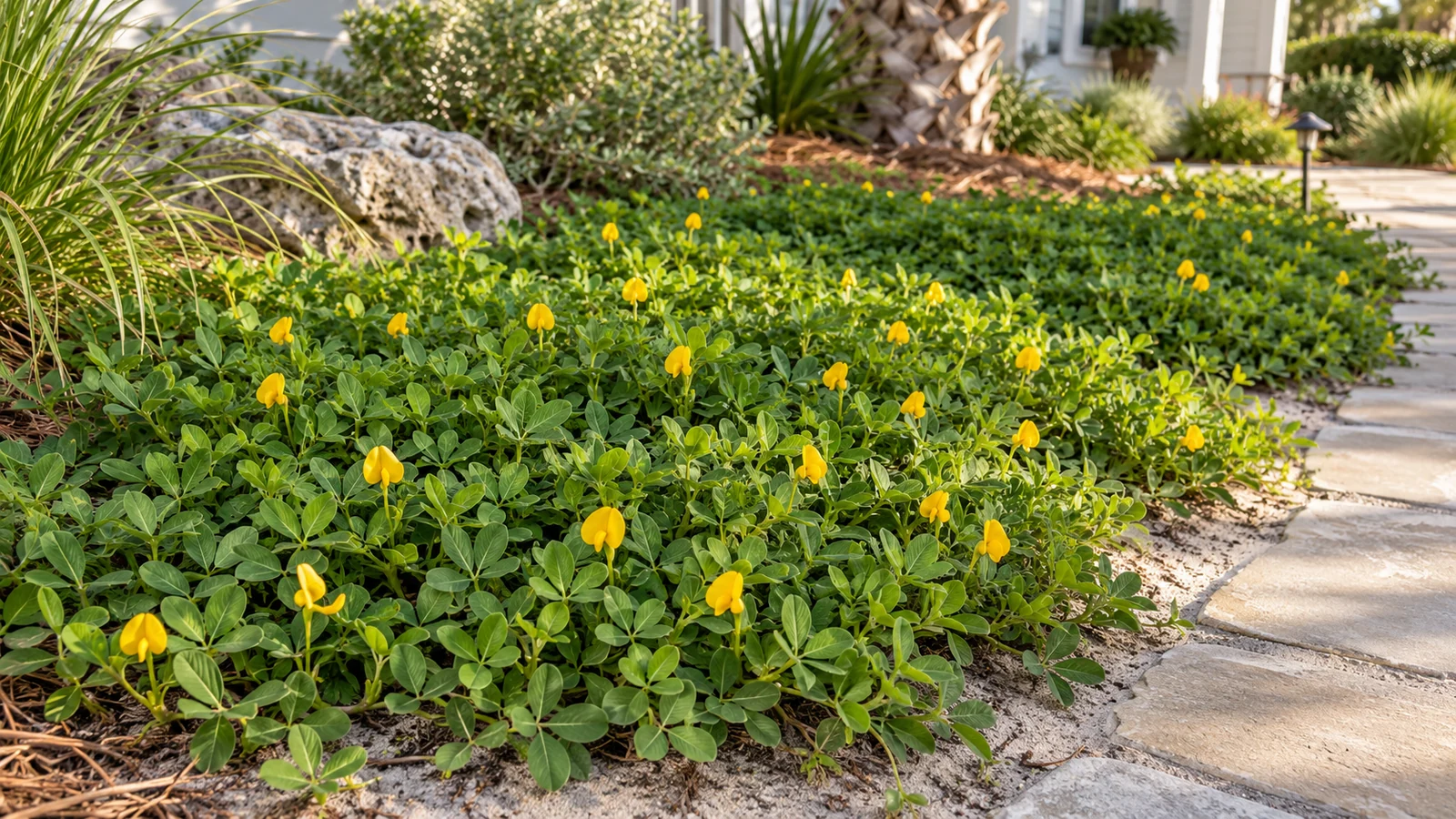
Illustrative planting concept
Size and space
Typical height: Varies by selection; 4 in mowing example. Spreading habit: Spreading colony; keep a managed boundary.
Natural height varies with selection and care. UF/IFAS describes an optional 4 in mowing example; that is the height drawn here, not a natural mature maximum. The three-foot patch is also illustrative. Confirm the exact nursery selection and its expected unmown habit before deciding how it fits.
Installed example: 3 in high × 9 in wide. This is an illustrative size, not a pot-size or growth-timeline promise.
Full sun; some part shade, with fewer flowers · Well-drained soil; irrigate through establishment, then adjust to rainfall · Yellow warm-season flowers; foliage can die back in winter
Care: Choose a low landscape selection; manage edges and mow only if desired
Know the whole plant
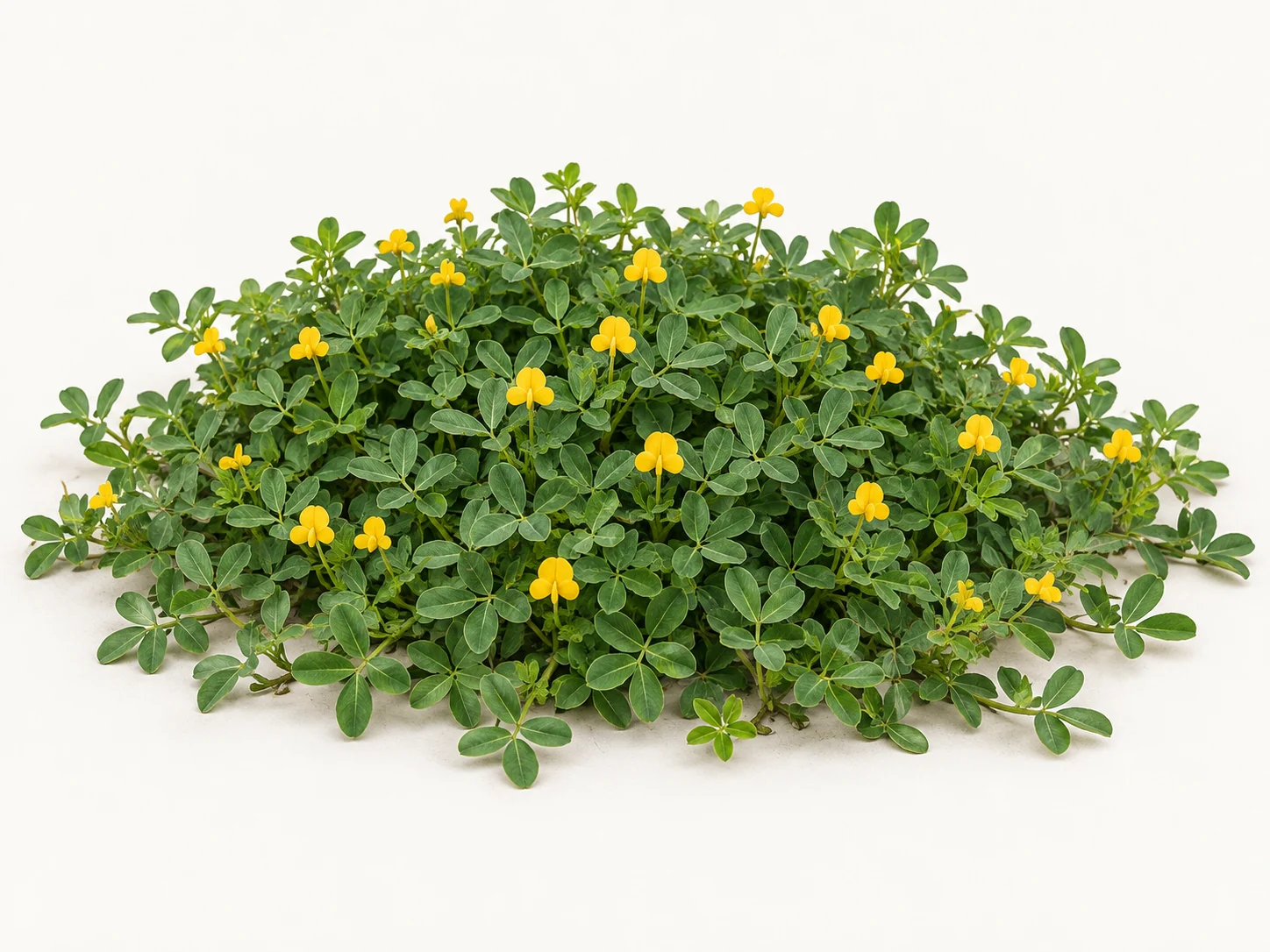
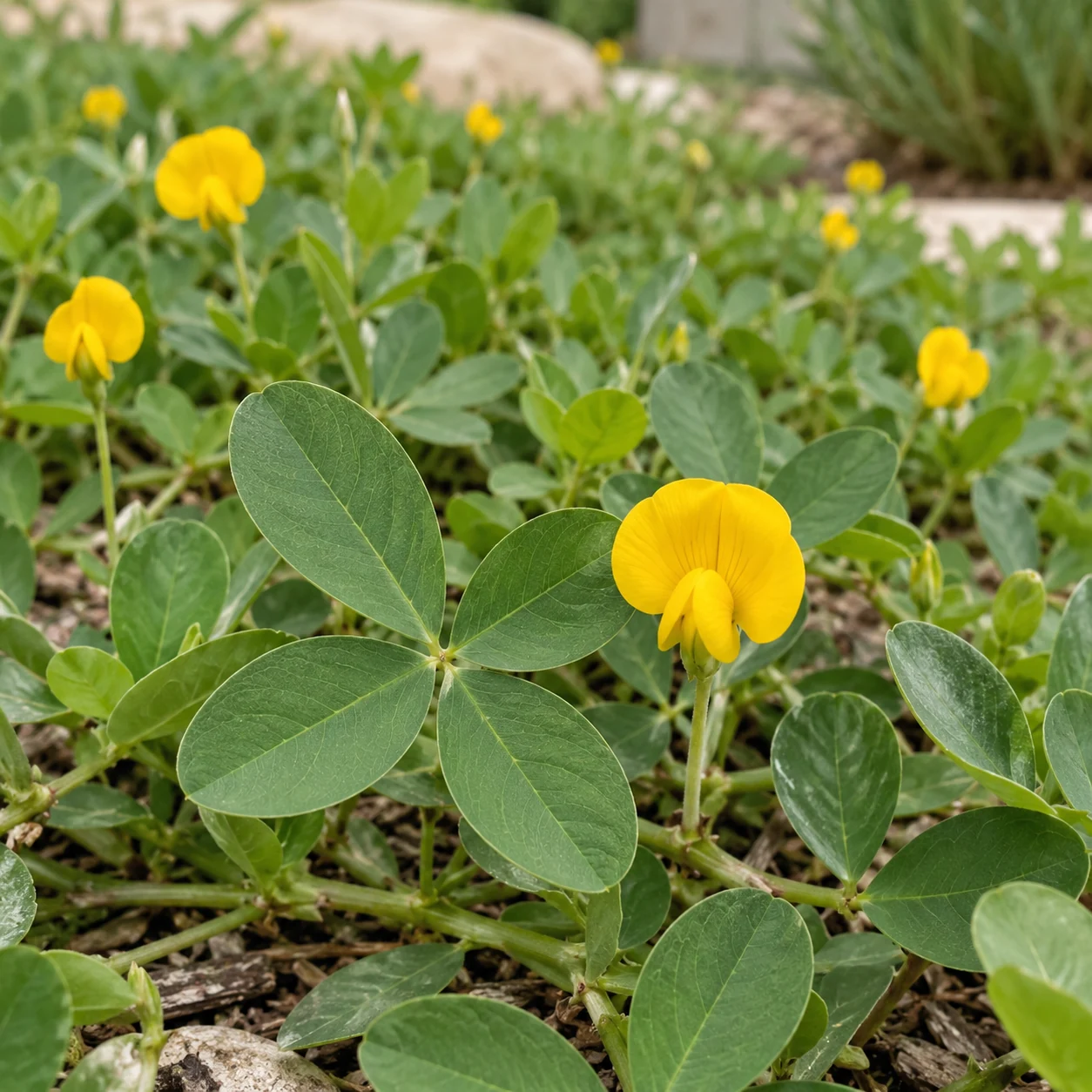
Illustrative overall form of Perennial Peanut; the nursery plant, season and growing conditions will affect its appearance.Illustrative foliage and seasonal detail of Perennial Peanut. Confirm the botanical name on the nursery label.
Where it works around Pensacola
Use Perennial Peanut in a sunny Pensacola bed, broad border or lightly used lawn-alternative area with good drainage. Begin where the spreading edge remains accessible. Summer flowers are part of its appeal, so consider how mowing affects the display. Plan evergreen structure nearby if winter foliage loss would leave the composition feeling empty.
A sunny flowering ground layer
A broad low-maintenance-style bed
A lightly used lawn-alternative trial
A warm-season border beside a walk
A connecting layer around separate shrub beds
Which selection is available?
Ask for the botanical name and landscape cultivar. Low-growing selections such as Ecoturf have different uses from taller forage material; do not buy by the common name alone.
Can it establish before competing?
Prepare the area, control weeds and water the new planting. The first season is a period of establishment, not evidence of its eventual maintenance needs.
How will the boundary be kept?
Rhizomes spread below ground. Keep adjoining beds reachable and inspect the edge instead of assuming a small planting will remain contained.
Does the winter appearance fit?
Cool weather can remove the foliage in North Florida. Consider the view from the house and street through the colder part of the year.
Before it goes on the plan
Is this the peanut grown for snacks?
No. This guide describes the ornamental rhizomatous perennial Arachis glabrata, not the annual crop peanut Arachis hypogaea.
Does it have to be mown?
No. Mowing depends on the desired appearance and selection. A UF/IFAS example uses a 4 in cut about monthly; treat that as an optional care example rather than a universal schedule.
Can it handle a busy backyard?
It suits limited foot traffic. Keep the main walking or play surface in a material suited to regular use, and use the planting around that route.
Pairing ideas
Pink Muhly Grass: Pink Muhly shares a preference for sun and drainage. Keep peanut growth outside the grass crown and allow space to maintain both.
Schilling’s Dwarf Yaupon Holly: Dwarf Yaupon supplies evergreen form in a separate planting area. Allow for its larger canopy so the peanut patch retains useful sunlight.
{"key":"peanut","name":"Perennial Peanut","botanical":"Arachis glabrata","slug":"perennial-peanut","id":"PLT-ARAC-GLAB","type":"groundcovers","h":[0.3333333333333333,0.3333333333333333],"w":[3,3],"install":[0.25,0.75],"native":false,"groundGroup":"small","light":"Full sun; some part shade, with fewer flowers","lightTags":["sun","part"],"water":"Well-drained soil; irrigate through establishment, then adjust to rainfall","season":"Yellow warm-season flowers; foliage can die back in winter","care":"Choose a low landscape selection; manage edges and mow only if desired","benefit":"Fill a sunny area with green foliage and yellow flowers.","intro":"Perennial Peanut offers a broad, spreading ground layer for a sunny landscape. Its yellow pea-like flowers brighten the foliage in warm weather, and rhizomes gradually connect the planting below the soil. UF/IFAS has used Arachis glabrata at the Escambia County Extension office, making it a useful local option to explore with the right nursery selection.","caution":"Choose a low-growing landscape selection, not an unspecified forage type. It is not intended for heavy foot traffic, and North Florida cold can take away the foliage. A new planting needs weed control and irrigation while it fills in; established drought tolerance does not mean instant coverage.","sizeNote":"Natural height varies with selection and care. UF/IFAS describes an optional 4 in mowing example; that is the height drawn here, not a natural mature maximum. The three-foot patch is also illustrative. Confirm the exact nursery selection and its expected unmown habit before deciding how it fits.","site":"Use Perennial Peanut in a sunny Pensacola bed, broad border or lightly used lawn-alternative area with good drainage. Begin where the spreading edge remains accessible. Summer flowers are part of its appeal, so consider how mowing affects the display. Plan evergreen structure nearby if winter foliage loss would leave the composition feeling empty.","uses":["A sunny flowering ground layer","A broad low-maintenance-style bed","A lightly used lawn-alternative trial","A warm-season border beside a walk","A connecting layer around separate shrub beds"],"checks":[["Which selection is available?","Ask for the botanical name and landscape cultivar. Low-growing selections such as Ecoturf have different uses from taller forage material; do not buy by the common name alone."],["Can it establish before competing?","Prepare the area, control weeds and water the new planting. The first season is a period of establishment, not evidence of its eventual maintenance needs."],["How will the boundary be kept?","Rhizomes spread below ground. Keep adjoining beds reachable and inspect the edge instead of assuming a small planting will remain contained."],["Does the winter appearance fit?","Cool weather can remove the foliage in North Florida. Consider the view from the house and street through the colder part of the year."]],"faq":[["Is this the peanut grown for snacks?","No. This guide describes the ornamental rhizomatous perennial Arachis glabrata, not the annual crop peanut Arachis hypogaea."],["Does it have to be mown?","No. Mowing depends on the desired appearance and selection. A UF/IFAS example uses a 4 in cut about monthly; treat that as an optional care example rather than a universal schedule."],["Can it handle a busy backyard?","It suits limited foot traffic. Keep the main walking or play surface in a material suited to regular use, and use the planting around that route."]],"sources":[["UF/IFAS Escambia County: Perennial Peanut","https://blogs.ifas.ufl.edu/escambiaco/2020/06/30/weekly-what-is-it-perennial-peanut/"],["UF/IFAS: Perennial Peanut","https://gardeningsolutions.ifas.ufl.edu/plants/ornamentals/perennial-peanut/"],["UF/IFAS Charlotte County: Mowing example","https://blogs.ifas.ufl.edu/charlotteco/2026/03/16/another-turf-alternative-perennial-peanut/"]],"unit":"in","heightLabel":"Typical height","spreadLabel":"Spreading habit","color":"#70815a","guideKind":"Groundcover","eyebrow":"THE LOW LAYER / FORM + SEASON","aliases":["Perennial Peanut","Arachis glabrata"],"goals":["color"],"wholeCaption":"Illustrative overall form of Perennial Peanut; the nursery plant, season and growing conditions will affect its appearance.","detailCaption":"Illustrative foliage and seasonal detail of Perennial Peanut. Confirm the botanical name on the nursery label.","heightText":"Varies by selection; 4 in mowing example","heightReferenceOnly":true,"sizeBasis":"Mown patch example","sizeSummary":"Spreading cover · optional 4 in mowing example","referenceNote":"Four inches is a mowing example, not a natural mature height. Confirm the landscape selection and its unmown habit.","patch":true,"patchWidth":3,"spreadText":"Spreading colony; keep a managed boundary","groundForm":"mat","images":{"context":{"id":"6aa052e20135cf70b0154a30","url":"https://cdn.prod.website-files.com/6a975baac0f352647862d847/6aa052e20135cf70b0154a30_landova-groundcover-peanut-context.webp","alt":"Illustrative planting concept with Perennial Peanut","width":1600,"height":900},"whole":{"id":"6aa052e283ad46bebb7a0020","url":"https://cdn.prod.website-files.com/6a975baac0f352647862d847/6aa052e283ad46bebb7a0020_landova-groundcover-peanut-whole.webp","alt":"Illustrative whole-plant form of Perennial Peanut","width":1448,"height":1086,"fit":"contain"},"detail":{"id":"6aa052e2ca5bad632633cc8b","url":"https://cdn.prod.website-files.com/6a975baac0f352647862d847/6aa052e2ca5bad632633cc8b_landova-groundcover-peanut-detail.webp","alt":"Illustrative foliage and seasonal detail of Perennial Peanut","width":1254,"height":1254}},"companions":[{"slug":"pink-muhly-grass","name":"Pink Muhly Grass","title":"Add a taller sunny texture","reason":"Pink Muhly shares a preference for sun and drainage. Keep peanut growth outside the grass crown and allow space to maintain both.","image":{"id":"6aa00228430659e428d61061","url":"https://cdn.prod.website-files.com/6a975baac0f352647862d847/6aa00228430659e428d61061_landova-grass-muhly-context.webp","alt":"Illustrative planting concept with Pink Muhly Grass","width":1600,"height":900}},{"slug":"schillings-dwarf-yaupon-holly","name":"Schilling’s Dwarf Yaupon Holly","title":"Frame the seasonal ground layer","reason":"Dwarf Yaupon supplies evergreen form in a separate planting area. Allow for its larger canopy so the peanut patch retains useful sunlight.","image":{"id":"6a9f5cd31fbbc23ce58d34ef","url":"https://cdn.prod.website-files.com/6a975baac0f352647862d847/6a9f5cd31fbbc23ce58d34ef_landova-schilling-context-r05.webp","alt":"Illustrative planting concept with Schilling’s Dwarf Yaupon Holly"}}]}
LANDOVA / PLANTING DECISIONS
Choose plants with the whole space in mind.
Explore a planting goal, then compare the growing needs and mature size of individual plants.
LANDOVA is in beta
Join the launch waitlist.
We are not accepting paying clients yet. We expect to launch around January 2027 and may open sooner. Explore our free tools now, and sign up for launch updates and educational planning emails.
Thank you. Your waitlist signup has been received. We will email you with launch updates. No purchase or project booking has been made.
We could not save your signup. Please try again or email info@landovadesign.com.