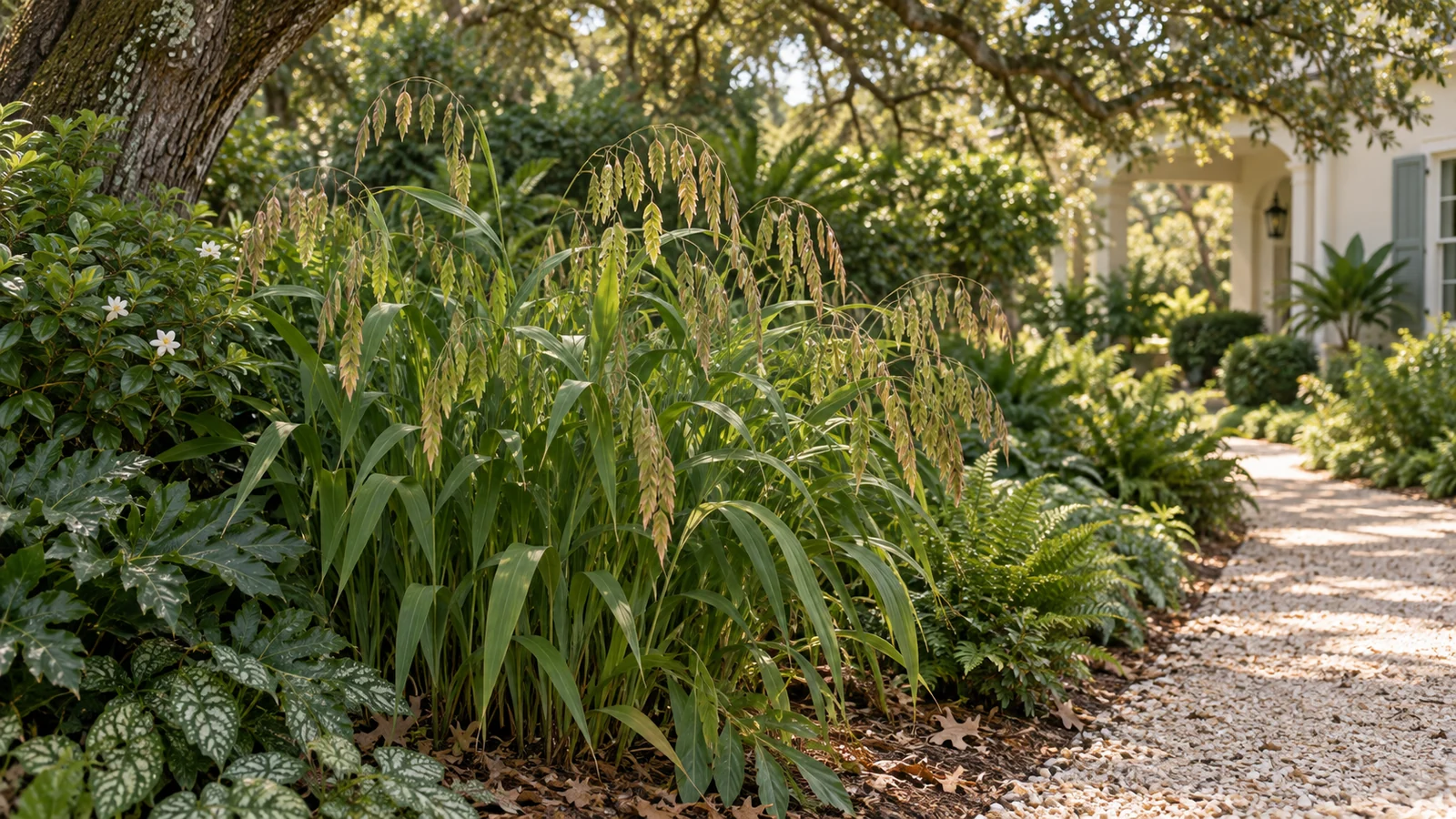
River oats adds broad, bamboo-like leaves and dangling seed heads to a garden that receives filtered light. Its loose rhythm works well at a woodland edge or in a larger shaded bed. Give it a place where some natural expansion feels welcome and where the gardener can reach new seedlings.
Before you choose: River oats reseeds readily and can spread aggressively. Use it where that habit can be managed; it is a poor choice for a tiny, tightly controlled border.
Illustrative planting concept
Size and space
Mature height: 2–5 ft. Mature spread: 1–2.5 ft.
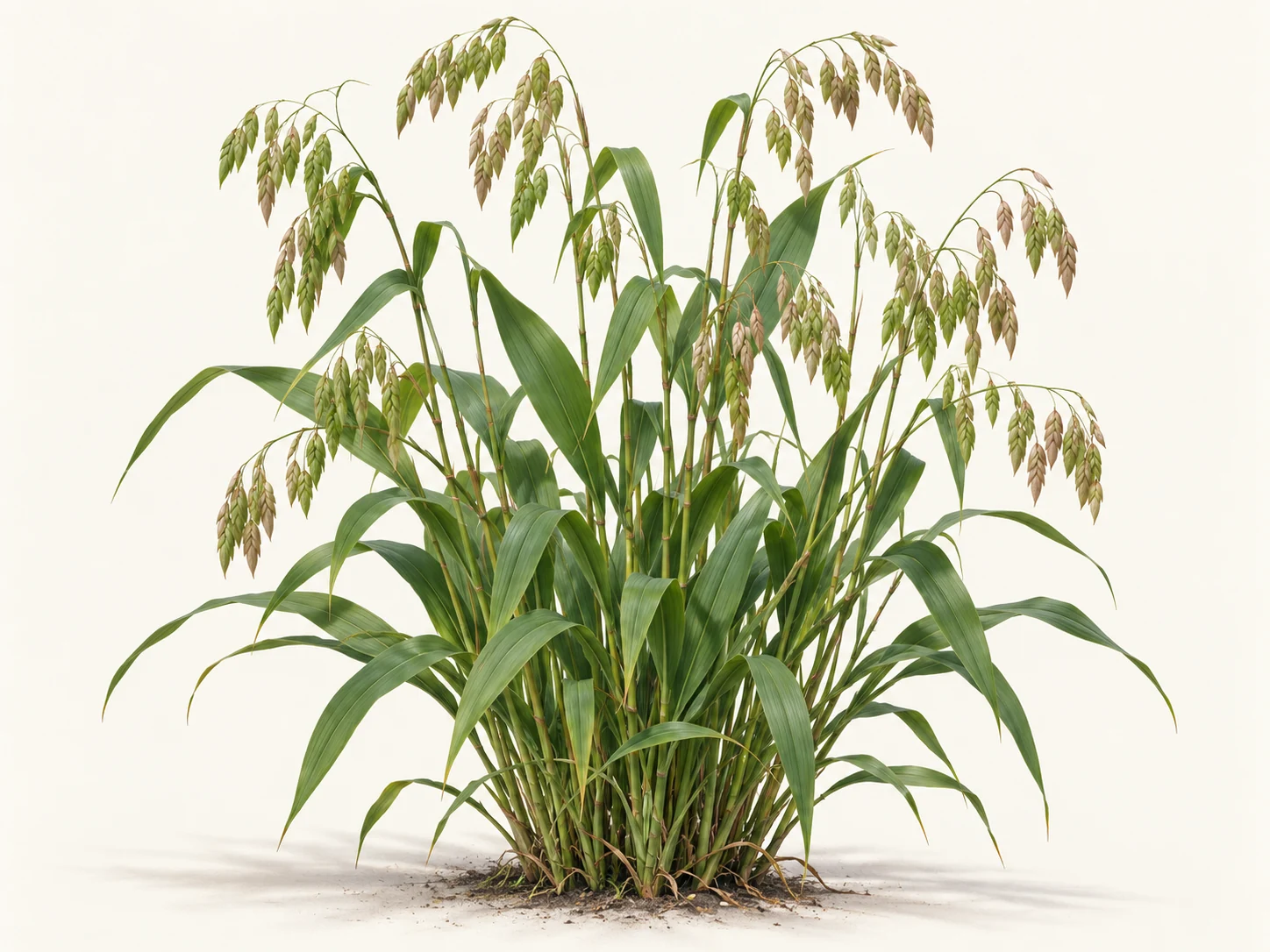
The 2–5 ft height and 1–2.5 ft spread follow NC State’s species dimensions. UF/IFAS describes the foliage at 2–3 ft; taller arching stems account for a larger seasonal outline. The footprint represents one clump, not the area that seedlings or rhizomes may eventually occupy.
Installed example: 1 ft high × 0.75 ft wide. This is an illustrative size, not a pot-size or growth-timeline promise.
Part shade to shade; sheltered from direct salt exposure · Consistently moist soil with suitable drainage; review dry-season watering · Green broad leaves · hanging oat-shaped seeds · golden to brown seasonal stems
Care: Renew old growth in early spring; manage seedlings and expanding clumps
Know the whole plant
Illustrative leafy river-oats clump with arching seed stems; allow more room than the original nursery pot suggests.Illustrative flat oat-shaped seed heads changing from green toward bronze.
Where it works around Pensacola
UF/IFAS specifically identifies North Florida as the best part of the state for river oats. A sheltered, moist Pensacola shade garden is a useful starting point. Review root competition beneath trees, summer moisture and access for maintenance before laying out a broad drift.
A moist woodland edge
A native grass for filtered light
A loose shaded border
Hanging seed-head interest
A wildlife-oriented planting area
Is a naturalized edge the right look?
Choose river oats for a bed that can carry an informal rhythm. If every clump must stay in a fixed, neat circle, another shade plant may be easier to maintain.
Where can seedlings be reached?
Leave a clear maintenance edge. A spreading grass is harder to manage when new plants emerge inside a dense shrub layer or beyond an inaccessible fence.
Does tree shade also mean dry soil?
Shade and moisture are separate conditions. Check how quickly the soil dries beneath established trees rather than assuming a shaded location stays damp.
Will the stems lean into the route?
Allow the seed heads to arch inside the bed. Place the mature envelope before deciding how close the first small plant can sit to a walk.
Before it goes on the plan
Is this the sea oats found on beach dunes?
No. River oats is Chasmanthium latifolium, a woodland and streamside grass. It should not be substituted for dune sea oats based on the shared common name.
Will it stay evergreen?
Expect seasonal foliage change and old stems that need renewal. Use nearby evergreen plants if the winter view needs a consistent green backdrop.
Can its spread be managed?
Regularly remove unwanted seedlings and review clump expansion. Cutting seed heads before they mature can reduce seed distribution, but it also removes that seed display and wildlife food.
Pairing ideas
Florida Anise: Florida anise can provide larger evergreen leaves in a compatible sheltered, moist planting. Reserve its substantial mature space behind the grass.
Henry’s Garnet Sweetspire: Sweetspire can complement a moist, partly shaded bed. Both plants can expand, so plan maintenance access and avoid crowding the same narrow strip.
{"key":"riveroats","id":"PLT-CHAS-LATIFOLIUM","slug":"river-oats","name":"River Oats","botanical":"Chasmanthium latifolium","eyebrow":"WOODLAND TEXTURE + HANGING SEED HEADS","benefit":"Bring movement into the shade.","intro":"River oats adds broad, bamboo-like leaves and dangling seed heads to a garden that receives filtered light. Its loose rhythm works well at a woodland edge or in a larger shaded bed. Give it a place where some natural expansion feels welcome and where the gardener can reach new seedlings.","h":[2,5],"w":[1,2.5],"install":[1,0.75],"color":"#7c8b5c","habit":"leafy","plantKind":"grass","light":"Part shade to shade; sheltered from direct salt exposure","lightTags":["part","shade"],"water":"Consistently moist soil with suitable drainage; review dry-season watering","season":"Green broad leaves · hanging oat-shaped seeds · golden to brown seasonal stems","care":"Renew old growth in early spring; manage seedlings and expanding clumps","caution":"River oats reseeds readily and can spread aggressively. Use it where that habit can be managed; it is a poor choice for a tiny, tightly controlled border.","site":"UF/IFAS specifically identifies North Florida as the best part of the state for river oats. A sheltered, moist Pensacola shade garden is a useful starting point. Review root competition beneath trees, summer moisture and access for maintenance before laying out a broad drift.","sizeNote":"The 2–5 ft height and 1–2.5 ft spread follow NC State’s species dimensions. UF/IFAS describes the foliage at 2–3 ft; taller arching stems account for a larger seasonal outline. The footprint represents one clump, not the area that seedlings or rhizomes may eventually occupy.","uses":["A moist woodland edge","A native grass for filtered light","A loose shaded border","Hanging seed-head interest","A wildlife-oriented planting area"],"checks":[["Is a naturalized edge the right look?","Choose river oats for a bed that can carry an informal rhythm. If every clump must stay in a fixed, neat circle, another shade plant may be easier to maintain."],["Where can seedlings be reached?","Leave a clear maintenance edge. A spreading grass is harder to manage when new plants emerge inside a dense shrub layer or beyond an inaccessible fence."],["Does tree shade also mean dry soil?","Shade and moisture are separate conditions. Check how quickly the soil dries beneath established trees rather than assuming a shaded location stays damp."],["Will the stems lean into the route?","Allow the seed heads to arch inside the bed. Place the mature envelope before deciding how close the first small plant can sit to a walk."]],"faq":[["Is this the sea oats found on beach dunes?","No. River oats is Chasmanthium latifolium, a woodland and streamside grass. It should not be substituted for dune sea oats based on the shared common name."],["Will it stay evergreen?","Expect seasonal foliage change and old stems that need renewal. Use nearby evergreen plants if the winter view needs a consistent green backdrop."],["Can its spread be managed?","Regularly remove unwanted seedlings and review clump expansion. Cutting seed heads before they mature can reduce seed distribution, but it also removes that seed display and wildlife food."]],"sources":[["UF/IFAS · river oats in North Florida gardens","https://gardeningsolutions.ifas.ufl.edu/plants/ornamentals/river-oats/"],["NC State Extension · mature dimensions and spread","https://plants.ces.ncsu.edu/plants/chasmanthium-latifolium/"],["Florida Native Plant Society · light, moisture and coastal exposure","https://www.fnps.org/plant/chasmanthium-latifolium"]],"wholeCaption":"Illustrative leafy river-oats clump with arching seed stems; allow more room than the original nursery pot suggests.","detailCaption":"Illustrative flat oat-shaped seed heads changing from green toward bronze.","native":true,"guideKind":"Native shade-grass guide","aliases":["river oats","inland sea oats","northern sea oats","wood oats","wild oats","Chasmanthium","shade","woodland"],"goals":["color"],"type":"grasses","categoryLabel":"Grasses + grasslike plants","reviewDate":"2026-09-08","images":{"context":{"id":"6aa00d177c6403f4c7349a61","url":"https://cdn.prod.website-files.com/6a975baac0f352647862d847/6aa00d177c6403f4c7349a61_landova-grass-riveroats-context.webp","alt":"Illustrative planting concept with River Oats","width":1600,"height":900},"whole":{"id":"6aa00d17aa033ea1d9eaedf1","url":"https://cdn.prod.website-files.com/6a975baac0f352647862d847/6aa00d17aa033ea1d9eaedf1_landova-grass-riveroats-whole.webp","alt":"Illustrative whole-plant form of River Oats","width":1448,"height":1086,"fit":"contain"},"detail":{"id":"6aa00d17a4225aca32e13421","url":"https://cdn.prod.website-files.com/6a975baac0f352647862d847/6aa00d17a4225aca32e13421_landova-grass-riveroats-detail.webp","alt":"Illustrative foliage and seasonal detail of River Oats","width":1254,"height":1254}},"companions":[{"slug":"florida-anise","name":"Florida Anise","title":"Build an evergreen woodland backdrop","reason":"Florida anise can provide larger evergreen leaves in a compatible sheltered, moist planting. Reserve its substantial mature space behind the grass.","image":{"id":"6a9f3484598f07756d53faf0","url":"https://cdn.prod.website-files.com/6a975baac0f352647862d847/6a9f3484598f07756d53faf0_landova-shrub-anise-context-r02.webp","alt":"Illustrative planting concept with Florida Anise"}},{"slug":"henrys-garnet-sweetspire","name":"Henry’s Garnet Sweetspire","title":"Connect the planting with seasonal color","reason":"Sweetspire can complement a moist, partly shaded bed. Both plants can expand, so plan maintenance access and avoid crowding the same narrow strip.","image":{"id":"6a9f5cd7d7f880ff25110b61","url":"https://cdn.prod.website-files.com/6a975baac0f352647862d847/6a9f5cd7d7f880ff25110b61_landova-henry-context-r05.webp","alt":"Illustrative planting concept with Henry’s Garnet Sweetspire"}}]}
LANDOVA / PLANTING DECISIONS
Choose plants with the whole space in mind.
Explore a planting goal, then compare the growing needs and mature size of individual plants.
LANDOVA is in beta
Join the launch waitlist.
We are not accepting paying clients yet. We expect to launch around January 2027 and may open sooner. Explore our free tools now, and sign up for launch updates and educational planning emails.
Thank you. Your waitlist signup has been received. We will email you with launch updates. No purchase or project booking has been made.
We could not save your signup. Please try again or email info@landovadesign.com.