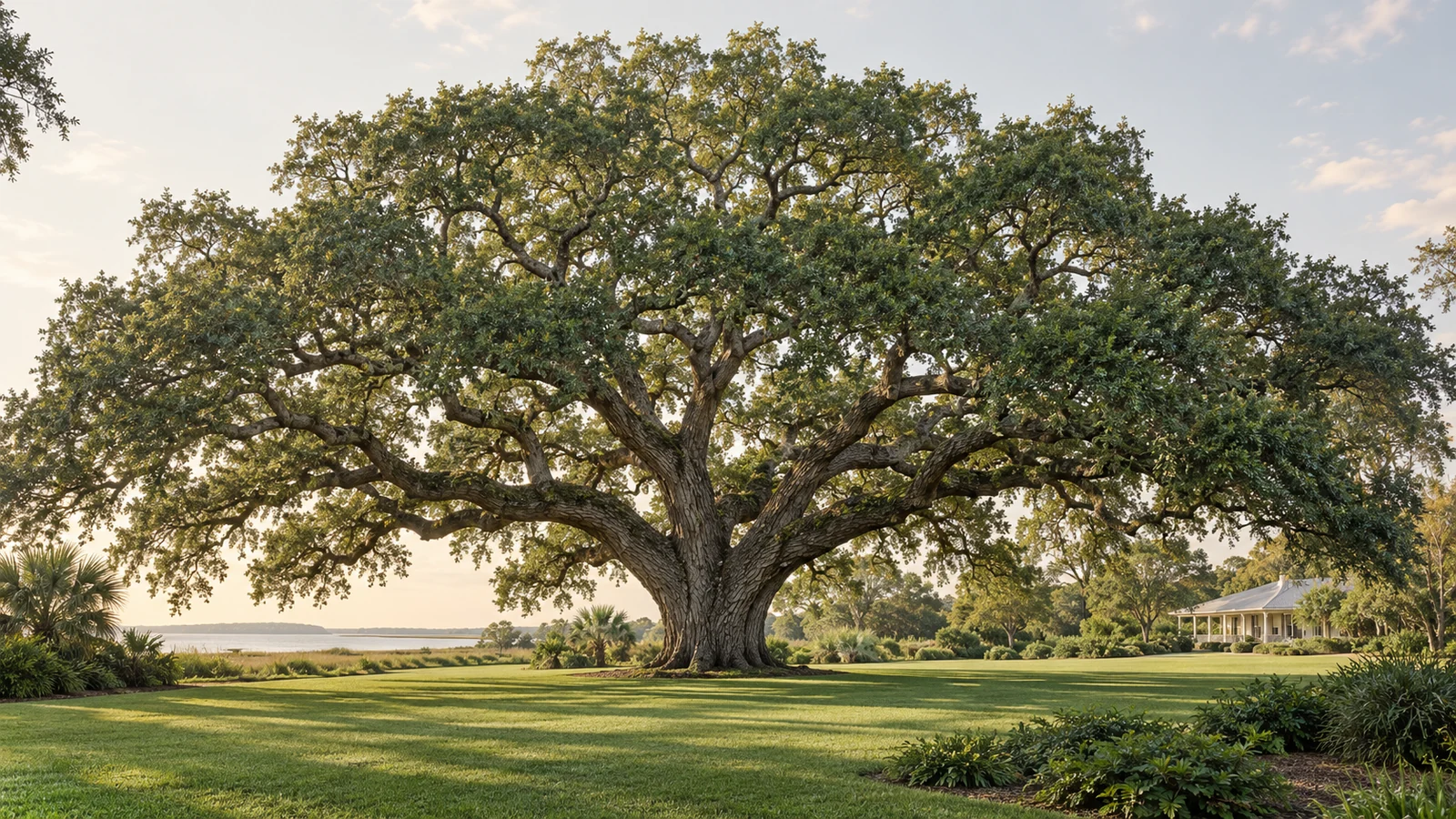
Southern Live Oak can become the defining feature of a large Gulf Coast landscape. Its broad limbs and enduring green canopy shape the light, views and spaces beneath it. This is a tree to plan around from the beginning, with a generous soil area and a clear idea of where the house, outdoor rooms and future work belong.
Before you choose: A Live Oak is a very large, spreading tree. Mature roots can affect nearby paving, and branches need extensive room. Good wind resistance is not a promise of storm safety; tree condition, rooting space and care all matter.
Illustrative planting concept
Size and space
Mature height: 60–80 ft. Mature spread: 60–120 ft.
UF/IFAS describes 60–80 ft of height and a 60–120 ft spread under suitable conditions. The diagram allows the full upper width without cropping or squeezing it. The six-foot person is intentionally small beside it. The circle is canopy space only; roots and construction protection needs can extend beyond it.
Installed example: 8 ft high × 5 ft wide. This is an illustrative size, not a pot-size or growth-timeline promise.
Full sun to part shade · Adaptable once established; give new trees appropriate water and a generous uncompacted root area · Evergreen canopy · seasonal leaf and catkin drop · acorns for wildlife
Care: Plan structural pruning while young and qualified arborist care as the tree develops
Know the whole plant
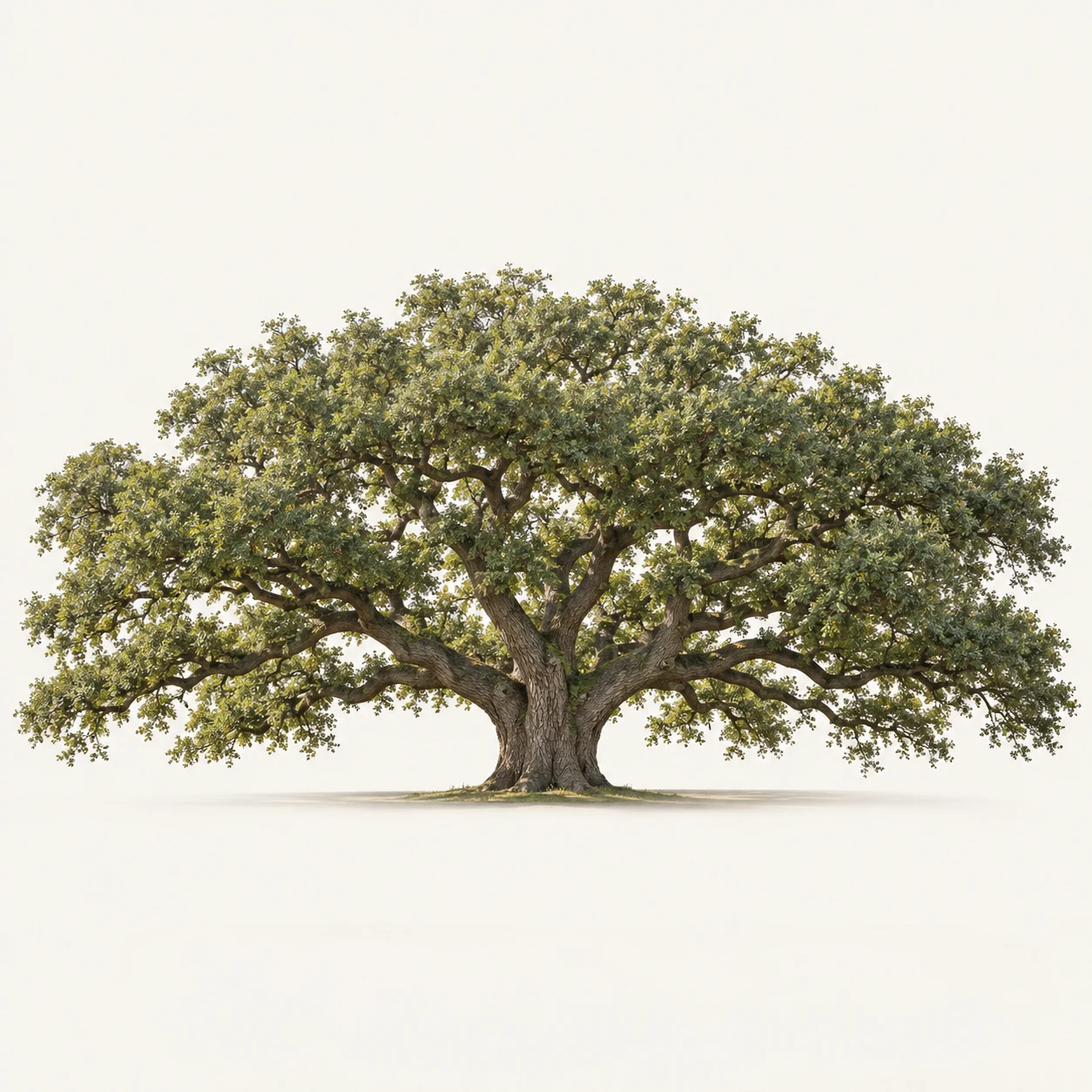
Illustrative open-grown Southern Live Oak with a very broad crown; the measured view shows the full planning envelope.Illustrative leathery oval live-oak leaves and acorns; this is Quercus virginiana, not Coast Live Oak.
Where it works around Pensacola
For Pensacola, the first question is whether the property can support the long-term canopy and root area. Use a qualified arborist when planning work around an existing tree. Locate new construction, access routes and soil changes around a protection plan before turning the space under the canopy into an outdoor project.
Shade for a generous property
A defining native canopy
An open lawn with a long-term tree
A framework for distant garden rooms
Wildlife habitat where ample space is available
Does the entire future canopy fit?
Consider the property as a whole, including neighbors, overhead lines and planned structures. A young trunk location is only the center of a much larger decision.
What work is planned near the roots?
Discuss pools, trenches, driveways and grade changes before they are designed into the tree area. Protecting a mature tree requires more than leaving the trunk untouched.
How will people use the shade?
Keep the intended activities clear while leaving room for branching, litter and care. Place fixed structures thoughtfully instead of assuming every spot beneath a tree is buildable.
Who will guide the structure over time?
Plan early training and periodic professional review. Strong branch development and good rooting conditions are investments in the future tree, not one-time finishing details.
Before it goes on the plan
Is it suitable for a small courtyard?
Usually a smaller tree is the more workable choice. A species capable of a 120 ft crown should not be selected on the basis of its installation size.
Does evergreen mean no leaf cleanup?
No. Live oaks shed old leaves and produce seasonal catkins and acorns. Consider where that material will collect in the everyday layout.
Can I build beneath an existing Live Oak?
That needs a site-specific tree and construction assessment. Have an arborist review proposed excavation, grades and root protection before the project layout is fixed.
Pairing ideas
Yaupon Holly: Yaupon can provide an evergreen layer where the light and soil conditions fit. Locate new planting around a root-protection plan rather than excavating into an established oak.
River Oats: River Oats is an option for a sheltered, moist area with room to manage its spread. It is not suitable for every dry oak root zone.
{"key":"liveoak","id":"PLT-QUER-VIRG","slug":"southern-live-oak","name":"Southern Live Oak","botanical":"Quercus virginiana","h":[60,80],"w":[60,120],"install":[8,5],"treeForm":"spreading","color":"#687953","native":true,"type":"trees","categoryLabel":"Trees","reviewDate":"2026-09-08","guideKind":"Native large-canopy tree guide","eyebrow":"GENEROUS SHADE + A LANDSCAPE FOR GENERATIONS","benefit":"Let one great canopy organize the whole property.","intro":"Southern Live Oak can become the defining feature of a large Gulf Coast landscape. Its broad limbs and enduring green canopy shape the light, views and spaces beneath it. This is a tree to plan around from the beginning, with a generous soil area and a clear idea of where the house, outdoor rooms and future work belong.","light":"Full sun to part shade","lightTags":["sun","part"],"water":"Adaptable once established; give new trees appropriate water and a generous uncompacted root area","season":"Evergreen canopy · seasonal leaf and catkin drop · acorns for wildlife","care":"Plan structural pruning while young and qualified arborist care as the tree develops","caution":"A Live Oak is a very large, spreading tree. Mature roots can affect nearby paving, and branches need extensive room. Good wind resistance is not a promise of storm safety; tree condition, rooting space and care all matter.","site":"For Pensacola, the first question is whether the property can support the long-term canopy and root area. Use a qualified arborist when planning work around an existing tree. Locate new construction, access routes and soil changes around a protection plan before turning the space under the canopy into an outdoor project.","sizeNote":"UF/IFAS describes 60–80 ft of height and a 60–120 ft spread under suitable conditions. The diagram allows the full upper width without cropping or squeezing it. The six-foot person is intentionally small beside it. The circle is canopy space only; roots and construction protection needs can extend beyond it.","uses":["Shade for a generous property","A defining native canopy","An open lawn with a long-term tree","A framework for distant garden rooms","Wildlife habitat where ample space is available"],"checks":[["Does the entire future canopy fit?","Consider the property as a whole, including neighbors, overhead lines and planned structures. A young trunk location is only the center of a much larger decision."],["What work is planned near the roots?","Discuss pools, trenches, driveways and grade changes before they are designed into the tree area. Protecting a mature tree requires more than leaving the trunk untouched."],["How will people use the shade?","Keep the intended activities clear while leaving room for branching, litter and care. Place fixed structures thoughtfully instead of assuming every spot beneath a tree is buildable."],["Who will guide the structure over time?","Plan early training and periodic professional review. Strong branch development and good rooting conditions are investments in the future tree, not one-time finishing details."]],"faq":[["Is it suitable for a small courtyard?","Usually a smaller tree is the more workable choice. A species capable of a 120 ft crown should not be selected on the basis of its installation size."],["Does evergreen mean no leaf cleanup?","No. Live oaks shed old leaves and produce seasonal catkins and acorns. Consider where that material will collect in the everyday layout."],["Can I build beneath an existing Live Oak?","That needs a site-specific tree and construction assessment. Have an arborist review proposed excavation, grades and root protection before the project layout is fixed."]],"sources":[["UF/IFAS Gardening Solutions · Live Oak scale and care","https://gardeningsolutions.ifas.ufl.edu/plants/trees-and-shrubs/trees/live-oaks/"],["UF/IFAS · North Florida tree-selection context","https://edis.ifas.ufl.edu/publication/EP451"]],"wholeCaption":"Illustrative open-grown Southern Live Oak with a very broad crown; the measured view shows the full planning envelope.","detailCaption":"Illustrative leathery oval live-oak leaves and acorns; this is Quercus virginiana, not Coast Live Oak.","aliases":["live oak","Southern Live Oak","Quercus virginiana","shade tree","large canopy","native","evergreen"],"goals":["privacy"],"images":{"context":{"id":"6aa01712ed6287b2dea3228e","url":"https://cdn.prod.website-files.com/6a975baac0f352647862d847/6aa01712ed6287b2dea3228e_landova-tree-liveoak-context.webp","alt":"Illustrative planting concept with Southern Live Oak","width":1600,"height":900},"whole":{"id":"6aa0171210b1cbe8ff6d6a57","url":"https://cdn.prod.website-files.com/6a975baac0f352647862d847/6aa0171210b1cbe8ff6d6a57_landova-tree-liveoak-whole.webp","alt":"Illustrative whole-plant form of Southern Live Oak","width":1254,"height":1254,"fit":"contain"},"detail":{"id":"6aa0171362f370de12c072ab","url":"https://cdn.prod.website-files.com/6a975baac0f352647862d847/6aa0171362f370de12c072ab_landova-tree-liveoak-detail.webp","alt":"Illustrative foliage and seasonal detail of Southern Live Oak","width":1122,"height":1402}},"companions":[{"slug":"yaupon-holly","name":"Yaupon Holly","title":"Use a smaller native tree at the garden edge","reason":"Yaupon can provide an evergreen layer where the light and soil conditions fit. Locate new planting around a root-protection plan rather than excavating into an established oak.","image":{"id":"6aa0171262f370de12c071ea","url":"https://cdn.prod.website-files.com/6a975baac0f352647862d847/6aa0171262f370de12c071ea_landova-tree-yaupon-context.webp","alt":"Illustrative planting concept with Yaupon Holly","width":1600,"height":900}},{"slug":"river-oats","name":"River Oats","title":"Consider a shade-grass layer where moisture fits","reason":"River Oats is an option for a sheltered, moist area with room to manage its spread. It is not suitable for every dry oak root zone.","image":{"id":"6aa00d177c6403f4c7349a61","url":"https://cdn.prod.website-files.com/6a975baac0f352647862d847/6aa00d177c6403f4c7349a61_landova-grass-riveroats-context.webp","alt":"Illustrative planting concept with River Oats","width":1600,"height":900}}]}
LANDOVA / PLANTING DECISIONS
Choose plants with the whole space in mind.
Explore a planting goal, then compare the growing needs and mature size of individual plants.
LANDOVA is in beta
Join the launch waitlist.
We are not accepting paying clients yet. We expect to launch around January 2027 and may open sooner. Explore our free tools now, and sign up for launch updates and educational planning emails.
Thank you. Your waitlist signup has been received. We will email you with launch updates. No purchase or project booking has been made.
We could not save your signup. Please try again or email info@landovadesign.com.