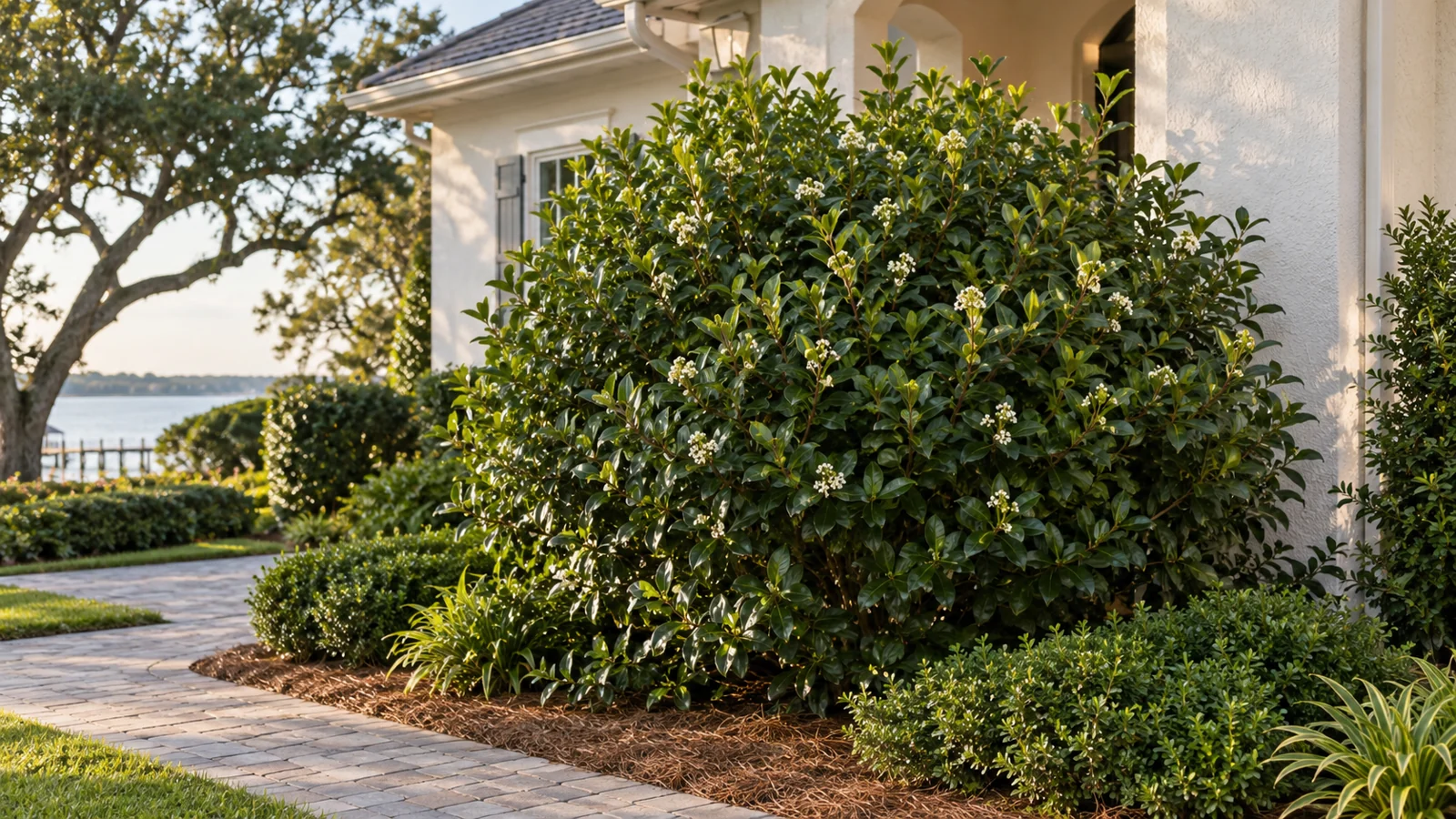
Sweet viburnum is often considered for a tall evergreen screen, but its mature width can surprise homeowners. This reference helps you compare the natural plant with the narrow hedge you may have pictured, and consider the upkeep and site review that choice requires.
Before you choose: UF/IFAS’s species assessment is currently incomplete. Treat this as a comparison guide; confirm current regional advice before selection.
Illustrative planting concept
Size and space
Mature range: 10–20 ft high × 15–20 ft wide.
NC State lists 10–20 ft of height and 15–20 ft of natural spread. The 8 × 5 ft maintained example is an illustrative pruning target, not a cultivar size or growth limit. Awabuki and named compact selections require separate identity and cold-hardiness checks.
Installed example: 3 ft high × 2 ft wide. This is an illustrative size, not a pot-size or growth-timeline promise.
Sun to part shade · Moist, well-drained soil; water while establishing · Evergreen in suitable conditions · white spring flowers
Where it works around Pensacola
A large sheltered property offers a different opportunity from a narrow side yard. Compare the natural canopy, maintenance access and neighboring boundaries before treating this as a screening solution. Current Florida assessment remains under review; this page does not establish approval for every property.
Screening comparison
Large-property boundary study
Evergreen background study
Hedge upkeep planning
Natural-size comparison
Draw the natural width first.
Set out the eventual canopy before drawing a clipped hedge line. Include space on both sides for access and consider what happens if pruning is delayed.
Separate the hedge from the plant.
A maintained example describes work you will keep doing. It does not shrink the roots, change the natural growth potential or guarantee a dense screen at every height.
Verify the exact selection.
Sweet viburnum and awabuki names are sometimes used loosely. Check the botanical and cultivar labels, nursery dimensions and local cold exposure before specifying plants.
Check the current regional review.
UF/IFAS lists the species assessment as incomplete. Check the linked assessment and local Extension advice before selection; compare the reviewed evergreen alternatives below in the meantime.
Before it goes on the plan
Will a five-foot-wide strip hold its natural growth?
No. This species can spread much farther. A narrow hedge requires continuing pruning and access, and another plant may fit the site better.
Is this an approved low-maintenance recommendation?
This is an educational comparison profile. The current Florida assessment needs checking before selection, and a small clipped hedge creates an ongoing care commitment.
Is the maintained diagram a mature-size promise?
No. It is an illustrative pruning target. Use the natural mature diagram to understand the plant’s larger potential footprint.
Compare these screening alternatives.
Walter’s Viburnum: Walter’s viburnum offers another screening direction where its moisture, light and generous mature space work. Confirm the full species versus a dwarf cultivar.
Cleyera: Cleyera can provide structure in a partly shaded, acidic bed with good drainage. Its different dimensions and conditions still need to fit the property.
{"key":"sweetvib","id":"PLT-VIBU-ODORATISSIMUM","slug":"sweet-viburnum","name":"Sweet Viburnum","botanical":"Viburnum odoratissimum","eyebrow":"LARGE SCREENING SHRUB / REVIEW BEFORE SELECTION","benefit":"Understand the space behind a tall green screen.","intro":"Sweet viburnum is often considered for a tall evergreen screen, but its mature width can surprise homeowners. This reference helps you compare the natural plant with the narrow hedge you may have pictured, and consider the upkeep and site review that choice requires.","h":[10,20],"w":[15,20],"install":[3,2],"maintained":[8,5],"color":"#4b7547","habit":"upright","light":"Sun to part shade","lightTags":["sun","part"],"water":"Moist, well-drained soil; water while establishing","season":"Evergreen in suitable conditions · white spring flowers","care":"Ongoing pruning if maintained smaller than natural size","caution":"UF/IFAS’s species assessment is currently incomplete. Treat this as a comparison guide; confirm current regional advice before selection.","site":"A large sheltered property offers a different opportunity from a narrow side yard. Compare the natural canopy, maintenance access and neighboring boundaries before treating this as a screening solution. Current Florida assessment remains under review; this page does not establish approval for every property.","sizeNote":"NC State lists 10–20 ft of height and 15–20 ft of natural spread. The 8 × 5 ft maintained example is an illustrative pruning target, not a cultivar size or growth limit. Awabuki and named compact selections require separate identity and cold-hardiness checks.","uses":["Screening comparison","Large-property boundary study","Evergreen background study","Hedge upkeep planning","Natural-size comparison"],"checks":[["Draw the natural width first.","Set out the eventual canopy before drawing a clipped hedge line. Include space on both sides for access and consider what happens if pruning is delayed."],["Separate the hedge from the plant.","A maintained example describes work you will keep doing. It does not shrink the roots, change the natural growth potential or guarantee a dense screen at every height."],["Verify the exact selection.","Sweet viburnum and awabuki names are sometimes used loosely. Check the botanical and cultivar labels, nursery dimensions and local cold exposure before specifying plants."],["Check the current regional review.","UF/IFAS lists the species assessment as incomplete. Check the linked assessment and local Extension advice before selection; compare the reviewed evergreen alternatives below in the meantime."]],"faq":[["Will a five-foot-wide strip hold its natural growth?","No. This species can spread much farther. A narrow hedge requires continuing pruning and access, and another plant may fit the site better."],["Is this an approved low-maintenance recommendation?","This is an educational comparison profile. The current Florida assessment needs checking before selection, and a small clipped hedge creates an ongoing care commitment."],["Is the maintained diagram a mature-size promise?","No. It is an illustrative pruning target. Use the natural mature diagram to understand the plant’s larger potential footprint."]],"sources":[["NC State Extension · natural size and growing needs","https://plants.ces.ncsu.edu/plants/viburnum-odoratissimum/"],["UF/IFAS Assessment · incomplete species assessment","https://assessment.ifas.ufl.edu/assessments/viburnum-odoratissimum/"]],"pairHeading":"Compare these screening alternatives.","pairIntro":"These are alternatives to evaluate for the same job, not an instruction to combine all three. Match each option to the site and mature space.","wholeCaption":"Illustrative natural species form · much wider than a clipped hedge","detailCaption":"Illustrative detail · broad leaves and small white flower clusters","native":false,"guideKind":"Screening reference · review first","aliases":["sweet viburnum hedge","Viburnum odoratissimum"],"goals":[],"images":{"context":{"id":"6a9fefa9ccf2cf96774ad01b","url":"https://cdn.prod.website-files.com/6a975baac0f352647862d847/6a9fefa9ccf2cf96774ad01b_landova-sweetvib-context-r07.webp","alt":"Illustrative planting concept with Sweet Viburnum","width":1600,"height":900},"whole":{"id":"6a9fefa933bce6c67a8b7c44","url":"https://cdn.prod.website-files.com/6a975baac0f352647862d847/6a9fefa933bce6c67a8b7c44_landova-sweetvib-whole-r07.webp","alt":"Illustrative whole-plant form of Sweet Viburnum","width":1448,"height":1086,"fit":"contain"},"detail":{"id":"6a9fefa90801709cd0d21bdf","url":"https://cdn.prod.website-files.com/6a975baac0f352647862d847/6a9fefa90801709cd0d21bdf_landova-sweetvib-detail-r07.webp","alt":"Illustrative foliage and seasonal detail of Sweet Viburnum","width":1254,"height":1254}},"reviewDate":"2026-09-08","companions":[{"slug":"walters-viburnum","name":"Walter’s Viburnum","title":"Consider a native screening species.","reason":"Walter’s viburnum offers another screening direction where its moisture, light and generous mature space work. Confirm the full species versus a dwarf cultivar.","image":{"id":"6a9f5cd5ed7b89a06a969071","url":"https://cdn.prod.website-files.com/6a975baac0f352647862d847/6a9f5cd5ed7b89a06a969071_landova-walter-context-r05.webp","alt":"Illustrative planting concept with Walter’s Viburnum"}},{"slug":"cleyera-ternstroemia","name":"Cleyera","title":"Consider an upright evergreen alternative.","reason":"Cleyera can provide structure in a partly shaded, acidic bed with good drainage. Its different dimensions and conditions still need to fit the property.","image":{"id":"6a9fefa5c7d8ea3556dc9c21","url":"https://cdn.prod.website-files.com/6a975baac0f352647862d847/6a9fefa5c7d8ea3556dc9c21_landova-cleyera-context-r07.webp","alt":"Illustrative planting concept with Cleyera","width":1600,"height":900}}]}
LANDOVA / PLANTING DECISIONS
Choose plants with the whole space in mind.
Explore a planting goal, then compare the growing needs and mature size of individual plants.
LANDOVA is in beta
Join the launch waitlist.
We are not accepting paying clients yet. We expect to launch around January 2027 and may open sooner. Explore our free tools now, and sign up for launch updates and educational planning emails.
Thank you. Your waitlist signup has been received. We will email you with launch updates. No purchase or project booking has been made.
We could not save your signup. Please try again or email info@landovadesign.com.