Vitex brings lavender-purple flower spikes to a broad, airy small tree. Its gray-green foliage can sit comfortably beside a quiet evergreen layer, while the open branching gives the garden a lighter outline. Choose a position where the summer flowers can be enjoyed from the house and where the spreading crown has room to develop.
Before you choose: Choose Vitex agnus-castus by botanical name. It is non-native, may seed into nearby beds, and becomes wider than many small-tree spaces. Beach vitex and other Vitex species have different guidance.
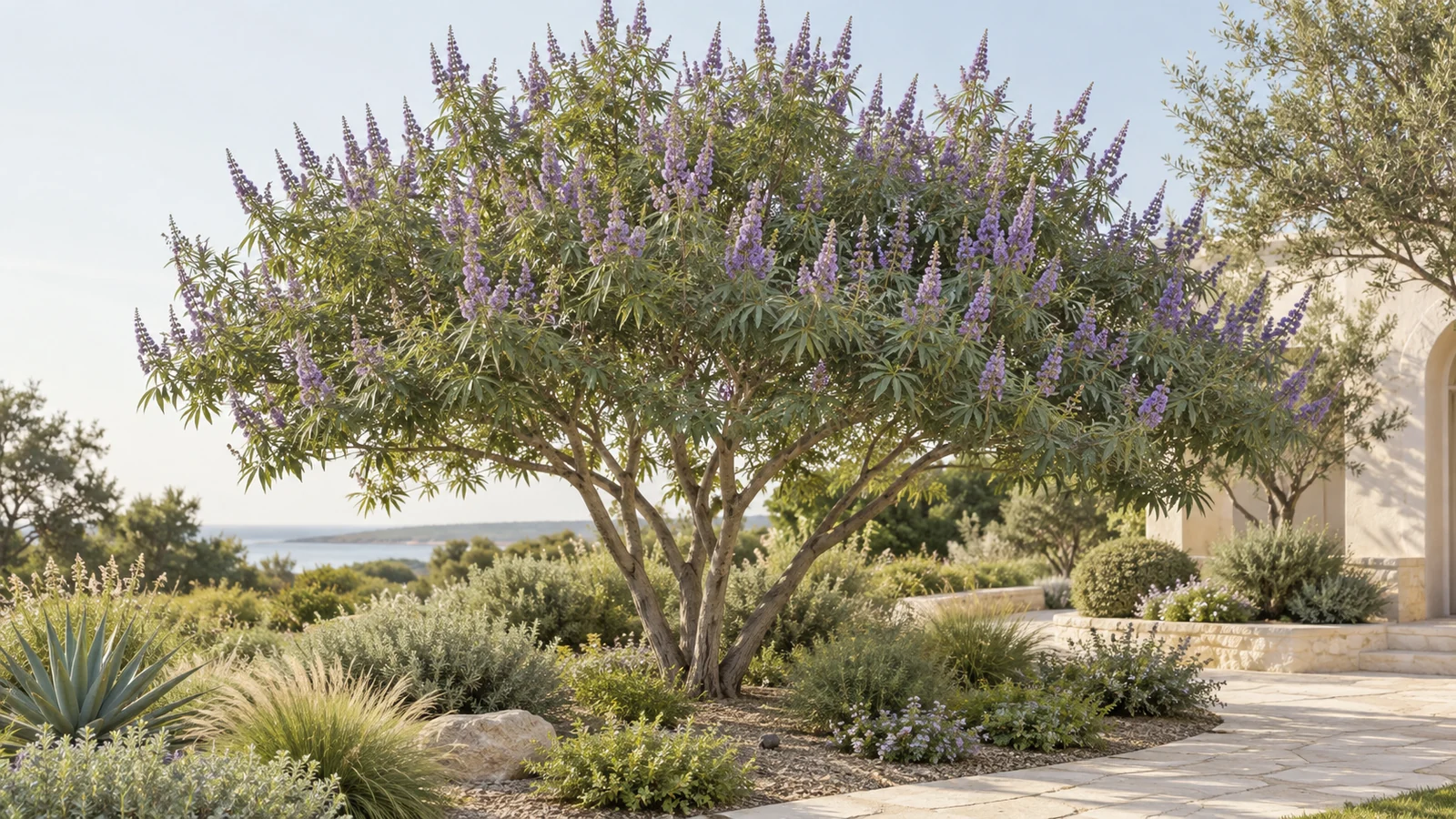
Illustrative planting concept
Size and space
Mature height: 10–15 ft. Mature spread: 15–20 ft.
UF/IFAS describes a 10–15 ft height and 15–20 ft spread. This is a species planning range, not a size promise for every cultivar. Low branches can extend into nearby activity areas; pruning the crown upward is an ongoing design choice, not a way to make its roots small.
Installed example: 5 ft high × 4 ft wide. This is an illustrative size, not a pot-size or growth-timeline promise.
Full sun to part shade · Well-drained soil; water to establish, then match irrigation to the site · Lavender-purple summer flowers · gray-green foliage · bare branches in winter
Care: Guide the young branch structure and remove unwanted seedlings; avoid a persistently wet root zone
Know the whole plant
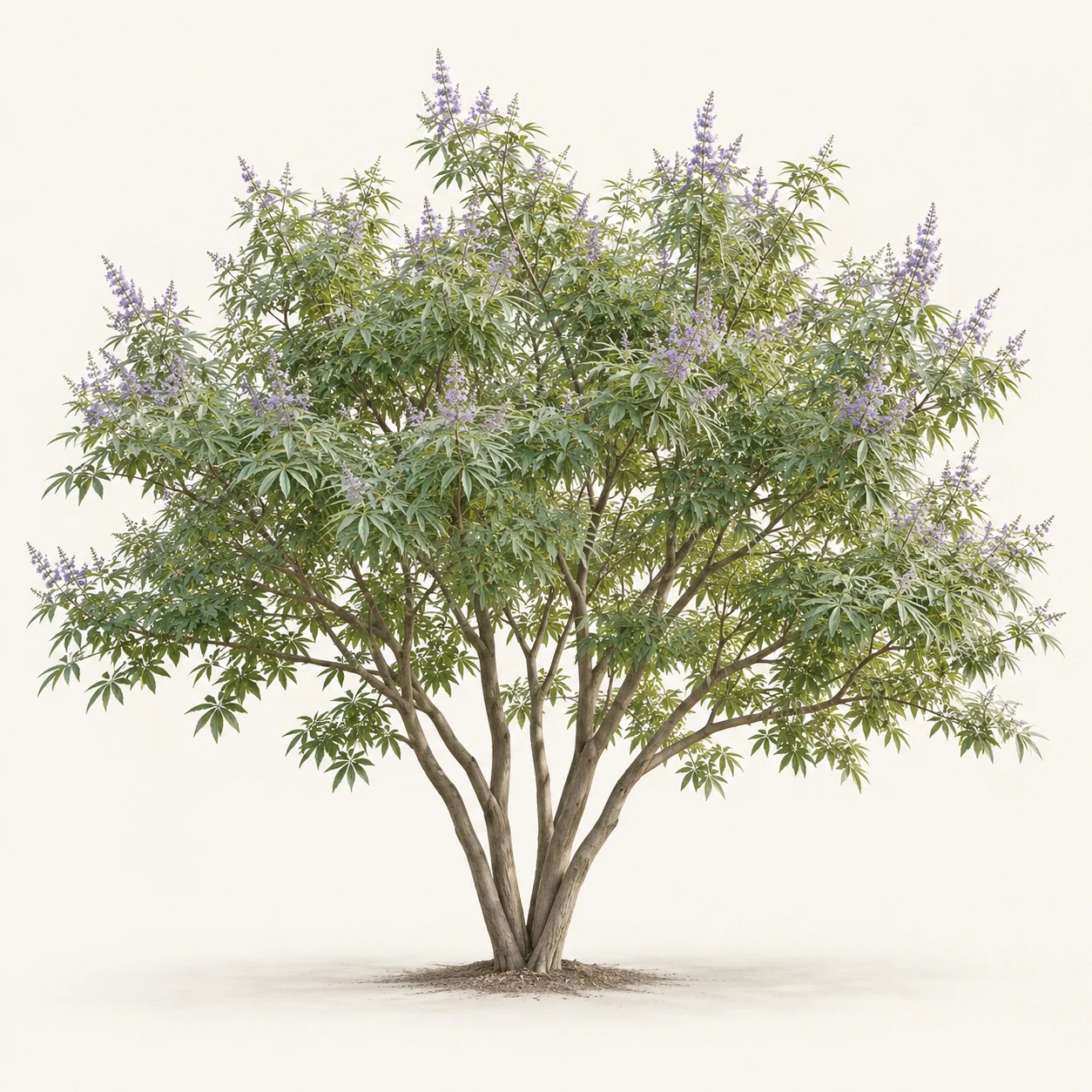
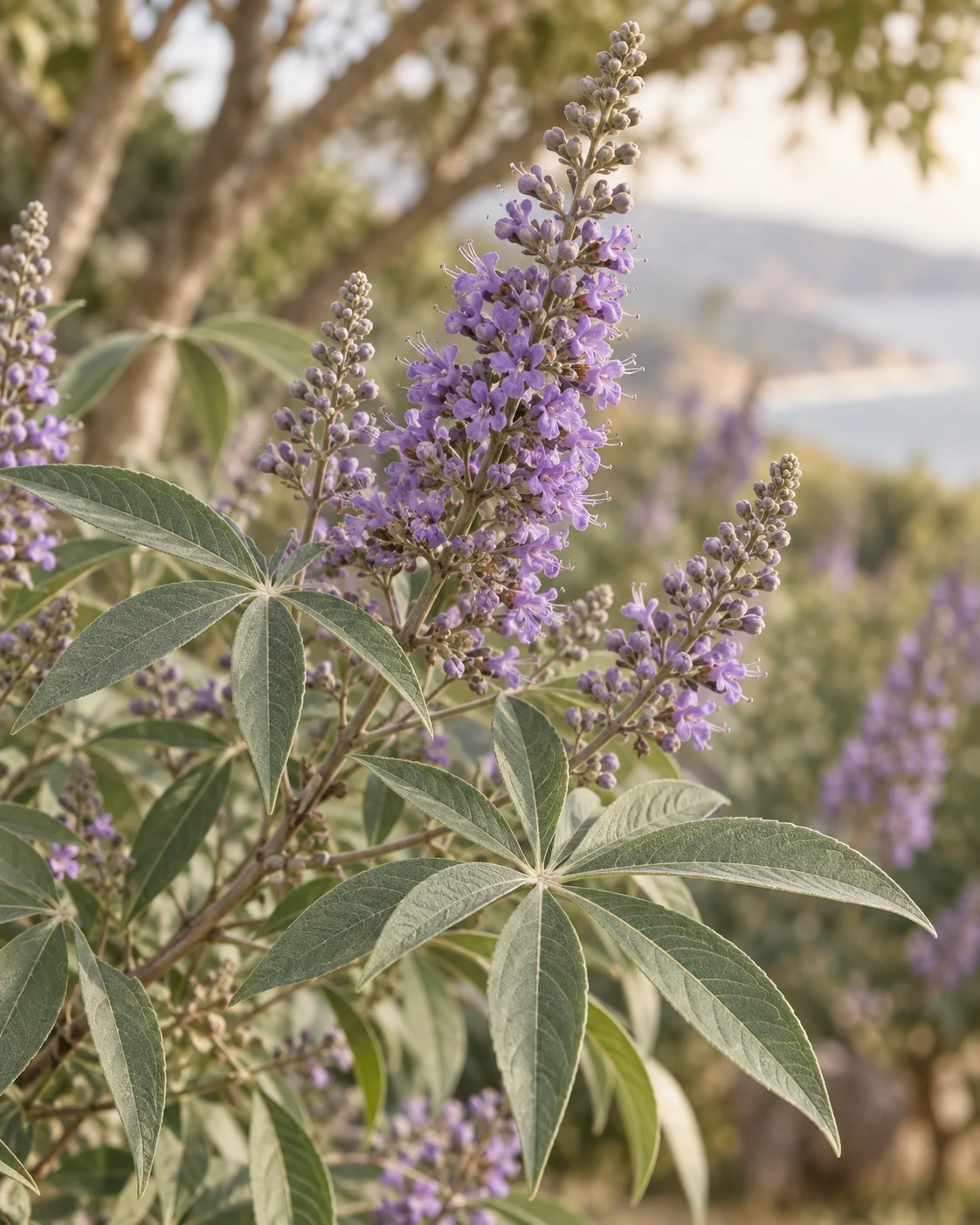
Illustrative broad vitex crown with visible branching; the tree form depends on selection and early training.Illustrative lavender flower spikes and compound gray-green leaves of Vitex agnus-castus.
Where it works around Pensacola
A sunny, freely draining Pensacola bed is a useful starting point. Give the tree a clear role as a flowering accent, with its lower branches outside the main walking route. If the bed shares irrigation with a lawn or a moisture-loving planting, review that arrangement before choosing vitex.
A sunny flowering focal point
Lavender color above a lower border
A broad accent beyond a patio
An open informal garden edge
A seasonal nectar planting
Where will the crown be allowed to spread?
Draw the full width before setting the trunk location. A tree that looks modest at the nursery can still fill the space between a path and a fence.
What happens to the view in winter?
Use nearby evergreen planting where year-round cover matters. Let vitex provide seasonal interest without asking it to conceal equipment throughout the year.
Is the soil staying too wet?
Observe the bed after rain and check nearby sprinklers. A flowering tree belongs in a compatible moisture setting, not simply in the last empty patch of a plan.
Can the branching be managed from the start?
Choose the nursery form deliberately. Allow access for routine care and keep future low branches clear of seating, vehicle access and the main route through the garden.
Before it goes on the plan
Is vitex native to Florida?
No. The current UF/IFAS assessment lists V. agnus-castus as not a problem species, with the assessment complete. Seedlings can still become weedy in nearby beds, so monitor spread.
Is it the same as beach vitex?
No. Confirm Vitex agnus-castus on the nursery label. Do not substitute another Vitex solely because the common name or flower color looks similar.
Will the purple flowers last all year?
No. The flowering display is seasonal, and the tree is deciduous. Evaluate its green-leaf appearance and winter branching as part of the same planting decision.
Pairing ideas
Pink Muhly Grass: Pink Muhly can bring a different seasonal texture in a compatible sunny, drained bed. Place it beyond the tree’s mature crown where it will retain enough light.
Schilling’s Dwarf Yaupon Holly: A dwarf yaupon can keep a settled green outline near the composition. Reserve separate mature spaces and protect access around the vitex.
{"key":"vitex","id":"PLT-VITE-AGNUS-CASTUS","slug":"vitex-chastetree","name":"Vitex / Chastetree","botanical":"Vitex agnus-castus","h":[10,15],"w":[15,20],"install":[5,4],"treeForm":"vase","color":"#7b886b","native":false,"type":"trees","categoryLabel":"Trees","reviewDate":"2026-09-08","guideKind":"Flowering species guide","eyebrow":"LAVENDER SUMMER COLOR + OPEN BRANCHING","benefit":"Let summer color rise above the lower planting.","intro":"Vitex brings lavender-purple flower spikes to a broad, airy small tree. Its gray-green foliage can sit comfortably beside a quiet evergreen layer, while the open branching gives the garden a lighter outline. Choose a position where the summer flowers can be enjoyed from the house and where the spreading crown has room to develop.","light":"Full sun to part shade","lightTags":["sun","part"],"water":"Well-drained soil; water to establish, then match irrigation to the site","season":"Lavender-purple summer flowers · gray-green foliage · bare branches in winter","care":"Guide the young branch structure and remove unwanted seedlings; avoid a persistently wet root zone","caution":"Choose Vitex agnus-castus by botanical name. It is non-native, may seed into nearby beds, and becomes wider than many small-tree spaces. Beach vitex and other Vitex species have different guidance.","site":"A sunny, freely draining Pensacola bed is a useful starting point. Give the tree a clear role as a flowering accent, with its lower branches outside the main walking route. If the bed shares irrigation with a lawn or a moisture-loving planting, review that arrangement before choosing vitex.","sizeNote":"UF/IFAS describes a 10–15 ft height and 15–20 ft spread. This is a species planning range, not a size promise for every cultivar. Low branches can extend into nearby activity areas; pruning the crown upward is an ongoing design choice, not a way to make its roots small.","uses":["A sunny flowering focal point","Lavender color above a lower border","A broad accent beyond a patio","An open informal garden edge","A seasonal nectar planting"],"checks":[["Where will the crown be allowed to spread?","Draw the full width before setting the trunk location. A tree that looks modest at the nursery can still fill the space between a path and a fence."],["What happens to the view in winter?","Use nearby evergreen planting where year-round cover matters. Let vitex provide seasonal interest without asking it to conceal equipment throughout the year."],["Is the soil staying too wet?","Observe the bed after rain and check nearby sprinklers. A flowering tree belongs in a compatible moisture setting, not simply in the last empty patch of a plan."],["Can the branching be managed from the start?","Choose the nursery form deliberately. Allow access for routine care and keep future low branches clear of seating, vehicle access and the main route through the garden."]],"faq":[["Is vitex native to Florida?","No. The current UF/IFAS assessment lists V. agnus-castus as not a problem species, with the assessment complete. Seedlings can still become weedy in nearby beds, so monitor spread."],["Is it the same as beach vitex?","No. Confirm Vitex agnus-castus on the nursery label. Do not substitute another Vitex solely because the common name or flower color looks similar."],["Will the purple flowers last all year?","No. The flowering display is seasonal, and the tree is deciduous. Evaluate its green-leaf appearance and winter branching as part of the same planting decision."]],"sources":[["UF/IFAS Gardening Solutions · chastetree size and growing conditions","https://gardeningsolutions.ifas.ufl.edu/plants/trees-and-shrubs/trees/chastetree/"],["UF/IFAS Assessment · Vitex agnus-castus","https://assessment.ifas.ufl.edu/assessments/vitex-agnus-castus/"]],"wholeCaption":"Illustrative broad vitex crown with visible branching; the tree form depends on selection and early training.","detailCaption":"Illustrative lavender flower spikes and compound gray-green leaves of Vitex agnus-castus.","aliases":["vitex","chaste tree","chastetree","lavender","purple","summer flowers"],"goals":["color"],"images":{"context":{"id":"6aa0170cd9c686655a9ae4a3","url":"https://cdn.prod.website-files.com/6a975baac0f352647862d847/6aa0170cd9c686655a9ae4a3_landova-tree-vitex-context.webp","alt":"Illustrative planting concept with Vitex / Chastetree","width":1600,"height":900},"whole":{"id":"6aa0170c313e40e250eb172f","url":"https://cdn.prod.website-files.com/6a975baac0f352647862d847/6aa0170c313e40e250eb172f_landova-tree-vitex-whole.webp","alt":"Illustrative whole-plant form of Vitex / Chastetree","width":1254,"height":1254,"fit":"contain"},"detail":{"id":"6aa0170dd7240435a6270cd7","url":"https://cdn.prod.website-files.com/6a975baac0f352647862d847/6aa0170dd7240435a6270cd7_landova-tree-vitex-detail.webp","alt":"Illustrative foliage and seasonal detail of Vitex / Chastetree","width":1122,"height":1402}},"companions":[{"slug":"pink-muhly-grass","name":"Pink Muhly Grass","title":"Carry color into another season","reason":"Pink Muhly can bring a different seasonal texture in a compatible sunny, drained bed. Place it beyond the tree’s mature crown where it will retain enough light.","image":{"id":"6aa00228430659e428d61061","url":"https://cdn.prod.website-files.com/6a975baac0f352647862d847/6aa00228430659e428d61061_landova-grass-muhly-context.webp","alt":"Illustrative planting concept with Pink Muhly Grass","width":1600,"height":900}},{"slug":"schillings-dwarf-yaupon-holly","name":"Schilling’s Dwarf Yaupon Holly","title":"Give the lower layer evergreen structure","reason":"A dwarf yaupon can keep a settled green outline near the composition. Reserve separate mature spaces and protect access around the vitex.","image":{"id":"6a9f5cd31fbbc23ce58d34ef","url":"https://cdn.prod.website-files.com/6a975baac0f352647862d847/6a9f5cd31fbbc23ce58d34ef_landova-schilling-context-r05.webp","alt":"Illustrative planting concept with Schilling’s Dwarf Yaupon Holly"}}]}
LANDOVA / PLANTING DECISIONS
Choose plants with the whole space in mind.
Explore a planting goal, then compare the growing needs and mature size of individual plants.
LANDOVA is in beta
Join the launch waitlist.
We are not accepting paying clients yet. We expect to launch around January 2027 and may open sooner. Explore our free tools now, and sign up for launch updates and educational planning emails.
Thank you. Your waitlist signup has been received. We will email you with launch updates. No purchase or project booking has been made.
We could not save your signup. Please try again or email info@landovadesign.com.