Add a slender vertical accent with an open lower profile.
Windmill Palm offers a compact fan crown above a straight, fibrous trunk. It can fit a residential composition that needs a vertical marker without the broad feathered canopy of a Pindo Palm. Its relatively narrow crown is useful, but the long-term height still belongs in the plan.
Before you choose: A narrow crown does not mean a low plant. UF/IFAS describes many landscape specimens around 25 ft; NC State records 20–40 ft in the species’ larger range. Strong wind can tear the fans, so a sheltered site is preferable to an exposed coastal position.
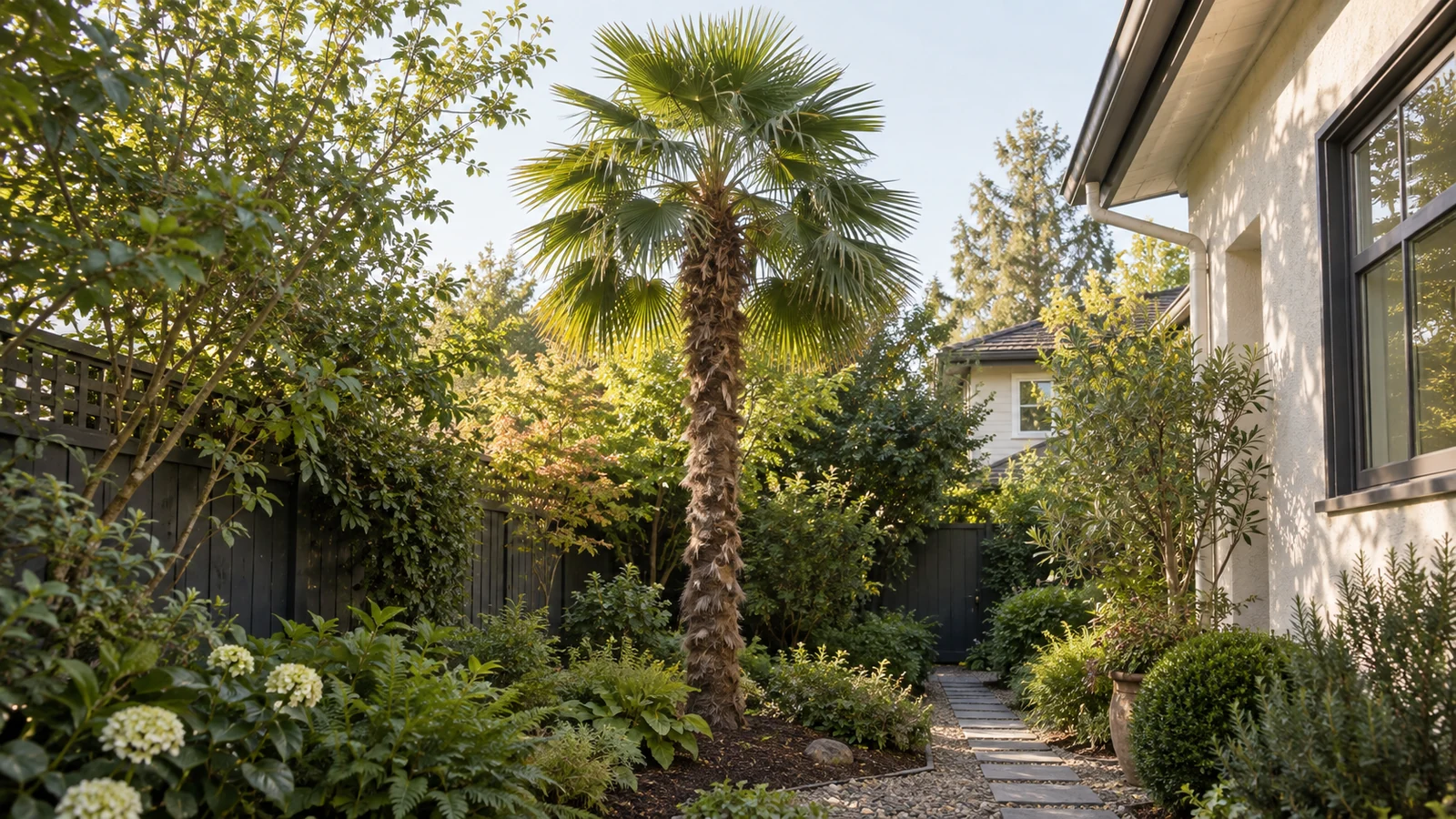
Illustrative planting concept
Size and space
Total mature height: 20–40 ft. Mature frond spread: 6–10 ft.
The diagram uses 20–40 ft in total height and 6–10 ft of frond spread to keep larger specimens in the space discussion. Smaller cultivated plants are common. This is an eventual planning range, not a growth timetable or a measurement of bare trunk.
Installed example: 5 ft high × 3 ft wide. This is an illustrative size, not a pot-size or growth-timeline promise.
Part shade to sun; shelter from strong wind · Fertile, well-drained soil; water during establishment and prolonged dry spells · Evergreen fan crown · shaggy fibrous trunk
Care: Modest cleanup; retain healthy fronds and monitor leaf condition
Know the whole plant
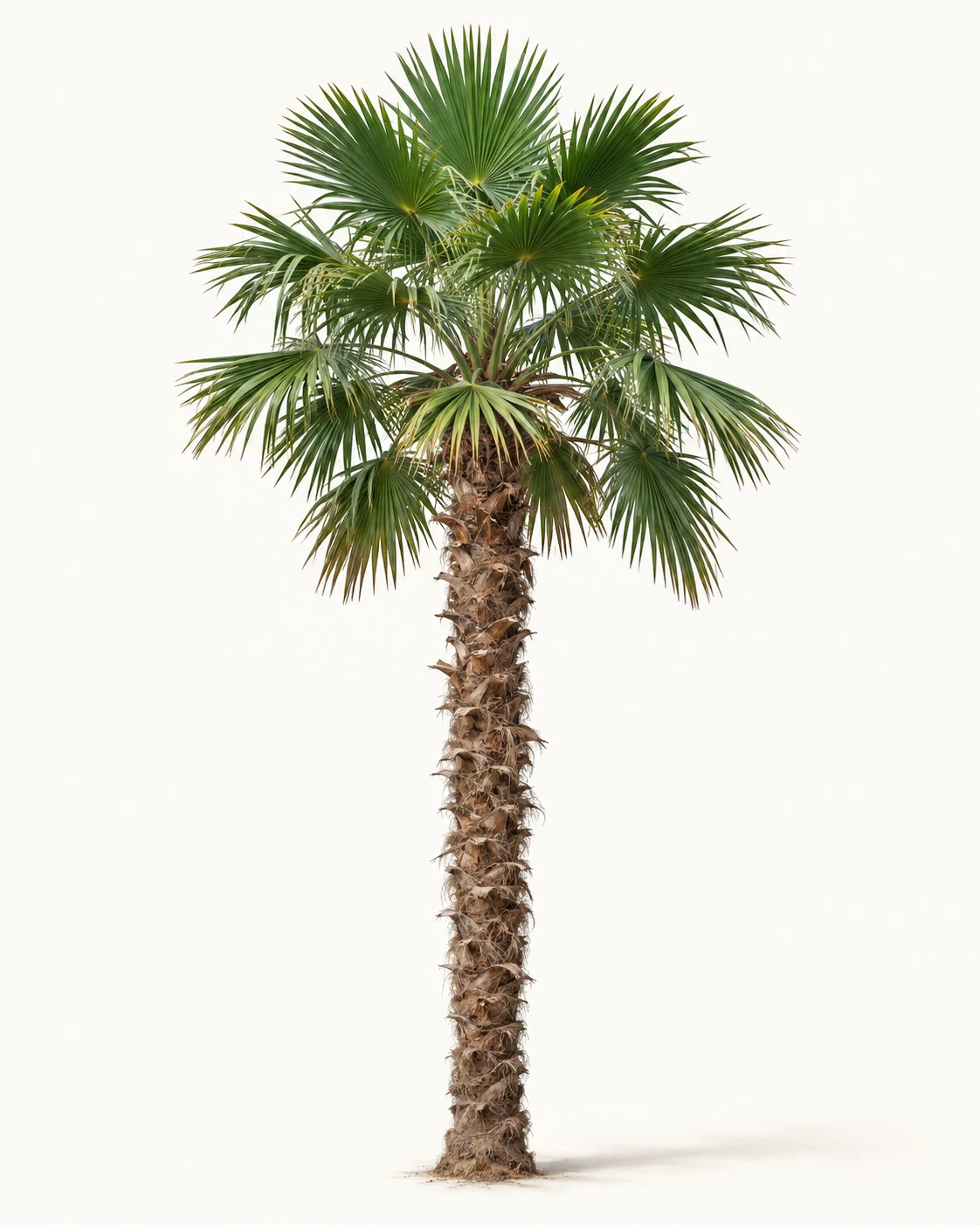
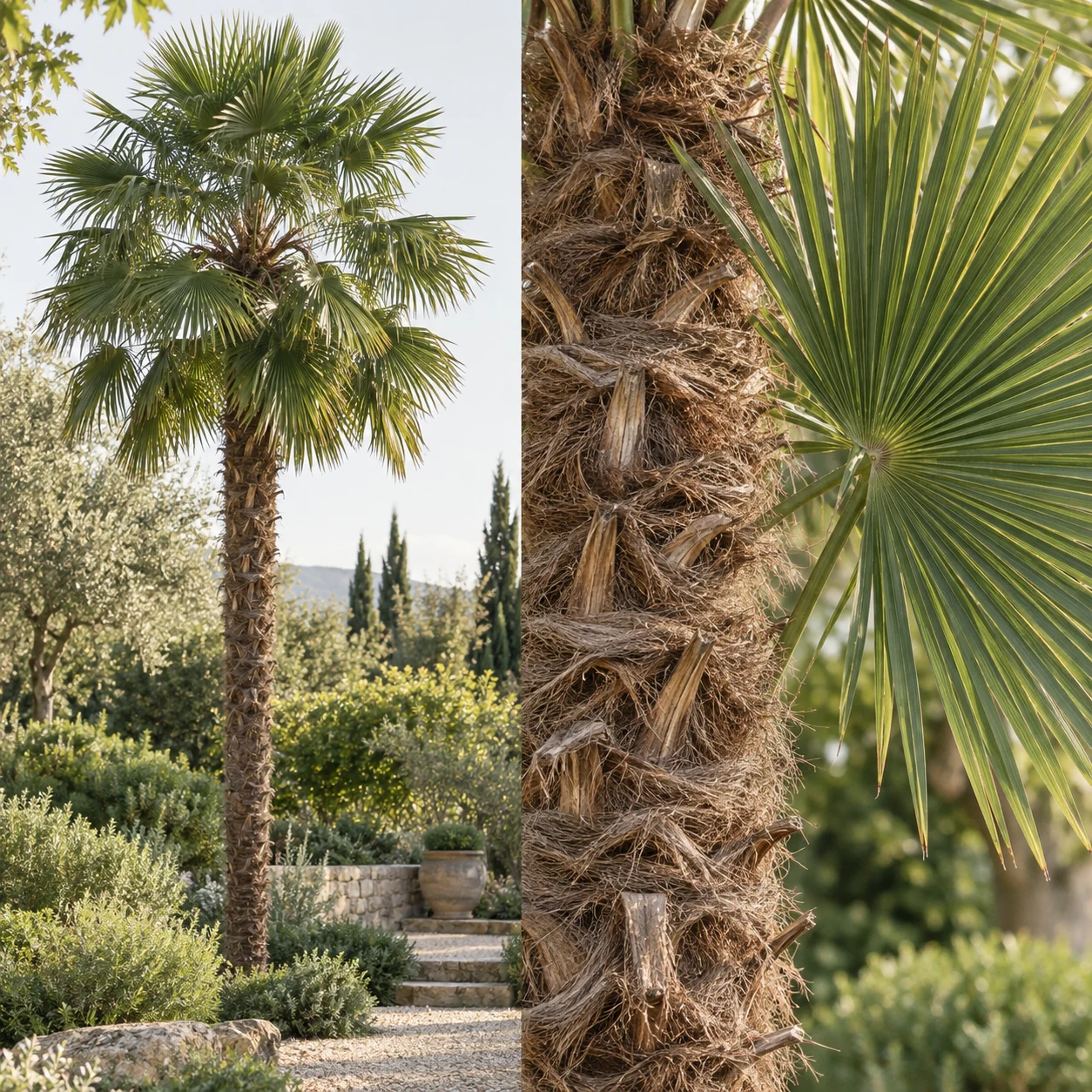
Illustrative whole-plant form of Windmill Palm; fronds, stems and overall proportions vary with age and growing conditions.Illustrative foliage detail of Windmill Palm. Use the botanical name and nursery label to confirm the plant.
Where it works around Pensacola
Use Windmill Palm as a vertical feature in a sheltered Pensacola courtyard or side garden with clear sky above. Frame a view or garden entrance while keeping the crown away from buildings and utilities. Its lower trunk leaves room for a separate planting layer rather than providing low privacy on its own.
A slender courtyard accent
A vertical marker beside a garden entry
A sheltered side-garden palm
A narrow-crowned upper layer
A focal point above lower planting
Is overhead space clear?
Check eaves, utility lines and future structures against total mature height. The nursery plant’s trunk height does not show its final reach.
Will wind damage the fans?
Choose shelter where possible. A torn crown may survive but lose the tidy appearance that made the plant appealing.
Does the design need low screening?
This palm’s crown rises as the trunk develops. Use a separate appropriate lower layer if the view needs privacy near eye level.
How will the crown be inspected?
Consider long-term access for maintenance and assessment. Prompt advice is useful if unusual discoloration or decline appears; this palm is among hosts of lethal bronzing.
Before it goes on the plan
Is it cold hardy enough for this collection?
It is one of the cold-tolerant palms recommended by UF/IFAS for North Florida. Plant health, exposure and the severity of a freeze still affect performance.
Will it stay at the nursery height?
No. Growth is slow, but the species can become tall. Use the larger planning range when the planting has a strict height limit.
Does it suit direct beach wind?
It benefits from wind protection, and its leaves can tear in strong exposure. Coastal neighborhood use is different from an exposed beachfront site.
Pairing ideas
European Fan Palm: European Fan Palm can fill more of the lower view but requires a broader bed and clearance from sharp petioles.
Dwarf Mondo Grass: Dwarf Mondo Grass can be considered separately beneath or near the composition where light and soil conditions fit.
{"key":"windmill","name":"Windmill Palm","botanical":"Trachycarpus fortunei","slug":"windmill-palm","id":"PLT-TRAC-FORT","type":"palms","h":[20,40],"w":[6,10],"install":[5,3],"palmForm":"fan-single","trunkRatio":0.76,"native":false,"light":"Part shade to sun; shelter from strong wind","lightTags":["part","sun"],"water":"Fertile, well-drained soil; water during establishment and prolonged dry spells","season":"Evergreen fan crown · shaggy fibrous trunk","care":"Modest cleanup; retain healthy fronds and monitor leaf condition","benefit":"Add a slender vertical accent with an open lower profile.","intro":"Windmill Palm offers a compact fan crown above a straight, fibrous trunk. It can fit a residential composition that needs a vertical marker without the broad feathered canopy of a Pindo Palm. Its relatively narrow crown is useful, but the long-term height still belongs in the plan.","caution":"A narrow crown does not mean a low plant. UF/IFAS describes many landscape specimens around 25 ft; NC State records 20–40 ft in the species’ larger range. Strong wind can tear the fans, so a sheltered site is preferable to an exposed coastal position.","sizeNote":"The diagram uses 20–40 ft in total height and 6–10 ft of frond spread to keep larger specimens in the space discussion. Smaller cultivated plants are common. This is an eventual planning range, not a growth timetable or a measurement of bare trunk.","site":"Use Windmill Palm as a vertical feature in a sheltered Pensacola courtyard or side garden with clear sky above. Frame a view or garden entrance while keeping the crown away from buildings and utilities. Its lower trunk leaves room for a separate planting layer rather than providing low privacy on its own.","uses":["A slender courtyard accent","A vertical marker beside a garden entry","A sheltered side-garden palm","A narrow-crowned upper layer","A focal point above lower planting"],"checks":[["Is overhead space clear?","Check eaves, utility lines and future structures against total mature height. The nursery plant’s trunk height does not show its final reach."],["Will wind damage the fans?","Choose shelter where possible. A torn crown may survive but lose the tidy appearance that made the plant appealing."],["Does the design need low screening?","This palm’s crown rises as the trunk develops. Use a separate appropriate lower layer if the view needs privacy near eye level."],["How will the crown be inspected?","Consider long-term access for maintenance and assessment. Prompt advice is useful if unusual discoloration or decline appears; this palm is among hosts of lethal bronzing."]],"faq":[["Is it cold hardy enough for this collection?","It is one of the cold-tolerant palms recommended by UF/IFAS for North Florida. Plant health, exposure and the severity of a freeze still affect performance."],["Will it stay at the nursery height?","No. Growth is slow, but the species can become tall. Use the larger planning range when the planting has a strict height limit."],["Does it suit direct beach wind?","It benefits from wind protection, and its leaves can tear in strong exposure. Coastal neighborhood use is different from an exposed beachfront site."]],"sources":[["UF/IFAS: Windmill Palm","https://gardeningsolutions.ifas.ufl.edu/plants/trees-and-shrubs/palms-and-cycads/windmill-palm/"],["NC State Extension: Windmill Palm","https://plants.ces.ncsu.edu/plants/trachycarpus-fortunei/"]],"unit":"ft","heightLabel":"Total mature height","spreadLabel":"Mature frond spread","color":"#70815a","guideKind":"Palm","eyebrow":"EVERGREEN FORM + THOUGHTFUL PLACEMENT","wholeCaption":"Illustrative whole-plant form of Windmill Palm; fronds, stems and overall proportions vary with age and growing conditions.","detailCaption":"Illustrative foliage detail of Windmill Palm. Use the botanical name and nursery label to confirm the plant.","aliases":["Windmill Palm","Trachycarpus fortunei","Chusan palm","Chinese windmill palm"],"goals":["pool"],"palmSizeGroup":"large","images":{"context":{"id":"6aa03d8b48a9fbea52c609df","url":"https://cdn.prod.website-files.com/6a975baac0f352647862d847/6aa03d8b48a9fbea52c609df_landova-palm-windmill-context.webp","alt":"Illustrative planting concept with Windmill Palm","width":1600,"height":900},"whole":{"id":"6aa03d8bea97d9a7fab449dc","url":"https://cdn.prod.website-files.com/6a975baac0f352647862d847/6aa03d8bea97d9a7fab449dc_landova-palm-windmill-whole.webp","alt":"Illustrative whole-plant form of Windmill Palm","width":1122,"height":1402,"fit":"contain"},"detail":{"id":"6aa03d8c876c821d804ea225","url":"https://cdn.prod.website-files.com/6a975baac0f352647862d847/6aa03d8c876c821d804ea225_landova-palm-windmill-detail.webp","alt":"Illustrative foliage and seasonal detail of Windmill Palm","width":1254,"height":1254}},"companions":[{"slug":"european-fan-palm","name":"European Fan Palm","title":"Compare a lower clustered form","reason":"European Fan Palm can fill more of the lower view but requires a broader bed and clearance from sharp petioles.","image":{"id":"6aa03d85c7ace907310d0668","url":"https://cdn.prod.website-files.com/6a975baac0f352647862d847/6aa03d85c7ace907310d0668_landova-palm-european-context.webp","alt":"Illustrative planting concept with European Fan Palm","width":1600,"height":900}},{"slug":"dwarf-mondo-grass","name":"Dwarf Mondo Grass","title":"Explore the lower shaded layer","reason":"Dwarf Mondo Grass can be considered separately beneath or near the composition where light and soil conditions fit.","image":{"id":"6aa00d183fe0798c1efa78ee","url":"https://cdn.prod.website-files.com/6a975baac0f352647862d847/6aa00d183fe0798c1efa78ee_landova-grass-mondo-context.webp","alt":"Illustrative planting concept with Dwarf Mondo Grass","width":1600,"height":900}}]}
LANDOVA / PLANTING DECISIONS
Choose plants with the whole space in mind.
Explore a planting goal, then compare the growing needs and mature size of individual plants.
LANDOVA is in beta
Join the launch waitlist.
We are not accepting paying clients yet. We expect to launch around January 2027 and may open sooner. Explore our free tools now, and sign up for launch updates and educational planning emails.
Thank you. Your waitlist signup has been received. We will email you with launch updates. No purchase or project booking has been made.
We could not save your signup. Please try again or email info@landovadesign.com.