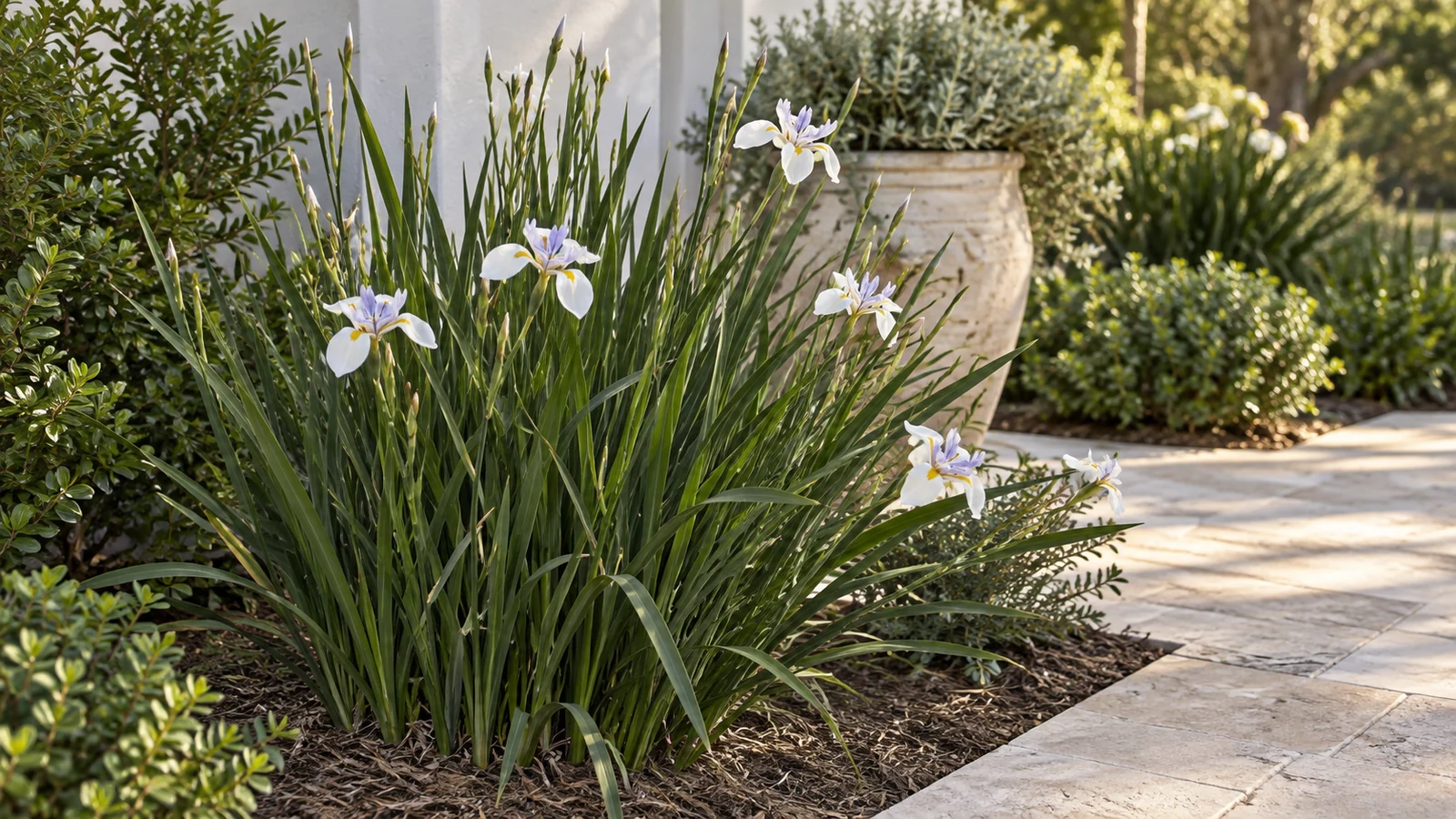
Create an upright fan of leaves with occasional white flowers.
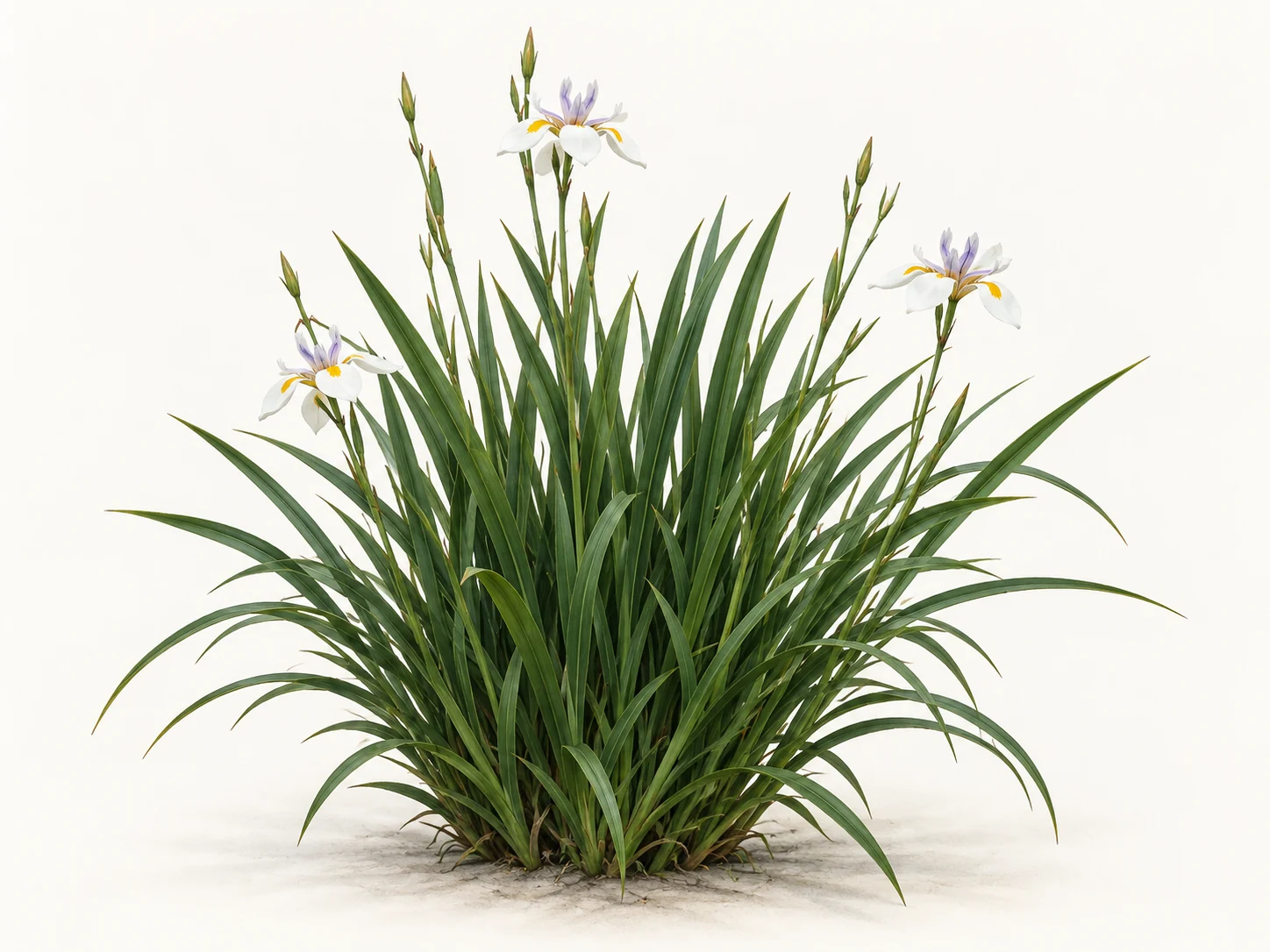
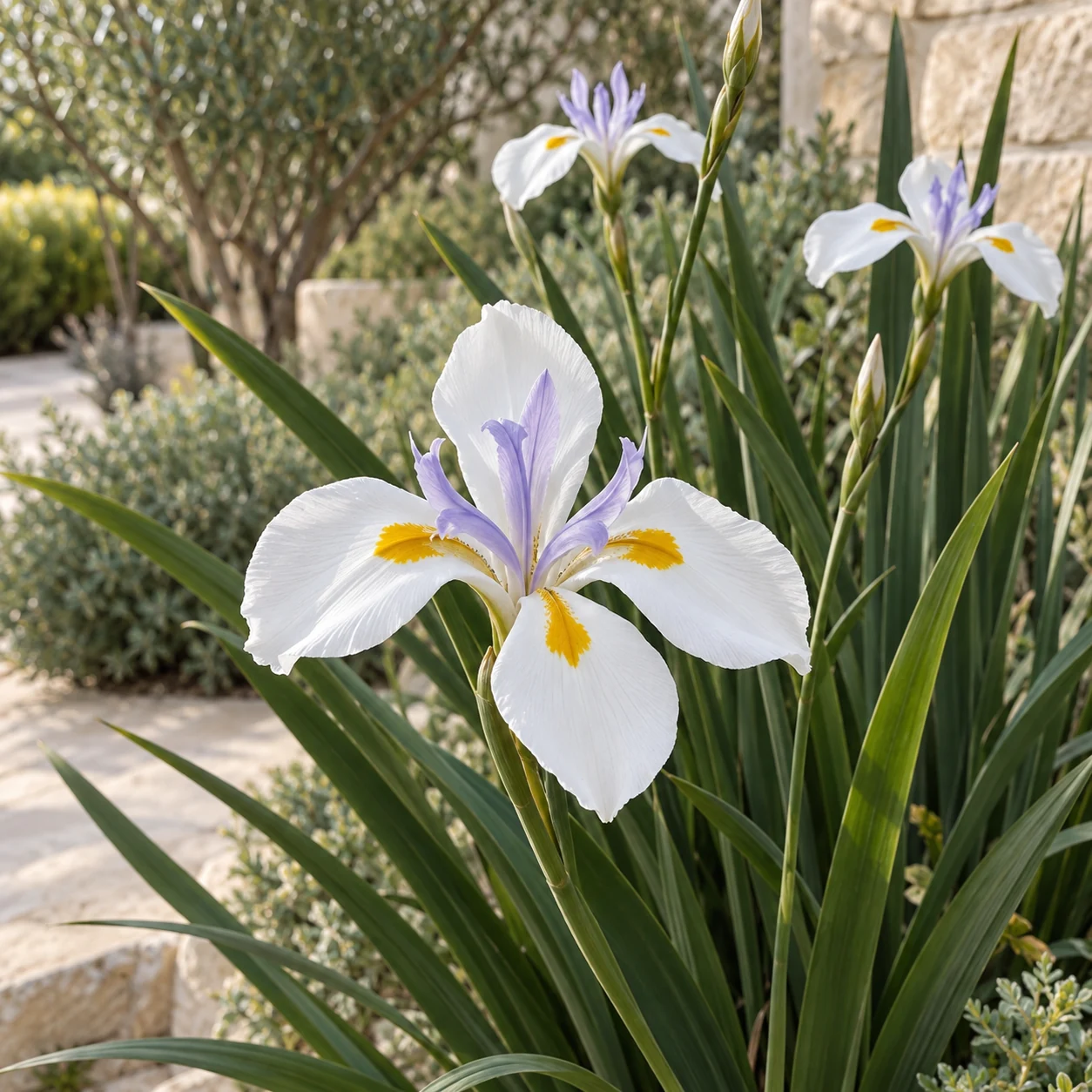
African Iris forms a clump of narrow sword-shaped leaves arranged in upright fans. White flowers with yellow and blue-violet markings rise among the foliage, bringing brief, delicate detail to a strongly structured plant. The leaves do much of the landscape work between flowering flushes, so choose the plant for its year-round form as well as its flower.
Before you choose: Confirm Dietes iridioides on the nursery label. African Iris is used for several Dietes species, including larger white-flowered forms and yellow-flowered plants. Cold can brown the foliage in Pensacola, and individual flowers are short-lived. A photo full of open blooms should not be read as a continuous display.
Illustrative planting concept
Size and space
Species height reference: Up to about 2 ft. Illustrative clump width: 2 ft drawing; confirm nursery spread.
SANBI describes Dietes iridioides reaching about 600 mm, or 2 ft, in height. The drawing uses a two-foot-wide clump as an illustrative space reference, not a published mature-spread limit. Clumps spread by rhizomes and can seed around the garden. Confirm the nursery species and expected width; other plants sold as African Iris can grow substantially larger.
Installed example: 6 in high × 6 in wide. This is an illustrative size, not a pot-size or growth-timeline promise.
Full sun to part shade · Moist soil with drainage; established plants tolerate some drier conditions · White flowers with yellow and blue-violet markings in intermittent flushes; cold can brown leaves
Care: Remove damaged leaves selectively; divide clumps when their footprint becomes crowded
Know the whole plant
Illustrative overall form of African Iris. The nursery selection, season and site affect appearance.Illustrative foliage and seasonal detail of African Iris; confirm the botanical name and selection on the nursery label.
Where it works around Pensacola
Consider African Iris for an open Pensacola bed in sun or part shade where the fan of leaves can stand clear of neighboring plants. A few repeated clumps can make a border feel organized. Keep the foliage back from a narrow path and leave a reachable opening for selective cleanup. The planting should still read well when no flowers are open.
An upright foliage accent in a mixed bed
A repeated clump along a generous border
A white-flower detail near a patio
A transition between low flowers and larger shrubs
A container sized for a spreading clump
Which Dietes species is being sold?
Check the botanical name and flower color. Common names alone do not tell you the mature height or width of the plant in the pot.
Will the leaves lean into the path?
Allow the whole fan to expand without requiring people to brush past it. Include working space outside the reference footprint.
Does the design depend on constant flowers?
Use the leaf fans as the main design feature. The short-lived flowers appear in flushes and will not remain open throughout the season.
Can seedlings and spreading clumps be managed?
SANBI describes self-seeding and rhizomatous spread. Keep the planting reachable, remove unwanted seedlings and leave access for selective winter cleanup or division.
Before it goes on the plan
Is African Iris an ordinary bearded iris?
No. Dietes is a different plant with a clumping fan of evergreen or cold-damaged leaves in a mild climate. Match care and dimensions to the botanical name.
Will it flower continuously?
Expect intermittent flowers rather than a permanent white display. The strong leaf form is the more dependable design feature between bloom periods.
Does evergreen mean the leaves cannot freeze?
No. UF/IFAS describes cold browning in African Iris. In Pensacola, allow for weather-damaged foliage and keep additional structure in the landscape.
Pairing ideas
Society Garlic: Society Garlic offers thinner leaves and lilac flowers in a separate draining position. Preserve space around both clumps.
Agapanthus: Agapanthus can supply a different flowering silhouette. Confirm both selections and allow access between their expanding clumps.
Schilling’s Dwarf Yaupon Holly: Dwarf Yaupon provides a contrasting evergreen shape farther back, with enough sunlight and room for the iris.
{"key":"iris","name":"African Iris","botanical":"Dietes iridioides","slug":"african-iris","id":"PLT-DIET-IRID","type":"accents","h":[2,2],"w":[2,2],"install":[0.5,0.5],"native":false,"accentGroup":"perennial","accentForm":"fan","light":"Full sun to part shade","lightTags":["sun","part"],"water":"Moist soil with drainage; established plants tolerate some drier conditions","season":"White flowers with yellow and blue-violet markings in intermittent flushes; cold can brown leaves","care":"Remove damaged leaves selectively; divide clumps when their footprint becomes crowded","benefit":"Create an upright fan of leaves with occasional white flowers.","intro":"African Iris forms a clump of narrow sword-shaped leaves arranged in upright fans. White flowers with yellow and blue-violet markings rise among the foliage, bringing brief, delicate detail to a strongly structured plant. The leaves do much of the landscape work between flowering flushes, so choose the plant for its year-round form as well as its flower.","caution":"Confirm Dietes iridioides on the nursery label. African Iris is used for several Dietes species, including larger white-flowered forms and yellow-flowered plants. Cold can brown the foliage in Pensacola, and individual flowers are short-lived. A photo full of open blooms should not be read as a continuous display.","sizeNote":"SANBI describes Dietes iridioides reaching about 600 mm, or 2 ft, in height. The drawing uses a two-foot-wide clump as an illustrative space reference, not a published mature-spread limit. Clumps spread by rhizomes and can seed around the garden. Confirm the nursery species and expected width; other plants sold as African Iris can grow substantially larger.","site":"Consider African Iris for an open Pensacola bed in sun or part shade where the fan of leaves can stand clear of neighboring plants. A few repeated clumps can make a border feel organized. Keep the foliage back from a narrow path and leave a reachable opening for selective cleanup. The planting should still read well when no flowers are open.","uses":["An upright foliage accent in a mixed bed","A repeated clump along a generous border","A white-flower detail near a patio","A transition between low flowers and larger shrubs","A container sized for a spreading clump"],"checks":[["Which Dietes species is being sold?","Check the botanical name and flower color. Common names alone do not tell you the mature height or width of the plant in the pot."],["Will the leaves lean into the path?","Allow the whole fan to expand without requiring people to brush past it. Include working space outside the reference footprint."],["Does the design depend on constant flowers?","Use the leaf fans as the main design feature. The short-lived flowers appear in flushes and will not remain open throughout the season."],["Can seedlings and spreading clumps be managed?","SANBI describes self-seeding and rhizomatous spread. Keep the planting reachable, remove unwanted seedlings and leave access for selective winter cleanup or division."]],"faq":[["Is African Iris an ordinary bearded iris?","No. Dietes is a different plant with a clumping fan of evergreen or cold-damaged leaves in a mild climate. Match care and dimensions to the botanical name."],["Will it flower continuously?","Expect intermittent flowers rather than a permanent white display. The strong leaf form is the more dependable design feature between bloom periods."],["Does evergreen mean the leaves cannot freeze?","No. UF/IFAS describes cold browning in African Iris. In Pensacola, allow for weather-damaged foliage and keep additional structure in the landscape."]],"sources":[["SANBI PlantZAfrica: Dietes iridioides","https://pza.sanbi.org/dietes-iridioides"],["UF/IFAS: African Iris under the name Dietes vegeta","https://ask.ifas.ufl.edu/publication/FP179"]],"unit":"in","heightLabel":"Species height reference","spreadLabel":"Illustrative clump width","heightText":"Up to about 2 ft","spreadText":"2 ft drawing; confirm nursery spread","sizeSummary":"About 2 ft high · confirm clump width","color":"#70815a","bloomColor":"#eee9dc","guideKind":"Flowering + accent plant","eyebrow":"FLOWERS + FOLIAGE / FORM + SEASON","aliases":["African Iris","Dietes iridioides","Fortnight Lily","Dietes vegeta"],"goals":["color"],"wholeCaption":"Illustrative overall form of African Iris. The nursery selection, season and site affect appearance.","detailCaption":"Illustrative foliage and seasonal detail of African Iris; confirm the botanical name and selection on the nursery label.","sizeBasis":"Species + clump reference","widthReferenceOnly":true,"images":{"context":{"id":"6aa093df62e8d11122498edb","url":"https://cdn.prod.website-files.com/6a975baac0f352647862d847/6aa093df62e8d11122498edb_landova-accent-iris-context.webp","alt":"Illustrative planting concept with African Iris","width":1600,"height":900},"whole":{"id":"6aa093e0e788bb371fe2c79f","url":"https://cdn.prod.website-files.com/6a975baac0f352647862d847/6aa093e0e788bb371fe2c79f_landova-accent-iris-whole.webp","alt":"Illustrative whole-plant form of African Iris","width":1448,"height":1086,"fit":"contain"},"detail":{"id":"6aa093e0af7952c7ec799e80","url":"https://cdn.prod.website-files.com/6a975baac0f352647862d847/6aa093e0af7952c7ec799e80_landova-accent-iris-detail.webp","alt":"Illustrative foliage and seasonal detail of African Iris","width":1254,"height":1254}},"companions":[{"slug":"society-garlic","name":"Society Garlic","title":"Repeat the leaf shape at a finer scale","reason":"Society Garlic offers thinner leaves and lilac flowers in a separate draining position. Preserve space around both clumps.","image":{"id":"6aa093dee788bb371fe2c6d5","url":"https://cdn.prod.website-files.com/6a975baac0f352647862d847/6aa093dee788bb371fe2c6d5_landova-accent-society-context.webp","alt":"Illustrative planting concept with Society Garlic","width":1600,"height":900}},{"slug":"agapanthus","name":"Agapanthus","title":"Contrast fans with broader arching straps","reason":"Agapanthus can supply a different flowering silhouette. Confirm both selections and allow access between their expanding clumps.","image":{"id":"6aa093e181279d0609fe2fb2","url":"https://cdn.prod.website-files.com/6a975baac0f352647862d847/6aa093e181279d0609fe2fb2_landova-accent-agapanthus-context.webp","alt":"Illustrative planting concept with Agapanthus","width":1600,"height":900}},{"slug":"schillings-dwarf-yaupon-holly","name":"Schilling’s Dwarf Yaupon Holly","title":"Balance upright leaves with a rounded form","reason":"Dwarf Yaupon provides a contrasting evergreen shape farther back, with enough sunlight and room for the iris.","image":{"id":"6a9f5cd31fbbc23ce58d34ef","url":"https://cdn.prod.website-files.com/6a975baac0f352647862d847/6a9f5cd31fbbc23ce58d34ef_landova-schilling-context-r05.webp","alt":"Illustrative planting concept with Schilling’s Dwarf Yaupon Holly"}}]}
LANDOVA / PLANTING DECISIONS
Choose plants with the whole space in mind.
Explore a planting goal, then compare the growing needs and mature size of individual plants.
LANDOVA is in beta
Join the launch waitlist.
We are not accepting paying clients yet. We expect to launch around January 2027 and may open sooner. Explore our free tools now, and sign up for launch updates and educational planning emails.
Thank you. Your waitlist signup has been received. We will email you with launch updates. No purchase or project booking has been made.
We could not save your signup. Please try again or email info@landovadesign.com.