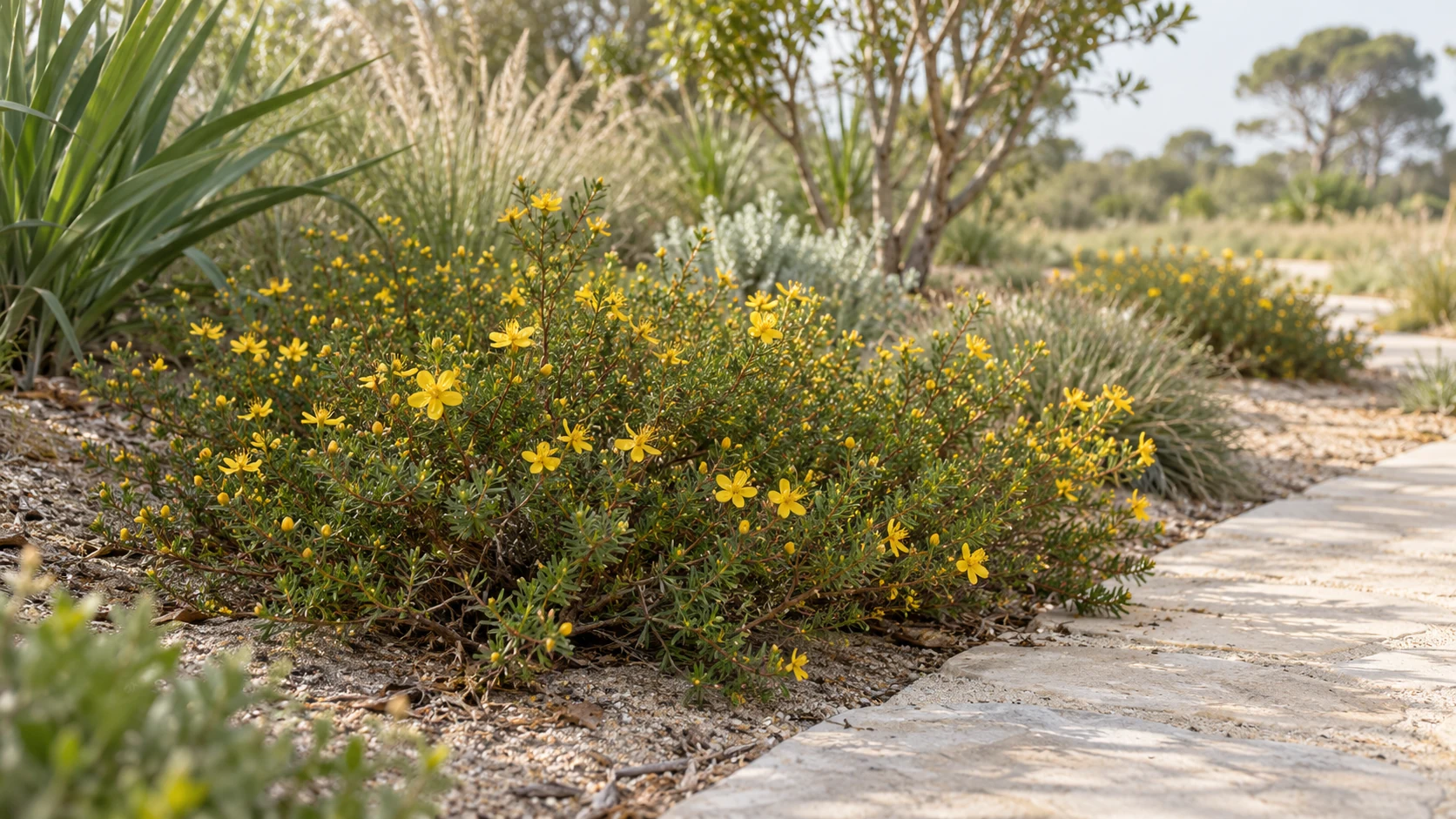
A low mound of fine foliage and yellow flowers can soften a sunny garden without building a visual wall. Plan this smaller native as a repeatable foreground layer, with enough room for its spreading outline and the pollinators its flowers attract.
Illustrative planting concept
Size and space
Mature range: 1–2 ft high × 1–2 ft wide.
FNPS lists 1–2 ft high and wide; the Florida Wildflower Foundation notes spread can exceed 2 ft. Leave a little flexibility at the edge instead of treating the diagram as a hard limit. The installed example is 6 inches high and 9 inches wide.
Compare with a six-foot person: installed example 0.5 ft high by 0.75 ft wide. This example is not a fixed pot size or a growth timeline.
Full sun · Well-drained sandy soil; establishment water, then match watering to dry periods. · Evergreen foliage; yellow blooms in the warmer months, with timing that varies by site.
Where it works around Pensacola
The Florida Wildflower Foundation places this native in the central and western Panhandle as well as the peninsula. Use a sunny, freely draining bed around Pensacola. Keep it out of direct salt spray and saltwater flooding.
Low native border
Sunny flowering layer
Open sandy garden
Pollinator planting
Small-scale foliage contrast
Can the view stay open?
Use the low layer where seeing across a bed matters. Check the mature plants behind it too, particularly beside a driveway, seating area or pool fence.
Where do people pause?
Give flowering plants space beside benches and narrow paths so visitors can enjoy them without brushing directly through the blooms.
Can the planting be renewed?
Keep the bed accessible for replacing individual plants over time. Permanent edging and lighting should not depend on every small shrub staying in place forever.
Is the water plan appropriate?
A fine sandy foreground and a damp rear bed may need separate care. Group plants by the conditions they need, then compose the colors.
Before it goes on the plan
Is this the St. John’s wort sold as a supplement?
No. This native ornamental is a different species. Do not use it as a food, tea or home remedy.
Does a one-foot shrub need a real planting bed?
Yes. Its spread, neighbors and maintenance access still belong on the plan. Small plants can be crowded just as easily as large ones.
Is it a salt-spray plant?
Do not choose it for direct ocean spray or brackish flooding. A sandy coastal yard can include sheltered areas with very different exposure.
Pairing ideas
Coastal False Rosemary: Coastal False Rosemary adds gray-green foliage and lavender flowers in a compatible sunny, sandy bed, with separate room for each mound.
Schilling’s Dwarf Yaupon Holly: Place Schilling’s Dwarf Yaupon farther back where its much broader mature canopy will not overtake the low flowering layer.
{"key":"hypericum","id":"PLT-HYPE-TENUIFOLIUM","slug":"atlantic-st-johns-wort","name":"Atlantic St. John’s Wort","botanical":"Hypericum tenuifolium","eyebrow":"A little native shrub with a sunny role","benefit":"Keep the foreground low and lively.","intro":"A low mound of fine foliage and yellow flowers can soften a sunny garden without building a visual wall. Plan this smaller native as a repeatable foreground layer, with enough room for its spreading outline and the pollinators its flowers attract.","h":[1,2],"w":[1,2],"install":[0.5,0.75],"color":"#789354","habit":"round","light":"Full sun","lightTags":["sun"],"water":"Well-drained sandy soil; establishment water, then match watering to dry periods.","season":"Evergreen foliage; yellow blooms in the warmer months, with timing that varies by site.","care":"A shorter-lived shrub: allow for eventual renewal rather than treating it as permanent screening.","site":"The Florida Wildflower Foundation places this native in the central and western Panhandle as well as the peninsula. Use a sunny, freely draining bed around Pensacola. Keep it out of direct salt spray and saltwater flooding.","sizeNote":"FNPS lists 1–2 ft high and wide; the Florida Wildflower Foundation notes spread can exceed 2 ft. Leave a little flexibility at the edge instead of treating the diagram as a hard limit. The installed example is 6 inches high and 9 inches wide.","uses":["Low native border","Sunny flowering layer","Open sandy garden","Pollinator planting","Small-scale foliage contrast"],"checks":[["Can the view stay open?","Use the low layer where seeing across a bed matters. Check the mature plants behind it too, particularly beside a driveway, seating area or pool fence."],["Where do people pause?","Give flowering plants space beside benches and narrow paths so visitors can enjoy them without brushing directly through the blooms."],["Can the planting be renewed?","Keep the bed accessible for replacing individual plants over time. Permanent edging and lighting should not depend on every small shrub staying in place forever."],["Is the water plan appropriate?","A fine sandy foreground and a damp rear bed may need separate care. Group plants by the conditions they need, then compose the colors."]],"faq":[["Is this the St. John’s wort sold as a supplement?","No. This native ornamental is a different species. Do not use it as a food, tea or home remedy."],["Does a one-foot shrub need a real planting bed?","Yes. Its spread, neighbors and maintenance access still belong on the plan. Small plants can be crowded just as easily as large ones."],["Is it a salt-spray plant?","Do not choose it for direct ocean spray or brackish flooding. A sandy coastal yard can include sheltered areas with very different exposure."]],"sources":[["Florida Native Plant Society","https://www.fnps.org/plant/hypericum-tenuifolium"],["Florida Wildflower Foundation","https://www.flawildflowers.org/flower-friday-hypericum-tenuifolium/"]],"companions":[{"slug":"coastal-false-rosemary","name":"Coastal False Rosemary","title":"Mix two fine-textured natives","reason":"Coastal False Rosemary adds gray-green foliage and lavender flowers in a compatible sunny, sandy bed, with separate room for each mound.","image":{"id":"6a9fefd2b5d71773d64bf03b","url":"https://cdn.prod.website-files.com/6a975baac0f352647862d847/6a9fefd2b5d71773d64bf03b_landova-rosemary-context-r07.webp","alt":"Illustrative planting concept with Coastal False Rosemary"}},{"slug":"schillings-dwarf-yaupon-holly","name":"Schilling’s Dwarf Yaupon Holly","title":"Add a larger evergreen form","reason":"Place Schilling’s Dwarf Yaupon farther back where its much broader mature canopy will not overtake the low flowering layer.","image":{"id":"6a9f5cd31fbbc23ce58d34ef","url":"https://cdn.prod.website-files.com/6a975baac0f352647862d847/6a9f5cd31fbbc23ce58d34ef_landova-schilling-context-r05.webp","alt":"Illustrative planting concept with Schilling’s Dwarf Yaupon Holly"}}],"wholeCaption":"Illustrative low, spreading form; a small shrub still needs room to expand.","detailCaption":"Illustrative five-petaled yellow flowers and tiny needlelike leaves.","wholeFit":"contain","native":true,"guideKind":"Native species guide","aliases":["Hypericum reductum","Atlantic Saint Johns Wort","St Johns Wort"],"images":{"context":{"id":"6a9fefd33c7f566bd6ccb150","url":"https://cdn.prod.website-files.com/6a975baac0f352647862d847/6a9fefd33c7f566bd6ccb150_landova-hypericum-context-r07.webp","alt":"Illustrative planting concept with Atlantic St. John’s Wort"},"whole":{"id":"6a9fefd3b1a5ea91411ff4c4","url":"https://cdn.prod.website-files.com/6a975baac0f352647862d847/6a9fefd3b1a5ea91411ff4c4_landova-hypericum-whole-r07.webp","alt":"Illustrative view of Atlantic St. John’s Wort overall form","fit":"contain"},"detail":{"id":"6a9fefd44ccdebd0a5006b85","url":"https://cdn.prod.website-files.com/6a975baac0f352647862d847/6a9fefd44ccdebd0a5006b85_landova-hypericum-detail-r07.webp","alt":"Illustrative view of Atlantic St. John’s Wort foliage and seasonal detail"}},"caution":"Low does not mean fixed: spread can exceed 2 ft. Allow eventual renewal and protect from direct salt exposure."}
LANDOVA / PLANTING DECISIONS
Choose plants with the whole space in mind.
Explore a planting goal, then compare the growing needs and mature size of individual plants.
LANDOVA is in beta
Join the launch waitlist.
We are not accepting paying clients yet. We expect to launch around January 2027 and may open sooner. Explore our free tools now, and sign up for launch updates and educational planning emails.
Thank you. Your waitlist signup has been received. We will email you with launch updates. No purchase or project booking has been made.
We could not save your signup. Please try again or email info@landovadesign.com.