Fine succulent leaves with airy orange or yellow flowers
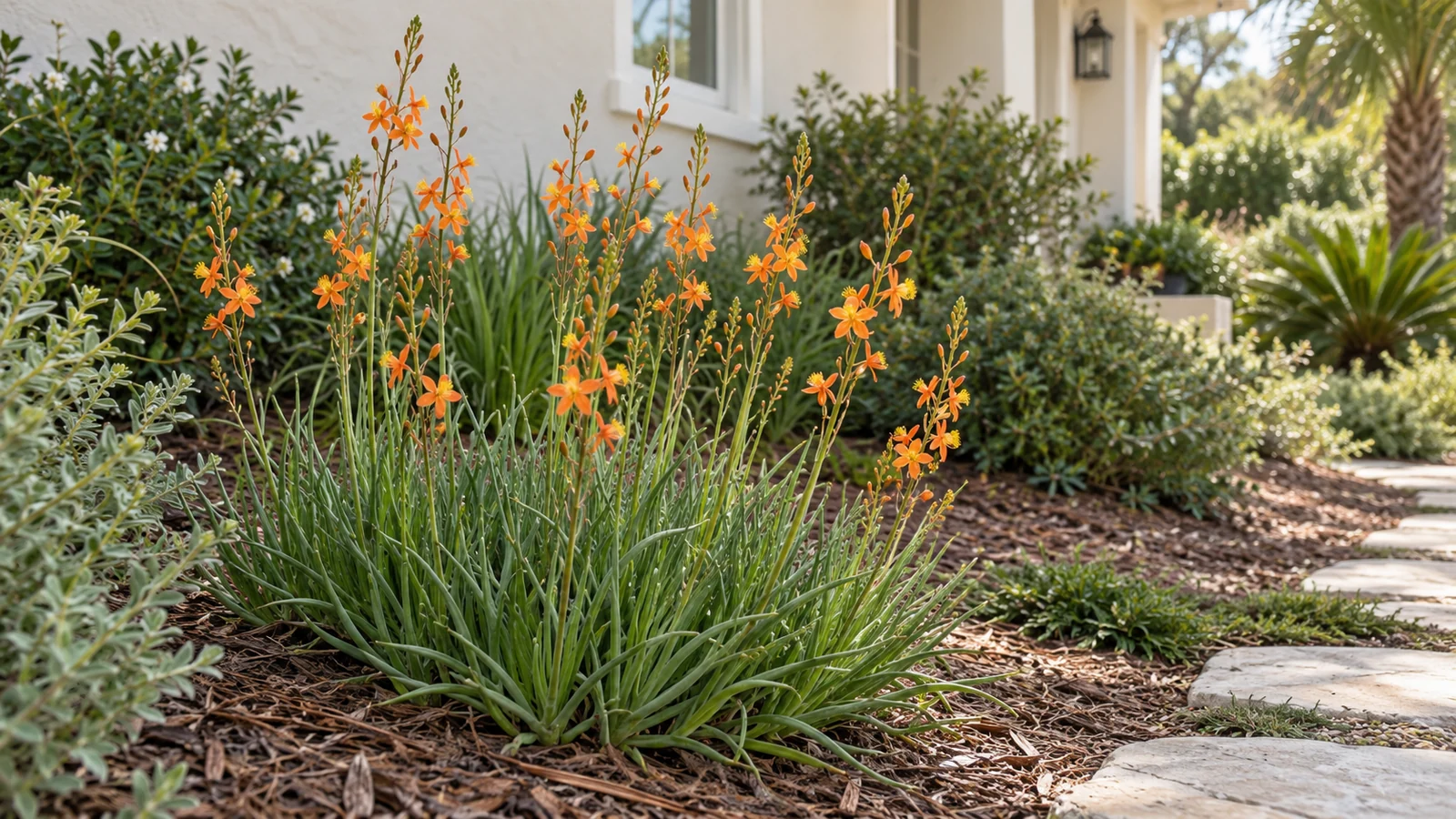
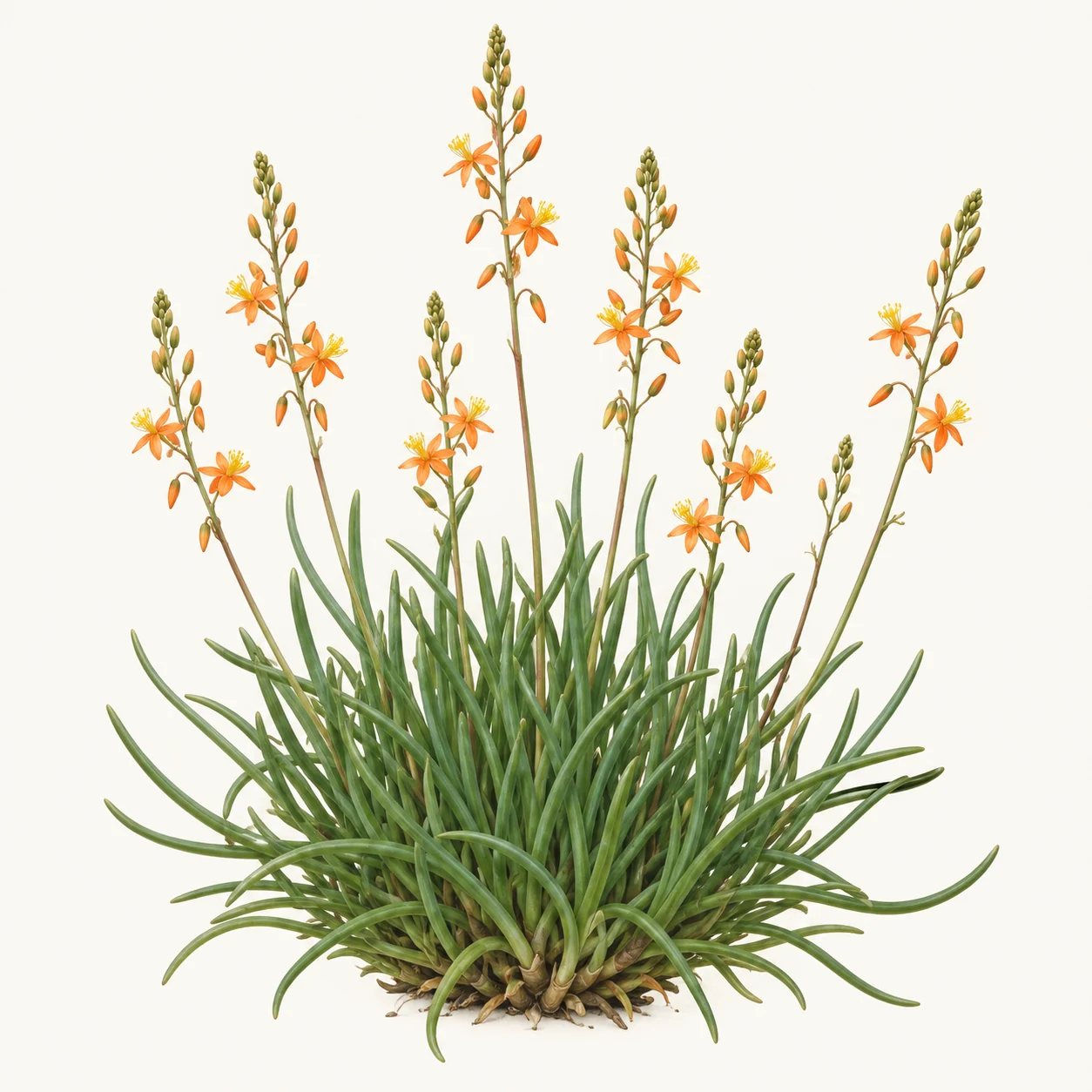
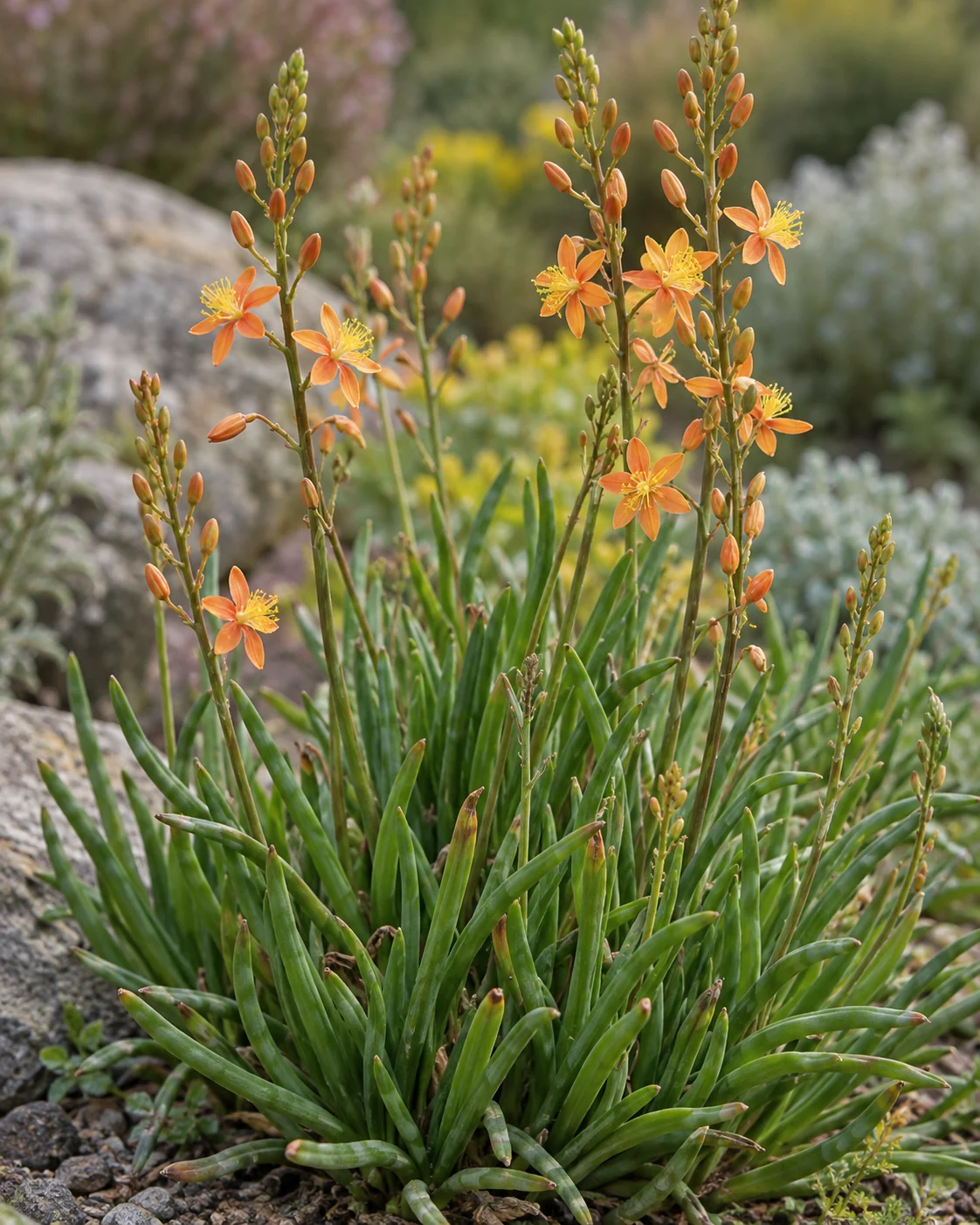
Bulbine offers a lighter, finer-textured succulent accent than an agave or large aloe. Slender fleshy leaves form a low expanding clump, with small starry flowers carried above them on thin stalks. The orange-flowered form illustrated is representative; yellow flowers and named selections are also available.
Before you choose: Cold exposure is the key local limitation. UF/IFAS places bulbine in zones 9–11 and notes tolerance only into the low twenties Fahrenheit. In colder Pensacola-area locations, treat survival as uncertain and use a protected site or a movable container.
Illustrative planting concept
Size and space
Typical height: 12–24 in. Typical spread: Up to 48 in.
Foliage is commonly about 12 inches high, while flower stems can reach roughly 24 inches. An established clump may spread to about 4 feet, so it is not automatically a tiny edging plant. Leave room for lateral growth, or plan to divide the clump. The size view includes the taller flower stems.
Installed example: 6 in high × 6 in wide. This is an illustrative size, not a pot-size or growth-timeline promise.
Sun to part shade · Low after establishment; excellent drainage · Warm-season flowers; cold-sensitive locally
Care: Remove old flower stalks; divide spreading clumps
Know the whole plant
Illustrative overall form of Bulbine. The nursery selection, season and site affect appearance.Illustrative foliage and seasonal detail of Bulbine; confirm the botanical name and selection on the nursery label.
Where it works around Pensacola
A sunny, sharply drained bed suits bulbine better than a routinely wet pocket in an irrigated lawn. Sandy or lean soil can be useful when water drains away. Keep it near the house or a patio only where the microclimate is suitable, and avoid relying on it as the sole plant that must look good through every winter.
Add fine succulent texture to a sunny, draining mixed bed.
Use airy flower stems near a patio where small details are visible.
Place in a container that can be moved for severe cold.
Pair with compatible dry-site plants in a sheltered garden.
Soften a bed edge while keeping the expanding clump clear of paving.
How dry can it grow?
Established bulbine can manage with relatively little water, but new plants need establishment care. Avoid allowing a newly planted root ball to dry completely.
What soil should be avoided?
Persistent wetness and poorly drained soil are poor starting points. Check where stormwater collects before selecting a location.
What about winter?
Cold injury and plant loss are possible locally. A sheltered placement may help, but it does not create a guarantee; a movable container offers more flexibility.
How much maintenance?
Remove old flower stalks for neatness and divide clumps that outgrow their space. Check the selected cultivar’s growth and seeding behavior.
Before it goes on the plan
Is every orange bulbine ‘Hallmark’?
No. Confirm the cultivar on the nursery label. This guide illustrates an orange-flowered form without assigning it to a named cultivar.
Can it fit a narrow strip?
Only with careful spacing and management. The foliage looks delicate, but the clump can become several feet wide and overlap adjacent surfaces.
Should it be used throughout the property?
Use it selectively where drainage and winter exposure fit. More cold-tolerant plants should provide the dependable framework in exposed or colder gardens.
Pairing ideas
Blanket Flower: Blanket flower can add a broader flower shape in a sunny, draining bed; allow for its own seasonal changes.
Pink Muhly Grass: Pink muhly provides a taller clump behind bulbine, with adequate separation for both to spread.
Blue Rug Juniper: Blue Rug juniper offers a spreading blue-green foreground in a compatible sunny, well-drained location.
{"key":"bulbine","name":"Bulbine","botanical":"Bulbine frutescens","slug":"bulbine","id":"PLT-BULB-FRUT","type":"accents","h":[1,2],"w":[4,4],"install":[0.5,0.5],"native":false,"accentGroup":"perennial","accentForm":"bulbine","light":"Sun to part shade","lightTags":["sun","part"],"water":"Low after establishment; excellent drainage","season":"Warm-season flowers; cold-sensitive locally","care":"Remove old flower stalks; divide spreading clumps","benefit":"Fine succulent leaves with airy orange or yellow flowers","intro":"Bulbine offers a lighter, finer-textured succulent accent than an agave or large aloe. Slender fleshy leaves form a low expanding clump, with small starry flowers carried above them on thin stalks. The orange-flowered form illustrated is representative; yellow flowers and named selections are also available.","caution":"Cold exposure is the key local limitation. UF/IFAS places bulbine in zones 9–11 and notes tolerance only into the low twenties Fahrenheit. In colder Pensacola-area locations, treat survival as uncertain and use a protected site or a movable container.","sizeNote":"Foliage is commonly about 12 inches high, while flower stems can reach roughly 24 inches. An established clump may spread to about 4 feet, so it is not automatically a tiny edging plant. Leave room for lateral growth, or plan to divide the clump. The size view includes the taller flower stems.","site":"A sunny, sharply drained bed suits bulbine better than a routinely wet pocket in an irrigated lawn. Sandy or lean soil can be useful when water drains away. Keep it near the house or a patio only where the microclimate is suitable, and avoid relying on it as the sole plant that must look good through every winter.","uses":["Add fine succulent texture to a sunny, draining mixed bed.","Use airy flower stems near a patio where small details are visible.","Place in a container that can be moved for severe cold.","Pair with compatible dry-site plants in a sheltered garden.","Soften a bed edge while keeping the expanding clump clear of paving."],"checks":[["How dry can it grow?","Established bulbine can manage with relatively little water, but new plants need establishment care. Avoid allowing a newly planted root ball to dry completely."],["What soil should be avoided?","Persistent wetness and poorly drained soil are poor starting points. Check where stormwater collects before selecting a location."],["What about winter?","Cold injury and plant loss are possible locally. A sheltered placement may help, but it does not create a guarantee; a movable container offers more flexibility."],["How much maintenance?","Remove old flower stalks for neatness and divide clumps that outgrow their space. Check the selected cultivar’s growth and seeding behavior."]],"faq":[["Is every orange bulbine ‘Hallmark’?","No. Confirm the cultivar on the nursery label. This guide illustrates an orange-flowered form without assigning it to a named cultivar."],["Can it fit a narrow strip?","Only with careful spacing and management. The foliage looks delicate, but the clump can become several feet wide and overlap adjacent surfaces."],["Should it be used throughout the property?","Use it selectively where drainage and winter exposure fit. More cold-tolerant plants should provide the dependable framework in exposed or colder gardens."]],"sources":[["UF/IFAS: Bulbine","https://gardeningsolutions.ifas.ufl.edu/plants/ornamentals/bulbine/"]],"unit":"in","heightLabel":"Typical height","spreadLabel":"Typical spread","heightText":"12–24 in","spreadText":"Up to 48 in","sizeSummary":"12–24 in high × up to 48 in wide","color":"#70815a","bloomColor":"#d78c43","guideKind":"Flowering + accent plant","eyebrow":"FLOWERS + FOLIAGE / FORM + SEASON","aliases":["Orange bulbine","Yellow bulbine","succulent accent","orange","yellow","succulent"],"goals":["color"],"wholeCaption":"Illustrative overall form of Bulbine. The nursery selection, season and site affect appearance.","detailCaption":"Illustrative foliage and seasonal detail of Bulbine; confirm the botanical name and selection on the nursery label.","images":{"context":{"id":"6aa09dc34ac77bd28cb4514c","url":"https://cdn.prod.website-files.com/6a975baac0f352647862d847/6aa09dc34ac77bd28cb4514c_landova-accent-bulbine-context.webp","alt":"Illustrative planting concept with Bulbine","width":1600,"height":900},"whole":{"id":"6aa09dc36c9254bb15d4c4e7","url":"https://cdn.prod.website-files.com/6a975baac0f352647862d847/6aa09dc36c9254bb15d4c4e7_landova-accent-bulbine-whole.webp","alt":"Illustrative whole-plant form of Bulbine","width":1254,"height":1254,"fit":"contain"},"detail":{"id":"6aa09dc3cedf2f2af1d71b47","url":"https://cdn.prod.website-files.com/6a975baac0f352647862d847/6aa09dc3cedf2f2af1d71b47_landova-accent-bulbine-detail.webp","alt":"Illustrative foliage and seasonal detail of Bulbine","width":1122,"height":1402}},"companions":[{"slug":"blanket-flower","name":"Blanket Flower","title":"Dry-site flowers","reason":"Blanket flower can add a broader flower shape in a sunny, draining bed; allow for its own seasonal changes.","image":{"id":"6aa093d53783fcdd7c479a46","url":"https://cdn.prod.website-files.com/6a975baac0f352647862d847/6aa093d53783fcdd7c479a46_landova-accent-blanket-context.webp","alt":"Illustrative planting concept with Blanket Flower","width":1600,"height":900}},{"slug":"pink-muhly-grass","name":"Pink Muhly Grass","title":"Larger fine texture","reason":"Pink muhly provides a taller clump behind bulbine, with adequate separation for both to spread.","image":{"id":"6aa00228430659e428d61061","url":"https://cdn.prod.website-files.com/6a975baac0f352647862d847/6aa00228430659e428d61061_landova-grass-muhly-context.webp","alt":"Illustrative planting concept with Pink Muhly Grass","width":1600,"height":900}},{"slug":"blue-rug-juniper","name":"Blue Rug Juniper","title":"Low evergreen contrast","reason":"Blue Rug juniper offers a spreading blue-green foreground in a compatible sunny, well-drained location.","image":{"id":"6aa052e38c44eb05710cacca","url":"https://cdn.prod.website-files.com/6a975baac0f352647862d847/6aa052e38c44eb05710cacca_landova-groundcover-bluerug-context.webp","alt":"Illustrative planting concept with Blue Rug Juniper","width":1600,"height":900}}]}
LANDOVA / PLANTING DECISIONS
Choose plants with the whole space in mind.
Explore a planting goal, then compare the growing needs and mature size of individual plants.
LANDOVA is in beta
Join the launch waitlist.
We are not accepting paying clients yet. We expect to launch around January 2027 and may open sooner. Explore our free tools now, and sign up for launch updates and educational planning emails.
Thank you. Your waitlist signup has been received. We will email you with launch updates. No purchase or project booking has been made.
We could not save your signup. Please try again or email info@landovadesign.com.