Coleus brings burgundy, pink, lime and other leaf colors to a warm-season planting. It is especially useful where the design needs a block of color rather than a short burst of bloom. Repeat one compatible selection for a calmer effect, or use a single vivid plant as the focus of a container arrangement.
Before you choose: Sun tolerance and final size vary greatly by selection. Choose a sun-tolerant cultivar for a sunny site rather than assuming all coleus can take hot afternoon exposure. Treat it as seasonal color in the Pensacola area, not a permanent evergreen shrub.
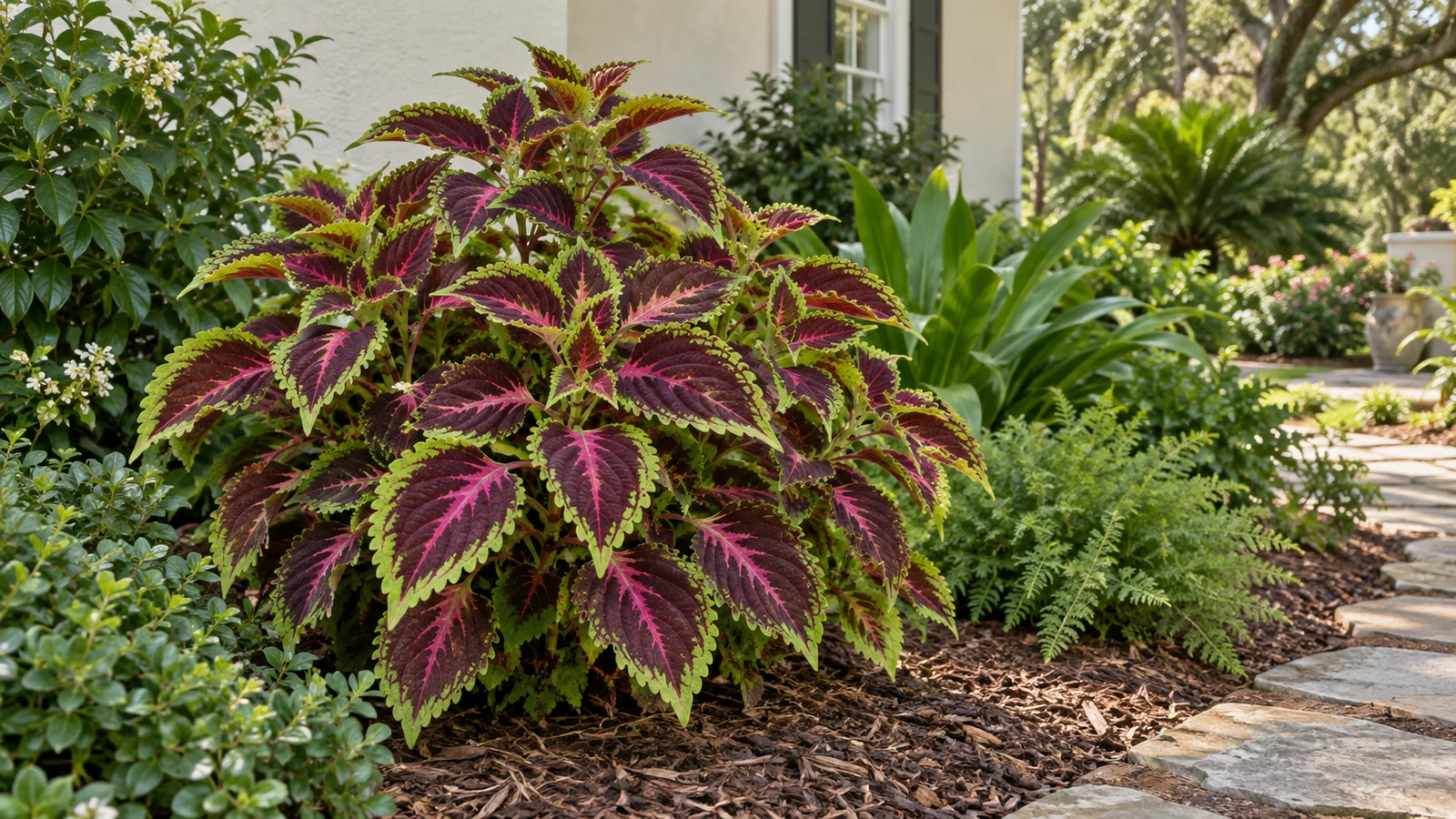
Illustrative planting concept
Size and space
Typical height: 6–36 in. Typical spread: 6–36 in.
The species reference covers a broad 6–36-inch range in both height and width. Compact, upright and trailing selections do not share one footprint. Confirm the nursery cultivar and leave room for branching. The multicolored foliage shown is representative, so match the actual leaf pattern when buying plants for a repeated design.
Installed example: 6 in high × 6 in wide. This is an illustrative size, not a pot-size or growth-timeline promise.
Part shade to shade; sun tolerance varies by selection · Moderate; evenly moist, well-drained soil · Warm-season foliage; frost-tender
Care: Water consistently; pinch or trim as the selection needs
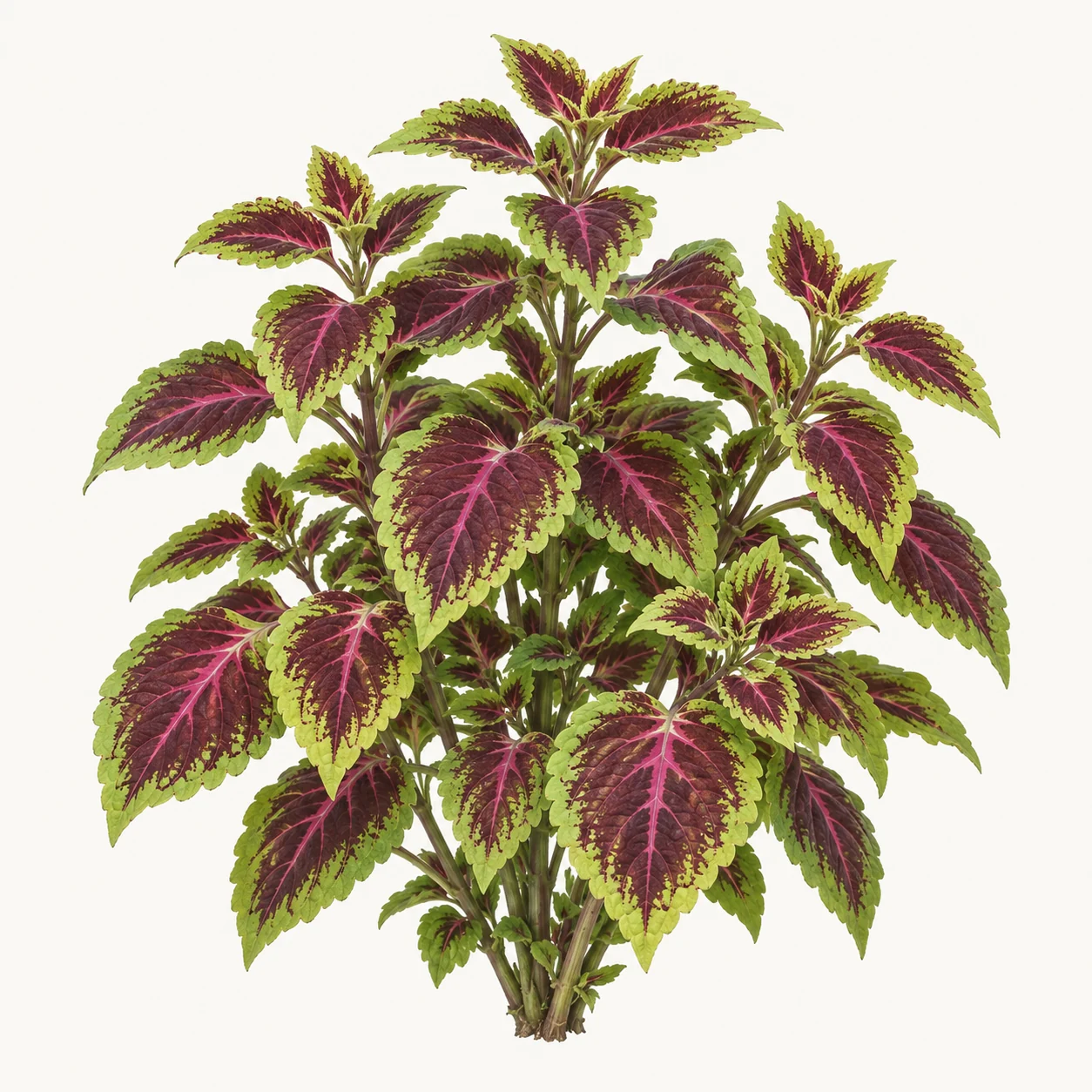
Know the whole plant
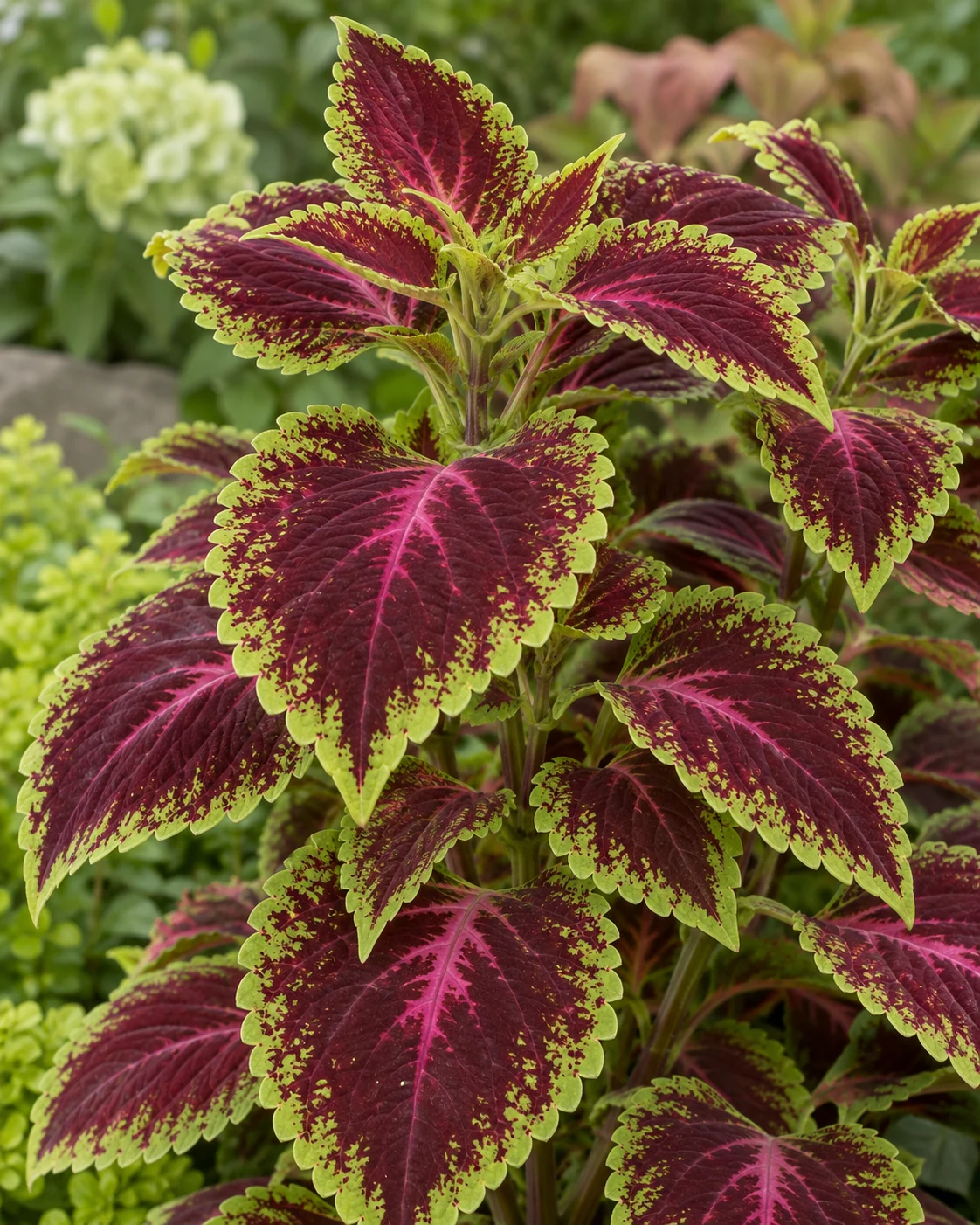
Illustrative overall form of Coleus. The nursery selection, season and site affect appearance.Illustrative foliage and seasonal detail of Coleus; confirm the botanical name and selection on the nursery label.
Where it works around Pensacola
A bed with suitable light, regular moisture and drainage gives coleus a better chance of looking full through warm weather. Shaded patios and protected entry planting can make its leaf colors particularly noticeable. Keep it within easy watering reach, especially in containers where a large leaf canopy can use water quickly.
Brighten a shaded entry bed with a repeated foliage color.
Create a warm-season focal plant in a porch container.
Contrast burgundy leaves with green shrubs or ground covers.
Fill a planned seasonal pocket without changing permanent planting.
Use a compact named selection near the front of a small bed.
How much light?
Start with the cultivar’s label. Many forms suit part shade, while specifically selected sun-tolerant varieties can handle brighter positions. Watch for leaf stress after planting.
How much water?
Keep moisture reasonably even while allowing drainage. Check pots frequently in hot weather and avoid leaving containers standing in collected water.
Does it need pinching?
Some selections branch naturally; others benefit from pinching or trimming to maintain a fuller outline. Follow the selected plant’s needs instead of cutting every plant on a fixed schedule.
What happens in cold weather?
Coleus is frost-tender. Plan a seasonal changeover or another source of winter interest rather than expecting the summer foliage display to remain.
Before it goes on the plan
Is it grown mainly for flowers?
No. Its main design value is colored foliage. Flower spikes are secondary and may be removed when a fuller leafy appearance is the priority.
Can the illustration identify my cultivar?
No. Many cultivars have similar patterns. Use the nursery label to confirm size, light tolerance and the exact leaf color you want.
Will it work under dense trees?
Evaluate the light and root competition first. Deep dry shade is different from a watered part-shade bed, even if both are described as shaded.
Pairing ideas
Caladium: Caladium adds a different broad-leaf shape in a compatible shaded seasonal planting; check the light needs of both selections.
Wax Begonia: Wax begonia contributes seasonal flowers near coleus where moisture and light requirements overlap.
Cast Iron Plant: Cast iron plant offers a steady green backdrop in shade while coleus supplies replaceable warm-season color.
{"key":"coleus","name":"Coleus","botanical":"Coleus scutellarioides","slug":"coleus","id":"PLT-COLE-SCUT","type":"accents","h":[0.5,3],"w":[0.5,3],"install":[0.5,0.5],"native":false,"accentGroup":"foliage","accentForm":"coleus","light":"Part shade to shade; sun tolerance varies by selection","lightTags":["part","shade"],"water":"Moderate; evenly moist, well-drained soil","season":"Warm-season foliage; frost-tender","care":"Water consistently; pinch or trim as the selection needs","benefit":"Rich foliage color without waiting for flowers","intro":"Coleus brings burgundy, pink, lime and other leaf colors to a warm-season planting. It is especially useful where the design needs a block of color rather than a short burst of bloom. Repeat one compatible selection for a calmer effect, or use a single vivid plant as the focus of a container arrangement.","caution":"Sun tolerance and final size vary greatly by selection. Choose a sun-tolerant cultivar for a sunny site rather than assuming all coleus can take hot afternoon exposure. Treat it as seasonal color in the Pensacola area, not a permanent evergreen shrub.","sizeNote":"The species reference covers a broad 6–36-inch range in both height and width. Compact, upright and trailing selections do not share one footprint. Confirm the nursery cultivar and leave room for branching. The multicolored foliage shown is representative, so match the actual leaf pattern when buying plants for a repeated design.","site":"A bed with suitable light, regular moisture and drainage gives coleus a better chance of looking full through warm weather. Shaded patios and protected entry planting can make its leaf colors particularly noticeable. Keep it within easy watering reach, especially in containers where a large leaf canopy can use water quickly.","uses":["Brighten a shaded entry bed with a repeated foliage color.","Create a warm-season focal plant in a porch container.","Contrast burgundy leaves with green shrubs or ground covers.","Fill a planned seasonal pocket without changing permanent planting.","Use a compact named selection near the front of a small bed."],"checks":[["How much light?","Start with the cultivar’s label. Many forms suit part shade, while specifically selected sun-tolerant varieties can handle brighter positions. Watch for leaf stress after planting."],["How much water?","Keep moisture reasonably even while allowing drainage. Check pots frequently in hot weather and avoid leaving containers standing in collected water."],["Does it need pinching?","Some selections branch naturally; others benefit from pinching or trimming to maintain a fuller outline. Follow the selected plant’s needs instead of cutting every plant on a fixed schedule."],["What happens in cold weather?","Coleus is frost-tender. Plan a seasonal changeover or another source of winter interest rather than expecting the summer foliage display to remain."]],"faq":[["Is it grown mainly for flowers?","No. Its main design value is colored foliage. Flower spikes are secondary and may be removed when a fuller leafy appearance is the priority."],["Can the illustration identify my cultivar?","No. Many cultivars have similar patterns. Use the nursery label to confirm size, light tolerance and the exact leaf color you want."],["Will it work under dense trees?","Evaluate the light and root competition first. Deep dry shade is different from a watered part-shade bed, even if both are described as shaded."]],"sources":[["UF/IFAS: Coleus","https://gardeningsolutions.ifas.ufl.edu/plants/ornamentals/coleus/"],["NC State Extension: Coleus scutellarioides","https://plants.ces.ncsu.edu/plants/coleus-scutellarioides/"]],"unit":"in","heightLabel":"Typical height","spreadLabel":"Typical spread","heightText":"6–36 in","spreadText":"6–36 in","sizeSummary":"6–36 in high × 6–36 in wide; selection varies","color":"#713a4c","bloomColor":"#bb687f","guideKind":"Flowering + accent plant","eyebrow":"FLOWERS + FOLIAGE / FORM + SEASON","aliases":["Painted nettle","Solenostemon","Plectranthus scutellarioides","colorful foliage","burgundy","pink","lime","green","shade"],"goals":["color"],"wholeCaption":"Illustrative overall form of Coleus. The nursery selection, season and site affect appearance.","detailCaption":"Illustrative foliage and seasonal detail of Coleus; confirm the botanical name and selection on the nursery label.","images":{"context":{"id":"6aa09dc479a86859abfc7ce4","url":"https://cdn.prod.website-files.com/6a975baac0f352647862d847/6aa09dc479a86859abfc7ce4_landova-accent-coleus-context.webp","alt":"Illustrative planting concept with Coleus","width":1600,"height":900},"whole":{"id":"6aa09dc473424914f4e74a6f","url":"https://cdn.prod.website-files.com/6a975baac0f352647862d847/6aa09dc473424914f4e74a6f_landova-accent-coleus-whole.webp","alt":"Illustrative whole-plant form of Coleus","width":1254,"height":1254,"fit":"contain"},"detail":{"id":"6aa09dc480fe7a73c5a06ebb","url":"https://cdn.prod.website-files.com/6a975baac0f352647862d847/6aa09dc480fe7a73c5a06ebb_landova-accent-coleus-detail.webp","alt":"Illustrative foliage and seasonal detail of Coleus","width":1122,"height":1402}},"companions":[{"slug":"caladium","name":"Caladium","title":"Contrasting leaf shapes","reason":"Caladium adds a different broad-leaf shape in a compatible shaded seasonal planting; check the light needs of both selections.","image":{"id":"6aa093e3e788bb371fe2c981","url":"https://cdn.prod.website-files.com/6a975baac0f352647862d847/6aa093e3e788bb371fe2c981_landova-accent-caladium-context.webp","alt":"Illustrative planting concept with Caladium","width":1600,"height":900}},{"slug":"wax-begonia","name":"Wax Begonia","title":"Flowers beside foliage","reason":"Wax begonia contributes seasonal flowers near coleus where moisture and light requirements overlap.","image":{"id":"6aa093ddaf7952c7ec799d37","url":"https://cdn.prod.website-files.com/6a975baac0f352647862d847/6aa093ddaf7952c7ec799d37_landova-accent-begonia-context.webp","alt":"Illustrative planting concept with Wax Begonia","width":1600,"height":900}},{"slug":"cast-iron-plant","name":"Cast Iron Plant","title":"Permanent green background","reason":"Cast iron plant offers a steady green backdrop in shade while coleus supplies replaceable warm-season color.","image":{"id":"6aa052e4beb1621af788dce7","url":"https://cdn.prod.website-files.com/6a975baac0f352647862d847/6aa052e4beb1621af788dce7_landova-groundcover-castiron-context.webp","alt":"Illustrative planting concept with Cast Iron Plant","width":1600,"height":900}}]}
LANDOVA / PLANTING DECISIONS
Choose plants with the whole space in mind.
Explore a planting goal, then compare the growing needs and mature size of individual plants.
LANDOVA is in beta
Join the launch waitlist.
We are not accepting paying clients yet. We expect to launch around January 2027 and may open sooner. Explore our free tools now, and sign up for launch updates and educational planning emails.
Thank you. Your waitlist signup has been received. We will email you with launch updates. No purchase or project booking has been made.
We could not save your signup. Please try again or email info@landovadesign.com.