Give the spring garden a light, golden-yellow layer.
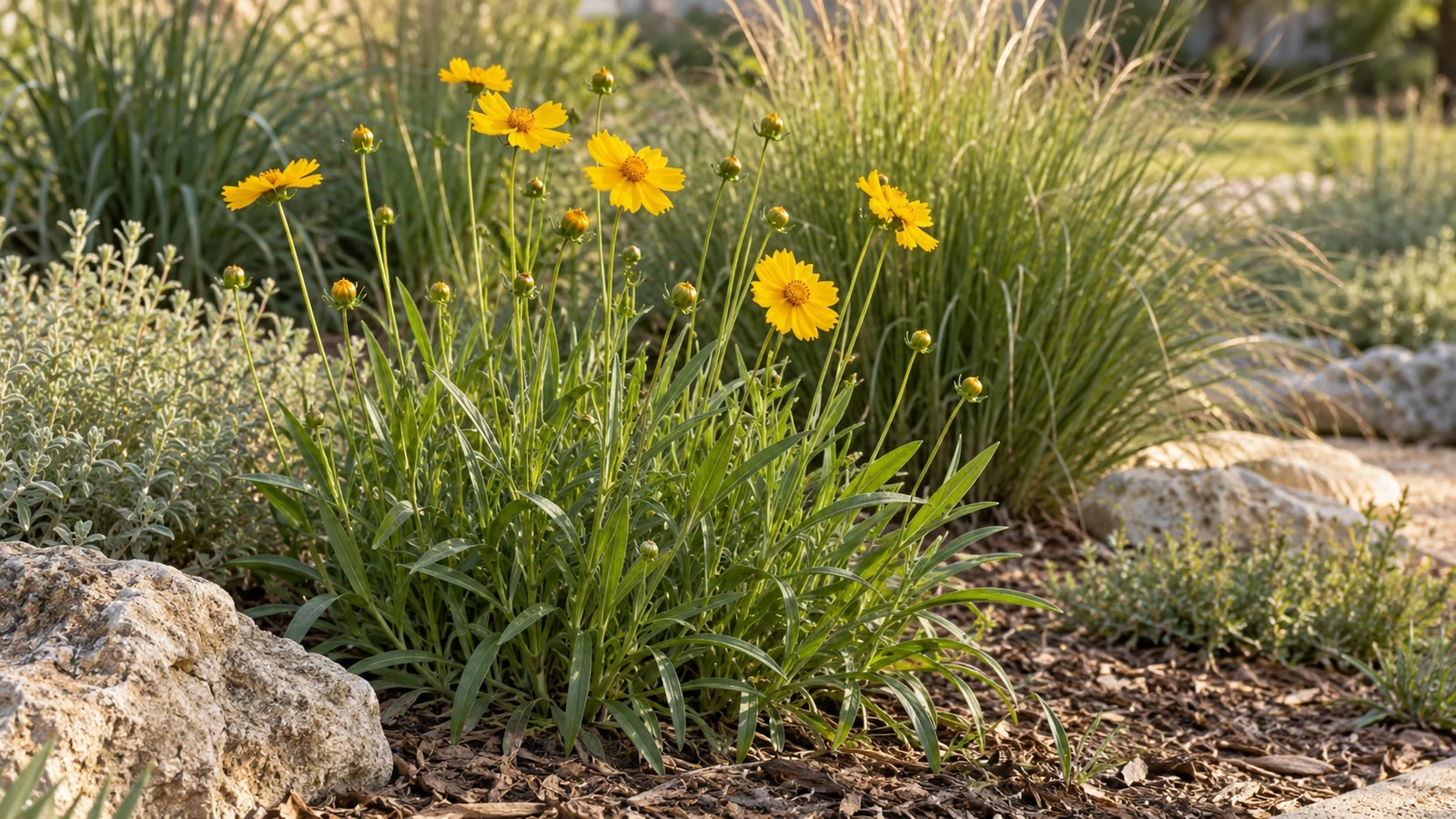
Lanceleaf Coreopsis lifts yellow daisy-like flowers above a lower clump of narrow green leaves. Its simple, open habit works well in a native flower bed, a small meadow-style area or a sunny border. The seasonal flower stems bring movement without creating a solid wall of foliage, making the plant easy to combine with separate evergreen structure.
Before you choose: This Florida native is a short-lived perennial that can seed around the garden. Its main display is in spring, and it becomes dormant in winter. Do not expect constant summer flowers or a uniform evergreen edge; plan the surrounding planting to carry the bed between bloom periods.
Illustrative planting concept
Size and space
Height in flower: 1.5–2.5 ft. Typical spread: 0.5–1.5 ft.
The Florida Native Plant Society gives a height of 1.5–2.5 ft and an individual spread of 0.5–1.5 ft. Height includes the flowering stems above the leaves. The diagram compares one plant with its reference footprint; seedlings can occupy additional space beyond that footprint and need their own management.
Installed example: 0.5 ft high × 0.5 ft wide. This is an illustrative size, not a pot-size or growth-timeline promise.
Full sun to part sun · Well-drained soil with moderate moisture; avoid persistent wetness · Mostly spring flowers; winter dormancy and a quieter summer appearance
Care: Keep selected seedheads; thin seedlings and renew short-lived plants
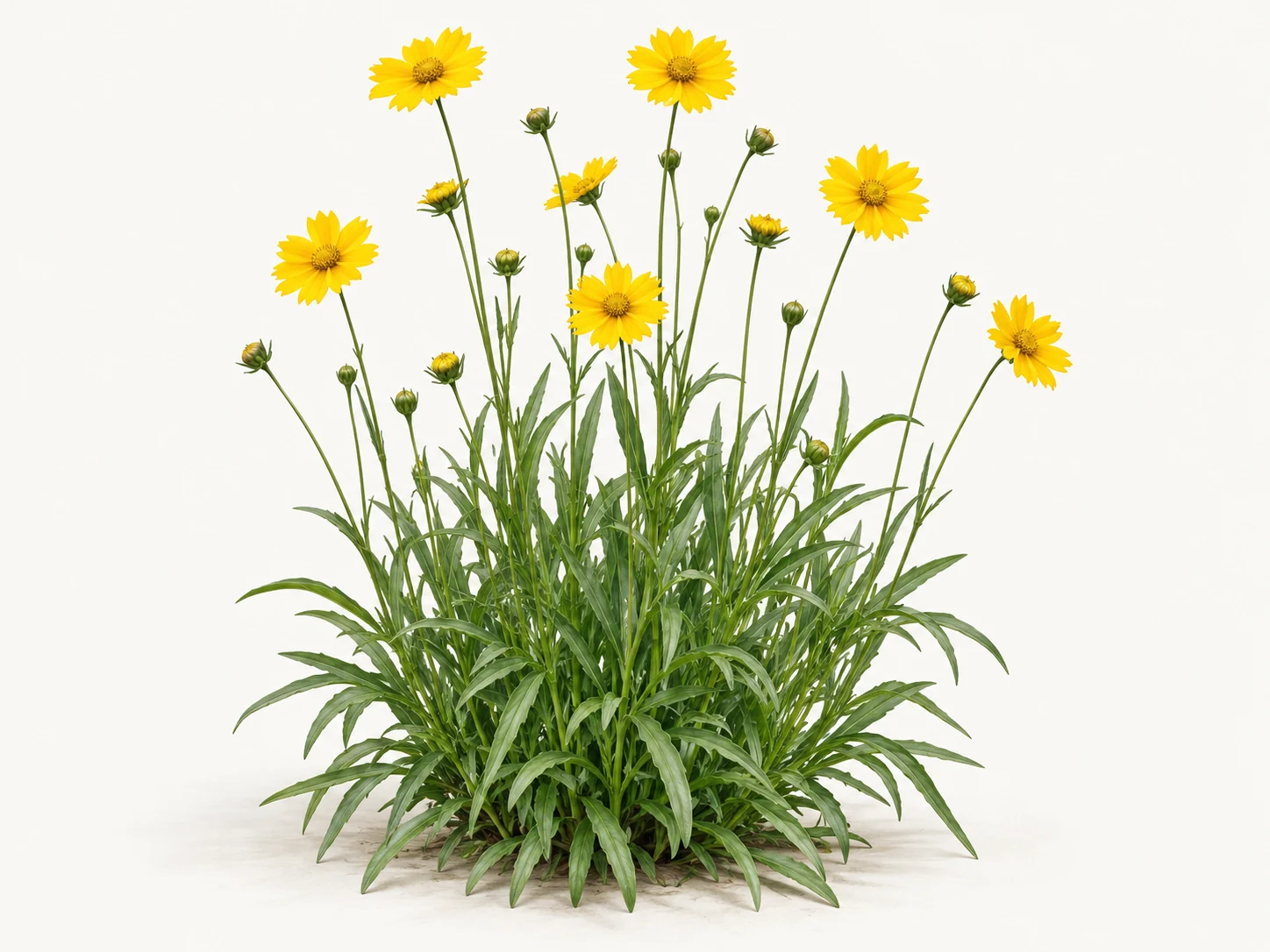
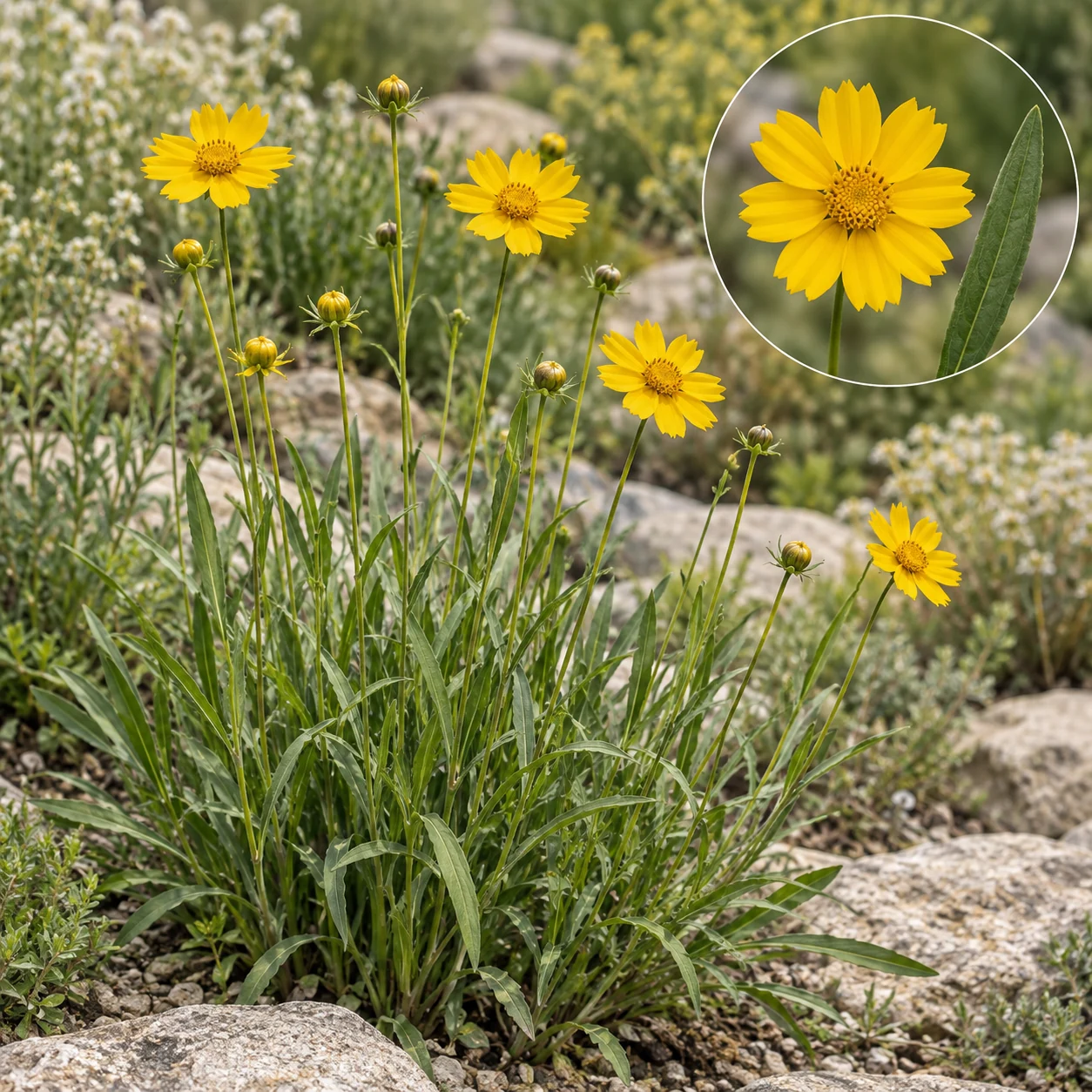
Know the whole plant
Illustrative overall form of Lanceleaf Coreopsis. The nursery selection, season and site affect appearance.Illustrative foliage and seasonal detail of Lanceleaf Coreopsis; confirm the botanical name and selection on the nursery label.
Where it works around Pensacola
Consider Lanceleaf Coreopsis for a Pensacola native bed with useful sun and drainage. A small patch where seedlings can be thinned is easier to manage than a narrow strip mixed tightly with slow-growing plants. Check summer moisture without keeping the crowns soggy. Local nursery-grown stock is a practical starting point when regional provenance matters.
A native spring-flower border
A small meadow-style planting
A pollinator-focused garden bed
A sunny edge beside a clear path
A golden accent among separate grass clumps
Where should new seedlings remain?
Choose the part of the bed where natural renewal is welcome. Thin crowded seedlings and remove those growing into paths or neighboring crowns.
What carries the view after spring?
Use foliage, later-flowering plants and evergreen structure nearby. A seasonal wildflower does not need to perform every job in the landscape.
Is the site exposed to salty water?
FNPS reports low tolerance of direct salt spray and no tolerance of saltwater flooding. Use a sheltered coastal garden position rather than assuming beachfront suitability.
Is the nursery species correct?
Coreopsis includes many species and cultivars. Confirm lanceolata; a different tickseed may bloom later, grow taller or prefer different moisture.
Before it goes on the plan
Is this Florida’s state wildflower?
Coreopsis is Florida’s state wildflower. Lanceleaf Coreopsis is one of several species in the group, with its own size and seasonal pattern.
Will it bloom all summer?
Its main display is spring, and flowering can finish earlier than some other coreopsis species. Use additional plants for a longer sequence of seasonal color.
Can I keep a few seedheads?
Yes. Allowing seed can help renew a short-lived planting and support wildlife. Watch where seedlings appear so the bed stays within the space you planned.
Pairing ideas
Little Bluestem: Little Bluestem can stand behind the flowers in a sunny, draining bed. Leave each crown its own space.
Scarlet Sage: Scarlet Sage can add later warm-season color in its own sunny position. Manage seedlings from both plants.
Schilling’s Dwarf Yaupon Holly: Dwarf Yaupon provides evergreen form farther back. Reserve enough open ground for the coreopsis to keep its sunlight.
{"key":"coreopsis","name":"Lanceleaf Coreopsis","botanical":"Coreopsis lanceolata","slug":"lanceleaf-coreopsis","id":"PLT-CORE-LANC","type":"accents","h":[1.5,2.5],"w":[0.5,1.5],"install":[0.5,0.5],"native":true,"accentGroup":"wildflower","accentForm":"daisy","light":"Full sun to part sun","lightTags":["sun","part"],"water":"Well-drained soil with moderate moisture; avoid persistent wetness","season":"Mostly spring flowers; winter dormancy and a quieter summer appearance","care":"Keep selected seedheads; thin seedlings and renew short-lived plants","benefit":"Give the spring garden a light, golden-yellow layer.","intro":"Lanceleaf Coreopsis lifts yellow daisy-like flowers above a lower clump of narrow green leaves. Its simple, open habit works well in a native flower bed, a small meadow-style area or a sunny border. The seasonal flower stems bring movement without creating a solid wall of foliage, making the plant easy to combine with separate evergreen structure.","caution":"This Florida native is a short-lived perennial that can seed around the garden. Its main display is in spring, and it becomes dormant in winter. Do not expect constant summer flowers or a uniform evergreen edge; plan the surrounding planting to carry the bed between bloom periods.","sizeNote":"The Florida Native Plant Society gives a height of 1.5–2.5 ft and an individual spread of 0.5–1.5 ft. Height includes the flowering stems above the leaves. The diagram compares one plant with its reference footprint; seedlings can occupy additional space beyond that footprint and need their own management.","site":"Consider Lanceleaf Coreopsis for a Pensacola native bed with useful sun and drainage. A small patch where seedlings can be thinned is easier to manage than a narrow strip mixed tightly with slow-growing plants. Check summer moisture without keeping the crowns soggy. Local nursery-grown stock is a practical starting point when regional provenance matters.","uses":["A native spring-flower border","A small meadow-style planting","A pollinator-focused garden bed","A sunny edge beside a clear path","A golden accent among separate grass clumps"],"checks":[["Where should new seedlings remain?","Choose the part of the bed where natural renewal is welcome. Thin crowded seedlings and remove those growing into paths or neighboring crowns."],["What carries the view after spring?","Use foliage, later-flowering plants and evergreen structure nearby. A seasonal wildflower does not need to perform every job in the landscape."],["Is the site exposed to salty water?","FNPS reports low tolerance of direct salt spray and no tolerance of saltwater flooding. Use a sheltered coastal garden position rather than assuming beachfront suitability."],["Is the nursery species correct?","Coreopsis includes many species and cultivars. Confirm lanceolata; a different tickseed may bloom later, grow taller or prefer different moisture."]],"faq":[["Is this Florida’s state wildflower?","Coreopsis is Florida’s state wildflower. Lanceleaf Coreopsis is one of several species in the group, with its own size and seasonal pattern."],["Will it bloom all summer?","Its main display is spring, and flowering can finish earlier than some other coreopsis species. Use additional plants for a longer sequence of seasonal color."],["Can I keep a few seedheads?","Yes. Allowing seed can help renew a short-lived planting and support wildlife. Watch where seedlings appear so the bed stays within the space you planned."]],"sources":[["Florida Native Plant Society: Lanceleaf Coreopsis","https://www.fnps.org/plant/coreopsis-lanceolata"],["UF/IFAS: Coreopsis","https://gardeningsolutions.ifas.ufl.edu/plants/ornamentals/coreopsis/"]],"unit":"ft","heightLabel":"Height in flower","spreadLabel":"Typical spread","heightText":"1.5–2.5 ft","spreadText":"0.5–1.5 ft","sizeSummary":"1.5–2.5 ft high × 0.5–1.5 ft wide","color":"#70815a","bloomColor":"#d3ad3f","guideKind":"Flowering + accent plant","eyebrow":"FLOWERS + FOLIAGE / FORM + SEASON","aliases":["Lanceleaf Coreopsis","Coreopsis lanceolata"],"goals":["color"],"wholeCaption":"Illustrative overall form of Lanceleaf Coreopsis. The nursery selection, season and site affect appearance.","detailCaption":"Illustrative foliage and seasonal detail of Lanceleaf Coreopsis; confirm the botanical name and selection on the nursery label.","images":{"context":{"id":"6aa093d762e8d111224989d1","url":"https://cdn.prod.website-files.com/6a975baac0f352647862d847/6aa093d762e8d111224989d1_landova-accent-coreopsis-context.webp","alt":"Illustrative planting concept with Lanceleaf Coreopsis","width":1600,"height":900},"whole":{"id":"6aa093d770670fadce05e782","url":"https://cdn.prod.website-files.com/6a975baac0f352647862d847/6aa093d770670fadce05e782_landova-accent-coreopsis-whole.webp","alt":"Illustrative whole-plant form of Lanceleaf Coreopsis","width":1448,"height":1086,"fit":"contain"},"detail":{"id":"6aa093d7608c9011a774e4a7","url":"https://cdn.prod.website-files.com/6a975baac0f352647862d847/6aa093d7608c9011a774e4a7_landova-accent-coreopsis-detail.webp","alt":"Illustrative foliage and seasonal detail of Lanceleaf Coreopsis","width":1254,"height":1254}},"companions":[{"slug":"little-bluestem","name":"Little Bluestem","title":"Add an upright seasonal texture","reason":"Little Bluestem can stand behind the flowers in a sunny, draining bed. Leave each crown its own space.","image":{"id":"6aa00d166a78cbdca0ff1a4e","url":"https://cdn.prod.website-files.com/6a975baac0f352647862d847/6aa00d166a78cbdca0ff1a4e_landova-grass-bluestem-context.webp","alt":"Illustrative planting concept with Little Bluestem","width":1600,"height":900}},{"slug":"scarlet-sage","name":"Scarlet Sage","title":"Extend the flower sequence","reason":"Scarlet Sage can add later warm-season color in its own sunny position. Manage seedlings from both plants.","image":{"id":"6aa093da22d595060ab68f44","url":"https://cdn.prod.website-files.com/6a975baac0f352647862d847/6aa093da22d595060ab68f44_landova-accent-scarlet-context.webp","alt":"Illustrative planting concept with Scarlet Sage","width":1600,"height":900}},{"slug":"schillings-dwarf-yaupon-holly","name":"Schilling’s Dwarf Yaupon Holly","title":"Frame a changing native foreground","reason":"Dwarf Yaupon provides evergreen form farther back. Reserve enough open ground for the coreopsis to keep its sunlight.","image":{"id":"6a9f5cd31fbbc23ce58d34ef","url":"https://cdn.prod.website-files.com/6a975baac0f352647862d847/6a9f5cd31fbbc23ce58d34ef_landova-schilling-context-r05.webp","alt":"Illustrative planting concept with Schilling’s Dwarf Yaupon Holly"}}]}
LANDOVA / PLANTING DECISIONS
Choose plants with the whole space in mind.
Explore a planting goal, then compare the growing needs and mature size of individual plants.
LANDOVA is in beta
Join the launch waitlist.
We are not accepting paying clients yet. We expect to launch around January 2027 and may open sooner. Explore our free tools now, and sign up for launch updates and educational planning emails.
Thank you. Your waitlist signup has been received. We will email you with launch updates. No purchase or project booking has been made.
We could not save your signup. Please try again or email info@landovadesign.com.