Use small red flowers to bring life to an open border.
Scarlet Sage has a loose, leafy base and slender stems carrying spaced red tubular flowers. Its airy habit lets color move through a planting without the heavy appearance of a solid red hedge. Hummingbirds and butterflies visit the flowers, making it a useful choice near a patio or garden path where the activity can be enjoyed.
Before you choose: This native sage is often annual or short-lived in the landscape and can reseed readily. Expect winter loss or reduced growth after cold weather rather than permanent evergreen structure. The straight red-flowered species differs from compact bedding salvias and from pink, white or dwarf selections of the same species.
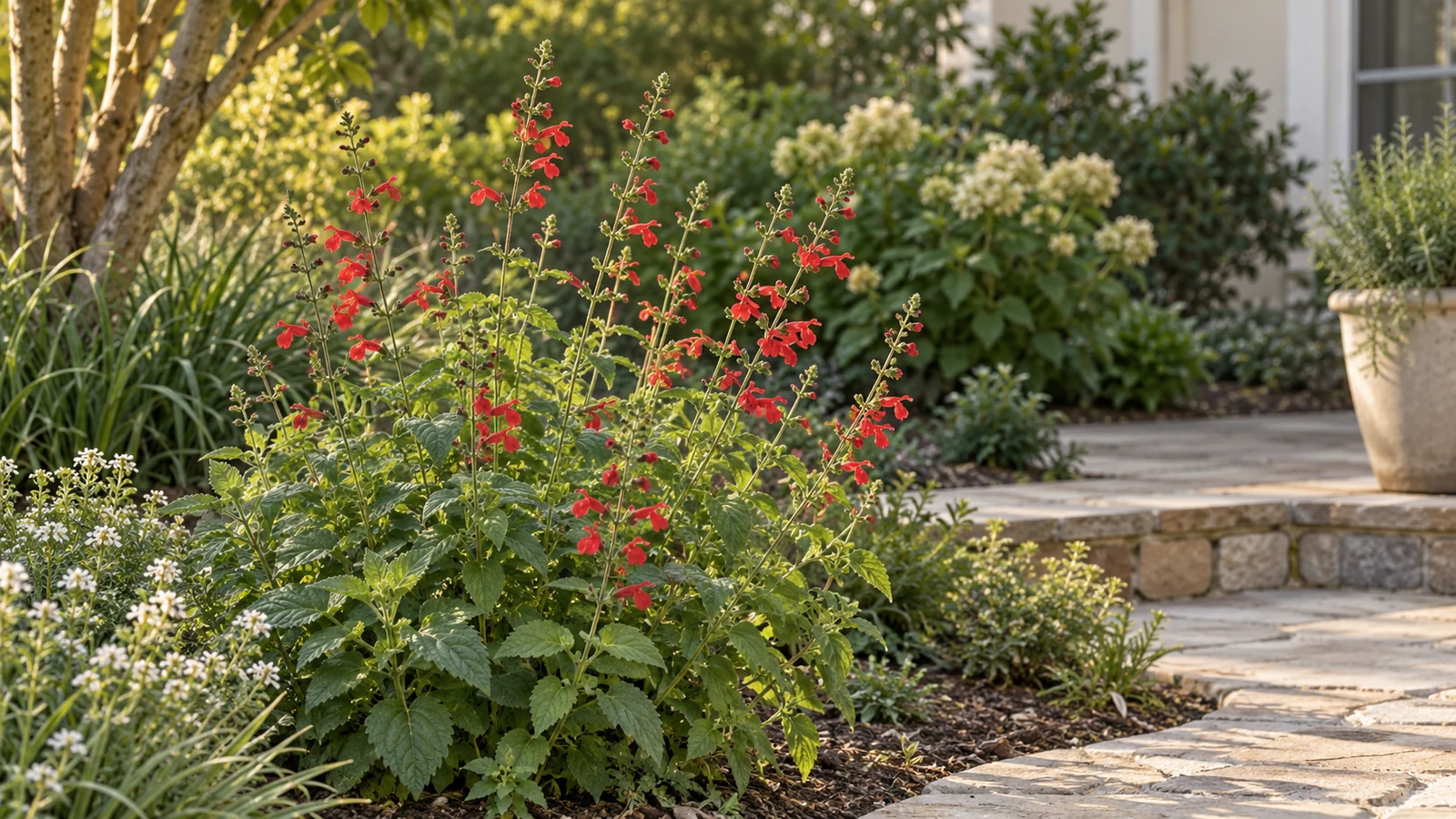
Illustrative planting concept
Size and space
Height in flower: 1–3 ft. Typical spread: 1–2.5 ft.
NC State lists a height of 1–3 ft and a width of 1–2.5 ft. Flower stems are included in that height. The measured view reserves an individual plant’s larger footprint; it does not show the extra area that seedlings may occupy. Confirm the selection if a precise low height is important beside paving.
Installed example: 0.5 ft high × 0.5 ft wide. This is an illustrative size, not a pot-size or growth-timeline promise.
Full sun to part shade · Well-drained soil; water new roots, then adjust to rainfall and dry spells · Red flowers through warm weather; cold may end the display
Care: Trim after flowering if needed; manage self-sown seedlings
Know the whole plant
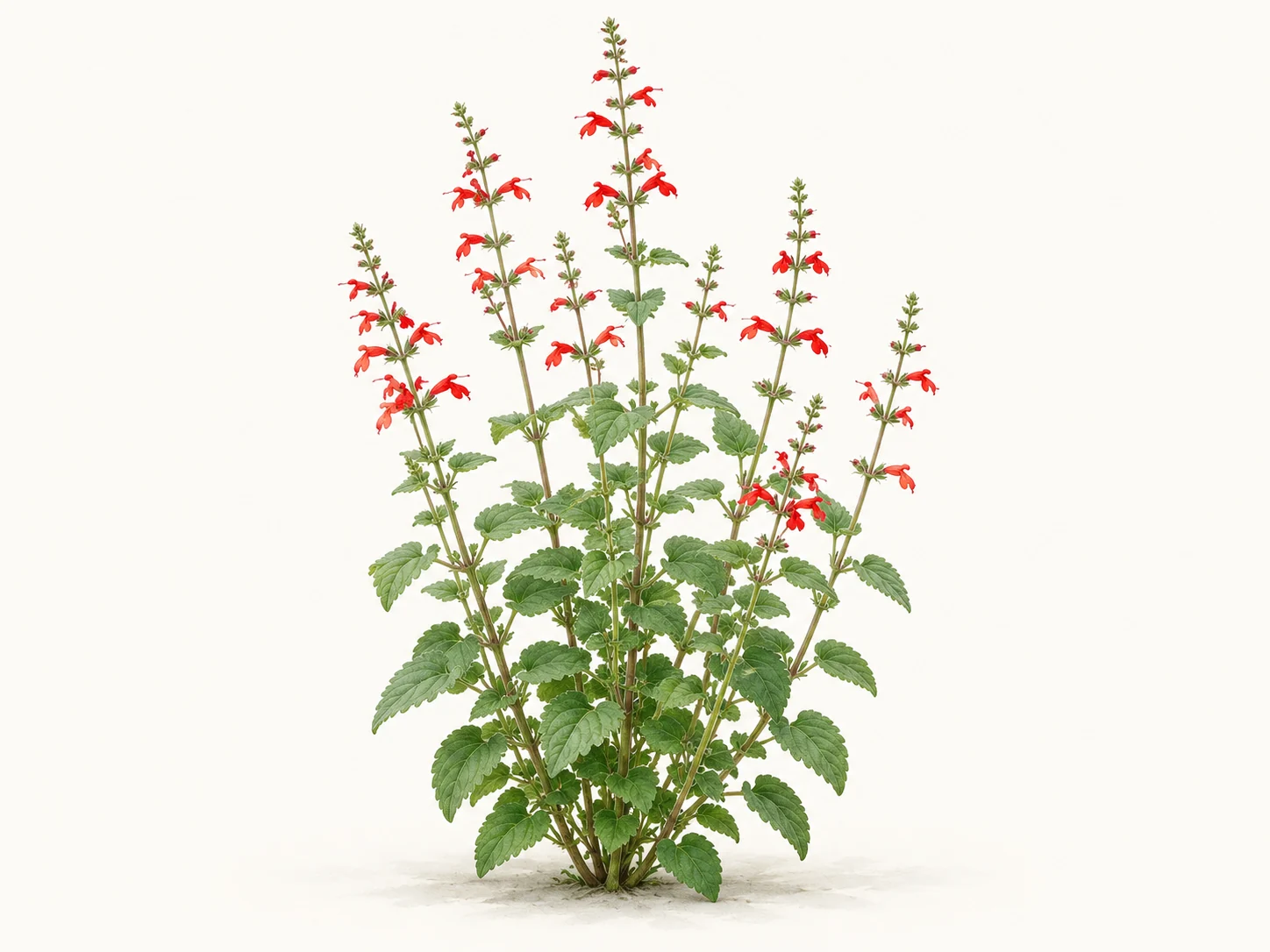
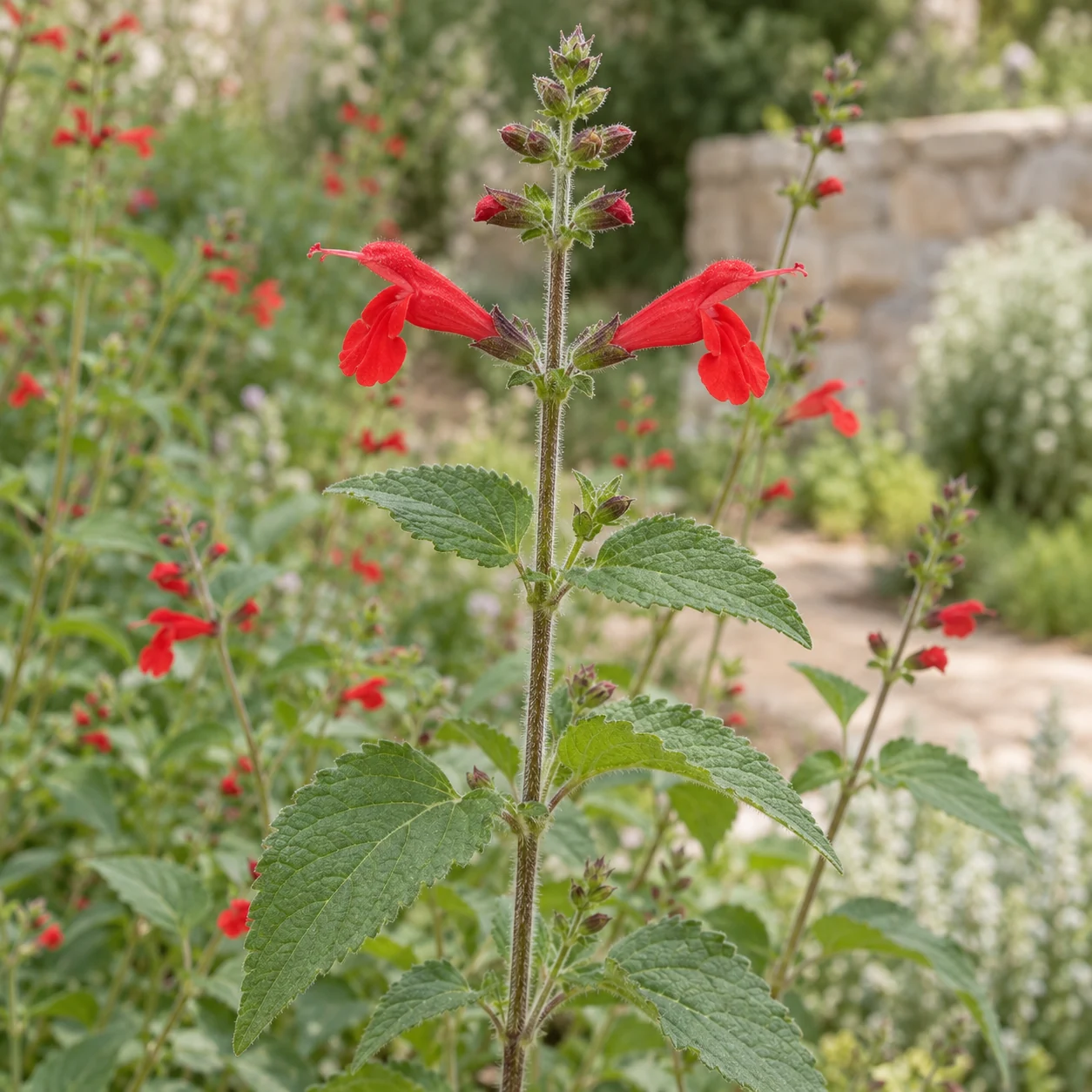
Illustrative overall form of Scarlet Sage. The nursery selection, season and site affect appearance.Illustrative foliage and seasonal detail of Scarlet Sage; confirm the botanical name and selection on the nursery label.
Where it works around Pensacola
Consider Scarlet Sage for a sunny or partly shaded Pensacola flower bed with good drainage. Let it sit in small groups among separate structural plants instead of packing every opening with seedlings. An accessible edge makes trimming and renewal easier. Use seasonal flowers as an adjustable layer while shrubs or other suitable plants hold the main layout.
A hummingbird-focused flower border
A small red accent near a patio
An informal native garden opening
A warm-season container with drainage
A later-flowering layer near spring wildflowers
How much red belongs in the view?
Repeat a few small groups and leave plain foliage between them. The flower color can be strong without filling the entire bed.
Where are seedlings welcome?
Keep the intended patch reachable. Remove seedlings from paving gaps and neighboring crowns before they become established.
Will the winter view still work?
Cold can remove the flowering layer. Check the backdrop from the house so the bed has shape when the sage is absent.
Is this the correct sage?
Look for Salvia coccinea on the label. Culinary sage, tropical bedding salvias and other native sages have different forms and growing needs.
Before it goes on the plan
Is this a hummingbird plant?
Its tubular flowers attract hummingbirds, and butterflies also visit. Place it where visitors can enjoy the flowers while keeping the main walking route clear.
Will it stay only one foot tall?
Some compact selections can, but the species range extends to three feet. Confirm the cultivar rather than treating the lower number as a mature limit.
Does it need to be replaced?
Individual plants may be short-lived, especially after cold weather. Selected seedlings or new nursery plants can renew the display where the site continues to suit it.
Pairing ideas
Lanceleaf Coreopsis: Coreopsis offers spring flowers in a compatible draining bed. Manage the seedling area for both plants.
Pink Muhly Grass: Pink Muhly can provide a taller background in sun. Keep sage plants outside its crown and mature spread.
Schilling’s Dwarf Yaupon Holly: Dwarf Yaupon anchors the composition from its own larger position. Preserve useful sunlight around the sage.
{"key":"scarlet","name":"Scarlet Sage","botanical":"Salvia coccinea","slug":"scarlet-sage","id":"PLT-SALV-COCC","type":"accents","h":[1,3],"w":[1,2.5],"install":[0.5,0.5],"native":true,"accentGroup":"wildflower","accentForm":"spire","light":"Full sun to part shade","lightTags":["sun","part"],"water":"Well-drained soil; water new roots, then adjust to rainfall and dry spells","season":"Red flowers through warm weather; cold may end the display","care":"Trim after flowering if needed; manage self-sown seedlings","benefit":"Use small red flowers to bring life to an open border.","intro":"Scarlet Sage has a loose, leafy base and slender stems carrying spaced red tubular flowers. Its airy habit lets color move through a planting without the heavy appearance of a solid red hedge. Hummingbirds and butterflies visit the flowers, making it a useful choice near a patio or garden path where the activity can be enjoyed.","caution":"This native sage is often annual or short-lived in the landscape and can reseed readily. Expect winter loss or reduced growth after cold weather rather than permanent evergreen structure. The straight red-flowered species differs from compact bedding salvias and from pink, white or dwarf selections of the same species.","sizeNote":"NC State lists a height of 1–3 ft and a width of 1–2.5 ft. Flower stems are included in that height. The measured view reserves an individual plant’s larger footprint; it does not show the extra area that seedlings may occupy. Confirm the selection if a precise low height is important beside paving.","site":"Consider Scarlet Sage for a sunny or partly shaded Pensacola flower bed with good drainage. Let it sit in small groups among separate structural plants instead of packing every opening with seedlings. An accessible edge makes trimming and renewal easier. Use seasonal flowers as an adjustable layer while shrubs or other suitable plants hold the main layout.","uses":["A hummingbird-focused flower border","A small red accent near a patio","An informal native garden opening","A warm-season container with drainage","A later-flowering layer near spring wildflowers"],"checks":[["How much red belongs in the view?","Repeat a few small groups and leave plain foliage between them. The flower color can be strong without filling the entire bed."],["Where are seedlings welcome?","Keep the intended patch reachable. Remove seedlings from paving gaps and neighboring crowns before they become established."],["Will the winter view still work?","Cold can remove the flowering layer. Check the backdrop from the house so the bed has shape when the sage is absent."],["Is this the correct sage?","Look for Salvia coccinea on the label. Culinary sage, tropical bedding salvias and other native sages have different forms and growing needs."]],"faq":[["Is this a hummingbird plant?","Its tubular flowers attract hummingbirds, and butterflies also visit. Place it where visitors can enjoy the flowers while keeping the main walking route clear."],["Will it stay only one foot tall?","Some compact selections can, but the species range extends to three feet. Confirm the cultivar rather than treating the lower number as a mature limit."],["Does it need to be replaced?","Individual plants may be short-lived, especially after cold weather. Selected seedlings or new nursery plants can renew the display where the site continues to suit it."]],"sources":[["NC State Extension: Scarlet Sage","https://plants.ces.ncsu.edu/plants/salvia-coccinea/"],["Florida Native Plant Society: Scarlet Sage","https://www.fnps.org/plant/salvia-coccinea"]],"unit":"ft","heightLabel":"Height in flower","spreadLabel":"Typical spread","heightText":"1–3 ft","spreadText":"1–2.5 ft","sizeSummary":"1–3 ft high × 1–2.5 ft wide","color":"#70815a","bloomColor":"#c65647","guideKind":"Flowering + accent plant","eyebrow":"FLOWERS + FOLIAGE / FORM + SEASON","aliases":["Scarlet Sage","Salvia coccinea"],"goals":["color"],"wholeCaption":"Illustrative overall form of Scarlet Sage. The nursery selection, season and site affect appearance.","detailCaption":"Illustrative foliage and seasonal detail of Scarlet Sage; confirm the botanical name and selection on the nursery label.","images":{"context":{"id":"6aa093da22d595060ab68f44","url":"https://cdn.prod.website-files.com/6a975baac0f352647862d847/6aa093da22d595060ab68f44_landova-accent-scarlet-context.webp","alt":"Illustrative planting concept with Scarlet Sage","width":1600,"height":900},"whole":{"id":"6aa093da91d475676757e741","url":"https://cdn.prod.website-files.com/6a975baac0f352647862d847/6aa093da91d475676757e741_landova-accent-scarlet-whole.webp","alt":"Illustrative whole-plant form of Scarlet Sage","width":1448,"height":1086,"fit":"contain"},"detail":{"id":"6aa093dacfe212e8ad2f6490","url":"https://cdn.prod.website-files.com/6a975baac0f352647862d847/6aa093dacfe212e8ad2f6490_landova-accent-scarlet-detail.webp","alt":"Illustrative foliage and seasonal detail of Scarlet Sage","width":1254,"height":1254}},"companions":[{"slug":"lanceleaf-coreopsis","name":"Lanceleaf Coreopsis","title":"Add an earlier yellow season","reason":"Coreopsis offers spring flowers in a compatible draining bed. Manage the seedling area for both plants.","image":{"id":"6aa093d762e8d111224989d1","url":"https://cdn.prod.website-files.com/6a975baac0f352647862d847/6aa093d762e8d111224989d1_landova-accent-coreopsis-context.webp","alt":"Illustrative planting concept with Lanceleaf Coreopsis","width":1600,"height":900}},{"slug":"pink-muhly-grass","name":"Pink Muhly Grass","title":"Set red flowers against fine foliage","reason":"Pink Muhly can provide a taller background in sun. Keep sage plants outside its crown and mature spread.","image":{"id":"6aa00228430659e428d61061","url":"https://cdn.prod.website-files.com/6a975baac0f352647862d847/6aa00228430659e428d61061_landova-grass-muhly-context.webp","alt":"Illustrative planting concept with Pink Muhly Grass","width":1600,"height":900}},{"slug":"schillings-dwarf-yaupon-holly","name":"Schilling’s Dwarf Yaupon Holly","title":"Keep a steady evergreen outline","reason":"Dwarf Yaupon anchors the composition from its own larger position. Preserve useful sunlight around the sage.","image":{"id":"6a9f5cd31fbbc23ce58d34ef","url":"https://cdn.prod.website-files.com/6a975baac0f352647862d847/6a9f5cd31fbbc23ce58d34ef_landova-schilling-context-r05.webp","alt":"Illustrative planting concept with Schilling’s Dwarf Yaupon Holly"}}]}
LANDOVA / PLANTING DECISIONS
Choose plants with the whole space in mind.
Explore a planting goal, then compare the growing needs and mature size of individual plants.
LANDOVA is in beta
Join the launch waitlist.
We are not accepting paying clients yet. We expect to launch around January 2027 and may open sooner. Explore our free tools now, and sign up for launch updates and educational planning emails.
Thank you. Your waitlist signup has been received. We will email you with launch updates. No purchase or project booking has been made.
We could not save your signup. Please try again or email info@landovadesign.com.