Needle Palm is a low, clumping native palm that can anchor the back of a residential bed. Its layered fans provide a dense shape beneath taller trees and work well where a single tall trunk would leave the lower garden feeling empty. Place it where that foliage can be enjoyed without regular contact.
Before you choose: Long, sharp needles occur around the base and can be hidden by foliage. Keep it away from play areas, tight paths and places where people or pets may reach into the clump. It expands through suckers and is difficult to relocate once established.
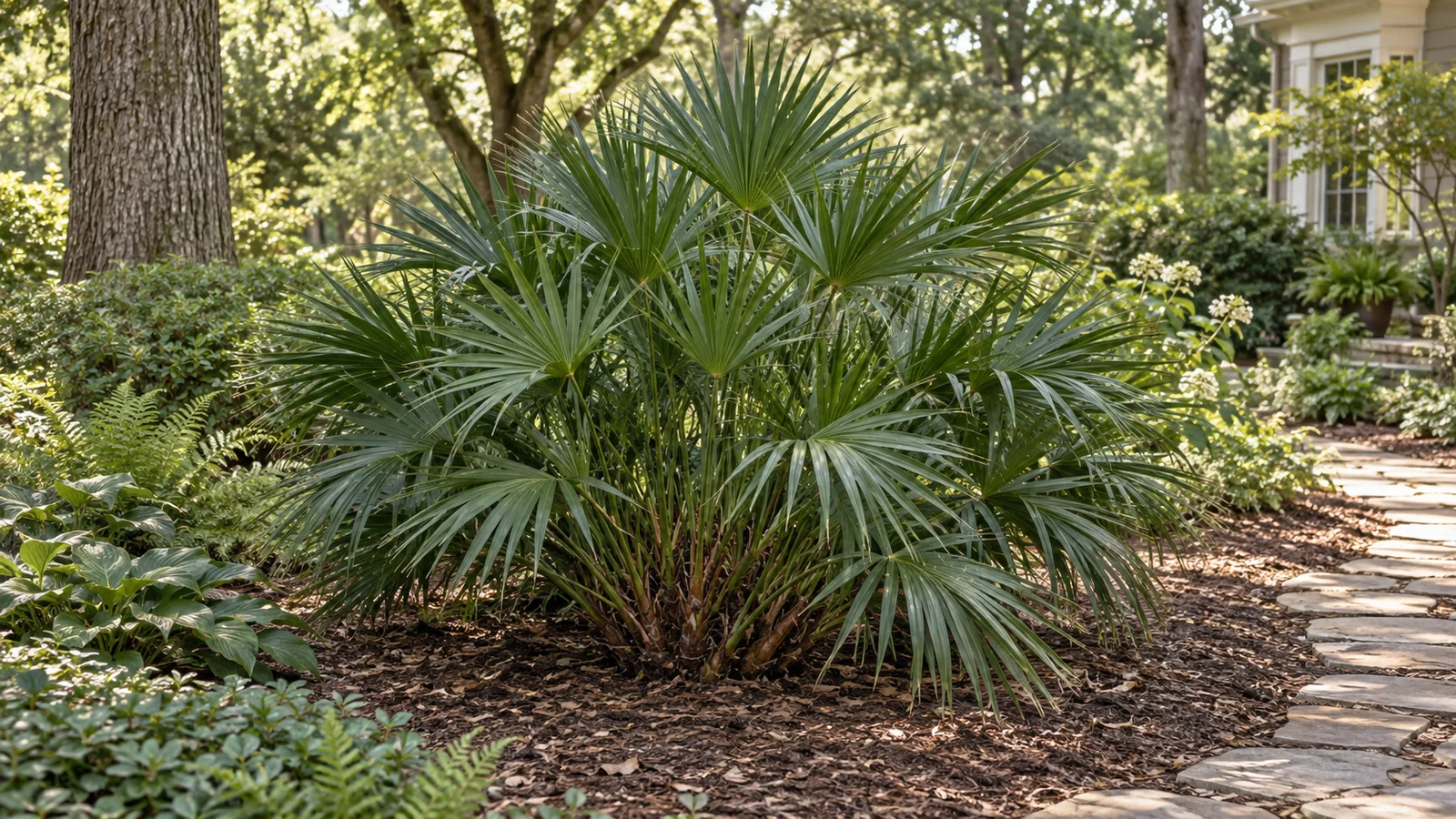
Illustrative planting concept
Size and space
Total mature height: 3–6 ft. Mature frond spread: 4–8 ft.
Use 3–6 ft high and 4–8 ft wide as the established planning range. The diagram includes the full foliage clump. It does not show the location of every needle or reserve the extra access needed to work around them.
Installed example: 2 ft high × 2 ft wide. This is an illustrative size, not a pot-size or growth-timeline promise.
Part shade; sheltered sun is possible · Moist, rich soil with drainage; water through establishment · Dense evergreen fans · low clumping structure
Care: Allow the clump to develop; handle the spiny base carefully
Know the whole plant
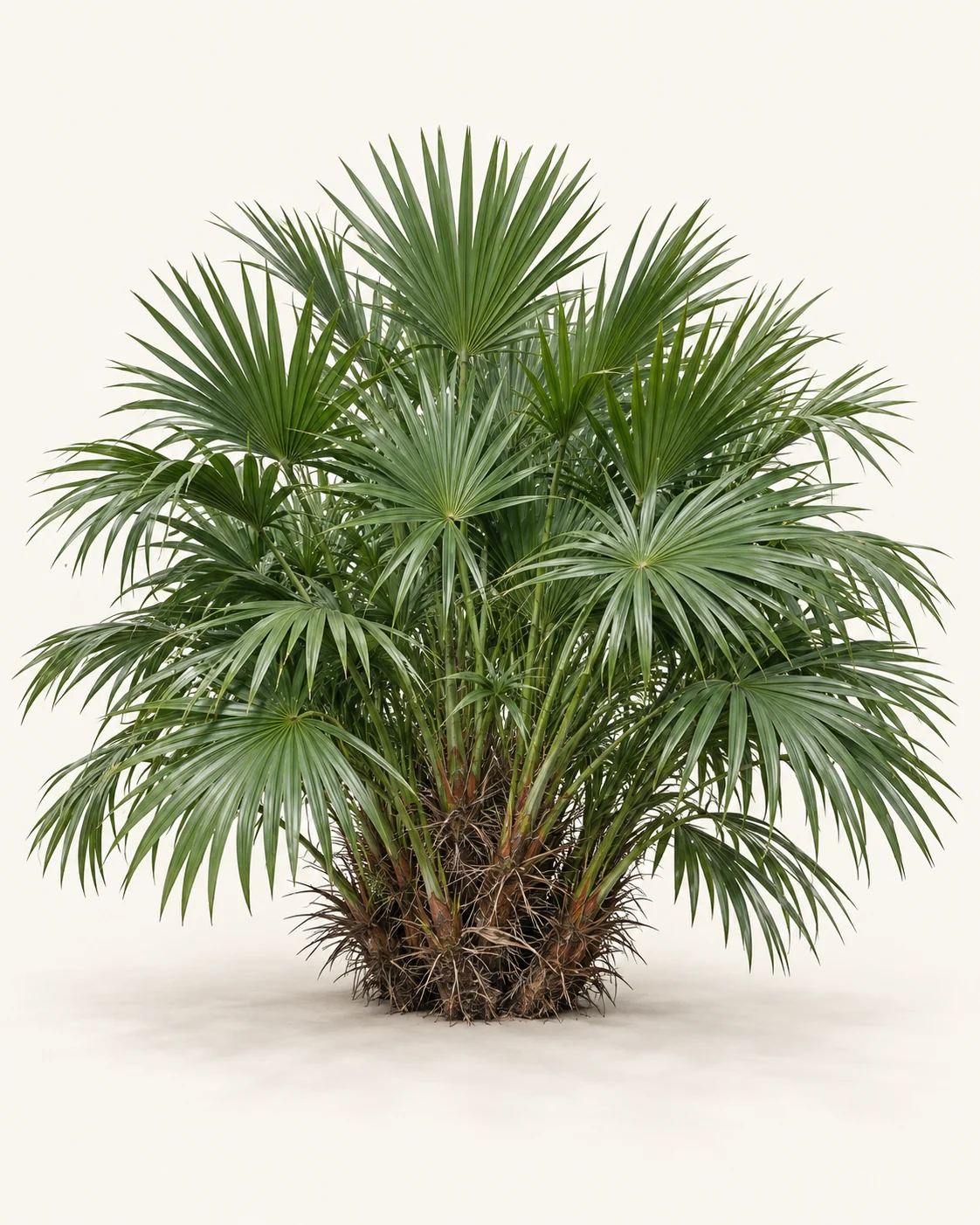
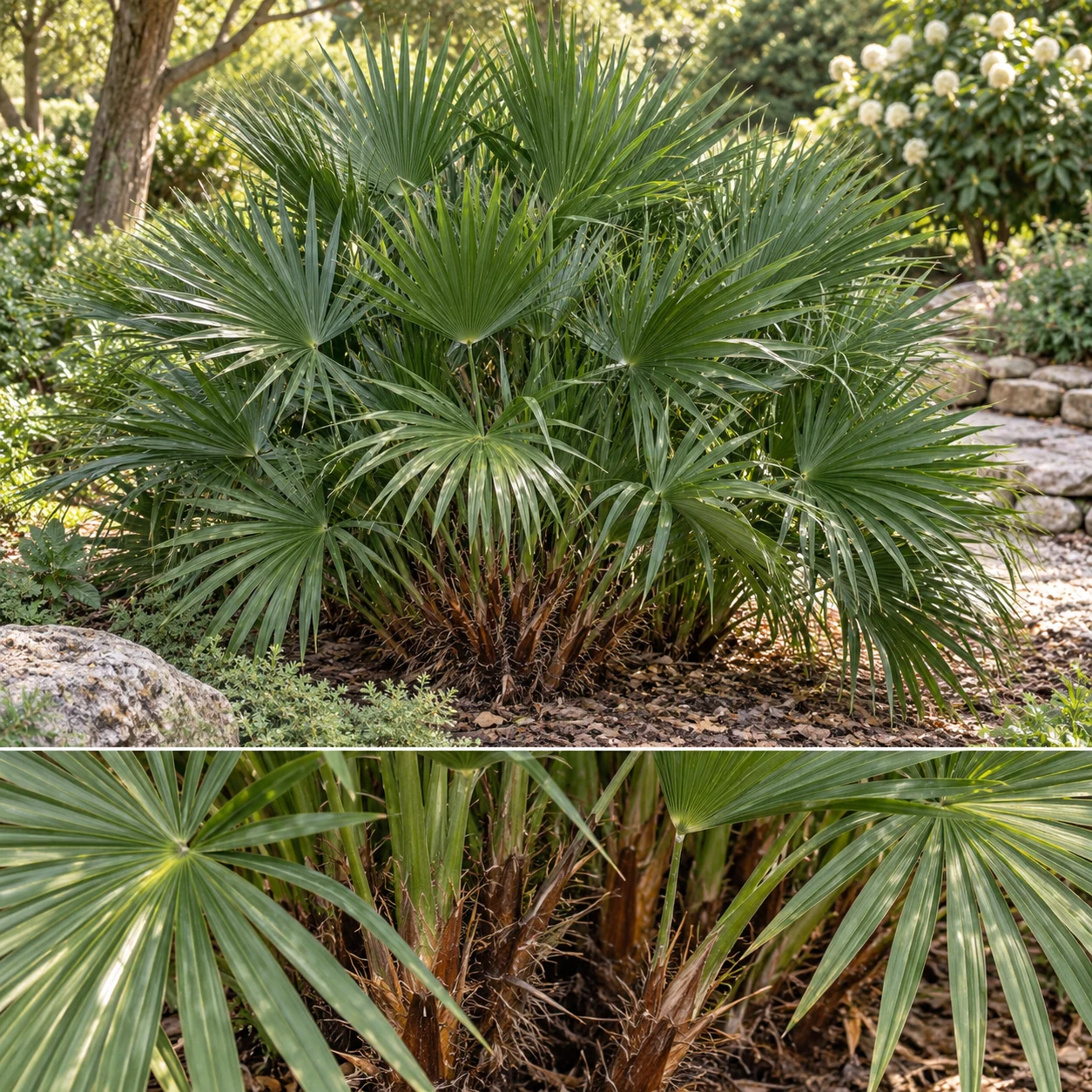
Illustrative whole-plant form of Needle Palm; fronds, stems and overall proportions vary with age and growing conditions.Illustrative foliage detail of Needle Palm. Use the botanical name and nursery label to confirm the plant.
Where it works around Pensacola
Consider Needle Palm for a sheltered, partly shaded Pensacola garden with a generous bed behind the walking route. It can provide an evergreen backdrop to finer foliage. Plan the bed as a place for the clump to remain, with safe access to utilities and neighboring plants.
A shaded native garden anchor
A dense understory clump
A backdrop to fine-textured planting
A sheltered garden boundary
Evergreen structure beneath taller trees
Will anyone brush against it?
Walk the routes for children, pets, bins and maintenance. Put the spiny base well outside those routes rather than relying on a visible leaf edge.
Can the clump remain here?
Choose the long-term position before planting. A spreading clump is harder to work around or move later.
Does it receive some shelter?
Partial shade and protection from harsh wind suit this palm. Cold hardiness does not remove the need to match exposure and soil.
Is the nursery stock cultivated?
Use reputable nursery-grown plants. Look for healthy foliage and sound roots, and confirm the species rather than buying a generic fan palm.
Before it goes on the plan
Why include it for Pensacola?
It is native to the Southeast and has strong cold tolerance. Its low shape also gives homeowners a useful alternative to tall palms.
Does a low height mean a small footprint?
No. A 4–8 ft spread is substantial, especially when extra space is needed around the sharp basal needles.
Can it provide screening?
A developed clump can add low screening and visual density. It will not provide the elevated coverage of a taller hedge, and each clump needs room to expand.
Pairing ideas
Dwarf Palmetto: Dwarf Palmetto offers another native lower-layer option with smooth petioles and a different range of mature forms.
Big Blue Liriope: Big Blue Liriope can occupy its own suitable section of the shaded bed, leaving safe access around the palm.
{"key":"needle","name":"Needle Palm","botanical":"Rhapidophyllum hystrix","slug":"needle-palm","id":"PLT-RHAP-HYST","type":"palms","h":[3,6],"w":[4,8],"install":[2,2],"palmForm":"fan-clump","trunkRatio":0.12,"native":true,"light":"Part shade; sheltered sun is possible","lightTags":["part","sun"],"water":"Moist, rich soil with drainage; water through establishment","season":"Dense evergreen fans · low clumping structure","care":"Allow the clump to develop; handle the spiny base carefully","benefit":"Give a shaded border a fuller evergreen shape.","intro":"Needle Palm is a low, clumping native palm that can anchor the back of a residential bed. Its layered fans provide a dense shape beneath taller trees and work well where a single tall trunk would leave the lower garden feeling empty. Place it where that foliage can be enjoyed without regular contact.","caution":"Long, sharp needles occur around the base and can be hidden by foliage. Keep it away from play areas, tight paths and places where people or pets may reach into the clump. It expands through suckers and is difficult to relocate once established.","sizeNote":"Use 3–6 ft high and 4–8 ft wide as the established planning range. The diagram includes the full foliage clump. It does not show the location of every needle or reserve the extra access needed to work around them.","site":"Consider Needle Palm for a sheltered, partly shaded Pensacola garden with a generous bed behind the walking route. It can provide an evergreen backdrop to finer foliage. Plan the bed as a place for the clump to remain, with safe access to utilities and neighboring plants.","uses":["A shaded native garden anchor","A dense understory clump","A backdrop to fine-textured planting","A sheltered garden boundary","Evergreen structure beneath taller trees"],"checks":[["Will anyone brush against it?","Walk the routes for children, pets, bins and maintenance. Put the spiny base well outside those routes rather than relying on a visible leaf edge."],["Can the clump remain here?","Choose the long-term position before planting. A spreading clump is harder to work around or move later."],["Does it receive some shelter?","Partial shade and protection from harsh wind suit this palm. Cold hardiness does not remove the need to match exposure and soil."],["Is the nursery stock cultivated?","Use reputable nursery-grown plants. Look for healthy foliage and sound roots, and confirm the species rather than buying a generic fan palm."]],"faq":[["Why include it for Pensacola?","It is native to the Southeast and has strong cold tolerance. Its low shape also gives homeowners a useful alternative to tall palms."],["Does a low height mean a small footprint?","No. A 4–8 ft spread is substantial, especially when extra space is needed around the sharp basal needles."],["Can it provide screening?","A developed clump can add low screening and visual density. It will not provide the elevated coverage of a taller hedge, and each clump needs room to expand."]],"sources":[["NC State Extension: Needle Palm","https://plants.ces.ncsu.edu/plants/rhapidophyllum-hystrix/"],["UF/IFAS: Ornamental Palms for Central Florida","https://ask.ifas.ufl.edu/publication/EP020"]],"unit":"ft","heightLabel":"Total mature height","spreadLabel":"Mature frond spread","color":"#70815a","guideKind":"Native palm","eyebrow":"EVERGREEN FORM + THOUGHTFUL PLACEMENT","wholeCaption":"Illustrative whole-plant form of Needle Palm; fronds, stems and overall proportions vary with age and growing conditions.","detailCaption":"Illustrative foliage detail of Needle Palm. Use the botanical name and nursery label to confirm the plant.","aliases":["Needle Palm","Rhapidophyllum hystrix","porcupine palm"],"goals":["privacy"],"palmSizeGroup":"small","images":{"context":{"id":"6aa03d830ee320cd00dfdfda","url":"https://cdn.prod.website-files.com/6a975baac0f352647862d847/6aa03d830ee320cd00dfdfda_landova-palm-needle-context.webp","alt":"Illustrative planting concept with Needle Palm","width":1600,"height":900},"whole":{"id":"6aa03d84c90bb73409769c80","url":"https://cdn.prod.website-files.com/6a975baac0f352647862d847/6aa03d84c90bb73409769c80_landova-palm-needle-whole.webp","alt":"Illustrative whole-plant form of Needle Palm","width":1122,"height":1402,"fit":"contain"},"detail":{"id":"6aa03d84784c76b20773c11b","url":"https://cdn.prod.website-files.com/6a975baac0f352647862d847/6aa03d84784c76b20773c11b_landova-palm-needle-detail.webp","alt":"Illustrative foliage and seasonal detail of Needle Palm","width":1254,"height":1254}},"companions":[{"slug":"dwarf-palmetto","name":"Dwarf Palmetto","title":"Compare a more open fan shape","reason":"Dwarf Palmetto offers another native lower-layer option with smooth petioles and a different range of mature forms.","image":{"id":"6aa03d82f08181b5baeebc1d","url":"https://cdn.prod.website-files.com/6a975baac0f352647862d847/6aa03d82f08181b5baeebc1d_landova-palm-dwarfpalmetto-context.webp","alt":"Illustrative planting concept with Dwarf Palmetto","width":1600,"height":900}},{"slug":"big-blue-liriope","name":"Big Blue Liriope","title":"Explore a finer shade layer","reason":"Big Blue Liriope can occupy its own suitable section of the shaded bed, leaving safe access around the palm.","image":{"id":"6aa00228a713a3c64d2d24fb","url":"https://cdn.prod.website-files.com/6a975baac0f352647862d847/6aa00228a713a3c64d2d24fb_landova-grass-bigblue-context.webp","alt":"Illustrative planting concept with Big Blue Liriope","width":1600,"height":900}}]}
LANDOVA / PLANTING DECISIONS
Choose plants with the whole space in mind.
Explore a planting goal, then compare the growing needs and mature size of individual plants.
LANDOVA is in beta
Join the launch waitlist.
We are not accepting paying clients yet. We expect to launch around January 2027 and may open sooner. Explore our free tools now, and sign up for launch updates and educational planning emails.
Thank you. Your waitlist signup has been received. We will email you with launch updates. No purchase or project booking has been made.
We could not save your signup. Please try again or email info@landovadesign.com.