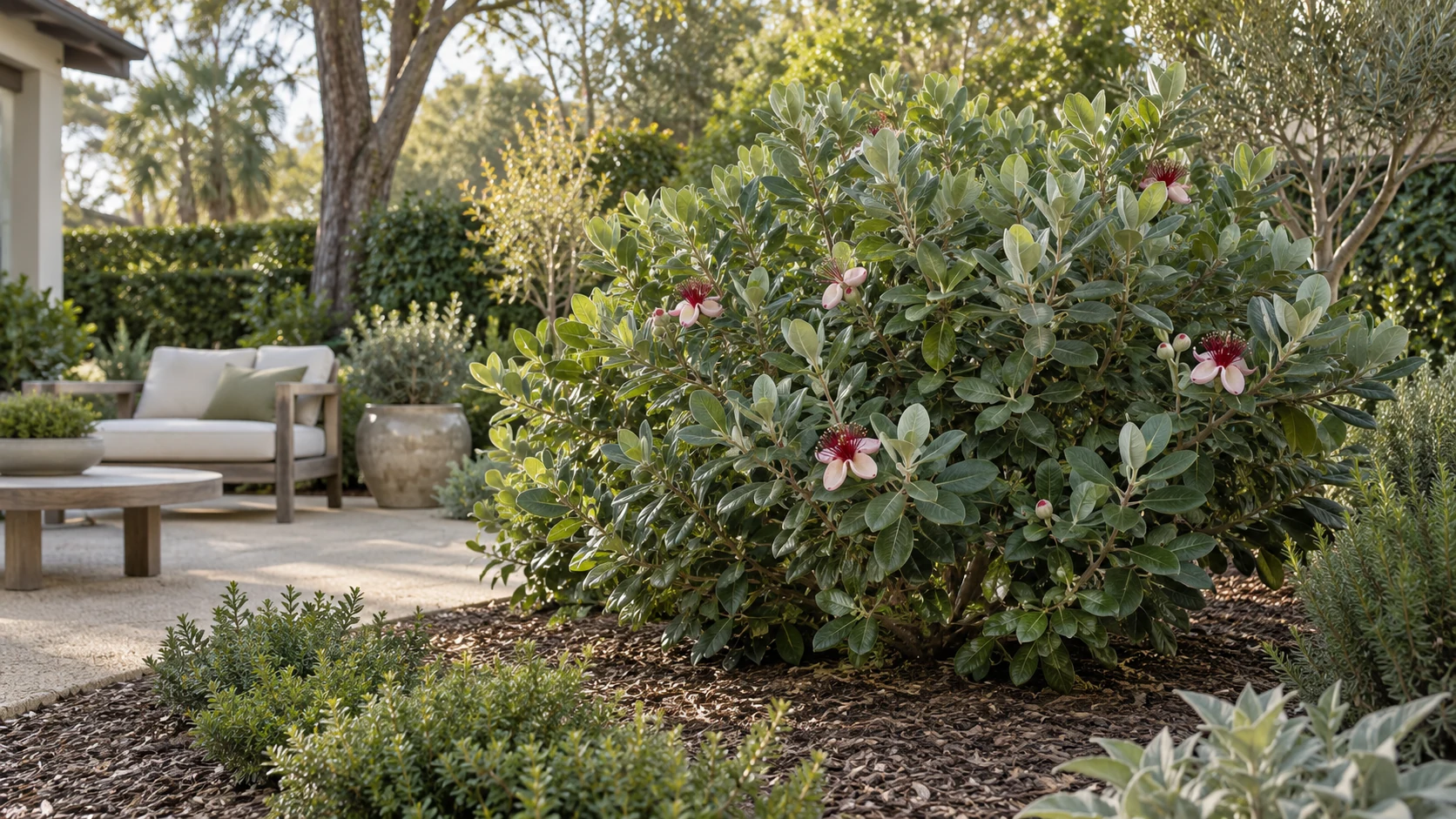
Silvery foliage and unusual spring flowers give Pineapple Guava a place in the design even when it is not fruiting. Give it a generous footprint first; a narrow hedge or trained tree is a maintenance choice, not its default shape.
Illustrative planting concept
Size and space
Mature range: 10–15 ft high × 10–15 ft wide.
Use the Florida-focused UF/IFAS range of 10–15 ft high and wide. Narrower descriptions exist in other references; do not use them to squeeze a full-sized shrub into a small bed. The 6 × 4 ft hedge illustration requires continuing pruning.
Compare with a six-foot person: installed example 3 ft high by 2 ft wide. This example is not a fixed pot size or a growth timeline.
Full sun to part shade · Well-drained soil; water new plants and during extended dry spells. · Evergreen silver-backed leaves; spring flowers; fruit depends on selection and conditions.
Maintained hedge example: 6 ft high by 4 ft wide. This illustrative size requires ongoing pruning; it is not the natural mature size or a root boundary.
Where it works around Pensacola
UF/IFAS recommends this shrub for Florida gardens, including coastal settings with salt spray. For a Pensacola-area yard, check drainage and reserve space for the broad canopy. Spray tolerance is not a promise of survival in storm-surge flooding.
Evergreen screening
Silver foliage contrast
Roomy courtyard specimen
Edible-garden backdrop
Informal coastal hedge
What will fit behind the hedge?
Leave space to reach the fence and maintain the back of the plant. Position irrigation and lighting where they remain accessible as the canopy expands.
Is fruit part of the brief?
Discuss the exact nursery selection and pollination needs before ordering. Treat a harvest as a separate goal from ornamental screening, with room to gather fallen fruit.
Where is the clean walking line?
Place fruiting branches over an accessible garden bed, away from steps and busy poolside paving. A useful plant should not create an awkward cleanup corner.
Natural, clipped or trained?
Choose the intended form before deciding spacing. A trained tree exposes the lower view; a clipped hedge changes the pruning commitment and may reduce flowering.
Before it goes on the plan
Will one plant always produce fruit?
No. Fruiting varies with the selection, pollination and weather. If fruit is important, confirm those requirements with the nursery before buying.
Is this common tropical guava?
No. Pineapple Guava is Acca sellowiana, also sold under the older name Feijoa sellowiana. Use that identity when matching the plant to this guide.
Can it be a small hedge?
Yes, with ongoing management. Compare that commitment with a naturally smaller shrub before planning a narrow planting strip.
Pairing ideas
Florida Privet: Florida Privet offers a looser native alternative where seasonal leaf loss is acceptable. Compare both before choosing the screen.
Coastal False Rosemary: Use Coastal False Rosemary in a separate sunny, freely draining foreground, outside the guava’s shade and irrigation pattern.
{"key":"guava","id":"PLT-ACCA-SELLOWIANA","slug":"pineapple-guava","name":"Pineapple Guava","botanical":"Acca sellowiana","eyebrow":"Evergreen structure with a silver finish","benefit":"Let the boundary do more than hide a fence.","intro":"Silvery foliage and unusual spring flowers give Pineapple Guava a place in the design even when it is not fruiting. Give it a generous footprint first; a narrow hedge or trained tree is a maintenance choice, not its default shape.","h":[10,15],"w":[10,15],"install":[3,2],"maintained":[6,4],"color":"#83917a","habit":"round","light":"Full sun to part shade","lightTags":["sun","part"],"water":"Well-drained soil; water new plants and during extended dry spells.","season":"Evergreen silver-backed leaves; spring flowers; fruit depends on selection and conditions.","care":"Light shaping for a natural form; a tight hedge requires more care.","site":"UF/IFAS recommends this shrub for Florida gardens, including coastal settings with salt spray. For a Pensacola-area yard, check drainage and reserve space for the broad canopy. Spray tolerance is not a promise of survival in storm-surge flooding.","sizeNote":"Use the Florida-focused UF/IFAS range of 10–15 ft high and wide. Narrower descriptions exist in other references; do not use them to squeeze a full-sized shrub into a small bed. The 6 × 4 ft hedge illustration requires continuing pruning.","uses":["Evergreen screening","Silver foliage contrast","Roomy courtyard specimen","Edible-garden backdrop","Informal coastal hedge"],"checks":[["What will fit behind the hedge?","Leave space to reach the fence and maintain the back of the plant. Position irrigation and lighting where they remain accessible as the canopy expands."],["Is fruit part of the brief?","Discuss the exact nursery selection and pollination needs before ordering. Treat a harvest as a separate goal from ornamental screening, with room to gather fallen fruit."],["Where is the clean walking line?","Place fruiting branches over an accessible garden bed, away from steps and busy poolside paving. A useful plant should not create an awkward cleanup corner."],["Natural, clipped or trained?","Choose the intended form before deciding spacing. A trained tree exposes the lower view; a clipped hedge changes the pruning commitment and may reduce flowering."]],"faq":[["Will one plant always produce fruit?","No. Fruiting varies with the selection, pollination and weather. If fruit is important, confirm those requirements with the nursery before buying."],["Is this common tropical guava?","No. Pineapple Guava is Acca sellowiana, also sold under the older name Feijoa sellowiana. Use that identity when matching the plant to this guide."],["Can it be a small hedge?","Yes, with ongoing management. Compare that commitment with a naturally smaller shrub before planning a narrow planting strip."]],"sources":[["UF/IFAS Gardening Solutions","https://gardeningsolutions.ifas.ufl.edu/plants/edibles/fruits/pineapple-guava/"],["UF/IFAS Growing Feijoa Fruit in Florida","https://ask.ifas.ufl.edu/publication/HS1424"],["NC State Extension plant reference","https://plants.ces.ncsu.edu/plants/acca-sellowiana/"]],"companions":[{"slug":"florida-privet","name":"Florida Privet","title":"Compare a native boundary","reason":"Florida Privet offers a looser native alternative where seasonal leaf loss is acceptable. Compare both before choosing the screen.","image":{"id":"6a9fefd1bc55594ead64b7f7","url":"https://cdn.prod.website-files.com/6a975baac0f352647862d847/6a9fefd1bc55594ead64b7f7_landova-privet-context-r07.webp","alt":"Illustrative planting concept with Florida Privet"}},{"slug":"coastal-false-rosemary","name":"Coastal False Rosemary","title":"Contrast fine and broad foliage","reason":"Use Coastal False Rosemary in a separate sunny, freely draining foreground, outside the guava’s shade and irrigation pattern.","image":{"id":"6a9fefd2b5d71773d64bf03b","url":"https://cdn.prod.website-files.com/6a975baac0f352647862d847/6a9fefd2b5d71773d64bf03b_landova-rosemary-context-r07.webp","alt":"Illustrative planting concept with Coastal False Rosemary"}}],"wholeCaption":"Illustrative natural shrub form; a clipped hedge or trained tree will look different.","detailCaption":"Illustrative silver-backed leaves and white-pink flowers with red stamens.","wholeFit":"contain","native":false,"guideKind":"Species guide","aliases":["feijoa","Feijoa sellowiana"],"images":{"context":{"id":"6a9fefd103e01d08cca8eeb2","url":"https://cdn.prod.website-files.com/6a975baac0f352647862d847/6a9fefd103e01d08cca8eeb2_landova-guava-context-r07.webp","alt":"Illustrative planting concept with Pineapple Guava"},"whole":{"id":"6a9ff11623cbec9ff9f6c15a","url":"https://cdn.prod.website-files.com/6a975baac0f352647862d847/6a9ff11623cbec9ff9f6c15a_landova-pineapple-guava-form-r07-v2.webp","alt":"Illustrative view of Pineapple Guava overall form","fit":"contain"},"detail":{"id":"6a9fefd191f4916cbcb95fad","url":"https://cdn.prod.website-files.com/6a975baac0f352647862d847/6a9fefd191f4916cbcb95fad_landova-guava-detail-r07.webp","alt":"Illustrative view of Pineapple Guava foliage and seasonal detail"}},"caution":"Natural size is 10–15 ft high and wide. A smaller hedge needs pruning; fruit depends on selection and conditions."}
LANDOVA / PLANTING DECISIONS
Choose plants with the whole space in mind.
Explore a planting goal, then compare the growing needs and mature size of individual plants.
LANDOVA is in beta
Join the launch waitlist.
We are not accepting paying clients yet. We expect to launch around January 2027 and may open sooner. Explore our free tools now, and sign up for launch updates and educational planning emails.
Thank you. Your waitlist signup has been received. We will email you with launch updates. No purchase or project booking has been made.
We could not save your signup. Please try again or email info@landovadesign.com.