Consider a formal cycad accent with its care needs in view.
Sago Palm is included as a familiar nursery choice that deserves a more careful decision. Its symmetrical rosette and sturdy trunk can create a strong focal point in a sheltered ornamental bed. It is a cycad rather than a true palm, and its household safety and maintenance needs should be considered before its appearance.
Before you choose: All parts are highly toxic if eaten; seeds contain especially high concentrations of toxin. Avoid it where children or pets can chew or ingest plant material. Sharp leaflets, freeze damage and cycad aulacaspis scale are additional concerns. This is a conditional choice, not the default recommendation for a family garden.
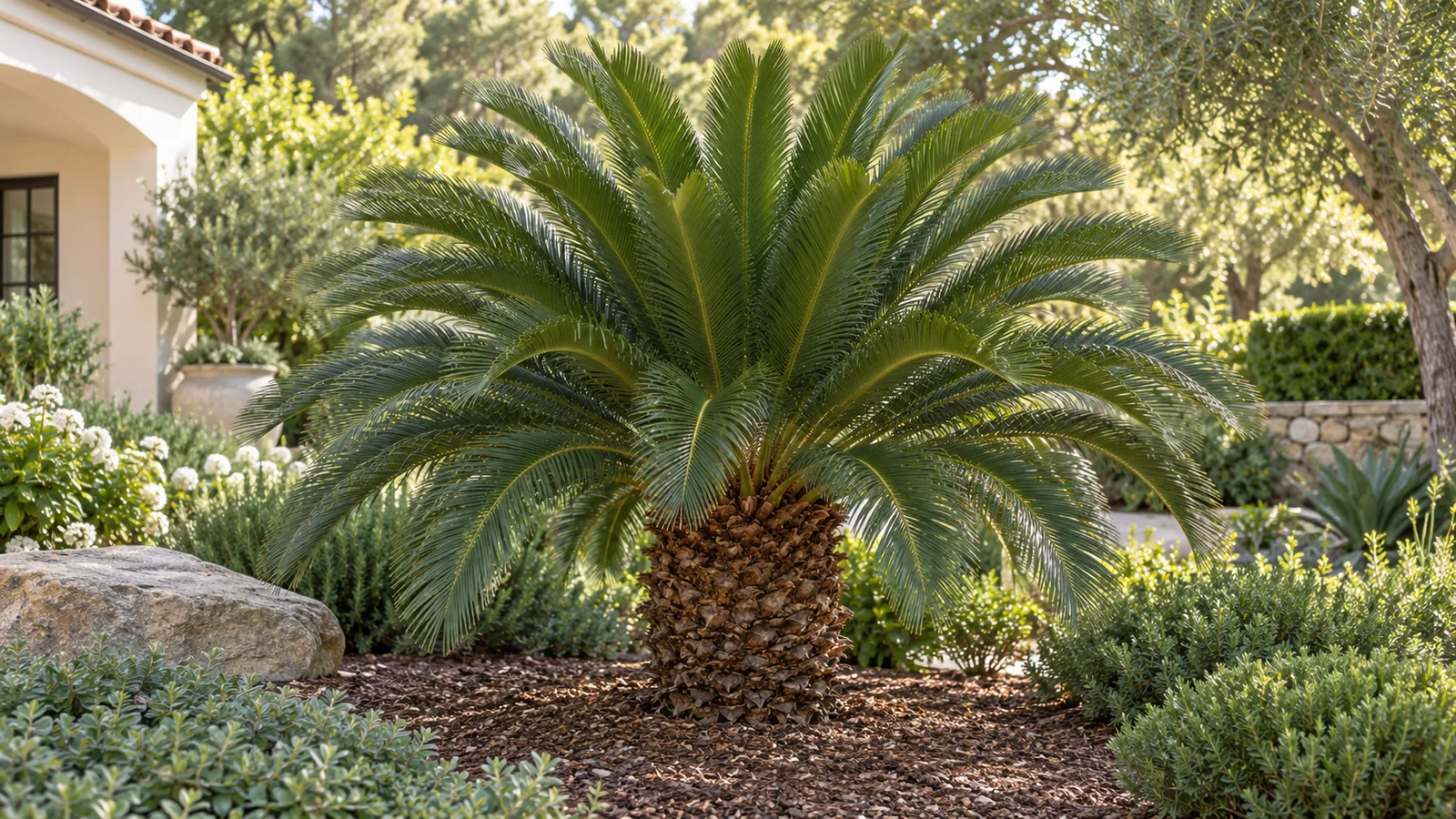
Illustrative planting concept
Size and space
Total mature height: 3–15 ft. Mature frond spread: 3–10 ft.
NC State lists 3–10 ft high and wide, while UF/IFAS notes that very old plants can reach 15 ft. This guide therefore shows 3–15 ft total height and 3–10 ft spread. Slow growth is not a permanent height cap, and offsets can broaden the planting.
Installed example: 2 ft high × 3 ft wide. This is an illustrative size, not a pot-size or growth-timeline promise.
Sun to part shade; shelter from harsh reflected heat · Well-drained soil; avoid overwatering and persistent saturation · Evergreen rosette · periodic new frond flushes · reproductive structures on mature plants
Care: Monitor scale insects, freeze injury and access around sharp foliage
Know the whole plant
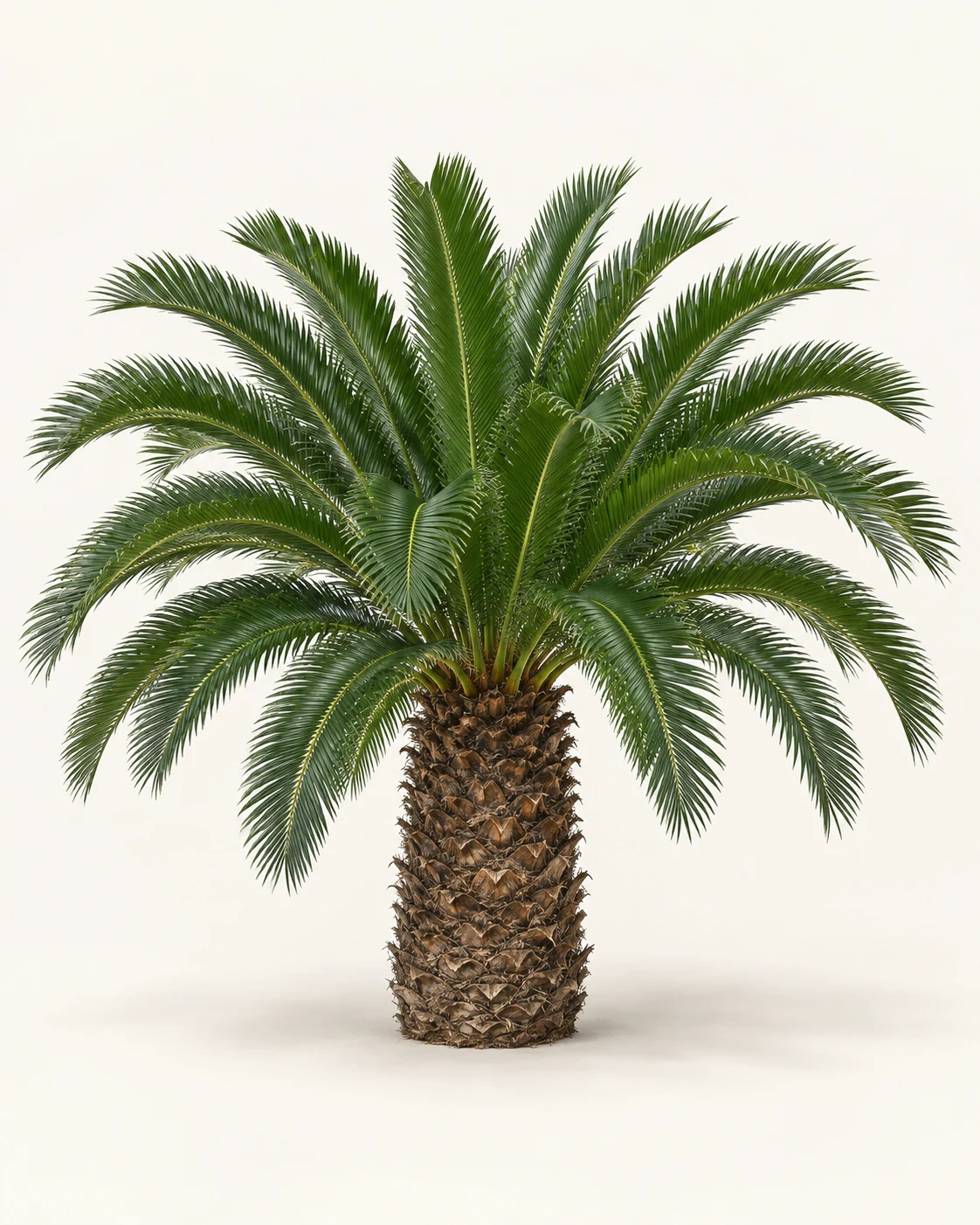
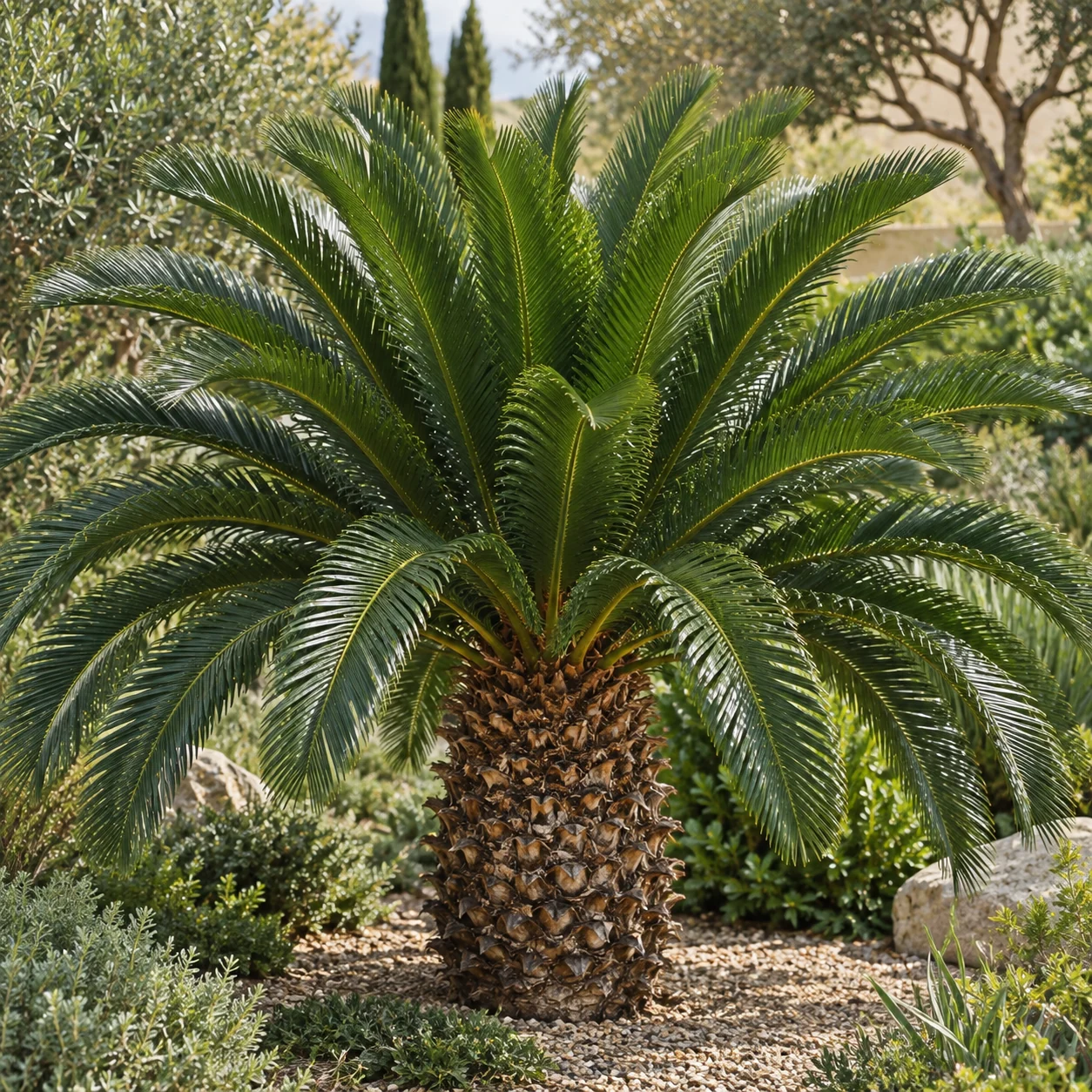
Illustrative whole-plant form of Sago Palm; fronds, stems and overall proportions vary with age and growing conditions.Illustrative foliage detail of Sago Palm. Use the botanical name and nursery label to confirm the plant.
Where it works around Pensacola
Consider Sago only in a sheltered Pensacola location where toxic material and sharp fronds can be kept away from everyday activity. A clear, broad bed can show its form, but a different plant is more appropriate where safe access cannot be maintained. Cold-damaged foliage and pest inspections also belong in the care plan.
A carefully placed ornamental focal point
A formal sheltered planting
A broad bed away from frequent contact
A specimen viewed from a distance
An existing-cycad care and replacement comparison
Could someone or a pet ingest it?
If chewing, seed collection or access cannot be reliably avoided, choose another plant. Removing visible seeds does not remove the toxicity of the rest of the plant.
Will sharp foliage contact people?
Reserve a generous gap around the full rosette. Do not use trimming as the routine solution to a frond growing into a narrow path.
Is ongoing pest monitoring acceptable?
Inspect plants for scale and declining foliage. Cycad aulacaspis scale can cause serious damage and warrants specific advice rather than automatic fertilizer use.
Is this a sheltered microclimate?
Freezes can damage foliage. Consider how a damaged rosette would affect the garden’s appearance and whether a more cold-tolerant palm would fit better.
Before it goes on the plan
Is Sago Palm safe for dogs?
No. Ingestion can cause severe poisoning or death, and all parts are toxic. A household with a plant-chewing dog should choose another plant.
Is it actually a palm?
No. Cycas revoluta is a cycad, with reproductive structures rather than palm flowers and fruit. Its common name describes the look, not its botanical group.
Will it remain a small mound?
No. Growth is slow, but older plants develop trunk height and may produce offsets. The mature range is larger than many nursery displays suggest.
Pairing ideas
Coontie: Coontie stays much lower, but it is also toxic if eaten. It is a size comparison, not a pet-safe substitute.
Dwarf Palmetto: Dwarf Palmetto has a fan-leaf form and different growing needs. Consider its full frond spread and nursery provenance.
{"key":"sago","name":"Sago Palm","botanical":"Cycas revoluta","slug":"sago-palm","id":"PLT-CYCA-REVO","type":"palms","h":[3,15],"w":[3,10],"install":[2,3],"palmForm":"cycad-trunk","trunkRatio":0.43,"native":false,"light":"Sun to part shade; shelter from harsh reflected heat","lightTags":["sun","part"],"water":"Well-drained soil; avoid overwatering and persistent saturation","season":"Evergreen rosette · periodic new frond flushes · reproductive structures on mature plants","care":"Monitor scale insects, freeze injury and access around sharp foliage","benefit":"Consider a formal cycad accent with its care needs in view.","intro":"Sago Palm is included as a familiar nursery choice that deserves a more careful decision. Its symmetrical rosette and sturdy trunk can create a strong focal point in a sheltered ornamental bed. It is a cycad rather than a true palm, and its household safety and maintenance needs should be considered before its appearance.","caution":"All parts are highly toxic if eaten; seeds contain especially high concentrations of toxin. Avoid it where children or pets can chew or ingest plant material. Sharp leaflets, freeze damage and cycad aulacaspis scale are additional concerns. This is a conditional choice, not the default recommendation for a family garden.","sizeNote":"NC State lists 3–10 ft high and wide, while UF/IFAS notes that very old plants can reach 15 ft. This guide therefore shows 3–15 ft total height and 3–10 ft spread. Slow growth is not a permanent height cap, and offsets can broaden the planting.","site":"Consider Sago only in a sheltered Pensacola location where toxic material and sharp fronds can be kept away from everyday activity. A clear, broad bed can show its form, but a different plant is more appropriate where safe access cannot be maintained. Cold-damaged foliage and pest inspections also belong in the care plan.","uses":["A carefully placed ornamental focal point","A formal sheltered planting","A broad bed away from frequent contact","A specimen viewed from a distance","An existing-cycad care and replacement comparison"],"checks":[["Could someone or a pet ingest it?","If chewing, seed collection or access cannot be reliably avoided, choose another plant. Removing visible seeds does not remove the toxicity of the rest of the plant."],["Will sharp foliage contact people?","Reserve a generous gap around the full rosette. Do not use trimming as the routine solution to a frond growing into a narrow path."],["Is ongoing pest monitoring acceptable?","Inspect plants for scale and declining foliage. Cycad aulacaspis scale can cause serious damage and warrants specific advice rather than automatic fertilizer use."],["Is this a sheltered microclimate?","Freezes can damage foliage. Consider how a damaged rosette would affect the garden’s appearance and whether a more cold-tolerant palm would fit better."]],"faq":[["Is Sago Palm safe for dogs?","No. Ingestion can cause severe poisoning or death, and all parts are toxic. A household with a plant-chewing dog should choose another plant."],["Is it actually a palm?","No. Cycas revoluta is a cycad, with reproductive structures rather than palm flowers and fruit. Its common name describes the look, not its botanical group."],["Will it remain a small mound?","No. Growth is slow, but older plants develop trunk height and may produce offsets. The mature range is larger than many nursery displays suggest."]],"sources":[["UF/IFAS: Sago Palm","https://ask.ifas.ufl.edu/publication/FR316"],["NC State Extension: Sago Palm and toxicity","https://plants.ces.ncsu.edu/plants/cycas-revoluta/"],["UF/IFAS: Cycad aulacaspis scale","https://ask.ifas.ufl.edu/publication/IN253"]],"unit":"ft","heightLabel":"Total mature height","spreadLabel":"Mature frond spread","color":"#70815a","guideKind":"Cycad · additional care","eyebrow":"EVERGREEN FORM + THOUGHTFUL PLACEMENT","wholeCaption":"Illustrative whole-plant form of Sago Palm; fronds, stems and overall proportions vary with age and growing conditions.","detailCaption":"Illustrative foliage detail of Sago Palm. Use the botanical name and nursery label to confirm the plant.","aliases":["Sago Palm","Cycas revoluta","king sago","Japanese sago","Cycas"],"goals":[],"palmSizeGroup":"medium","images":{"context":{"id":"6aa03d8cef196d01201da6cf","url":"https://cdn.prod.website-files.com/6a975baac0f352647862d847/6aa03d8cef196d01201da6cf_landova-palm-sago-context.webp","alt":"Illustrative planting concept with Sago Palm","width":1600,"height":900},"whole":{"id":"6aa03d8ca71057bcd34c18ee","url":"https://cdn.prod.website-files.com/6a975baac0f352647862d847/6aa03d8ca71057bcd34c18ee_landova-palm-sago-whole.webp","alt":"Illustrative whole-plant form of Sago Palm","width":1122,"height":1402,"fit":"contain"},"detail":{"id":"6aa03d8d784c76b20773c70c","url":"https://cdn.prod.website-files.com/6a975baac0f352647862d847/6aa03d8d784c76b20773c70c_landova-palm-sago-detail.webp","alt":"Illustrative foliage and seasonal detail of Sago Palm","width":1254,"height":1254}},"companions":[{"slug":"coontie","name":"Coontie","title":"Compare a lower native cycad","reason":"Coontie stays much lower, but it is also toxic if eaten. It is a size comparison, not a pet-safe substitute.","image":{"id":"6aa03e15876c821d804ed501","url":"https://cdn.prod.website-files.com/6a975baac0f352647862d847/6aa03e15876c821d804ed501_landova-palm-coontie-context.webp","alt":"Illustrative planting concept with Coontie","width":1600,"height":900}},{"slug":"dwarf-palmetto","name":"Dwarf Palmetto","title":"Compare a low true palm","reason":"Dwarf Palmetto has a fan-leaf form and different growing needs. Consider its full frond spread and nursery provenance.","image":{"id":"6aa03d82f08181b5baeebc1d","url":"https://cdn.prod.website-files.com/6a975baac0f352647862d847/6aa03d82f08181b5baeebc1d_landova-palm-dwarfpalmetto-context.webp","alt":"Illustrative planting concept with Dwarf Palmetto","width":1600,"height":900}}]}
LANDOVA / PLANTING DECISIONS
Choose plants with the whole space in mind.
Explore a planting goal, then compare the growing needs and mature size of individual plants.
LANDOVA is in beta
Join the launch waitlist.
We are not accepting paying clients yet. We expect to launch around January 2027 and may open sooner. Explore our free tools now, and sign up for launch updates and educational planning emails.
Thank you. Your waitlist signup has been received. We will email you with launch updates. No purchase or project booking has been made.
We could not save your signup. Please try again or email info@landovadesign.com.