Choose a shade tree for the landscape you are building.
Shumard Oak can give a broad garden a strong overhead layer without the year-round leafy mass of Live Oak. Its crown becomes more rounded with age, creating a generous shade pattern. Use that future canopy to organize the outdoor space, leaving room for the ways the property may change.
Before you choose: Shumard Oak is a large deciduous tree with acorns and seasonal leaf drop. It needs substantial branch, root and overhead space. Fall color varies from year to year in this climate; planting it beside a small paved courtyard will not keep it small.
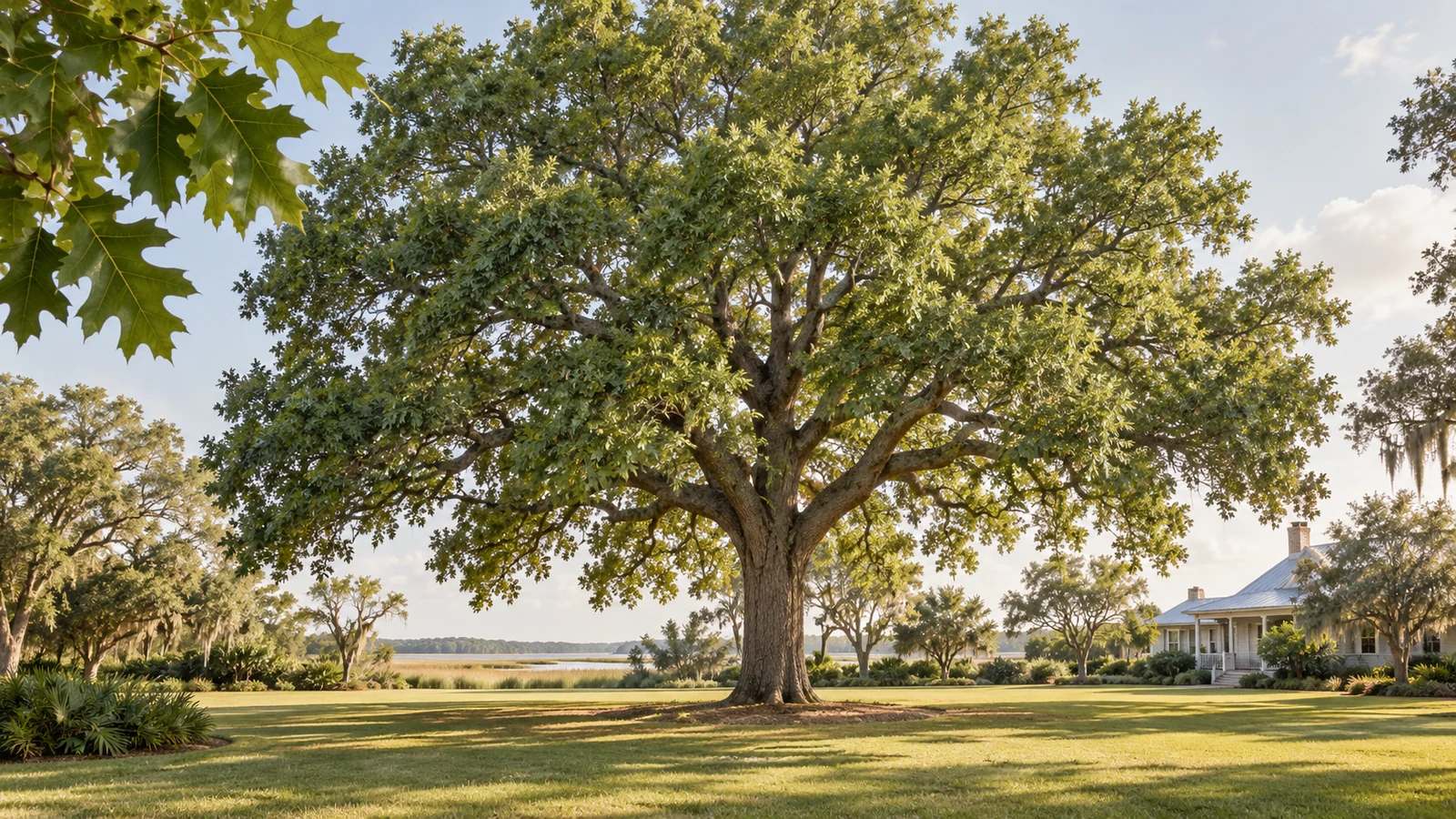
Illustrative planting concept
Size and space
Mature height: 55–80 ft. Mature spread: 40–50 ft.
This guide uses the current UF/IFAS landscape range of 55–80 ft high and 40–50 ft wide. Older woodland trees may grow larger. Shumard is distinct from Southern Live Oak; a smaller illustrated spread does not mean its roots can be confined to a small bed.
Installed example: 8 ft high × 5 ft wide. This is an illustrative size, not a pot-size or growth-timeline promise.
Full sun · Adaptable soil needs; water to establish and review moisture during extended drought · Green summer canopy · variable red-orange fall color · acorns and fallen leaves
Care: Develop a sound central leader early and plan qualified structural care as the tree grows
Know the whole plant
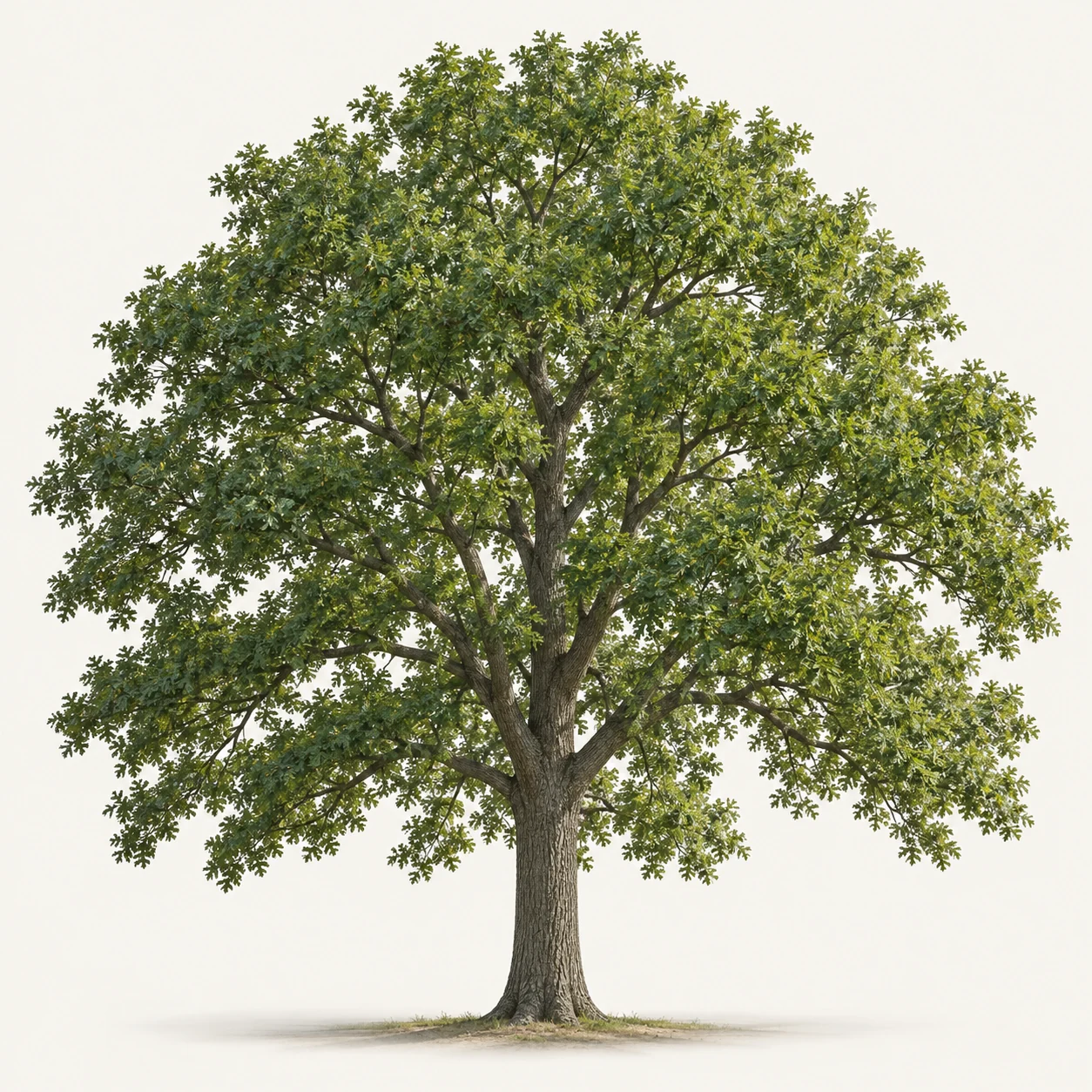
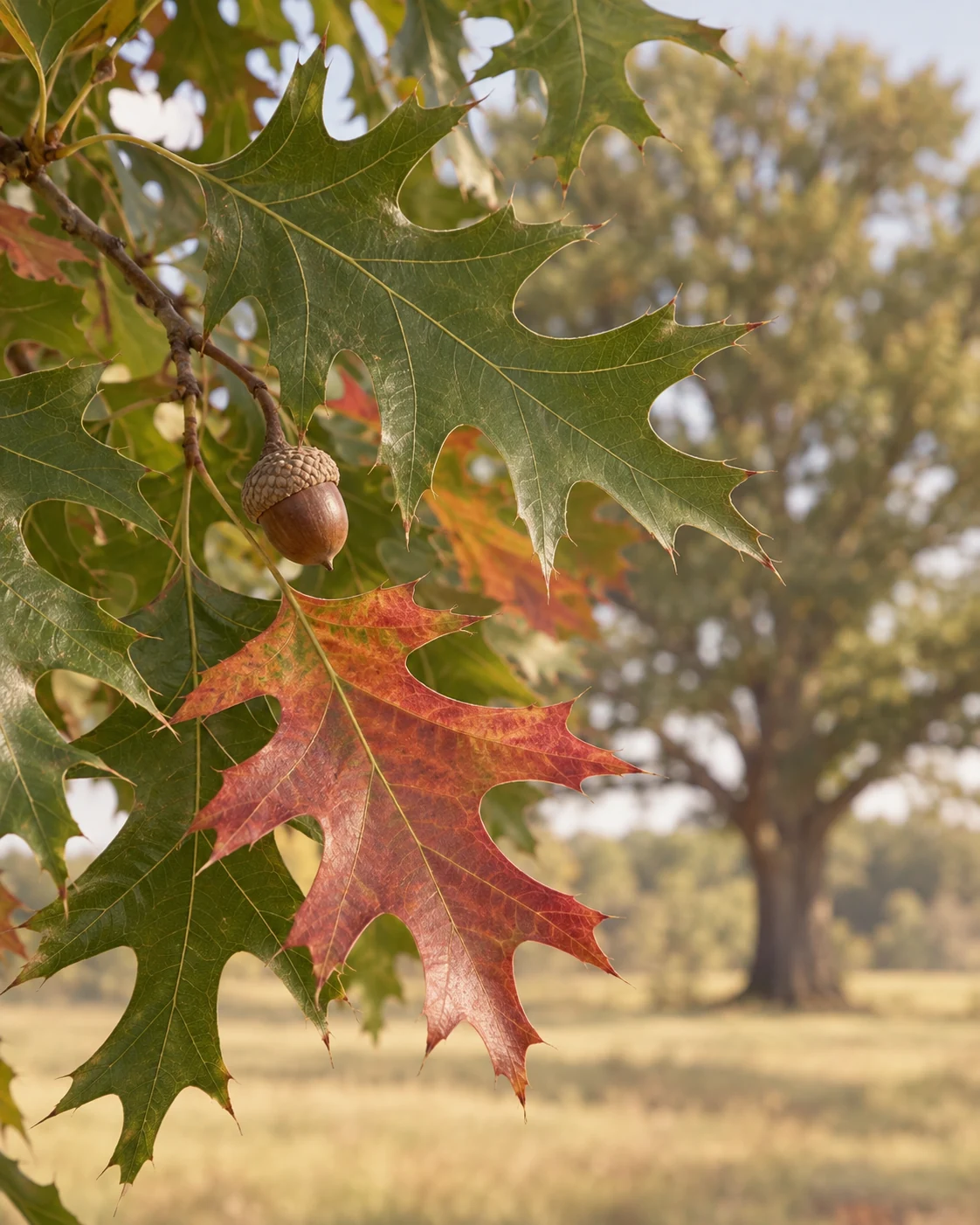
Illustrative Shumard Oak with a broad green summer crown and a strong central framework.Illustrative deeply lobed oak leaves, an acorn and possible autumn tones; fall color is variable on the Gulf Coast.
Where it works around Pensacola
For a Pensacola-area property with a generous sunny planting area, Shumard can be a useful deciduous shade choice. Plan the shade in relation to afternoon gathering spaces and the home, while keeping the trunk location clear of future excavation, utility routes and crowded paving.
A large deciduous shade canopy
A broad garden or lawn anchor
A native specimen for a spacious property
Seasonal color above an open landscape
A long-term tree in a mixed canopy plan
Where should the afternoon shade fall?
Place the future canopy over the plan, then check the house and the spaces people use. The most attractive trunk position is not always the most useful shade position.
What will be built nearby later?
Include future structures, drainage lines and access now. A tree chosen as a permanent anchor deserves a location that can remain undisturbed.
Does the young framework look sound?
Choose a well-structured nursery tree and arrange early pruning guidance. A good long-term form begins before the crown becomes difficult to reach.
How will acorns and leaves affect use?
Think about seating, pool maintenance and the route from the house. Choose the location with seasonal cleanup in mind rather than treating litter as a surprise.
Before it goes on the plan
Is Shumard Oak evergreen?
No. It is deciduous, so its winter outline differs from the evergreen character of Southern Live Oak. That seasonal change can be useful where winter light matters.
Is its fall color reliable?
The leaves can become red or orange, but UF/IFAS notes year-to-year variation in warmer zones. Select it for the whole canopy and site fit, not only one autumn photograph.
Does it need early pruning?
Yes. Young trees benefit from structural guidance to establish a strong central leader and well-arranged main branches. Have larger or corrective work assessed by a qualified arborist.
Pairing ideas
Southern Live Oak: Live Oak has a very different crown spread and winter character. Compare both on the same property plan before deciding which long-term canopy belongs.
American Beautyberry: Beautyberry can provide a separate lower layer where light and moisture are suitable. Leave access and avoid disturbing established tree roots.
{"key":"shumard","id":"PLT-QUER-SHUMARDII","slug":"shumard-oak","name":"Shumard Oak","botanical":"Quercus shumardii","h":[55,80],"w":[40,50],"install":[8,5],"treeForm":"rounded","color":"#60784e","native":true,"type":"trees","categoryLabel":"Trees","reviewDate":"2026-09-08","guideKind":"Native deciduous canopy guide","eyebrow":"GENEROUS SUMMER SHADE + AN OPEN WINTER FRAME","benefit":"Choose a shade tree for the landscape you are building.","intro":"Shumard Oak can give a broad garden a strong overhead layer without the year-round leafy mass of Live Oak. Its crown becomes more rounded with age, creating a generous shade pattern. Use that future canopy to organize the outdoor space, leaving room for the ways the property may change.","light":"Full sun","lightTags":["sun"],"water":"Adaptable soil needs; water to establish and review moisture during extended drought","season":"Green summer canopy · variable red-orange fall color · acorns and fallen leaves","care":"Develop a sound central leader early and plan qualified structural care as the tree grows","caution":"Shumard Oak is a large deciduous tree with acorns and seasonal leaf drop. It needs substantial branch, root and overhead space. Fall color varies from year to year in this climate; planting it beside a small paved courtyard will not keep it small.","site":"For a Pensacola-area property with a generous sunny planting area, Shumard can be a useful deciduous shade choice. Plan the shade in relation to afternoon gathering spaces and the home, while keeping the trunk location clear of future excavation, utility routes and crowded paving.","sizeNote":"This guide uses the current UF/IFAS landscape range of 55–80 ft high and 40–50 ft wide. Older woodland trees may grow larger. Shumard is distinct from Southern Live Oak; a smaller illustrated spread does not mean its roots can be confined to a small bed.","uses":["A large deciduous shade canopy","A broad garden or lawn anchor","A native specimen for a spacious property","Seasonal color above an open landscape","A long-term tree in a mixed canopy plan"],"checks":[["Where should the afternoon shade fall?","Place the future canopy over the plan, then check the house and the spaces people use. The most attractive trunk position is not always the most useful shade position."],["What will be built nearby later?","Include future structures, drainage lines and access now. A tree chosen as a permanent anchor deserves a location that can remain undisturbed."],["Does the young framework look sound?","Choose a well-structured nursery tree and arrange early pruning guidance. A good long-term form begins before the crown becomes difficult to reach."],["How will acorns and leaves affect use?","Think about seating, pool maintenance and the route from the house. Choose the location with seasonal cleanup in mind rather than treating litter as a surprise."]],"faq":[["Is Shumard Oak evergreen?","No. It is deciduous, so its winter outline differs from the evergreen character of Southern Live Oak. That seasonal change can be useful where winter light matters."],["Is its fall color reliable?","The leaves can become red or orange, but UF/IFAS notes year-to-year variation in warmer zones. Select it for the whole canopy and site fit, not only one autumn photograph."],["Does it need early pruning?","Yes. Young trees benefit from structural guidance to establish a strong central leader and well-arranged main branches. Have larger or corrective work assessed by a qualified arborist."]],"sources":[["UF/IFAS · Shumard Oak dimensions and structural care","https://ask.ifas.ufl.edu/publication/ST561"],["UF/IFAS Gardening Solutions · Shumard Oak","https://gardeningsolutions.ifas.ufl.edu/plants/trees-and-shrubs/trees/shumard-oak/"],["USDA NRCS · Shumard Oak plant guide","https://plants.usda.gov/DocumentLibrary/plantguide/pdf/pg_qush.pdf"]],"wholeCaption":"Illustrative Shumard Oak with a broad green summer crown and a strong central framework.","detailCaption":"Illustrative deeply lobed oak leaves, an acorn and possible autumn tones; fall color is variable on the Gulf Coast.","aliases":["shumard oak","shumard red oak","quercus shumardii","shade","acorns","fall color"],"goals":["color"],"images":{"context":{"id":"6aa025590f005b5bf5012bd7","url":"https://cdn.prod.website-files.com/6a975baac0f352647862d847/6aa025590f005b5bf5012bd7_landova-tree-shumard-context.webp","alt":"Illustrative planting concept with Shumard Oak","width":1600,"height":900},"whole":{"id":"6aa02559610ea1cad31b312d","url":"https://cdn.prod.website-files.com/6a975baac0f352647862d847/6aa02559610ea1cad31b312d_landova-tree-shumard-whole.webp","alt":"Illustrative whole-plant form of Shumard Oak","width":1254,"height":1254,"fit":"contain"},"detail":{"id":"6aa0255aa82142bd614bbb18","url":"https://cdn.prod.website-files.com/6a975baac0f352647862d847/6aa0255aa82142bd614bbb18_landova-tree-shumard-detail.webp","alt":"Illustrative foliage and seasonal detail of Shumard Oak","width":1122,"height":1402}},"companions":[{"slug":"southern-live-oak","name":"Southern Live Oak","title":"Compare evergreen and deciduous shade","reason":"Live Oak has a very different crown spread and winter character. Compare both on the same property plan before deciding which long-term canopy belongs.","image":{"id":"6aa01712ed6287b2dea3228e","url":"https://cdn.prod.website-files.com/6a975baac0f352647862d847/6aa01712ed6287b2dea3228e_landova-tree-liveoak-context.webp","alt":"Illustrative planting concept with Southern Live Oak","width":1600,"height":900}},{"slug":"american-beautyberry","name":"American Beautyberry","title":"Bring a seasonal layer to the edge","reason":"Beautyberry can provide a separate lower layer where light and moisture are suitable. Leave access and avoid disturbing established tree roots.","image":{"id":"6a9f5cd67400c99880f6f542","url":"https://cdn.prod.website-files.com/6a975baac0f352647862d847/6a9f5cd67400c99880f6f542_landova-beauty-context-r05.webp","alt":"Illustrative planting concept with American Beautyberry"}}]}
LANDOVA / PLANTING DECISIONS
Choose plants with the whole space in mind.
Explore a planting goal, then compare the growing needs and mature size of individual plants.
LANDOVA is in beta
Join the launch waitlist.
We are not accepting paying clients yet. We expect to launch around January 2027 and may open sooner. Explore our free tools now, and sign up for launch updates and educational planning emails.
Thank you. Your waitlist signup has been received. We will email you with launch updates. No purchase or project booking has been made.
We could not save your signup. Please try again or email info@landovadesign.com.