Bring a graceful tree into the moister part of the garden.
Sweetbay Magnolia offers a lighter-looking crown than the familiar Southern Magnolia. Its green leaves can flash silver as they turn, and creamy flowers add a subtle focal detail. Use that quieter character where a tree should frame a view without making the whole composition feel heavy.
Before you choose: Sweetbay is a substantial tree, not a small flowering shrub. Winter leaf retention depends on plant selection and climate. Its preference for moisture does not make it a drainage repair or a tree for direct salt spray and saltwater flooding.
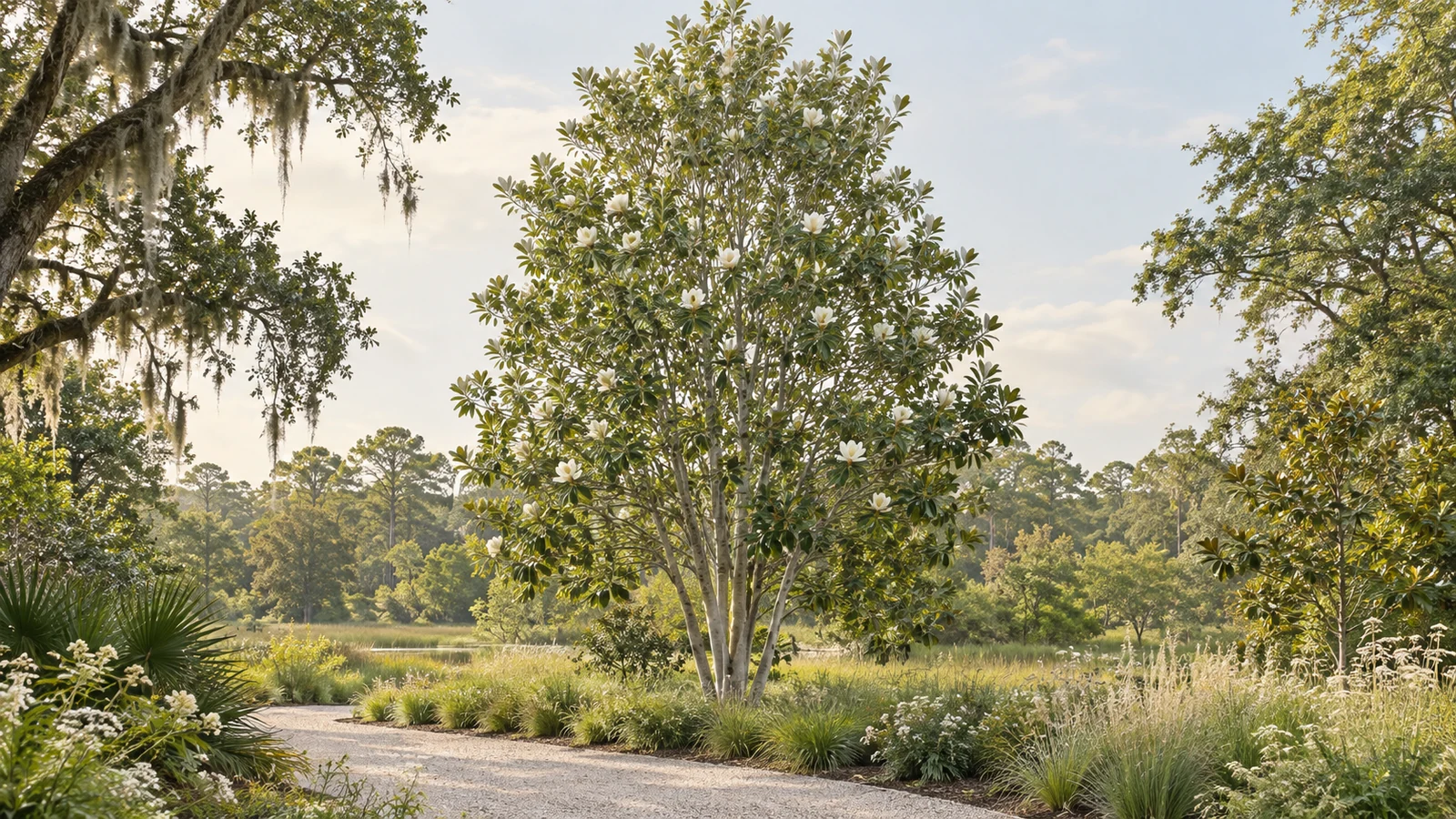
Illustrative planting concept
Size and space
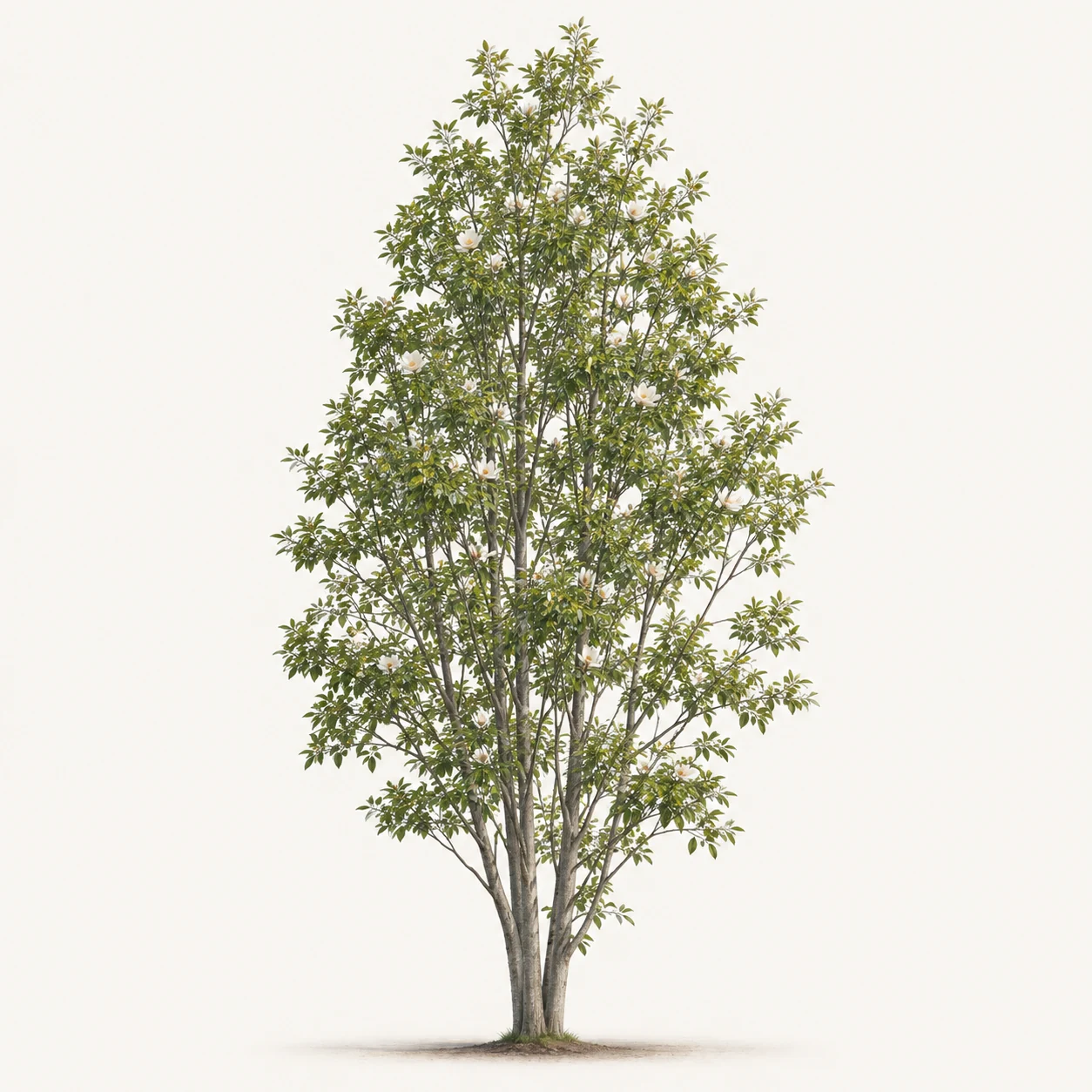
Mature height: 40–50 ft. Mature spread: 15–25 ft.
The diagram follows UF/IFAS’s 40–50 ft height and 15–25 ft spread; the same source notes that trees in the South can reach 60 ft. Single-leader and multiple-stem forms create different crowns. Confirm the selection and allow overhead clearance beyond the nursery specimen.
Installed example: 6 ft high × 3 ft wide. This is an illustrative size, not a pot-size or growth-timeline promise.
Full sun to part shade · Prefer moist, acidic soil; review dry-season irrigation and drainage together · Creamy scented flowers · silvery leaf undersides · winter leaf retention varies
Care: Choose the nursery form deliberately and watch for drought stress in confined or dry soil
Know the whole plant
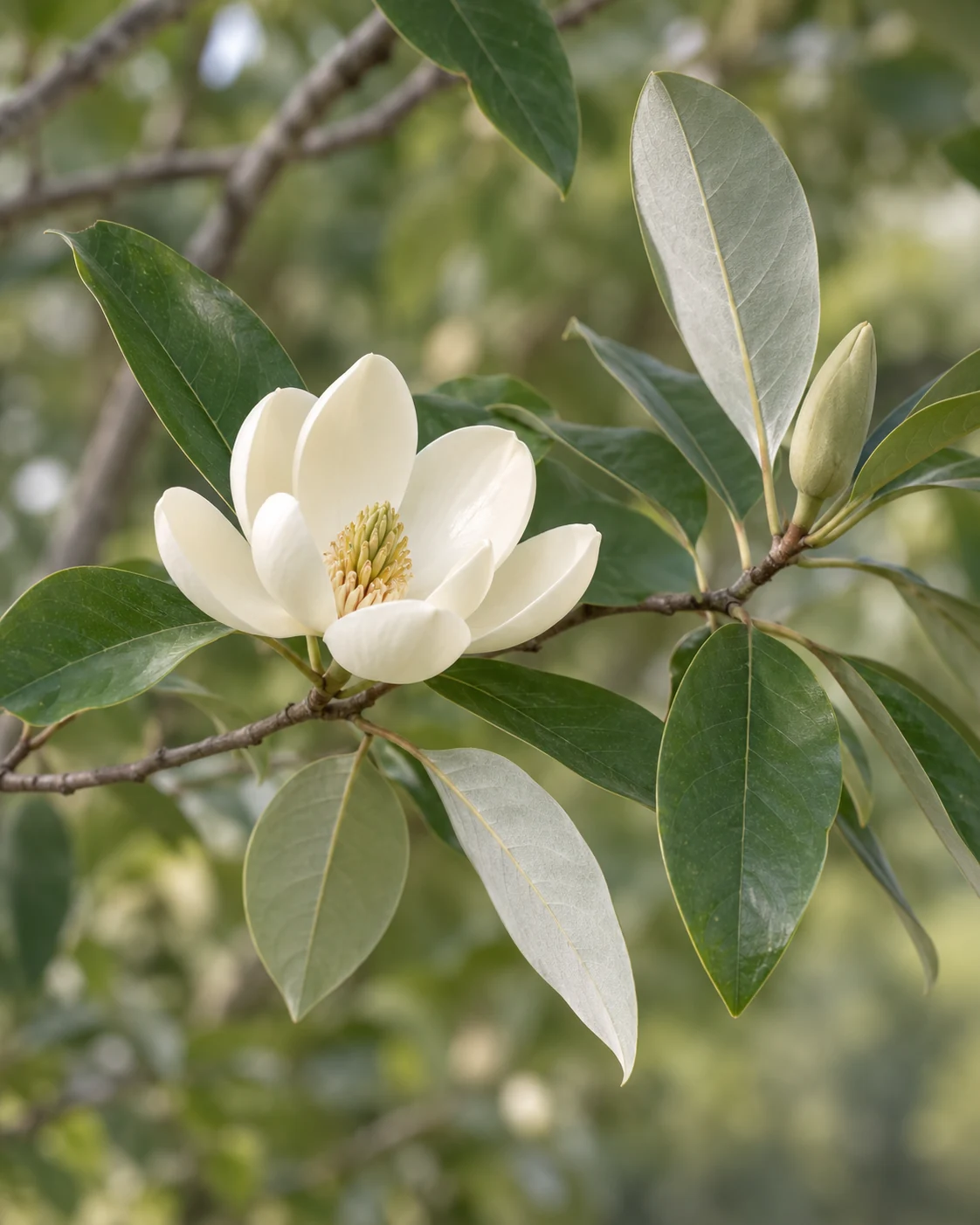
Illustrative upright Sweetbay Magnolia; branching and winter leaf retention vary with nursery selection and climate.Illustrative cream flower with green leaves and silvery-white undersides, distinct from Southern Magnolia’s rusty leaf backing.
Where it works around Pensacola
In a sheltered Pensacola landscape, start with a bed that retains useful moisture without forcing the tree into a cramped corner. Consider the dry part of the year as carefully as the rainy season. A tree selected for a naturally moist area may need a different irrigation arrangement from the drought-tolerant planting nearby.
A moist garden focal tree
An upright layer beyond a patio
A sheltered freshwater landscape edge
A lighter alternative to a dense magnolia
A native tree in a mixed border
How dry does the soil become?
Look at the bed during an extended dry spell, not only after rain. Match the tree to a moisture pattern you can realistically support through establishment.
Will winter privacy depend on it?
Ask the nursery about the exact stock and local leaf retention. Use another dependable evergreen layer if screening must remain dense through every winter.
Which trunk form suits the view?
A clear central stem and a low multi-stem specimen occupy space differently. Choose the form around the sightline and walking route before buying the tree.
Is this rainwater or salt exposure?
Separate a moist inland planting area from a site that receives salt spray or brackish flooding. A coastal address alone does not settle that question.
Before it goes on the plan
How is it different from Southern Magnolia?
Sweetbay has thinner leaves with silvery undersides and usually a lighter, narrower crown. Southern Magnolia has larger leathery leaves and a much broader full-size canopy.
Will it stay evergreen in Pensacola?
Leaf retention varies with climate and selection. Southern forms and some cultivars retain more foliage, but the species guide should not be used as a year-round privacy guarantee.
Can it grow in a normal garden bed?
Yes, when the soil, moisture and available space suit it. Check seasonal dryness and irrigation rather than assuming that a tree associated with wetlands needs permanent standing water.
Pairing ideas
Soft Rush: Soft Rush is a possibility in a suitably moist, bright part of the same garden. Keep its clumps out of circulation space and check each plant’s light needs.
Florida Anise: Florida Anise can provide a separate evergreen mass where shade and soil moisture suit it. Reserve the shrub’s own mature width rather than packing it against the tree.
{"key":"sweetbay","id":"PLT-MAGN-VIRGINIANA","slug":"sweetbay-magnolia","name":"Sweetbay Magnolia","botanical":"Magnolia virginiana","h":[40,50],"w":[15,25],"install":[6,3],"treeForm":"vase","color":"#788967","native":true,"type":"trees","categoryLabel":"Trees","reviewDate":"2026-09-08","guideKind":"Native moist-site tree guide","eyebrow":"SILVERY LEAF BACKS + A LIGHTER CROWN","benefit":"Bring a graceful tree into the moister part of the garden.","intro":"Sweetbay Magnolia offers a lighter-looking crown than the familiar Southern Magnolia. Its green leaves can flash silver as they turn, and creamy flowers add a subtle focal detail. Use that quieter character where a tree should frame a view without making the whole composition feel heavy.","light":"Full sun to part shade","lightTags":["sun","part"],"water":"Prefer moist, acidic soil; review dry-season irrigation and drainage together","season":"Creamy scented flowers · silvery leaf undersides · winter leaf retention varies","care":"Choose the nursery form deliberately and watch for drought stress in confined or dry soil","caution":"Sweetbay is a substantial tree, not a small flowering shrub. Winter leaf retention depends on plant selection and climate. Its preference for moisture does not make it a drainage repair or a tree for direct salt spray and saltwater flooding.","site":"In a sheltered Pensacola landscape, start with a bed that retains useful moisture without forcing the tree into a cramped corner. Consider the dry part of the year as carefully as the rainy season. A tree selected for a naturally moist area may need a different irrigation arrangement from the drought-tolerant planting nearby.","sizeNote":"The diagram follows UF/IFAS’s 40–50 ft height and 15–25 ft spread; the same source notes that trees in the South can reach 60 ft. Single-leader and multiple-stem forms create different crowns. Confirm the selection and allow overhead clearance beyond the nursery specimen.","uses":["A moist garden focal tree","An upright layer beyond a patio","A sheltered freshwater landscape edge","A lighter alternative to a dense magnolia","A native tree in a mixed border"],"checks":[["How dry does the soil become?","Look at the bed during an extended dry spell, not only after rain. Match the tree to a moisture pattern you can realistically support through establishment."],["Will winter privacy depend on it?","Ask the nursery about the exact stock and local leaf retention. Use another dependable evergreen layer if screening must remain dense through every winter."],["Which trunk form suits the view?","A clear central stem and a low multi-stem specimen occupy space differently. Choose the form around the sightline and walking route before buying the tree."],["Is this rainwater or salt exposure?","Separate a moist inland planting area from a site that receives salt spray or brackish flooding. A coastal address alone does not settle that question."]],"faq":[["How is it different from Southern Magnolia?","Sweetbay has thinner leaves with silvery undersides and usually a lighter, narrower crown. Southern Magnolia has larger leathery leaves and a much broader full-size canopy."],["Will it stay evergreen in Pensacola?","Leaf retention varies with climate and selection. Southern forms and some cultivars retain more foliage, but the species guide should not be used as a year-round privacy guarantee."],["Can it grow in a normal garden bed?","Yes, when the soil, moisture and available space suit it. Check seasonal dryness and irrigation rather than assuming that a tree associated with wetlands needs permanent standing water."]],"sources":[["UF/IFAS · Sweetbay Magnolia size, moisture and winter foliage","https://ask.ifas.ufl.edu/publication/ST384"],["UF/IFAS Gardening Solutions · Sweetbay Magnolia","https://gardeningsolutions.ifas.ufl.edu/plants/trees-and-shrubs/trees/sweetbay-magnolia/"]],"wholeCaption":"Illustrative upright Sweetbay Magnolia; branching and winter leaf retention vary with nursery selection and climate.","detailCaption":"Illustrative cream flower with green leaves and silvery-white undersides, distinct from Southern Magnolia’s rusty leaf backing.","aliases":["sweetbay","sweet bay","swamp magnolia","white flowers","moist soil","silver leaves"],"goals":["color"],"images":{"context":{"id":"6aa0255603dcd1c846836d85","url":"https://cdn.prod.website-files.com/6a975baac0f352647862d847/6aa0255603dcd1c846836d85_landova-tree-sweetbay-context.webp","alt":"Illustrative planting concept with Sweetbay Magnolia","width":1600,"height":900},"whole":{"id":"6aa02556acd205dadcb4d2bb","url":"https://cdn.prod.website-files.com/6a975baac0f352647862d847/6aa02556acd205dadcb4d2bb_landova-tree-sweetbay-whole.webp","alt":"Illustrative whole-plant form of Sweetbay Magnolia","width":1254,"height":1254,"fit":"contain"},"detail":{"id":"6aa02557781c87fc59b87dca","url":"https://cdn.prod.website-files.com/6a975baac0f352647862d847/6aa02557781c87fc59b87dca_landova-tree-sweetbay-detail.webp","alt":"Illustrative foliage and seasonal detail of Sweetbay Magnolia","width":1122,"height":1402}},"companions":[{"slug":"soft-rush","name":"Soft Rush","title":"Carry the moisture preference into a lower layer","reason":"Soft Rush is a possibility in a suitably moist, bright part of the same garden. Keep its clumps out of circulation space and check each plant’s light needs.","image":{"id":"6aa00d1713cf571cf7f1bdb3","url":"https://cdn.prod.website-files.com/6a975baac0f352647862d847/6aa00d1713cf571cf7f1bdb3_landova-grass-softrush-context.webp","alt":"Illustrative planting concept with Soft Rush","width":1600,"height":900}},{"slug":"florida-anise","name":"Florida Anise","title":"Compare a fuller shaded layer","reason":"Florida Anise can provide a separate evergreen mass where shade and soil moisture suit it. Reserve the shrub’s own mature width rather than packing it against the tree.","image":{"id":"6a9f3484598f07756d53faf0","url":"https://cdn.prod.website-files.com/6a975baac0f352647862d847/6a9f3484598f07756d53faf0_landova-shrub-anise-context-r02.webp","alt":"Illustrative planting concept with Florida Anise"}}]}
LANDOVA / PLANTING DECISIONS
Choose plants with the whole space in mind.
Explore a planting goal, then compare the growing needs and mature size of individual plants.
LANDOVA is in beta
Join the launch waitlist.
We are not accepting paying clients yet. We expect to launch around January 2027 and may open sooner. Explore our free tools now, and sign up for launch updates and educational planning emails.
Thank you. Your waitlist signup has been received. We will email you with launch updates. No purchase or project booking has been made.
We could not save your signup. Please try again or email info@landovadesign.com.